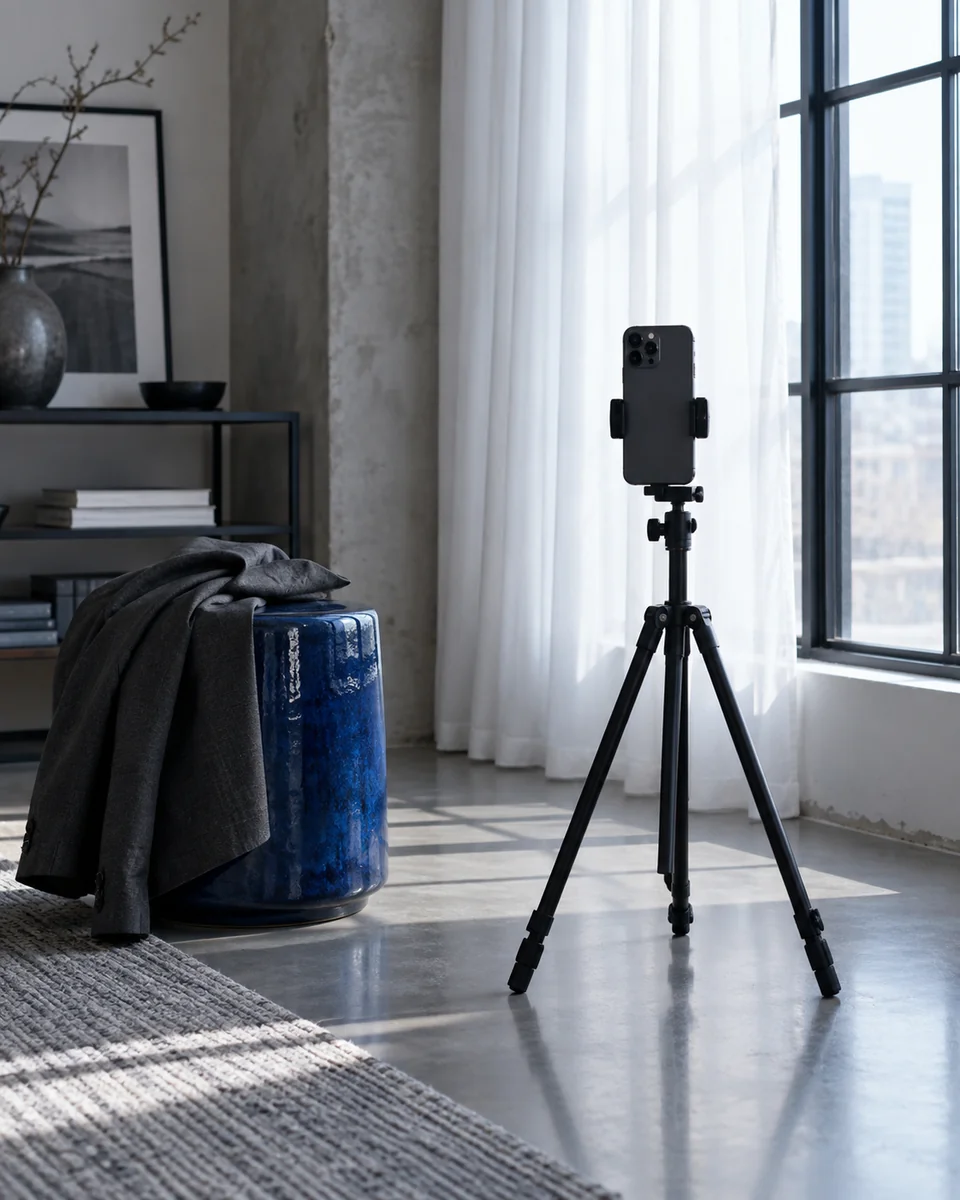
Your photos are part of the result. Make them clear enough to help with the question you want to answer.
FRONT & PROFILE
Make a repeatable reference.
Use a clear front view and a true side profile at eye level. Keep the light, distance and expression consistent. Choose a simple background and avoid heavy filters.
Face visible and in focus
A natural, relaxed expression
Similar camera distance and light
YOUR FACIAL PRIORITY
Name the area you want to understand.
Start with harmony, jawline, eye area or skin. Write a visual observation before choosing a solution. Keep structural questions separate from framing and daily care.
A specific feature relationship
One controllable variable
A clear question for the analysis
THE PHOTO CHECK
Fix the setup before judging the result.
If two photos look surprisingly different, check the lens distance, angle, lighting and pose. A different image is not automatically evidence that your features have changed.
KEEP THE CONTEXT
Remember what a photo cannot tell you.
A photograph cannot establish how a haircut behaves after washing, how glasses feel or which outfit is comfortable through a full day. Those questions belong in the next stage.
02 / 02 / THE INTERPRETATION
Read for a decision, not just a number.
MogRise brings facial proportions, grooming and presentation into a photo-based report. Use the detail to ask a better question.
FACIAL HARMONY
Read features in relation to each other.
Look at vertical proportions, facial widths, the eye frame and profile balance together. Treat uncertain landmarks and photo differences as part of the interpretation.
Front and profile context
Proportions rather than isolated labels
The influence of hair and beard framing
FEATURE OBSERVATIONS
Understand the detail behind the score.
Review jawline, eye-area and skin observations alongside the actual photos. Identify what is visible, what is inferred and what still needs an answer. A score cannot choose a treatment.
What does the image show?
Which conditions may affect the observation?
What action follows from it?
YOUR PRIORITY
Pick an action you can evaluate.
Choose one step with a clear purpose: compare lower-face framing, organize a skincare routine or document a persistent concern for assessment. Make the expected evidence explicit.
One defined observation
One appropriate action
One review question
03 / 03 / THE REAL-WORLD TEST
Make one change easy to understand.
A small experiment gives you a clearer result than changing several things at once.
EXPLORE
Preview a direction.
Compare a hairstyle, beard or glasses direction before committing. Use the image as a reference to discuss, then let a barber or optician assess the real-world details.
APPLY
Give the action a place.
Put one manageable task into your routine. That might mean preparing a haircut brief, assembling an outfit or learning a simpler styling sequence.
REVIEW
Keep, adapt or stop.
Review whether the action helped in ordinary life. Consider comfort, time and confidence in the decision. You do not need a new score to decide that a routine works better.
A LOOKSMAXXING AUDIT, IN PRACTICE
From a jawline observation to a useful next action.
An illustrative walkthrough of a lower-face question. Follow the same sequence with your own baseline.
01
Start with the baseline
Use relaxed front and profile photos. Note that the beard edge hides part of the natural chin outline.
02
Read the observation
Separate lower-face proportions from beard contour. Do not interpret a photo shadow as a structural change.
03
Choose a controlled action
Prepare a brief to compare less beard length at the chin while retaining the side coverage. Ask the barber which version is realistic.
04
Review the full face
Repeat the reference setup. Record whether the new contour improves the balance you were investigating and what maintenance it needs.
The result is a clear grooming decision connected to a facial observation, with no claim that the underlying jaw changed.
IN DEPTH / 05
A complete example: improve the lower-face frame
Start with the observation rather than the fix. Your neutral references show that the current beard adds more chin length than you prefer, while the side coverage works well with the haircut. The question is whether a shorter chin trim creates the lower-face silhouette you want. Keep the hairstyle, camera setup and side coverage familiar for the first comparison.
Use the report or Coach to clarify the framing vocabulary, then take a specific brief to the barber. After the trim, review the front and profile and try the normal maintenance routine. The decision is to keep, adapt or stop that outline. You have used analysis to make a real choice, with a visible variable and an everyday result.
IN DEPTH / 06
Choose a review that matches the action
A styling preference can be checked through a controlled comparison and ordinary use. A routine can be checked for time, comfort and repeatability. An ongoing skin or functional concern may need professional assessment and a suitable care timeline. Using one universal deadline for all three jobs creates confusion about what the result means.
Write the review question before the action. A clear question lets you collect enough evidence and finish. If the comparison conditions change, label that limitation and repeat only what is needed. The method should reduce uncertainty instead of creating an endless cycle of reports.
Different actions, different evidence
Action
Useful review
Hair or beard framing
Comparable views plus the finish you maintain yourself.
Glasses shortlist
Whole-face appearance plus real fitting and prescription needs.
Daily routine
Actual time, comfort and repeated friction.
Professional question
The assessment and appropriate next step.
IN DEPTH / 07
Prepare the next Coach conversation in three sentences
State the observation, desired effect and constraint. For example: ‘My current upper frame looks taller than I prefer. I want less crown height while keeping the forehead mostly open. I only want a brief morning styling sequence.’ These sentences give the conversation a purpose and make the response easier to assess.
Keep one useful action from the answer and note what still needs real-world judgment. A barber should adapt the haircut to your growth pattern; an optician should confirm fit; a qualified clinician should handle a medical concern. The app helps organize the appearance question, and your plan records the choice you can actually use.
A WORKABLE LOOKSMAXXING SYSTEM
Baseline. Observation. Action. Review.
Keep these four parts together in your notes. A baseline without a question becomes a photo collection. A recommendation without an observation becomes a trend to copy. A change without comparable conditions is hard to evaluate.
Use the free worksheets to build that record. MogRise adds photo-based feature analysis and personal planning; bring the specific question into the Coach instead of asking for an entirely new routine every time.
Understand the whole face
Choose one facial priority
Record what you actually changed
Before your first analysis
01Do I need professional photos?
No. Clear, consistent photos matter more than elaborate equipment. Use even light, a stable camera position and a natural expression.
02How often should I repeat an analysis?
Repeat it when you have a useful reason, such as reviewing a meaningful change with comparable photos. Constantly repeating an analysis is not necessary to make a hairstyle or grooming decision.
03Can I use the website first?
Yes. Start with our guides or the free starter-plan builder. They can help you arrive at the app with a clearer goal and better questions.
Understand your face. Build your plan.
AI face analysis. Your personal looksmaxxing plan.