

- Read the face as a whole before inspecting individual ratios.
- Facial thirds are descriptive reference points, not a universal target.
- Check the profile as well as the front view.
Facial harmony describes how features relate to one another. A chin is seen alongside the lips and nose; the eyes sit within a brow and cheek frame. Use proportions to organize your observations, then connect them to a specific looksmaxxing decision. A ratio by itself cannot tell you how attractive a whole face is.
A proportion is context, not a beauty formula
Facial analysis uses landmarks and distances to describe relationships. These can help organize a discussion, but a measurement and an aesthetic judgment are different things. Research reviewing facial beauty measures finds a more complex picture than a single mathematical ideal. The practical lesson is to avoid treating a golden-ratio overlay as an automatic verdict.
Start at normal portrait size. Write down the overall impression, then identify which relationship prompted it. For example, a very tall hairstyle and long beard can make the face’s visible outline seem more elongated. That observation offers a framing experiment without requiring you to label the underlying face as a problem.
- Describe a relationship, not an isolated defect.
- Keep camera position consistent.
- Use more than one view before drawing a conclusion.
Understand facial thirds and the midface
A common descriptive approach divides the face vertically around the hairline, brow region, base of the nose and bottom of the chin. These approximate thirds help you discuss upper, middle and lower facial height. Different analyses may use slightly different landmarks, so two reported ratios are not necessarily interchangeable.
Hair hiding the hairline, head tilt and an unclear chin boundary make home measurements less reliable. Rather than trying to hit three identical lengths, use the framework for a concrete question: does a fringe cover more of the upper face than you want, or does beard length add too much visual weight below the mouth? Record the landmarks and the uncertainty together.
Read width, symmetry and the eye frame together
From the front, compare the visible width of the forehead, cheek region and lower jaw. Then look at the eyes and brows within that outline. Avoid shifting immediately from ‘one brow looks higher’ to ‘I need to fix my symmetry’. Check for head rotation, expression and one-sided shadow first.
You can make a useful comparison by changing only a framing element: brush the brows into their usual shape, move a fringe away from the eyes, or compare glasses with and without the frame. Keep your expression neutral. The question is whether the framing supports the whole face, not whether every point becomes a mirror image.
Use the side profile for a different question
The profile shows the relationship between forehead, nose, lips, chin and neck outline. Take a true side view with your normal head position. A three-quarter portrait cannot substitute for it, and deliberately extending the neck changes the comparison.
If you are evaluating beard length, compare how its outer edge relates to the chin and under-jaw outline. If the concern involves your bite, breathing or jaw function, that is a professional assessment rather than a styling exercise. An AI image can suggest where to ask questions; it cannot establish a diagnosis from the silhouette.
Turn a proportion into one practical experiment
Choose one relationship and one reversible change. Example: ‘The combination of height on top and length at the chin makes the outline feel longer than I want. I will compare lower hair volume while keeping the beard unchanged.’ Photograph both versions under the same conditions and view them at the same size.
This is more informative than changing hair, beard and camera angle together. Save the explanation as well as the preferred photo. If you bring the observation into MogRise, ask the Coach about that exact relationship and the practical constraints of the change.
Read the face from the outside in
Begin with the outline formed by hair, temples, cheeks, jaw and chin. Then examine the smaller relationships inside that outline. A tall hairstyle can increase the apparent vertical emphasis of a portrait; fuller facial hair can extend the visible lower boundary. If you measure the skin landmarks but judge the hair-and-beard outline, you are comparing two different things without realizing it.
Keep an unmarked portrait beside any measurement notes. Describe whether your attention goes to the upper frame, central features or lower-face outline. Only then ask which relationship explains that impression. This order makes facial-harmony analysis useful for a real styling decision and helps you avoid treating an isolated measurement as the complete explanation of a face.
Distinguish facial balance from a copied reference
A reference model may have the jaw definition or brow framing you like, but the rest of his proportions, hair density and camera setup can be very different. Identify the visual idea rather than trying to reproduce the entire face. You might prefer a more open forehead, a cleaner side silhouette or a beard that adds less length at the chin.
Choose a second reference with a similar starting frame to yours. Compare what both references have in common and what depends on anatomy or styling. Bring the common idea into your own test. A barber can work with a request for controlled side volume; a request to ‘make my proportions look exactly like this model’ leaves too much unstated and may be impossible to translate.
Map the relationship before choosing the lever
Useful facial-harmony notes connect two features. ‘My forehead looks large’ is less precise than ‘the open forehead and tall crown make the upper frame more prominent than the lower frame.’ The second statement suggests a comparison you can actually make. It also leaves room for a different interpretation when you see the profile or an unstyled photo.
Write down the visual relationship, the variable you can change and the part you want to preserve. A face does not need every region emphasized equally. Your preference might be stronger cheekbone visibility or a deliberately angular lower frame. The point of the analysis is to explain that preference well enough to evaluate a version of it.
| Relationship to inspect | Variable worth comparing |
|---|---|
| Forehead exposure and crown height | Open forehead versus a restrained fringe; keep side length constant. |
| Cheek width and beard width | Less side bulk versus fuller coverage; preserve the same chin length. |
| Brow frame and glasses | Lighter versus stronger upper rims in frames that fit. |
| Chin outline and beard length | Shorter versus longer chin hair, checked in both front and profile. |
Check that the preference survives a normal day
A preferred portrait can depend on a polished finish. Test the hairstyle after your usual wash and the beard under ordinary room light. If the balance only works when the hair is held at a precise height or the head is tilted, include that dependency in your decision. Maintenance is part of the visual result, because it determines which version you will actually wear.
Keep a brief note with three headings: visible effect, everyday effort and unanswered question. For instance, ‘less crown height makes the upper frame calmer; takes two minutes to style; ask whether the side weight will remain controlled as it grows.’ That is a stronger outcome than another percentage, and it gives your next haircut or app conversation a clear purpose.
See what
one variable changes.
Explore three framing choices in natural-color portrait pairs. Learn which detail to look for in your own comparison.
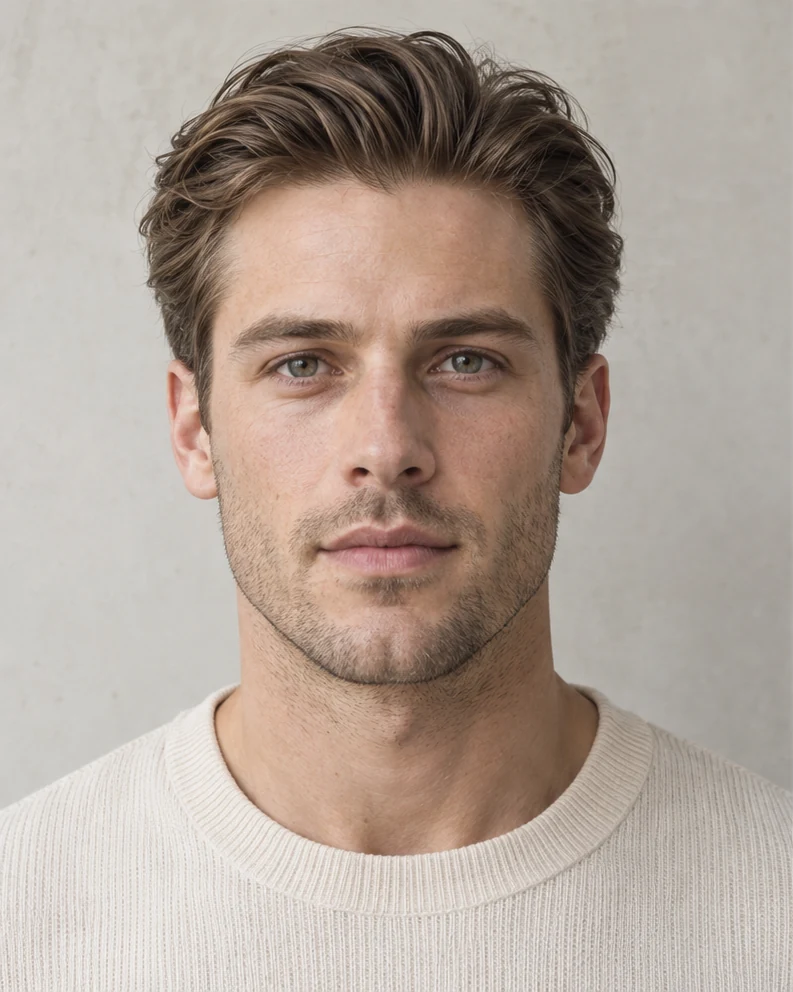

AI-generated editorial portraits · Styling examples, not transformation results
More forehead. A different facial frame.
A fringe covers part of the forehead and introduces a new edge above the brows. Moving it away reveals more of the upper face. Compare the amount of exposure before changing top height or side volume as well.
- Look for
- Where does the hair end relative to the brow frame?
- Your comparison
- Compare your usual fringe with it gently moved aside. Keep expression, beard and camera position unchanged.
One relationship. One controlled comparison.
You notice a long-looking outline but have not separated face proportions from hair and beard framing.
Keep the beard unchanged and compare reduced hair volume. Use the same front and side references. Describe whether the overall balance changed, rather than claiming that a facial ratio improved.
Your facial-harmony comparison
Use the prompts to turn this guide into your own next step. The examples are suggestions; write what fits your situation.
Did the change affect the relationship you meant to test? Record what remains uncertain.
Add a note to any prompt to continue. Your notes stay on this page. Download a text file before leaving.
A few useful clarifications.
01Can a face have good harmony without equal facial thirds?
Yes. Facial thirds are one descriptive framework, and the rest of the face still matters. Visible widths, feature shape, hairline, profile and personal aesthetic preference all affect how the portrait reads. An unequal division is not automatically a problem to fix.
02Should I use the beard edge when measuring the chin?
Record the distinction. A beard edge belongs to the visible silhouette, while a facial landmark is intended to describe the face beneath it. Comparing one with the other can make a styling change look like an anatomical change.
03How many harmony changes should I test together?
Begin with one clearly defined change. Keep the other major framing variables steady so you can explain the result. Once you know your preference, test how it works with a second adjustment.
Where your next question leads.
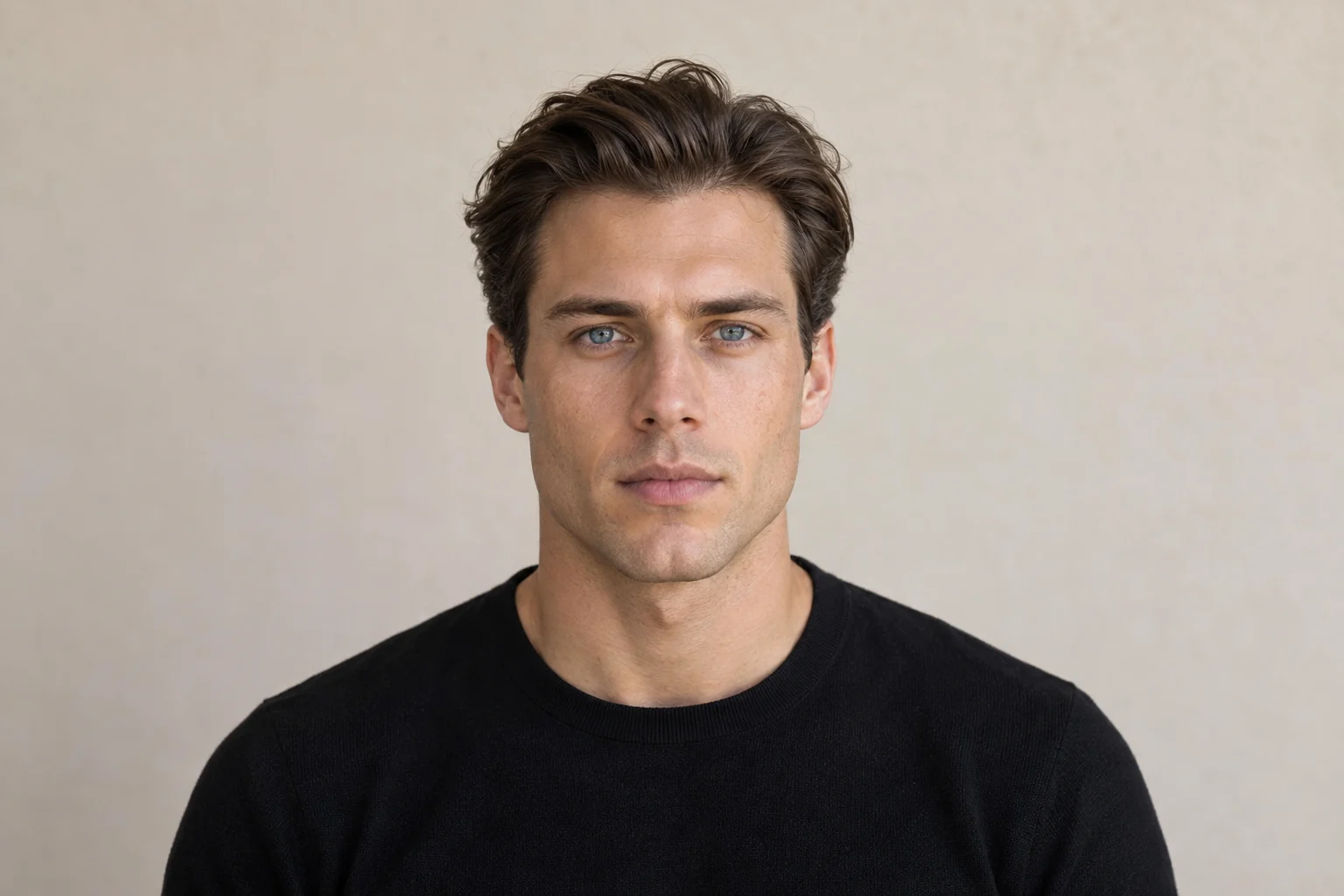
Facial thirds and midface ratio: read your proportions.
Learn how to assess facial thirds, distinguish midface ratios and interpret a longer lower face, with a worked measurement example and worksheet.

How to looksmaxx: a beginner’s guide to your first plan.
Learn how to looksmaxx with a face audit, clear priorities and practical steps for facial harmony, jawline, eyes and skin. Build your first plan.
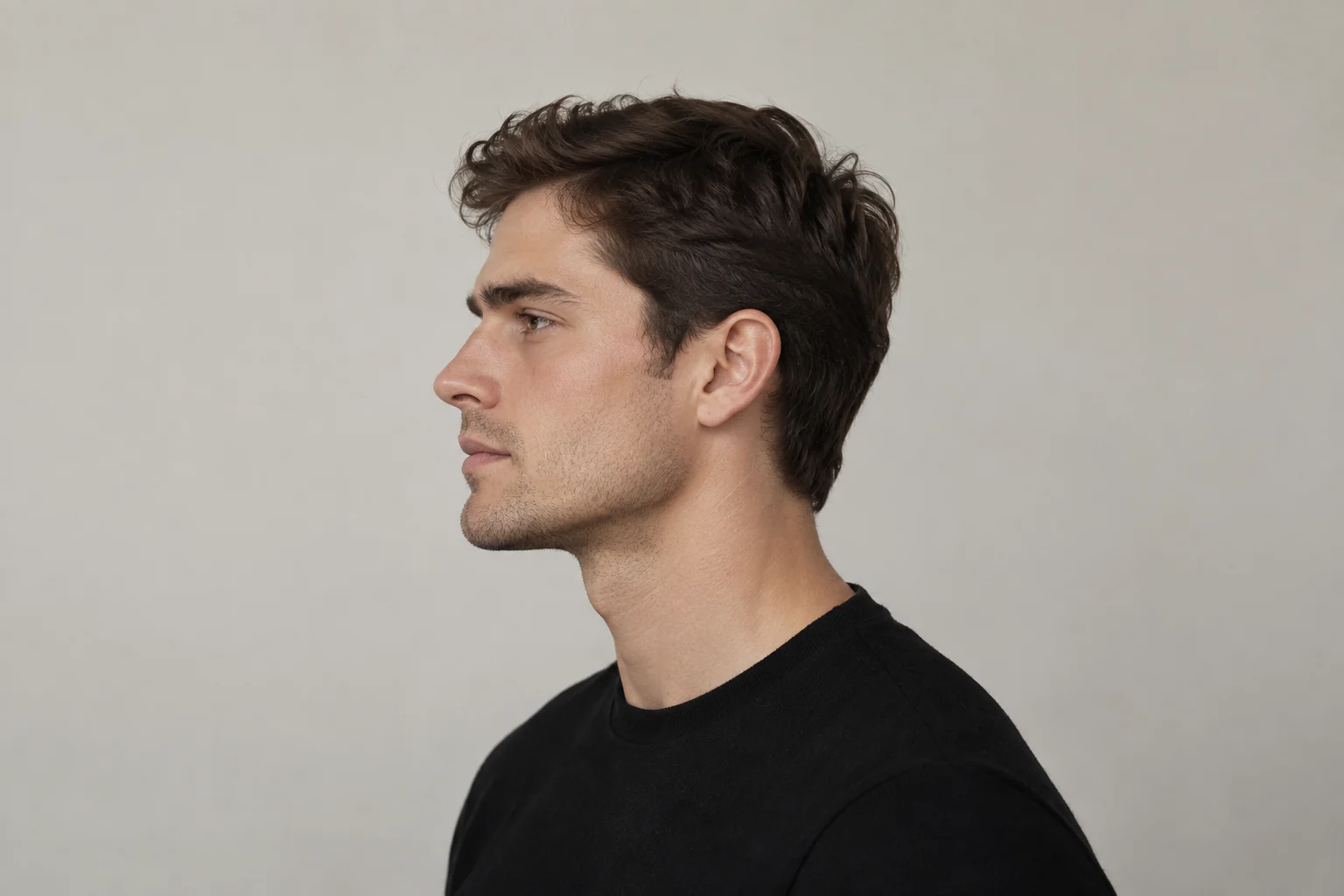
Jawline definition: separate structure, framing and the photo.
Understand jawline definition, chin and profile balance, beard framing and mewing claims before choosing your next looksmaxxing step.