

Hat size guide: start with the fit question
This hat size guide helps you turn a head measurement into a useful try-on question. The aim is a cap or ordinary hat that stays in its intended position without uncomfortable pressure. You will measure once carefully, compare the result with the exact model’s chart, and decide what still needs checking in person. An optional MogRise planning example can organize those steps; it cannot measure your head or certify a fit.
A circumference is clothing information, not a judgement about your face, attractiveness or body. It does not tell you which silhouette you must wear. Keep the task separate from appearance scores and repeated photo checks. The useful outcome is a short note containing a measurement, its unit and the relevant model, followed by a comfortable real-world trial.
This method concerns everyday headwear. It is not a fitting procedure for a protective helmet, medical device or specialist safety equipment. Follow the dedicated instructions and professional fitting requirements for those products instead of borrowing a casual cap routine.
Choose the actual headwear before reading a chart
Identify whether you are checking a fixed-size hat, an adjustable cap or a stretchy knitted item. A fixed-size piece has no closure to make it smaller. An adjustable cap has a stated adjustment range, while a flexible item may be sold by a range rather than one circumference. Those descriptions tell you which product information to look for; they do not guarantee a comfortable fit.
If you already own the item, place it nearby. If you are considering one, save the exact product name and its own size guide. A chart from a different brand or another style may not answer the same question. Do not transfer a letter size simply because both labels say medium.
Decide what you need today: check an existing cap, prepare a store visit or clarify a size question before ordering. Keeping that decision visible prevents a brief measurement from turning into an unnecessary search for a new wardrobe.
Prepare a flexible tool and an ordinary hairstyle
Use a soft measuring tape that can follow the intended hat line without standing away from the head. If none is available, a nonstretch string or narrow strip can record the circumference for transfer to a ruler. A rigid ruler itself is not suitable for wrapping around your head. Do not use elastic that changes length as you hold it.
Leave your hair in the way you expect to wear it with the cap. You do not need to press it flat, pull it tightly or alter your haircut to produce a preferred number. Remove anything that obstructs the intended band position. Ask another adult to help if you cannot keep the tool level and read it comfortably at the same time.
The photographs show an unmarked strip as a preparation aid, not a readable measurement result. Its length would still need transferring to an actual measuring scale. No number can be inferred from the pictures.

Measure where the band is intended to sit
Follow the model’s measuring instructions. For an ordinary hat, guide the tape around the intended sitting line, generally across the forehead and above the ears, keeping it comfortably in contact rather than pulling it tight. Read the circumference where the tape meets its start and record the unit. With string or a strip, hold the meeting point, remove it and measure that length flat.
The manufacturer’s Stetson fit guide demonstrates the flexible-tape or string method and relates it to its own chart. Use the measuring principle, rather than treating that brand’s sizing choices as a rule for every cap. Its suggestions about padding are not instructions to alter an unfamiliar item yourself.
Do not keep tightening the tool until the reading moves into a desired size. If the tape slips, catches hair or sits on an ear, correct its position before recording anything. You are trying to capture the intended wearing line, not the smallest possible circumference.

Resolve a doubtful reading before choosing a size
If the first reading is difficult to see or obviously shifted, take the tool off and make one careful repeat. Compare the setup, not just the figures. Was the line at the same height? Did the strip stretch? Did you include an unintended loop of slack? A second reading is useful when it answers one of those concrete questions.
When results still differ substantially, ask someone to check the tool and its position. Do not select whichever number looks more appealing or repeat the measurement indefinitely. Put the task aside if the process becomes uncomfortable. A clothing professional can help with the actual headwear and a suitable measuring tool.
Record what you actually read, including the unit. Avoid silently rounding, adding an allowance from an unrelated tutorial or turning a rough reading into several decimal places. If the seller asks for a particular format, clarify how they want an intermediate value reported.
Match the record to the exact model
Open the chart for the item you identified. Find the unit heading before following a row. Centimetres, inches, letter labels and fitted-size fractions are not interchangeable labels. Use the supplier’s stated correspondence for that product rather than copying a conversion from memory.
For a fixed-size cap, note which published entry your measurement corresponds to and whether it falls between entries. For an adjustable cap, check the stated circumference range and the closure instructions. For an elastic item, ask what its range means in wear if the product information is unclear. Do not assume that an adjustable closure removes every fit limitation.
A useful note might read: “Measurement recorded in centimetres; exact cap chart checked; between two listed entries; ask which trial size is appropriate.” This is an example of a note structure, not a report of a test or a recommendation for a particular size.
Separate circumference from construction
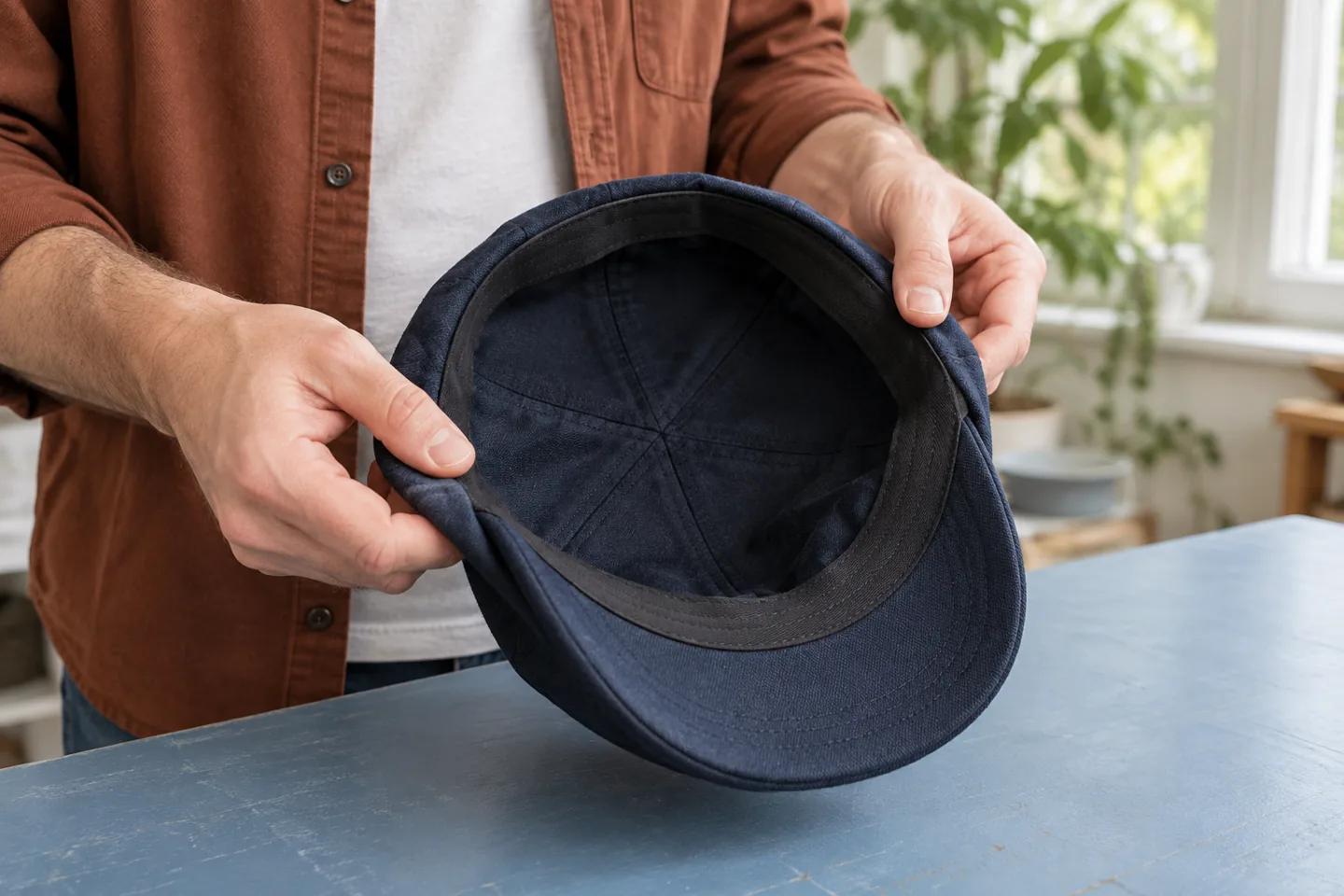
Look at the inside band and the way the cap is made. The label alone cannot show whether the crown feels suitable, whether a seam bothers you or whether the shape sits as intended. Two items can share a nominal size while feeling different when worn. That makes a try-on useful even after you have read the chart correctly.
Do not stretch, steam, wet, cut or stitch an item to rescue an uncertain choice. This guide covers measurement and trial, not home alteration. For a borrowed or returnable cap, preserve its condition and follow the owner’s or seller’s handling instructions. Ask before making any change to the band.
The same distinction is useful when checking other clothes: a size label is a starting point, while the garment still needs to work in use. Our wardrobe fit audit helps organize that practical check without turning every difference into a body problem.
Treat an intermediate size as a question
If your result falls between two published sizes, read that model’s own guidance. If none is given, contact the supplier with the measurement, unit and model name. Ask which size they suggest trying and what adjustment, if any, that specific construction allows. Do not assume a universal rule to size up, size down or add a fixed amount.
For example, you might ask: “My reading lies between these two entries in your chart. This is a fixed-size cap. Which would you suggest trying first, and what should I check during the trial?” This gives the seller a precise question without inventing a fitting guarantee.
Check the current return or exchange conditions separately if you intend to order. This article does not promise that an item is returnable or quote a retailer’s policy. You can also choose an in-person fitting when an online description leaves too much unresolved.
Make the try-on a comfort and movement check
Place the headwear in the intended position without forcing it down. Notice whether the band rests comfortably and whether the brim obstructs your ordinary view. Turn your head, look down naturally and walk a few steps in a suitable indoor setting. You are checking everyday use, not staging a wind or sports test.
If it slips noticeably or feels restrictive, take it off and ask about another size or model. Do not tighten an adjustable closure simply to make movement impossible, and do not accept discomfort as proof of a secure fit. A short trial cannot establish all-day comfort, so describe it honestly as an initial check.
One focused trial is more useful than many nearly identical selfies. The guide to tracking style without overthinking can help you keep the check connected to a real question. You do not need a face score to decide that a band feels wrong.

Use an optional Coach question to organize the next step
MogRise is our publisher’s app. Its existing product description includes personal plans, manageable actions and Coach follow-up questions about implementation and alternatives. Those features can help organize a preparation task, but they do not provide a measuring instrument or replace a supplier’s model-specific advice.
If you already use the app, a focused prompt could be: “I want to check one cap. I have recorded a circumference and found the product chart. Help me make a short list of questions for the seller and a simple try-on check.” This is an illustrative prompt, not an account of a tested response or a promised app outcome.
Keep the technical decision with the appropriate source. Do not ask the app to infer circumference from a selfie, certify a particular size or assess health from pressure marks. A paper note can hold exactly the same preparation information if you prefer completing the task without an app.
Close the task with a decision you can explain
Finish by choosing one next action: keep an item that works in the initial trial, ask the supplier a specific question or arrange another fitting. If you have insufficient information, “not decided yet” is a valid result. You do not need to buy something to make the measurement worthwhile.
Keep only the useful context: model name, unit, measurement and the practical issue you noticed. Avoid building a daily log of head measurements. Revisit the information when you have a real reason to check a different product or when the supplier asks for clarification.
If preparing clothes and accessories usually becomes rushed, a plan that fits your life can help you set aside a manageable preparation interval. The purpose is an easier next step, followed by getting on with your day.
Frequently asked questions
Is a hat size the same as head circumference?
Some charts connect a numerical size to a circumference, while others use letters or fitted-size systems. Read the unit and correspondence in the exact model’s chart. Do not assume that the same label means the same fit everywhere.
Can I use a string instead of a tape?
A nonstretch string or strip can record the line for measurement against a ruler afterwards. Hold the meeting point carefully. The strip alone does not provide a number, and an elastic material makes the transfer unreliable.
Should I choose the tighter size so it stays on?
Do not use uncomfortable pressure as the goal. Consult the model’s intermediate-size guidance and try the item appropriately. If a cap slips or restricts you, ask about alternatives rather than forcing the closure.
Can MogRise determine the size from my photo?
This workflow does not claim that capability. The optional app step organizes questions and actions. Your physical measurement, the actual product chart and a real try-on remain the basis for the clothing decision.