
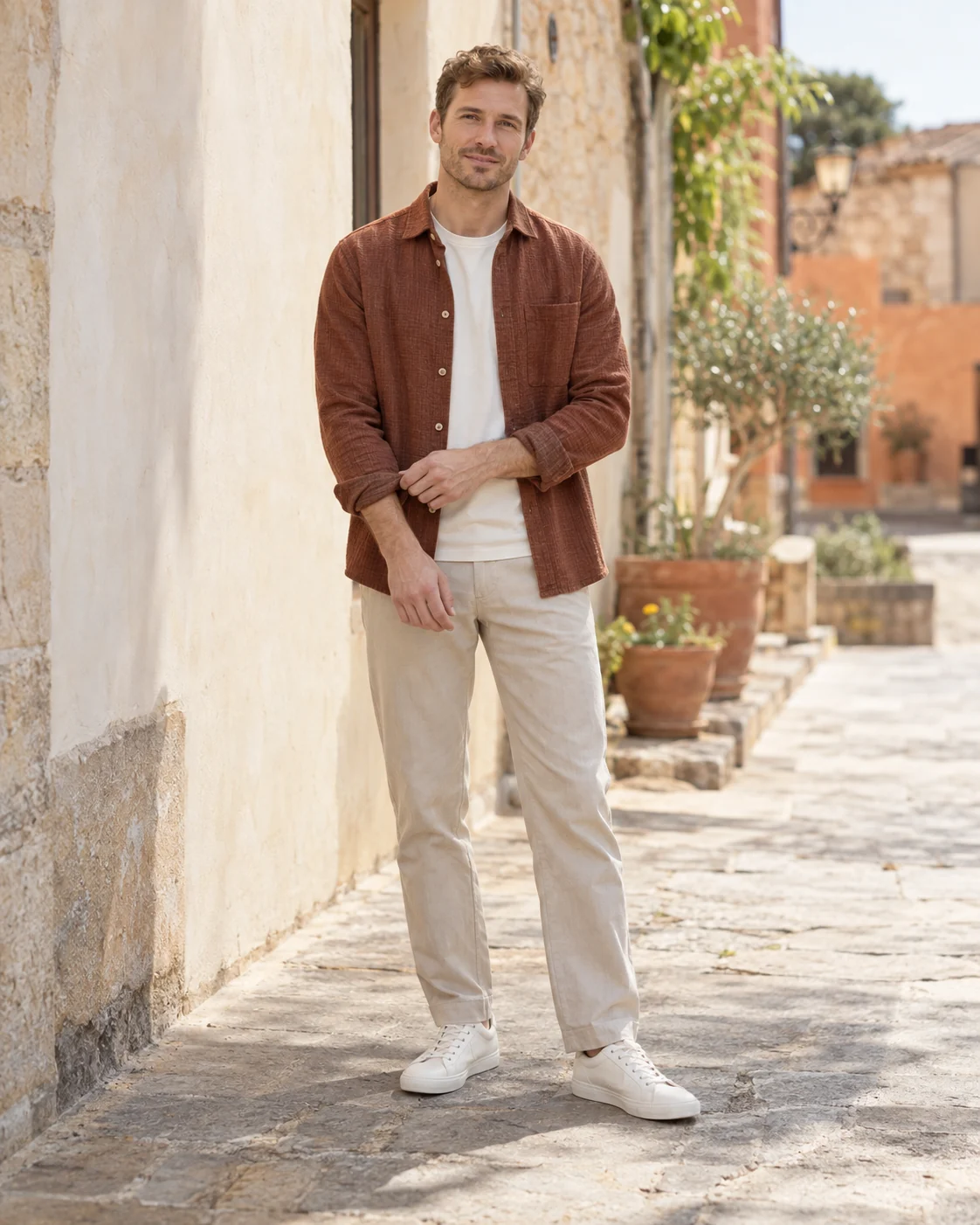
Your face. Your frame.
One complete silhouette.
- Bring
- A full outfit and a head-and-shoulders reference.
- Keep
- One piece you already enjoy wearing.
- Leave with
- A framing or proportion adjustment you can repeat.
Style supports looksmaxxing by framing the face and shaping the visible full-body silhouette. Begin with the neckline and shoulders, then compare the relationship between top length, trousers and shoes. This audit turns those observations into a specific adjustment using the clothes you already own.
Start with the frame around your face
Start with your usual hairstyle and glasses, then compare the boundary created by the neckline and collar. Note how much neck is visible and where the shoulder line sits. Choose one visual question before changing the entire outfit: the frame nearest your face, the torso outline or the top-to-trouser relationship.
Use an ordinary occasion to keep the comparison grounded: the clothes still need to suit the weather, movement and dress requirements. Hold one anchor piece fixed and assemble the complete outfit. First compare the head-and-shoulders frame; then step back to review the full silhouette, including the shoes.
- The occasion: where you are going and what the day involves.
- The anchor: one piece you want to keep in the outfit.
- The question: the specific thing you want to make easier or change.
Read shoulder fit before the torso silhouette
Sit, walk, reach forward and use your pockets. Notice where a garment restricts movement, slips or needs repeated adjustment. Name the location and the movement: “the shirt pulls when I reach” is much more useful than “this fit is bad.”
Roomy, close-fitting, cropped and long are different styling choices. None is a universal target. Decide whether you have a comfort problem or simply prefer a different outline. Changing size may affect several areas at once; a different cut can be a more useful comparison.
What you notice → what to try.
| If you notice… | Check this | A useful comparison |
|---|---|---|
| The shirt pulls when I reach. | CHECKMove your arms while wearing the actual layers. | TRYCompare another cut or size. Check the shoulders and sleeves again, too. |
| I keep adjusting the waistband. | CHECKSit, walk and check it with your usual pockets in use. | TRYTry another rise or waistband fit before choosing a new silhouette. |
| The outfit feels heavy at the bottom. | CHECKLook at the hem and shoes together from the same distance. | TRYCompare another existing trouser length or shoe. Change only one. |
| The pieces work, but the finish feels off. | CHECKSeparate a care task from a styling preference. | TRYHandle the care task, then reconsider the complete outfit. |
Compare upper- and lower-body proportions
Look at where the top or jacket ends relative to the trousers. Then look at how the trouser hem meets the shoes. Change only one of those relationships for the first comparison. Leave the camera position, shoes and anchor piece alone so you can describe what the swap actually did.
A shorter layer can reveal more of the trousers. A longer layer can create a line you prefer. A little fabric resting on the shoe and a cleaner hem create different finishes. The useful question is which version suits your taste, movement and occasion, rather than which follows a supposed rule for your body type.
Try an existing alternative first. A temporary fold can help you explore a length, but it does not show exactly how an alteration will hang. Ask a tailor what is practical before making a permanent change.
Same starting point.
Two separate questions.
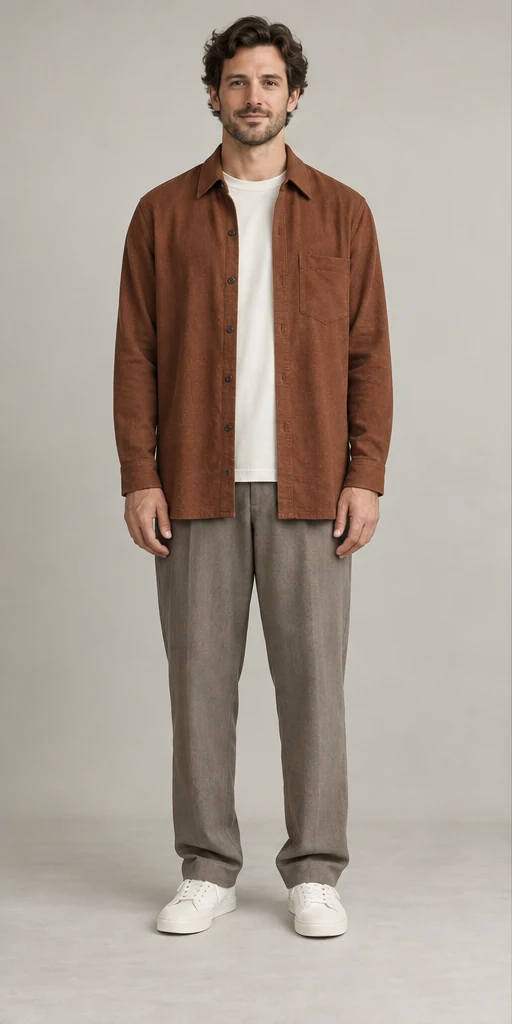
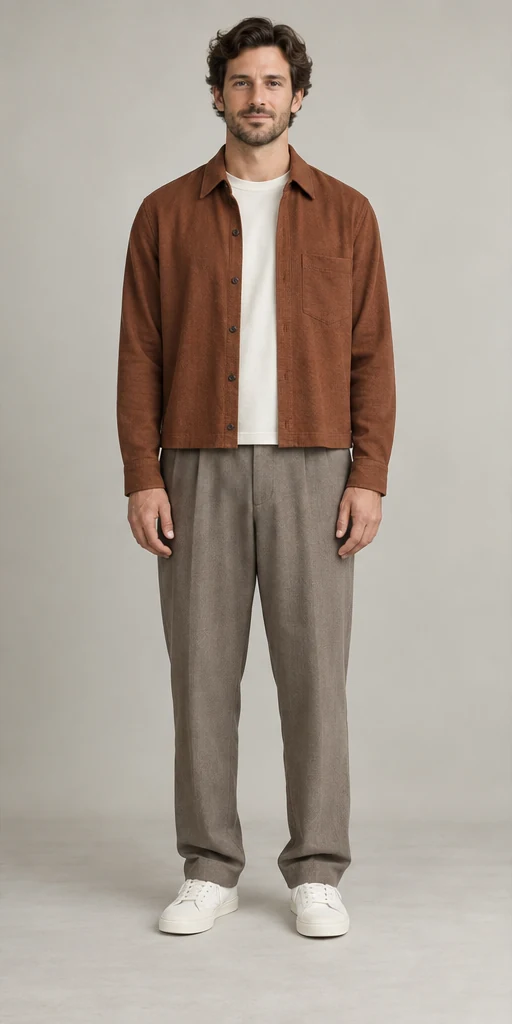
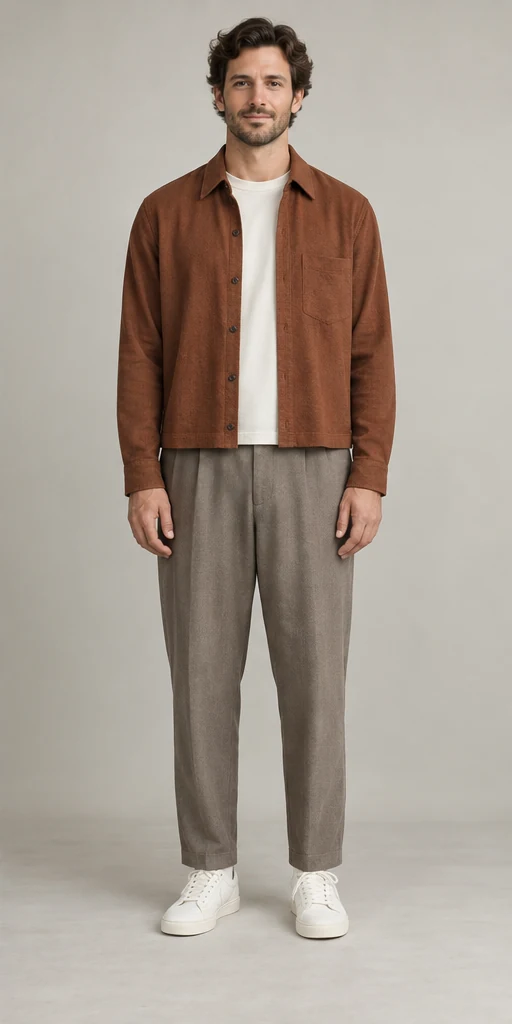
Follow the change from 01 to 03. These are styling options to compare; the final choice is your preference.
Keep a reference
A longer overshirt, relaxed trousers and light shoes. Name what you already like before changing anything.
Try a shorter layer
The trousers and shoes stay the same. A shorter layer reveals more of the trouser line; decide whether you prefer that relationship.
Explore the hem
Keep the shorter layer and shoes. Explore a cleaner trouser break, then check how it looks and feels while walking.
Keep the successful parts. Explore the next detail only if you still have a question.
AI-generated editorial photos. Garment lengths are styling examples, not sizing or tailoring measurements.
Control visual weight around the face
If the shape works but the outfit still feels unfinished, check its condition before changing the combination. Follow the garment care label, deal with a loose button and clean the shoes using an appropriate method. A maintenance job deserves a maintenance note; it does not automatically mean you need a replacement.
Next, return to the portrait frame. Keep the haircut and glasses stable while comparing one collar, neckline or accessory. Identify which detail draws attention and whether that matches your intention. Then review the complete outfit again: the head-and-shoulders view and the full-body silhouette should support the same presentation.
Give every purchase a specific job
After trying what you own, write the gap as a function: “a light outer layer that works over these two shirts and is comfortable on my commute.” Add the conditions it must meet, the pieces it should work with and your budget. A clear brief makes it easier to pass on something attractive that does not solve your problem.
Try a possible purchase with the actual combination when you can. Check movement, pockets, care requirements and the return policy before committing. If a different existing piece already solves the issue, save that outfit and close the shopping list for now.
- Job: what does this piece need to do?
- Partners: which existing top, trousers and shoes will it work with?
- Constraints: what weather, upkeep and budget must it fit?
Wear it, then make the decision
A mirror check is the first pass. Wear the combination for the situation you chose and notice what happens during the day. Do you keep adjusting a sleeve? Are the shoes comfortable for the route? Is the outer layer useful once you leave the house?
Finish with one decision: keep the combination, adapt one detail or set it aside for another occasion. Save a photo or a short note about the pieces. Repeat the process for two other situations when useful. A few complete outfits you can reach for are a better result than an unfinished audit of everything you own.
Start the outfit comparison at the collar
The collar is the clothing boundary nearest the face. Compare its opening, height and visual weight before changing the whole outfit. A high, heavy collar can create a different relationship with the jaw and beard from a more open neckline. Keep your posture natural and use the haircut and facial hair you normally wear so the upper frame is familiar.
Try two existing tops with the same trousers and shoes. Photograph the full outfit as well as the head-and-shoulders view. You might prefer one collar near the face but find that the other works better in the complete silhouette. Write down that distinction. It gives each top a purpose rather than turning a single portrait preference into a rule for your entire wardrobe.
Give layers a structural job
An overshirt, jacket or knit can add a boundary around the shoulders and torso. Decide what the layer is doing: clarifying the shoulder line, controlling visual bulk, introducing a vertical opening or adding contrast near the face. If the job is unclear, remove it for the comparison. More layers do not automatically create a stronger silhouette.
Check the result while moving and sitting. A layer may look controlled when posed but pull, bunch or restrict you during normal use. Keep the fit observation separate from the color preference. If the shoulder line works but the garment is uncomfortable, investigate a different cut or size rather than assuming you need an entirely different aesthetic.
Build a shopping brief from a failed outfit
Before shopping, identify the exact failure in an outfit you already own. Perhaps the trouser break is heavier than you prefer, a top bunches at the waist or the shoulder seam does not sit as intended. Name that problem and decide whether an adjustment, different combination or replacement is the most useful action.
Take the existing outfit details with you when trying a replacement. Judge the item in the role it must fill, not as an isolated purchase. A garment that looks impressive alone may introduce more contrast or volume than the outfit needs. The best buy solves a defined proportion or fit problem and works with clothes you already wear.
| Outfit problem | What to compare next |
|---|---|
| The upper frame feels crowded | A simpler neckline or lighter layer with the rest unchanged. |
| The torso silhouette is unclear | A different fit or layer length before changing the color palette. |
| The lower half feels visually heavy | Trouser length, break and shoe weight in a full-body view. |
| The item works only in one posed photo | Comfort and movement in the ordinary outfit. |
Keep three outfit formulas you can repeat
Choose a small set of combinations for the situations you actually have: everyday casual, a more structured social look and a practical work or study outfit. Describe the proportions and boundaries that make each one work. You might keep an open layer over a simple top, a consistent trouser length or a shoe shape that balances the lower half.
A formula is a starting arrangement, not a uniform. Swap one element and check whether it still serves the same job. This makes the wardrobe part of your looksmaxxing system without requiring a large collection of new clothes. Save full-body references and a short note about fit so the next purchase supports the outfits rather than creating another disconnected item.
Make the guide yours.
Choose the situation and the question. Leave with a focused test you can save, try and review.
Start with one outfit
A little more clarity.
Do I need to buy anything for this audit?
Start with complete outfits from what you own. If a swap, a care task or a different combination solves the issue, you already have a useful result. Put something on a shopping list only when you can name the job it would do.
How do I know whether to change the size or the style?
Begin with movement and comfort. A different size changes several measurements together; a different cut changes their relationship. Compare both when possible. If you are considering an alteration, ask a tailor which adjustment is feasible for that garment.
What if I like oversized or very fitted clothes?
Keep that preference in the brief. This guide does not prescribe one silhouette. Check whether the pieces let you move comfortably, work for the occasion and create the outline you enjoy.
How many outfits should I check at once?
Finish one first. Wear it, make one decision and save the combination. Then repeat for another situation if it helps. Stopping after a useful result keeps the exercise manageable.
A few useful clarifications.
01How does clothing connect to facial aesthetics?
Collars, neckline contrast and shoulder structure form a visible frame near the head. The complete outfit also changes overall proportions. Compare these effects with your normal hair and beard rather than treating clothing as a separate image.
02Do I need to replace my wardrobe to start?
No. Begin by comparing existing pieces, identifying fit issues and testing two clear proportions. Buy only when you can describe the missing role an item needs to fill.
03Should I assess fit from a mirror selfie?
A mirror can help, but a stable full-body reference makes comparisons easier. Include natural posture, movement and comfort. A single posed photo cannot establish whether a garment works through a normal day.
Where your next question leads.

Glasses for looksmaxxing: frame the eyes and brows.
Compare glasses through eye-area framing, brow visibility and visual weight. Keep physical fit and facial balance in the same decision.

Facial harmony: read the relationships between your features.
Understand facial thirds, midface, symmetry and profile balance. Learn what a face analysis can show and how to use it in looksmaxxing.

Your looksmaxxing plan: baseline, priorities and progress.
Create a looksmaxxing plan for your facial priorities. Connect your baseline, chosen action, routine and progress review.