
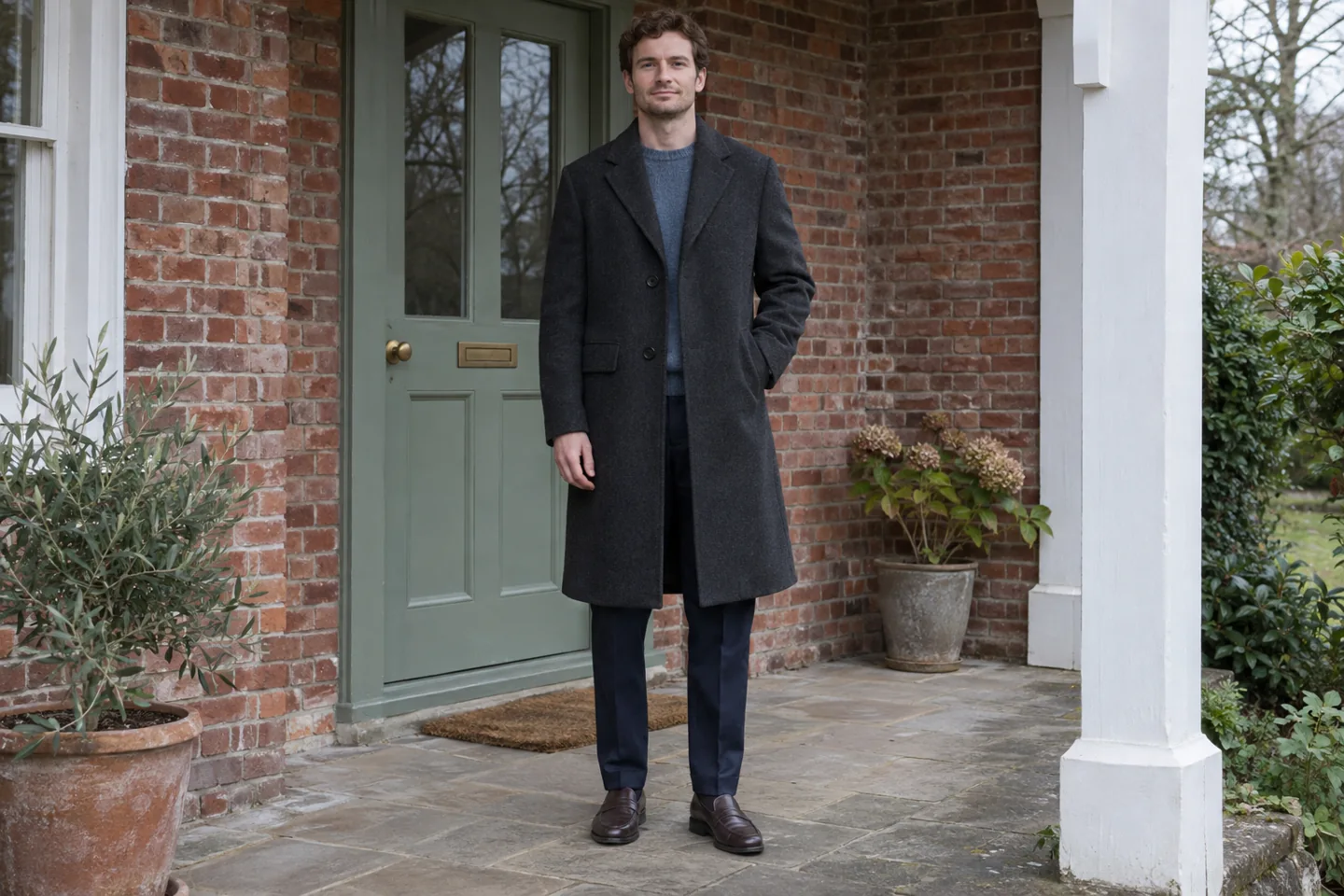
How should an overcoat fit over your usual layers?
How should an overcoat fit when you wear it over a sweater or a blazer? Begin with the layers you actually use, fasten the coat as intended and make a few ordinary movements. You should be able to reach a door handle, sit and take the coat off without wrestling with the sleeves. Look at the front and back after moving, then decide whether the combination works for the day you have planned.
Choose one coat and one likely outfit for this first check. A coat that feels comfortable over a thin shirt may behave differently over a chunky sweater. That gives you a reason to test the real combination, rather than buying another size from the label alone. Start with what is already in your wardrobe and note any specific movement that feels awkward.
Pick the outfit that belongs under this coat
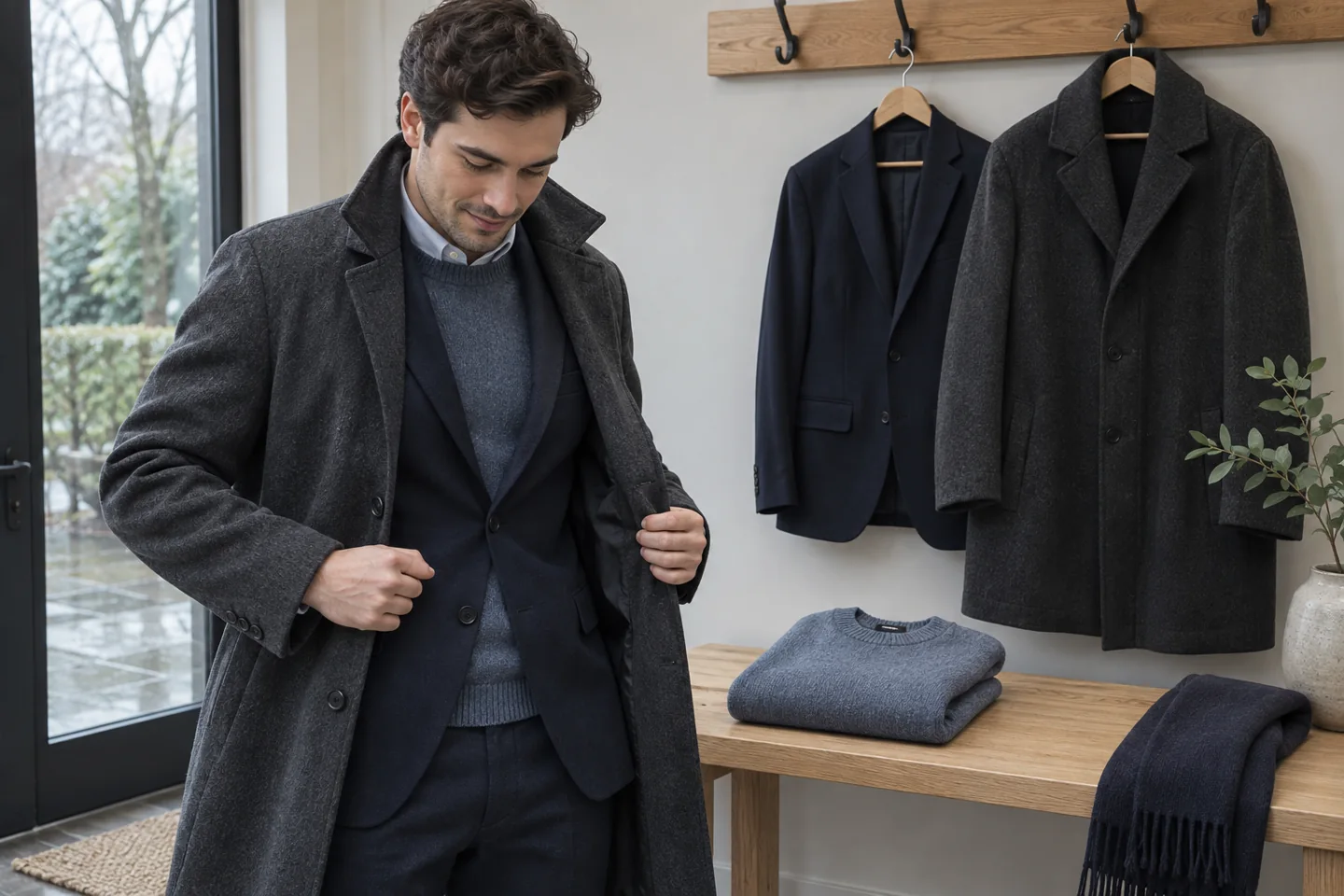
Lay out the shirt, knitwear or blazer you expect to wear. If you commute in a suit, use the actual jacket for the fitting. If the coat is mainly for weekend walks, try the sweater you normally reach for. Let each inner garment sit properly before you add the coat. A sleeve rolled up inside another sleeve can make the outer layer feel tighter than it otherwise would.
Keep pockets light for the first pass. A bulky object can pull one side of a coat down and distract you from the fit of the layers themselves. After you have checked the basic combination, add the items you normally carry. The wardrobe fit audit helps you choose a real outfit to assess, so you can finish with a decision about something you will wear.
Put the coat on without arranging every seam
Slide one arm and then the other into the sleeves, letting the inner sleeves follow. Smooth anything that has folded up at the cuff. Settle the collar once and let your arms rest at your sides. If you have to pull the whole coat sharply downward each time, look at where the inner layer is catching before judging the overall size.
A relaxed cut and a close cut can both be deliberate designs. Look at the model’s description so you know which you are trying. You do not need to move a shoulder seam to an imagined universal point. Notice instead whether the coat sits comfortably over the layer, whether the sleeve lets your arm move and whether the fabric returns to its usual position after a few steps.
Close it the way you intend to wear it
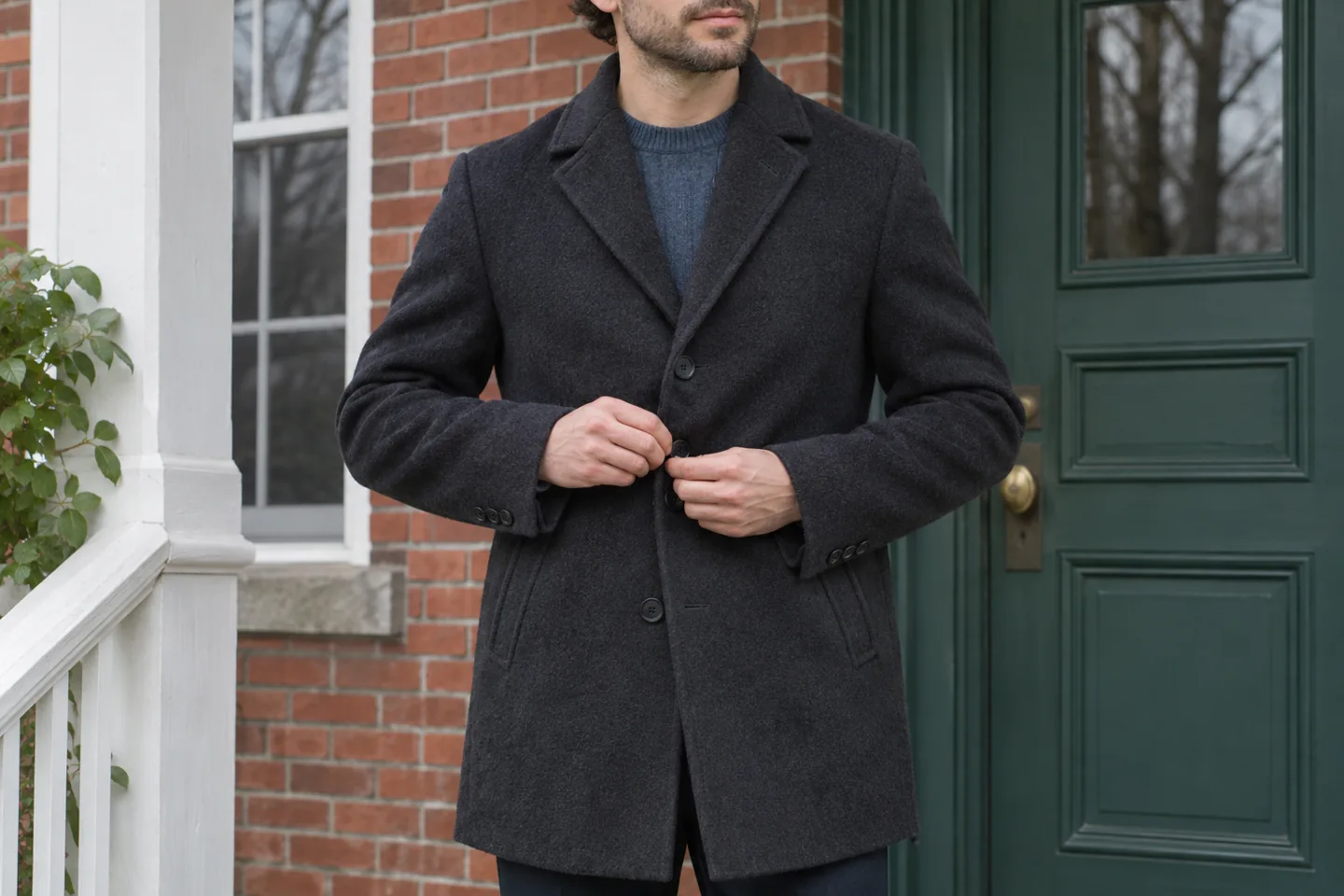
Fasten the buttons or zip according to the design. Use the same arrangement you would choose outdoors, rather than closing an extra decorative button for the photograph. Let your hands go and look at the front. If the fastening pulls the two sides into a sharp line of tension or you can only close it by holding your breath, record that as a problem with this combination.
Try a normal breath and a small turn of the upper body. The front may move as you do. You are checking whether you can perform ordinary actions comfortably, not keeping the cloth perfectly still. An open-coat outfit can be a choice, but decide whether you also need the coat to fasten on the days you use it. If so, include that closed check before choosing it for the day.
Reach forward and check the sleeves
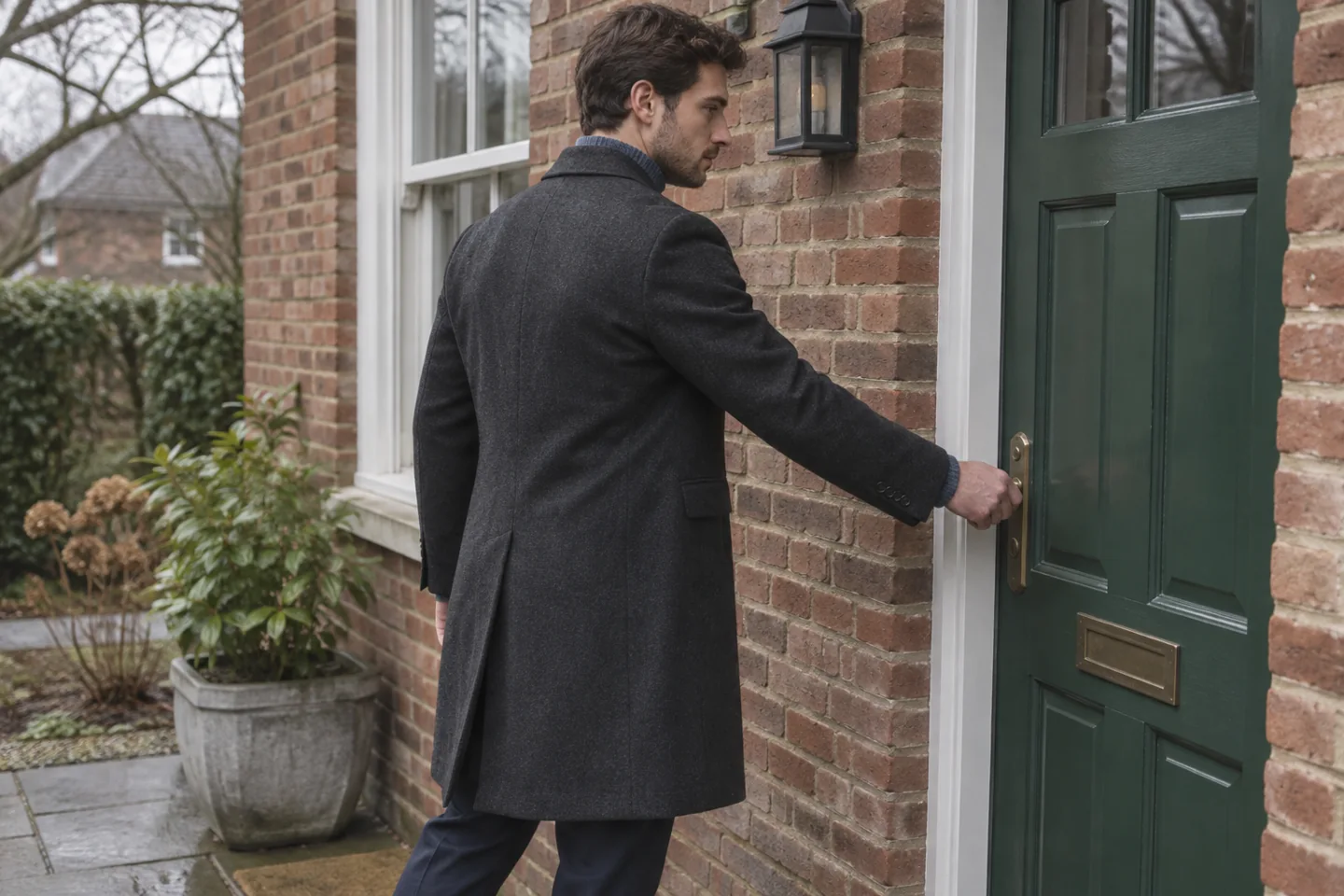
Reach for a nearby door handle or a bag on a table. Keep it an everyday movement, without stretching into an exaggerated pose. Notice where the coat catches, if anywhere. Does the inner jacket bunch at the elbow? Does the whole coat lift when you move your arm? Lower the arm afterward and see whether the layers settle again.
Check the cuffs with both arms relaxed. You may want the coat sleeve to cover the inner jacket or knitwear, depending on the outfit and the coat’s design. Then reach again and see what changes. If one inner sleeve stays trapped after you lower your hand, take the coat off and straighten that sleeve once. A repeated catch is useful information for a fitting, rather than a reason to keep pulling the fabric down.
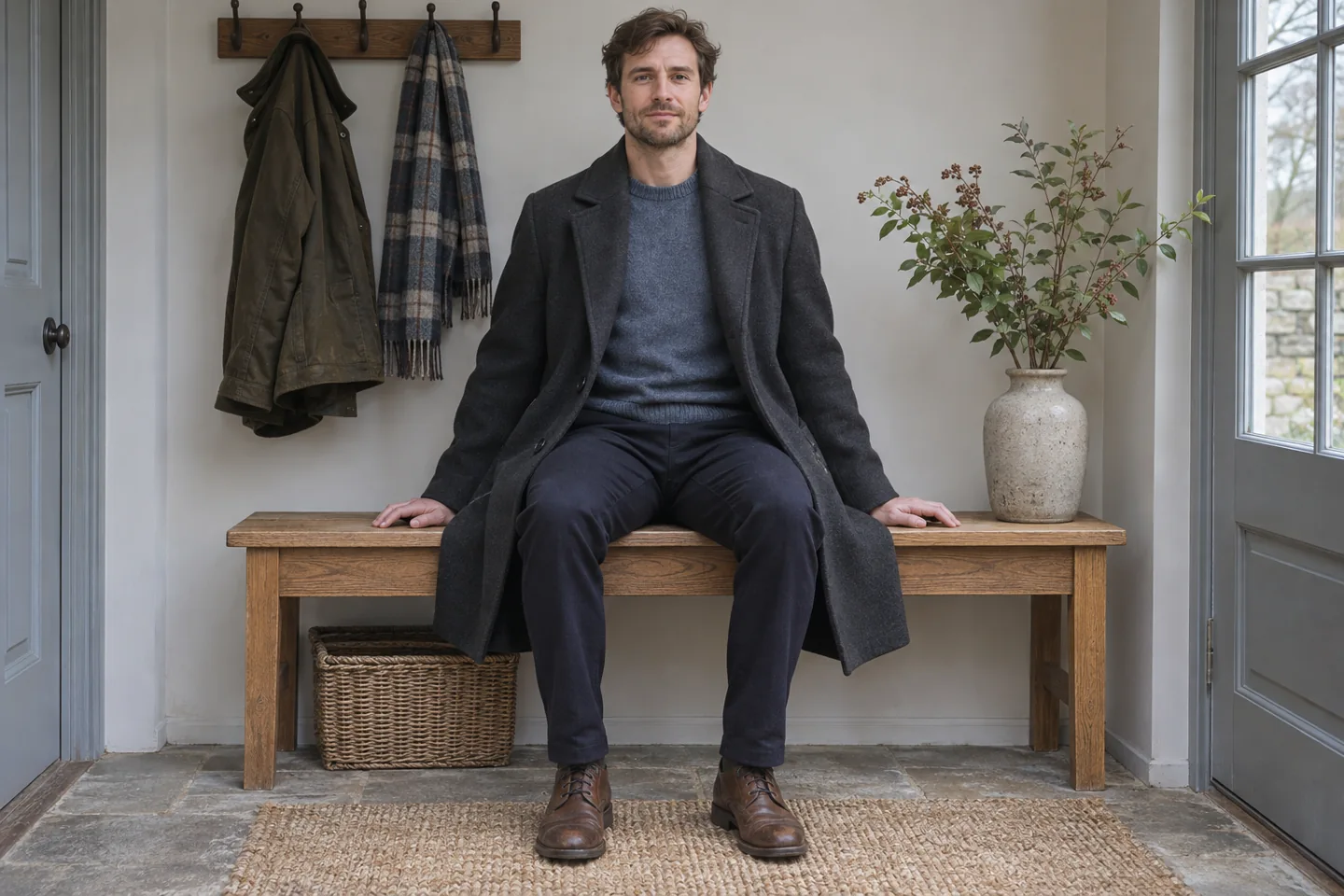
Sit down and walk a short distance
Use a chair or bench where you can put both feet down. Sit as you would while waiting for a train or talking to someone. Follow the coat’s design and your normal habit for opening it before sitting. Check whether the hem folds in a manageable way and whether the front stays comfortable. A longer coat needs a different amount of space around the seat than a short jacket.
Stand and walk a few steps. Add your everyday bag if you use one. A shoulder strap can change the feel of the coat, so look at that combination before blaming the sleeve alone. Take the bag off again if you want to isolate what changed. Finish the movement check once you understand the issue, rather than repeating each action until every crease looks the same.
Read the size chart before changing sizes
Find the chart for the exact model. Charles Tyrwhitt’s Epsom overcoat chart, for example, distinguishes body chest from garment chest and lists sleeve and back lengths separately. Those are different measurements. Use the maker’s named endpoints and units if you want to compare a reference coat or provide information to a retailer.
Avoid adding a fixed amount to a body measurement without checking what the chart already represents. A garment can have room built into its cut. If a different size is available, try it with the same layers and movements. A larger label can change several dimensions together. Compare the result as a complete coat, including its sleeves and hem, rather than treating the chest as the only variable.
Prepare one useful question for a fitting
MogRise is our publisher’s app. Its optional personal plans can help you organize a short try-on or prepare what to bring to a shop. Write the question in practical terms. “This coat catches over the blazer at the right elbow when I reach for a handle” tells you what to demonstrate. You can keep the same note on paper beside the outfit.
Use wearing comfort and the real garment to decide what to do. The app cannot feel the restriction or inspect the lining and seams. A photo may help show where the layers gather, but one clear reference is enough. The guide to tracking style progress without overthinking explains how to keep comparisons bounded. Stop when you have a usable answer or a specific question for a fitter.
Decide what this coat is for
A coat may work with a fine knit and still feel awkward over your largest blazer. Decide which use matters most. You can keep a lighter combination together if it meets your needs. If the coat has to go over the blazer for work, take both to a fitting and show the movement that causes difficulty. Ask about the garment’s construction before assuming an alteration will solve it.
If you compare two coats, use the same inner outfit, shoes and bag. Keep the comparison brief and record the practical outcome. For example, one coat may be easier to put on while another has a hem you prefer when seated. Make the choice around your ordinary day. You can return either coat to its hanger without deciding that one design is universally correct.
After the fitting, take the coat off at an ordinary pace and check that the inner sleeves stay in place. This is part of using the combination through a day. If removing the coat repeatedly pulls a blazer sleeve inside out, mention that along with any restriction you noticed while reaching.
Questions about overcoat fit
Do I always need to buy a larger size?
Use the model’s chart and try the coat over the intended clothes. Some cuts already include space for layers. A larger size may also change the sleeves and shoulder area. Choose after checking the whole garment with ordinary movement, instead of applying the same size rule to every brand.
Should I try every sweater I own?
Start with the one you expect to use most. Add one realistically bulkier layer if that is part of the coat’s purpose. If both combinations work, you have a useful answer. There is little need to test garments you would never wear with this coat.
What if it only feels tight with a bag?
Try the coat without the bag first, then add the strap. Check whether the strap catches a fold or pulls a shoulder upward. If the coat works alone but not with the bag you need, bring that combination to the fitting. Describe where you feel the change.
Can sleeve length be judged in a photo?
A photo with your arms relaxed can show where the cuffs finish. It cannot tell you whether the inner sleeve catches when you reach or how easily you remove the coat. Use the picture as a note alongside the short movement check, then ask a fitter about any change you are considering.