

How to clean an electric shaver begins with its instructions
Learning how to clean an electric shaver is easier when you separate device care from the shave itself. The immediate question is practical: which parts can you open, which cleaning method does this model permit, and where can it finish drying? A photograph of another shaver cannot answer those questions. Start with the instructions for the device you actually own, rather than copying a demonstration because the handle looks similar.
This guide helps organise a short maintenance task. It does not prescribe one cleaning liquid, brush technique or water routine for every rotary, foil or hybrid design. MogRise is optional for planning the sequence and asking implementation questions. It does not identify waterproofing, inspect cutters or decide whether a damaged device is safe.
Choose a time when you can complete the permitted steps and leave the shaver somewhere appropriate afterwards. The useful result is a device cared for according to its manual, not an object that looks polished in a close-up photograph. Appearance alone does not establish cleanliness or safe operation.
Find the model before choosing water or a brush
Look up the exact model in its manual or the maker's support pages. Match the device and attachment, not merely the brand. A rinseable head does not automatically mean that every part, cable or accessory can be treated the same way. If you cannot confirm the permitted method, postpone cleaning with water or chemicals until you have the answer.
Philips' official cleaning guidance distinguishes waterproof and dry-only devices, requires disconnection from mains power and directs readers to model instructions. It also separates ordinary cleaning from more involved head care. Use that distinction as a question to resolve for your own device, rather than assuming the page applies to every shaver.
Write down the manual page or save its public link. You do not need to copy an entire document into a planner. A note such as “model confirmed; follow cleaning section” preserves the source of the instruction and makes the next session easier to start.
Prepare a dry, uncluttered workspace
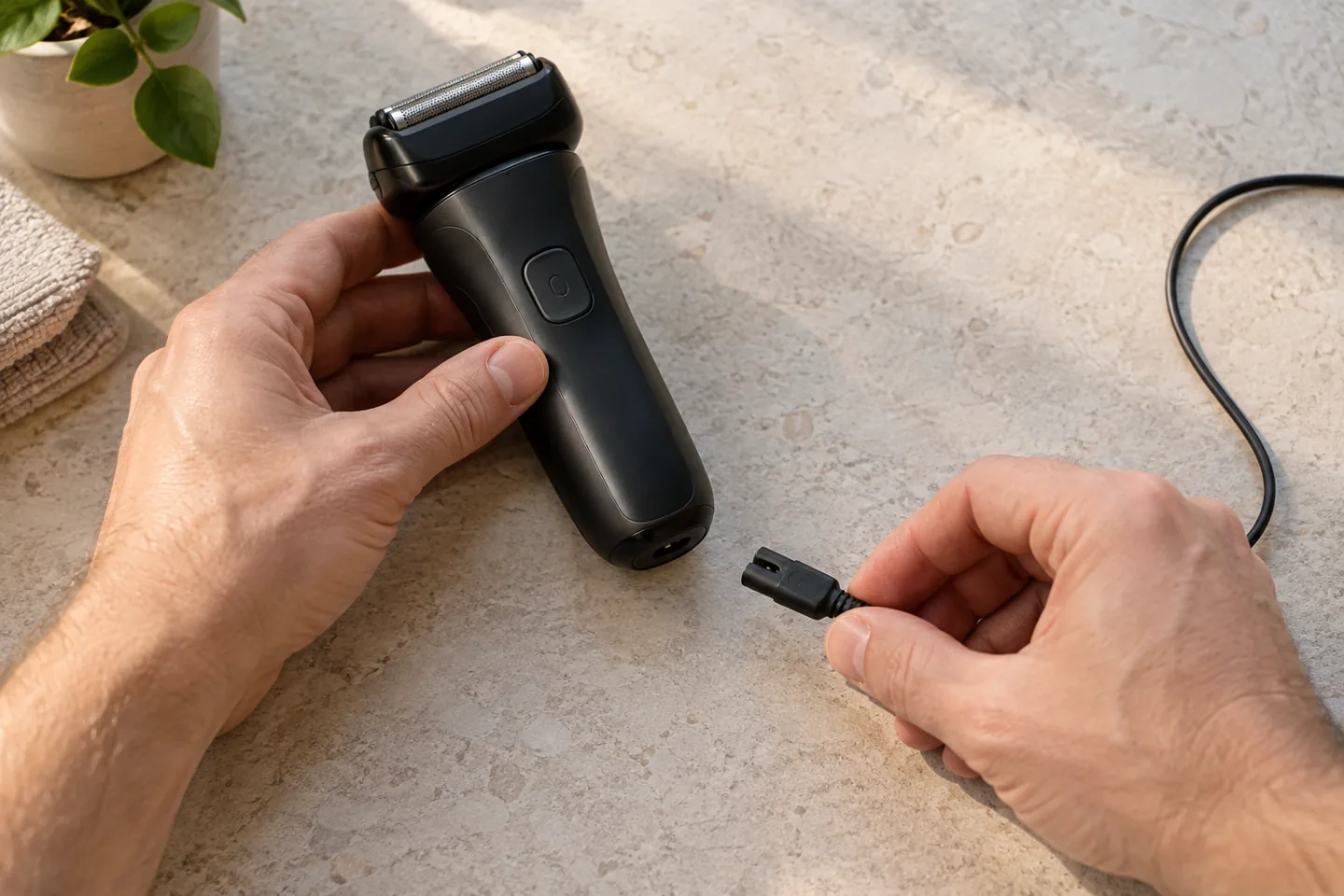
Turn the appliance off and disconnect it from its power supply before preparing the cleaning area. Keep the charger and cable away from the wet part of any permitted process. Do not use cleaning time to investigate a damaged cable, cracked housing or uncertain electrical connection. Stop and contact the maker or an appropriate service provider if something appears damaged.
Choose a stable surface with enough light to distinguish the hair chamber from delicate shaving surfaces. Move unrelated grooming tools away. Small components are harder to keep track of when several devices are open at once. Prepare only the tools and materials the manual calls for; a supplied brush is not permission to brush every surface.
Leave a separate clear place for drying or resting. That destination matters before you begin, especially if you share the bathroom. A device left beside a busy basin may be knocked or moved before the process is complete. If there is no suitable space, organise one first.
Make the first action small and specific
Open only the cleaning access described in the manual. That might be a release button, a removable top or a different arrangement. Do not pull a part simply because it appears to form a lid. If it does not move as described, stop and recheck the instructions instead of increasing force.
Decide which task you are doing today. Clearing the accessible hair chamber, following a permitted rinse and performing detailed cutter maintenance are different jobs. Starting a routine clean does not require every possible maintenance procedure at once. Keep any more involved task separate, with its own instructions and time.
For example, you might plan to finish the ordinary post-use cleaning, leave the permitted parts to dry and note a question about deeper maintenance. That is a complete small task, not an incomplete attempt at a total overhaul. It also makes it less likely that you will leave unfamiliar parts scattered while rushing to get dressed.
Keep the cleaning method within the manual
For a dry-only design, keep water out and use only the method and tools specified for that model. For a washable design, follow the stated parts, water conditions and sequence. Some instructions include powered steps; do not invent them or transfer them from another model. Keep the device disconnected from mains power and follow its specific directions exactly.
Do not add vinegar, bicarbonate, disinfectant, kitchen cleaner, fragrance or lubricant simply because a general article mentions it. Compatibility has to come from the device maker. Likewise, a cleaning station needs the correct device, consumable and procedure; it is not a universal bath for unrelated attachments.
Our simple morning grooming routine helps separate preparation from maintenance. If you are already late, choose another suitable grooming option and clean the device later with attention. A rushed improvisation is not a useful way to shorten a care task. The decision to postpone can be the most practical step.
Protect the head while handling the hair chamber
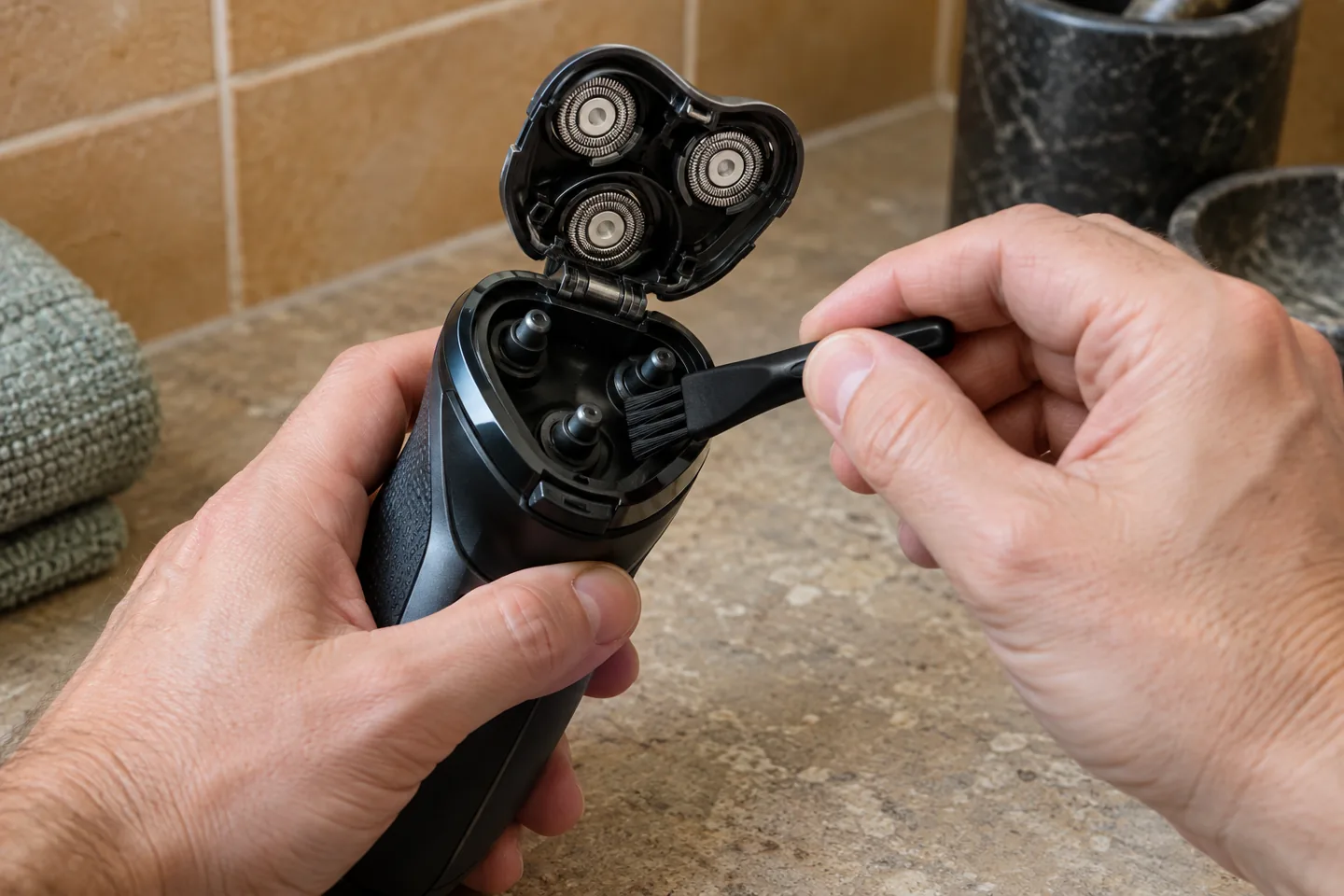
Keep track of which surface the manual permits you to touch or brush. The collection chamber and the shaving surface have different jobs. Do not scrub a foil, press on a guard or scrape a cutter with a sharp tool to make a visible speck disappear. If ordinary permitted cleaning does not remove a deposit, ask about the correct next step.
Avoid disassembling individual cutter sets during a quick routine unless that is explicitly part of your model's instructions. Where paired parts must stay together, keep their order clear. A generic photograph cannot show the internal matching or orientation of a different head assembly.
Work on one device at a time. Place any permitted removable piece in a deliberate location and check it before reassembly. Do not use a repeated close-up inspection to search for a flawless surface. The relevant question is whether you have completed the specified procedure and noticed a practical problem that needs support.
Give drying its own place in the sequence
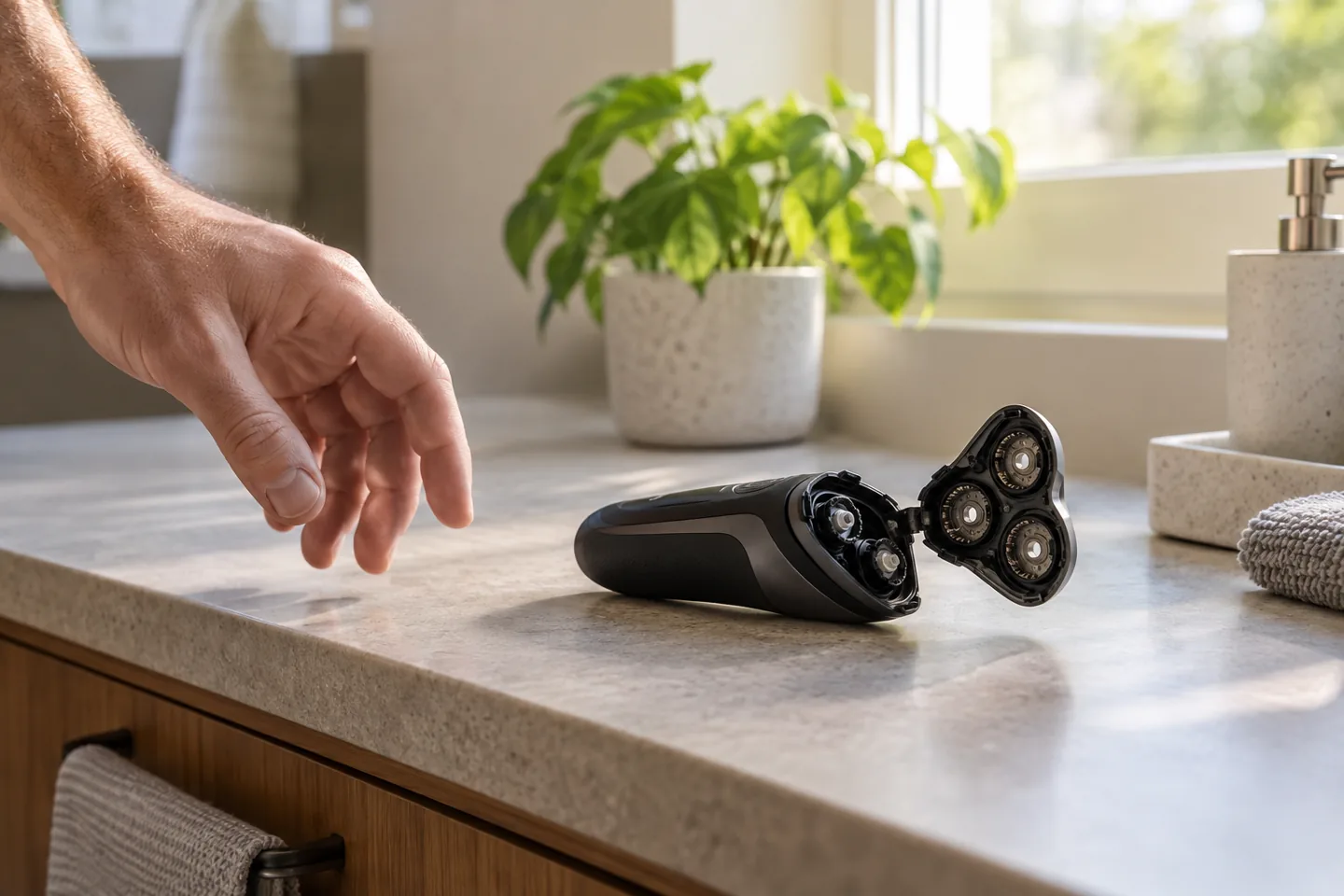
Where washing is allowed, complete the specified draining and drying steps before use, closure, charging or storage as directed by the manufacturer. Air drying needs an appropriate resting place and time. Do not force the process with a hairdryer, a radiator or rubbing a delicate shaving surface with a towel unless the maker specifically directs that method.
Drying is easy to forget because it happens after the active hand movements. Treat it as a separate state: cleaning done, device still resting. A simple note can distinguish that from ready to put away. Avoid leaving a loose charging cable next to the device as an invitation to connect it before you have checked the instructions.
If another person needs the counter, choose a suitable designated resting place rather than closing a damp device inside a travel case. This is a scheduling problem you can solve before the next clean. It does not require buying a new appliance or adding a complicated monitoring habit.
Reassemble without using force
Once the manual's conditions are met, replace the permitted pieces in the order and orientation shown. Check that the head sits as intended. If a part will not seat, reopen the instructions rather than forcing a latch. Do not switch the device on to pull a misaligned part into place.
A rattle, visible damage, an unexpected smell or a new operating problem is a reason to stop using the device and seek appropriate support. Cleaning should not become home repair of electrical components or a way to continue using a damaged head. Do not put the shaver against your skin merely to test a suspicious part.
The realistic looksmaxxing plan offers a useful boundary for maintenance: a clear next action, including asking for help, is more valuable than repeatedly trying the same unsuccessful step. Record the model and the specific difficulty so you can describe it without guessing at the cause.
Ask MogRise to organise the routine, not inspect the device
MogRise is our publisher's app. Its official product text describes personal plans, daily actions and Coach questions about implementation and simpler alternatives. Those functions can help when the difficulty is finding time, remembering a final check or making a broad grooming plan manageable. They do not provide device certification or replace the manufacturer's instructions.
A focused question could be: “I have the correct cleaning instructions. I can do the active steps after shaving, but I forget to leave space for drying. Help me organise the preparation and finish.” A useful routine might separate setup, permitted cleaning, resting and later storage. This is an editorial example of a question, not a claimed test or a report of a generated answer.
Keep technical decisions outside that planning request. Do not ask a photo score to decide waterproofing or whether a guard is damaged. You can organise the same sequence with a paper note. The app is optional, and its suggestions should never override the actual device instructions.
Store it only when it is ready
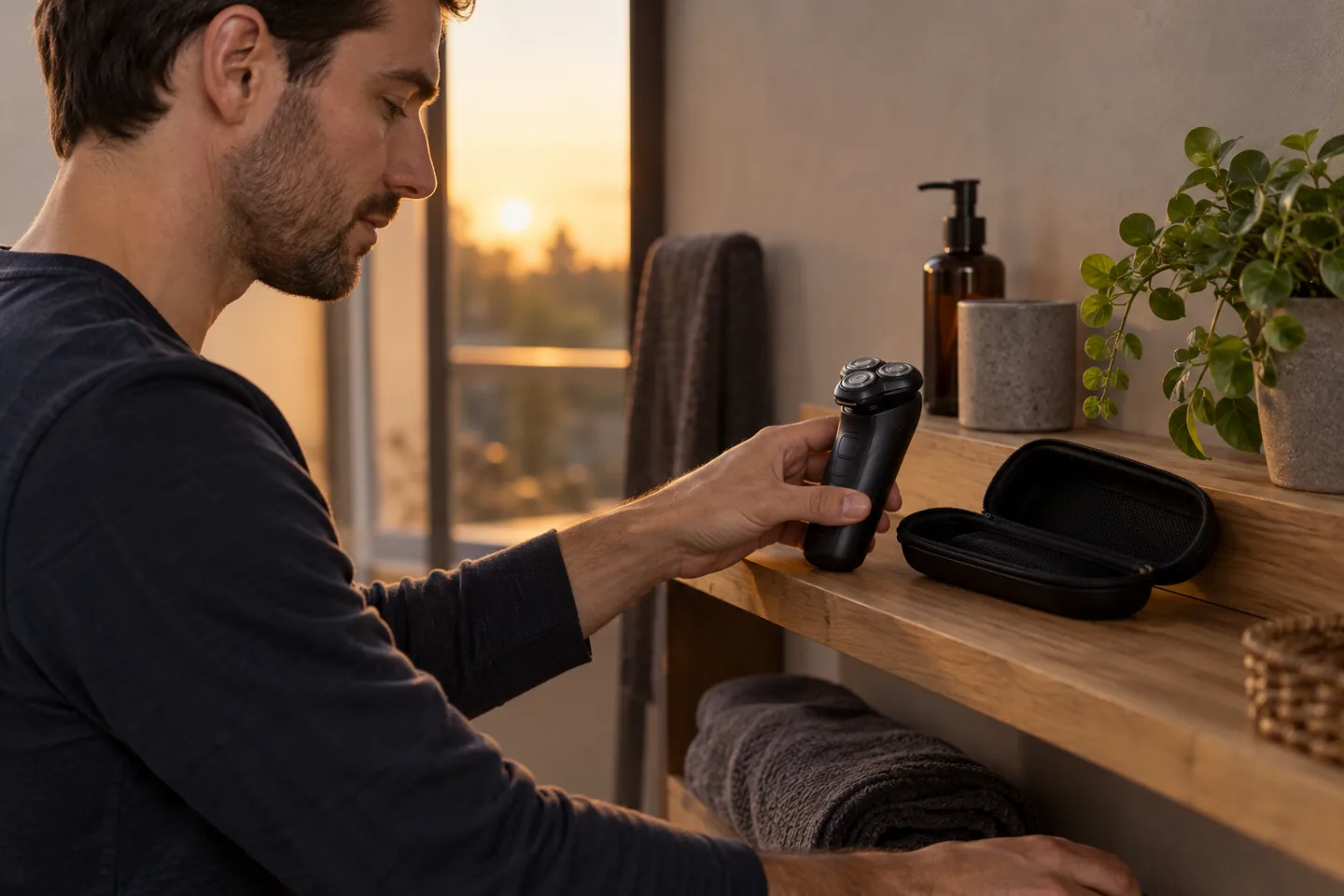
Use the storage and charging arrangement specified for your model. Keep the device and its accessories together in a way that does not confuse clean, drying and ready-to-use states. A travel case is useful only when the conditions for closing the device inside it have been met. Do not pack damp parts because the outside handle looks dry.
Put the permitted brush or other tool away after caring for it according to its own instructions. Clear the counter so the next grooming session begins with a usable space. You do not need several products left on display to prove that the routine is thorough.
Our guide to tracking style without overthinking keeps the endpoint concrete: finish a maintenance action and return to the day. A brief model-specific note is enough. Repeated device photos or appearance ratings do not add useful information about whether you followed the care procedure.
Keep routine care separate from replacement decisions
Check the manual for any separate maintenance, accessory or replacement schedule. Do not infer a universal interval from another model's advertisement. If you need a replacement part, confirm the exact compatibility before ordering. A similar-looking head is not necessarily the correct one.
A cleaning question is also different from a medical concern. This guide makes no promise about preventing skin problems or producing a particular appearance. If you have persistent skin symptoms, seek qualified advice rather than repeating a shave or increasing cleaning chemicals to experiment on yourself.
For the next session, keep four useful facts accessible: the exact model, the permitted cleaning source, the resting location and any unresolved support question. That is enough structure for a repeatable task. The goal is ordinary, supported device care with a clear stopping point, not an expanding ritual of checking every component each day.
Frequently asked questions
Can every electric shaver go under the tap?
No. Confirm the exact model and permitted parts in its instructions. Do not infer water resistance from the shape, brand or a photo of another device. Keep chargers and cables away from water.
Should I brush the shaving surface until it looks perfect?
No. Use tools only on the areas permitted by the manual. A hair chamber is not the same as a foil or guard. Ask for support when a deposit or damaged part remains uncertain.
Does cleaning mean I need to dismantle everything?
Not necessarily. Ordinary cleaning and detailed head care can be separate procedures. Follow the task described for your model and keep matched or oriented components in their correct arrangement.
Is MogRise needed to complete this?
No. It is optional for planning and implementation questions. A written sequence works too. Neither an app nor a photograph can establish electrical safety, waterproofing or the condition of hidden parts.