

- Build the minimum routine first.
- Keep skincare simple and follow product directions.
- Separate regular maintenance from the morning rush.
A daily softmaxxing routine maintains the care and framing decisions in your looksmaxxing plan. Give each step a purpose: follow your skincare directions, keep the chosen beard or brow finish, and recreate the hair silhouette. Save longer comparisons and trimming decisions for a separate session.
Keep maintenance separate from reassessment
Your morning routine should carry out decisions you already made. It is not the moment to re-score every feature or choose a different facial goal. List the steps that preserve the frame you want and follow the relevant product or care instructions.
Use a separate review to change the plan. If the hair outline is difficult to reproduce, revise the styling sequence. If a care step is uncomfortable or an ongoing concern needs attention, document it for appropriate advice. Make one specific adjustment instead of adding a new routine every day.
Start with the friction in your current routine
Notice what actually delays you: searching for tools, trying to fix yesterday’s outfit or using a styling technique you cannot reliably repeat. Write down the two recurring problems. Solving them may matter more than adding another step.
Place frequently used items where you use them and prepare a complete outfit when convenient. A practical routine is partly about organization. You can make a morning easier without buying anything or making a major change to your appearance.
Keep skincare deliberately simple
The American Academy of Dermatology describes a basic approach built around cleansing, moisturizing and sun protection. It also notes that expensive products are not required and that using too many can irritate skin. Choose products suited to your needs and follow their directions.
Introduce changes cautiously rather than combining several unfamiliar products at once. Persistent irritation, acne or another skin concern deserves advice from a qualified professional. This routine is an organizational starting point, not treatment for a skin condition.
Give hair and facial hair a repeatable finish
Use the sequence you can reproduce. If you need a styling product or tool, understand its job and the amount of time it adds. Keep a fallback for mornings when the full version is unrealistic, such as a simpler parting or a familiar hairstyle.
Put detailed beard shaping, a longer trim or experimenting with a new technique outside the rushed part of the morning. When shaving, follow the guidance appropriate to your skin and equipment rather than forcing a closer result through irritation. Keep tools clean according to their instructions.
- A normal version for an ordinary morning.
- A shorter fallback for a busy day.
- A separate time for maintenance and experimentation.
Review usefulness, not perfection
Try the routine for several ordinary mornings and note where it gets awkward. Remove a step that adds effort without serving your goal. Keep a step that reliably improves comfort, organization or the finish you want.
MogRise’s daily actions can help you keep a chosen priority visible. Use that structure to support a small routine rather than adding every suggestion to the same day. You have a workable system when you understand the steps and can adjust them as your schedule changes.
Organize the morning by dependencies
Some steps need to happen before others. Hair styling may depend on how damp the hair is; facial-hair finishing may involve tools you need ready; clothes may need a quick fit check after grooming. Write the sequence you actually use and identify the point where you usually repeat work. Moving a preparation step can solve more friction than adding a new technique.
Put the necessary tools in one accessible place and choose the everyday hairstyle finish in advance. Keep occasional decisions out of the morning: a new haircut search, product research or a detailed photo audit can happen separately. The daily routine should execute a preference you already understand, leaving you enough time to notice comfort and get on with the day.
Create a standard finish and an optional finish
Your standard finish is the version you can repeat on an ordinary morning. It should preserve the facial frame you prefer without depending on a perfect setup. The optional finish adds time for an occasion when you want it. For hair, that may mean extra volume or a more polished texture; for an outfit, a different layer or more deliberate styling.
Do not let the optional version become the unspoken minimum. Time the standard sequence and judge whether it keeps the forehead exposure, beard outline and outfit proportions you want. If it does, you have a reliable base. If one detail repeatedly fails, address that detail rather than expanding the whole routine.
Remove the step that has no clear purpose
Read your routine as a list of jobs. A care step addresses a need; a styling step creates an effect; a preparation step saves time. If you cannot name the purpose of a task, pause it for review. Multiple checks of the same feature can consume time without helping the morning finish.
Track friction for a few ordinary days. Note where you search for tools, redo the hair or change clothes after everything else is ready. Fix the repeated obstacle first. A more organized routine makes looksmaxxing easier to maintain because the preferred presentation becomes a normal sequence rather than a fresh project each day.
| Job | Useful question |
|---|---|
| Care | Does this step serve a current need and remain comfortable? |
| Hair and beard finish | Can I reproduce the preferred frame with a simple sequence? |
| Outfit | Is the combination ready and workable for today’s activities? |
| Review | Is there a specific issue to note, or can I finish here? |
A practical review after five ordinary mornings
Write actual time, the step you repeated and whether the result worked through the day. You might discover that drying the hair in the agreed direction reduces later adjustments, or that choosing the outfit the night before removes the biggest delay. Keep the observation concrete so the next change has an obvious purpose.
Your review decision can be small: move a tool, simplify one finish or ask the barber about the fringe. Avoid turning a routine review into a new facial assessment unless that is the question you intended to answer. A good morning system supports your appearance goal while requiring less attention, leaving deeper looksmaxxing decisions for a separate, purposeful session.
Leave with daily care connected to a facial goal and separate maintenance.
You have several appearance tasks but cannot explain which facial priority each step serves.
Give each familiar step a purpose: established skincare, maintaining the chosen hair frame and simple beard grooming. Put detailed contour changes or a new framing experiment into a separate slot. The daily sequence maintains the decisions you have already made.
Your daily softmaxxing sequence
Use the prompts to turn this guide into your own next step. The examples are suggestions; write what fits your situation.
Notice which step still creates a delay. Simplify that part before buying another product or extending the routine.
Add a note to any prompt to continue. Your notes stay on this page. Download a text file before leaving.
A few useful clarifications.
01Should I analyze my face every morning?
A daily routine is usually for care and presentation, not a new assessment. Use a planned review when there is a meaningful change or question. Keep the morning focused on the finish you already chose.
02What should I simplify first?
Start with the step you repeatedly redo or the preparation task that delays you. Record actual time and fix the most common friction. Remove tasks whose purpose you cannot explain.
03Can I have a different routine for special occasions?
Yes. Keep a dependable standard finish and an optional version with more styling time. This prevents the most polished version from becoming an unrealistic requirement for every ordinary day.
Where your next question leads.
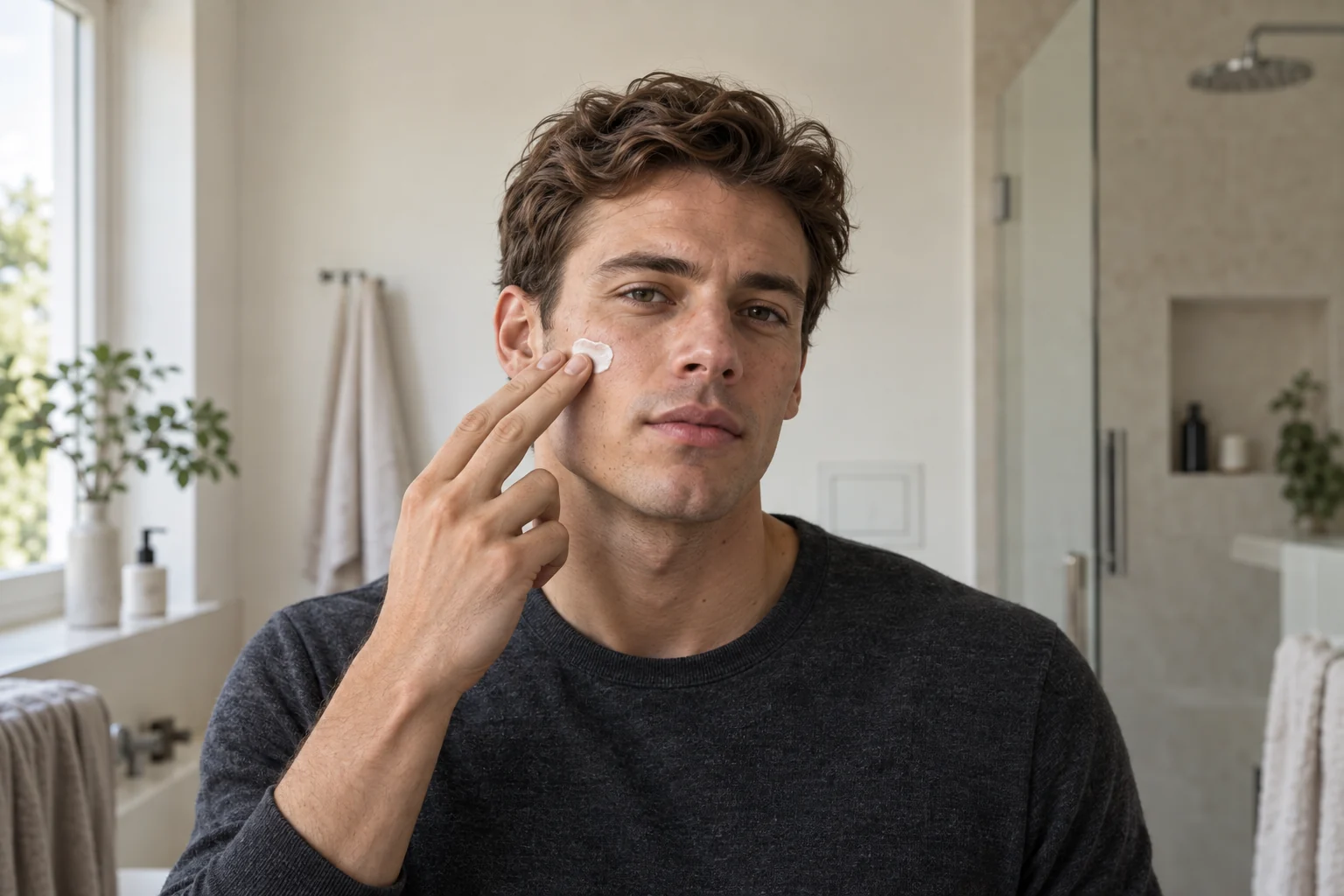
Skincare for looksmaxxing: build the base before adding more.
Build a simple looksmaxxing skincare routine. Separate skin texture, irritation and breakouts, then track care without photo-filter confusion.

Hair for looksmaxxing: build your facial-framing brief.
Choose a haircut around forehead exposure, temple width and facial balance. Turn your looksmaxxing goal into a precise barber brief.

Your looksmaxxing plan: baseline, priorities and progress.
Create a looksmaxxing plan for your facial priorities. Connect your baseline, chosen action, routine and progress review.