

How to style a side part: one short trial
Learning how to style a side part starts with the hair already on your head, rather than a picture of a different cut. The useful question is whether you can divide the top, guide the longer section sideways and then leave it alone during an ordinary morning. A soft line and a few loose strands are perfectly reasonable outcomes. You do not need a shaved stripe, a new collection of products or an app rating to begin.
This guide uses one short styling trial and, if useful, optional planning support from MogRise. We publish MogRise, so that relationship matters when we mention it. The app's documented personal plans and Coach follow-up questions can help organize an action; they do not establish the correct part for your hair. The practical decisions below remain yours, with your barber available for advice about the actual cut.
Set a useful goal before picking a side
Choose an outcome you can notice without studying your face: keep the front out of your eyes, make the top easier to arrange before work, or try a softer division than your usual brushed-back style. Pick one of these for the trial. A goal such as looking perfect from every angle gives you no clear finishing point and does not explain which action helped.
Consider the cut's available length. If the top cannot reach the direction you want without being pulled taut, accept a shorter sweep or leave the experiment for your next appointment. Very short hair may suggest a division without producing a long comb-over. Curly or textured hair may make a gentler separation more practical than a sharp line. Those are differences in the arrangement, not failures or rankings of hair types.
Prepare the top and a simple tool
Use a clean, intact comb with comfortable rounded teeth. Start with your usual preparation and hair that is manageable rather than dripping. There is no need to wash again just to run this trial. If you lightly dampen hair, keep water away from electrical equipment and use a towel to remove excess without vigorous rubbing.
The official Schwarzkopf side-part tutorial, in German describes towel-damp preparation, separating the hair and combing it sideways. We use that limited practical basis, without its face-shape prescriptions or promises about how long a result will last. This version does not require a dryer, round brush or a strong finishing spray. Put the comb somewhere accessible, check that it moves comfortably through your hair and stop if it catches or pulls.
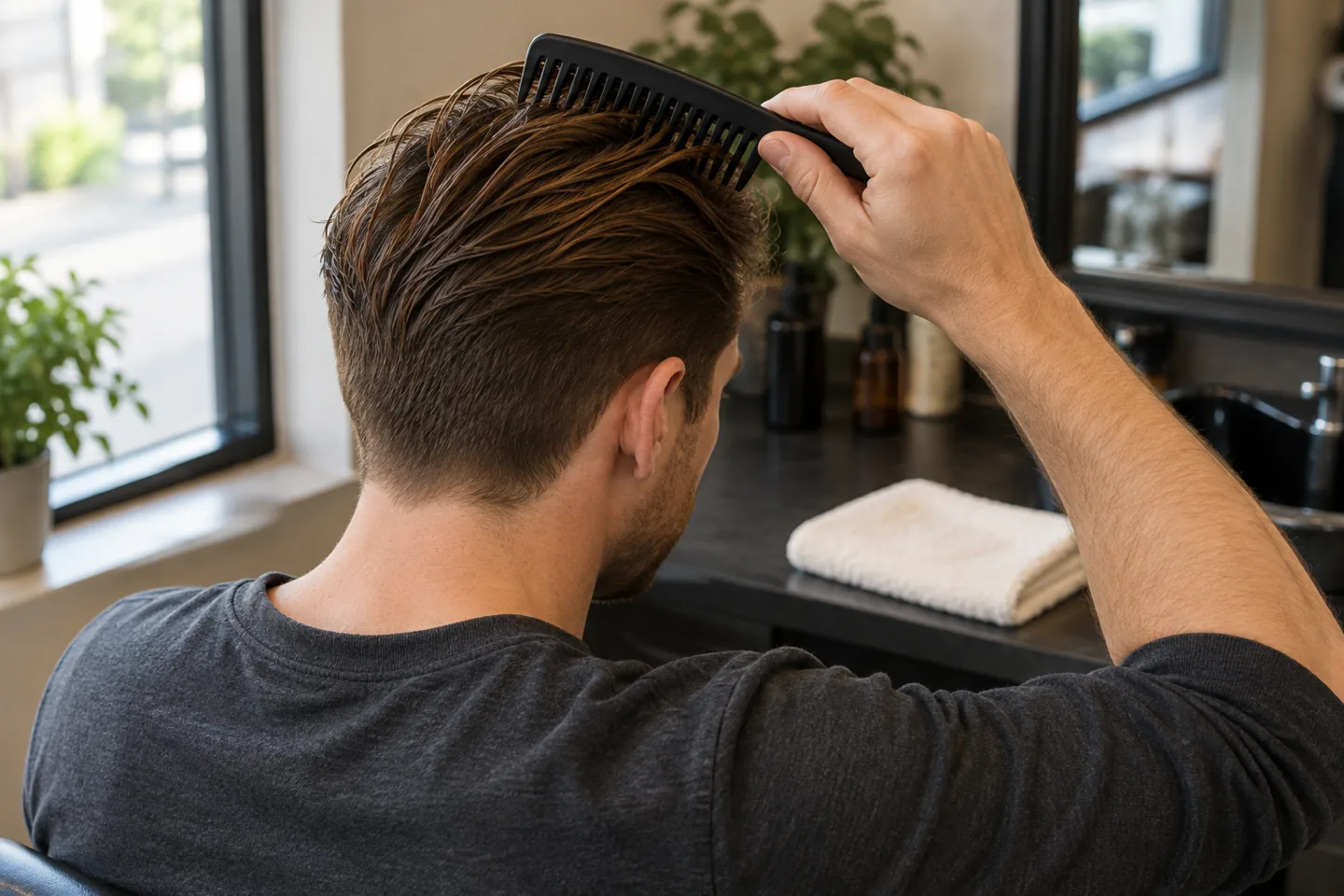
Find a separation that works with the current cut
Gently move the top back enough to see where it will divide. Try a side that the hair accepts with little effort, using the comb's rounded teeth rather than digging a pointed tail into your scalp. Let one section fall toward the shorter side and the longer section travel across the top. You are separating strands, not drawing a mark on your skin.
Avoid treating a clockwise swirl, an eyebrow position or a face-shape label as a rule that must decide the side. Your actual hair and comfort provide more useful feedback. If the section springs across the line immediately, make the separation softer or slightly adjust its position. Do not keep scraping the same track. A different side is an option for another trial, not another task you must complete today.
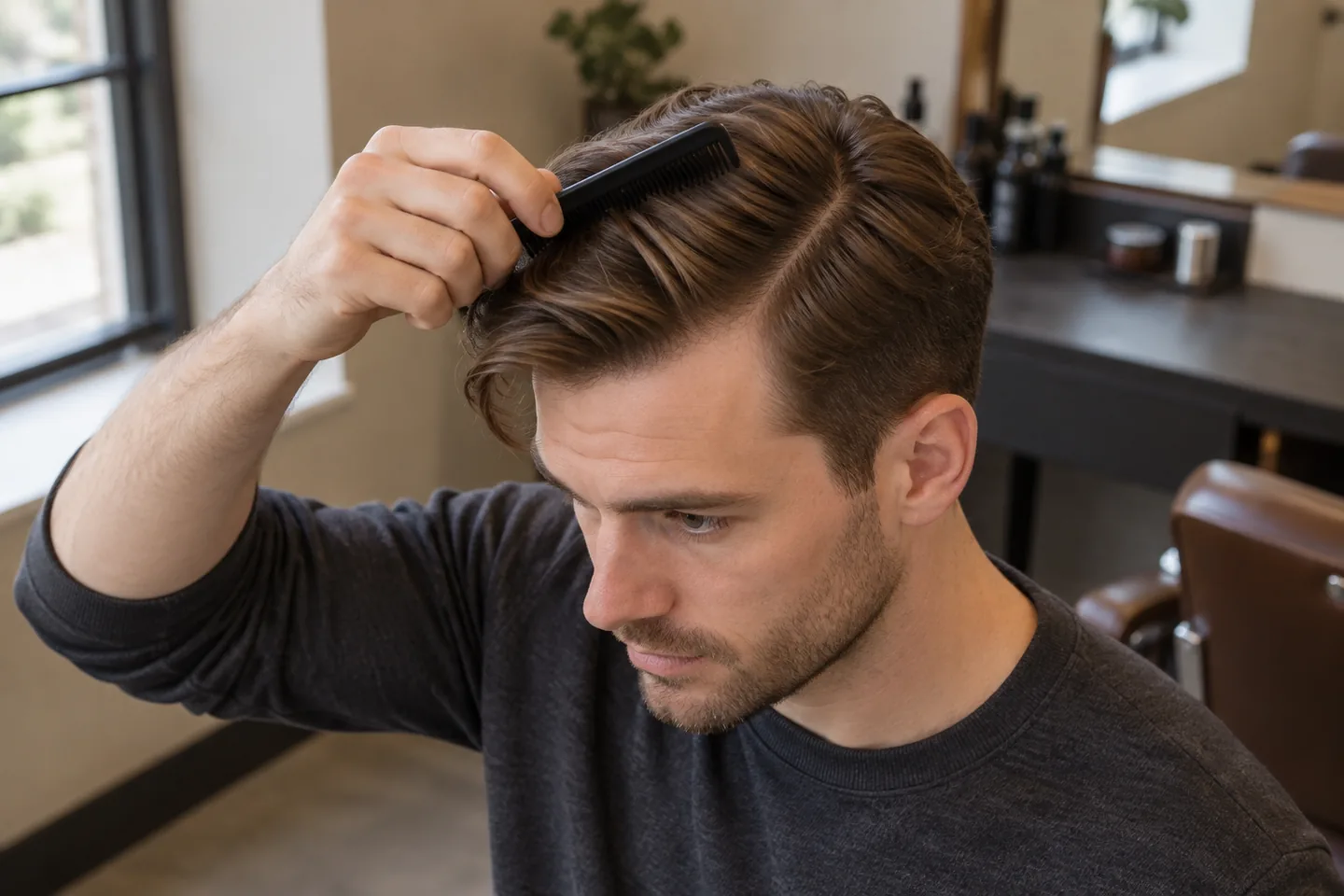
Guide the front without pulling it tight
Use your fingers or the comb to lay the longer top section in the intended direction. Begin with a modest sideways movement instead of trying to build height at the front. Let the shorter side sit naturally. The two sections do not need to look equally smooth or form a perfectly straight boundary from forehead to crown.
Notice what happens when you release your hand. If one front lock falls into your eyes, shorten the intended sweep or accept a looser finish. Holding it under tension does not demonstrate an arrangement you can wear. If several strokes have stopped adding anything useful, put the tool down. Frequent passes can turn a simple choice into a long inspection without telling you more about the cut. The photographs illustrate motions; they are not a requirement to reproduce the model's exact finish.

Keep the product decision separate
You can first check the part without adding anything. If you already use a styling product comfortably, follow its own directions and use your ordinary modest amount rather than layering several unfamiliar products. Choose whether you are testing the line or changing the product; doing both makes it harder to tell why the result feels different.
For example, keep your usual product and change only the separation from a severe line to a softer one. Alternatively, leave the part where it normally sits and test whether a lighter finish is easier to wear. Do not promise yourself that stronger hold will solve a length mismatch. Product instructions and personal tolerance still apply. Stop using anything that causes discomfort, and ask an appropriate professional about persistent scalp symptoms rather than asking a styling app to diagnose them.
Turn the trial into one manageable action
MogRise's documented personal plans can organize priorities and manageable actions. For this task, the useful action is small: prepare the comb, make one separation, guide the front, then finish. Place it in a morning that has enough room for an unfamiliar step. If your existing preparation already takes the time you have, replacing one styling step is more realistic than adding a second routine.
You could use a focused Coach question about implementation: “I have a short back and sides with a longer top. I want to try a soft side part using my current comb and product, with five minutes available. Help me keep the trial to one change.” This is an example prompt, not a tested response or a claim that the app can inspect your cut. A plan that fits your life should remain useful when a hairstyle experiment is postponed.
Check the finished arrangement at an ordinary distance
Step away from the close mirror and look once from your normal grooming distance. Ask whether the front is where you intended and whether the hair feels comfortable. You are checking a practical arrangement, not measuring symmetry or deciding how attractive you are. A few separated strands or an uneven part do not require correction if your goal is already met.
If a record would actually help, write one sentence such as “Soft line, usual product, front stayed clear while getting ready.” A photo is optional. Do not take repeated angles to chase a supposedly objective answer. Our guide to tracking style choices without overthinking explains how to keep a useful observation from turning into constant checking. Close the mirror task when you have enough information to leave.
Try the movements your morning includes
Turn your head, look down to pick up a bag and put on the outer layer you normally wear. Check whether the front immediately obstructs your view or whether you simply notice a little movement. Hair that moves is not automatically unsuitable. The question is whether the arrangement interferes with what you are doing or demands adjustments you do not want to make.
If a helmet, protective head covering or work requirement changes the style, let that requirement take priority. Do not alter safety equipment to preserve a part. You may prefer to arrange the hair after removing ordinary headwear, or choose a different everyday finish. These are practical choices about your schedule. There is no requirement for a home styling trial to survive every possible journey, weather condition or activity unchanged.

Use an example to choose the next step
Imagine that your top is long enough to sweep sideways, but the front drops as soon as you bend to tie a shoe. There are several possible responses: accept the movement, try a shorter sweep on a later morning, or ask your barber how the existing length could be arranged. Testing a new product, a new side and a new drying method simultaneously would not tell you which decision mattered.
Now imagine that the part stays comfortable but arranging it takes longer than you want. The issue may be convenience rather than appearance. Keep the step that makes the most difference and omit decorative precision. A simple morning grooming routine needs a realistic end time. An optional plan can remind you of that boundary; it should not turn every loose strand into another item on a checklist.
Know when the haircut needs a conversation
If the available length or the way sections join makes your intended shape impractical, bring a clear question to your next barber visit. Explain what you tried, which part was manageable and what required repeated correction. Ask to be shown a way of arranging the current cut before assuming that it needs a dramatic change. A demonstration you can follow is more useful than a promise about an ideal face shape.
Do not shave a hard part or trim a section yourself just to rescue this experiment. A soft division is reversible; cutting changes the task. Keep any later decision about length separate and deliberate. If the trial has become frustrating, stop and return to your usual style. Personal style can include curiosity without requiring constant improvement, and an app plan should support that freedom rather than make the experiment feel compulsory.
Questions about an everyday side part
Must the line be perfectly straight?
No. A soft separation can be enough to guide the longer section. Judge it against your practical aim, such as keeping the front clear, rather than a ruler-straight line in a photograph. If achieving a sharp boundary takes repeated correction you do not enjoy, leave it softer.
Can this permanently change my hair's direction?
This is a temporary styling arrangement, not a method for changing growth direction. Do not use pressure, scraping or repeated sessions to train a permanent part. If your intended direction fights the current cut, choose a gentler arrangement or ask a barber about options.
Do I need a new haircut or more products first?
Not automatically. Begin with the existing length and tools that work comfortably for you. The trial may show that a smaller sweep is sufficient, or that the idea is better discussed at your next normal appointment. Neither outcome requires an immediate purchase or booking.
What should I retain in an optional app plan?
Keep one action and one useful observation: the separation you tried and whether it fitted your morning. Avoid daily appearance scores or repeated photo comparisons. If checking your appearance becomes distressing or difficult to stop, pause the experiment and seek qualified support instead of adding more checks.