
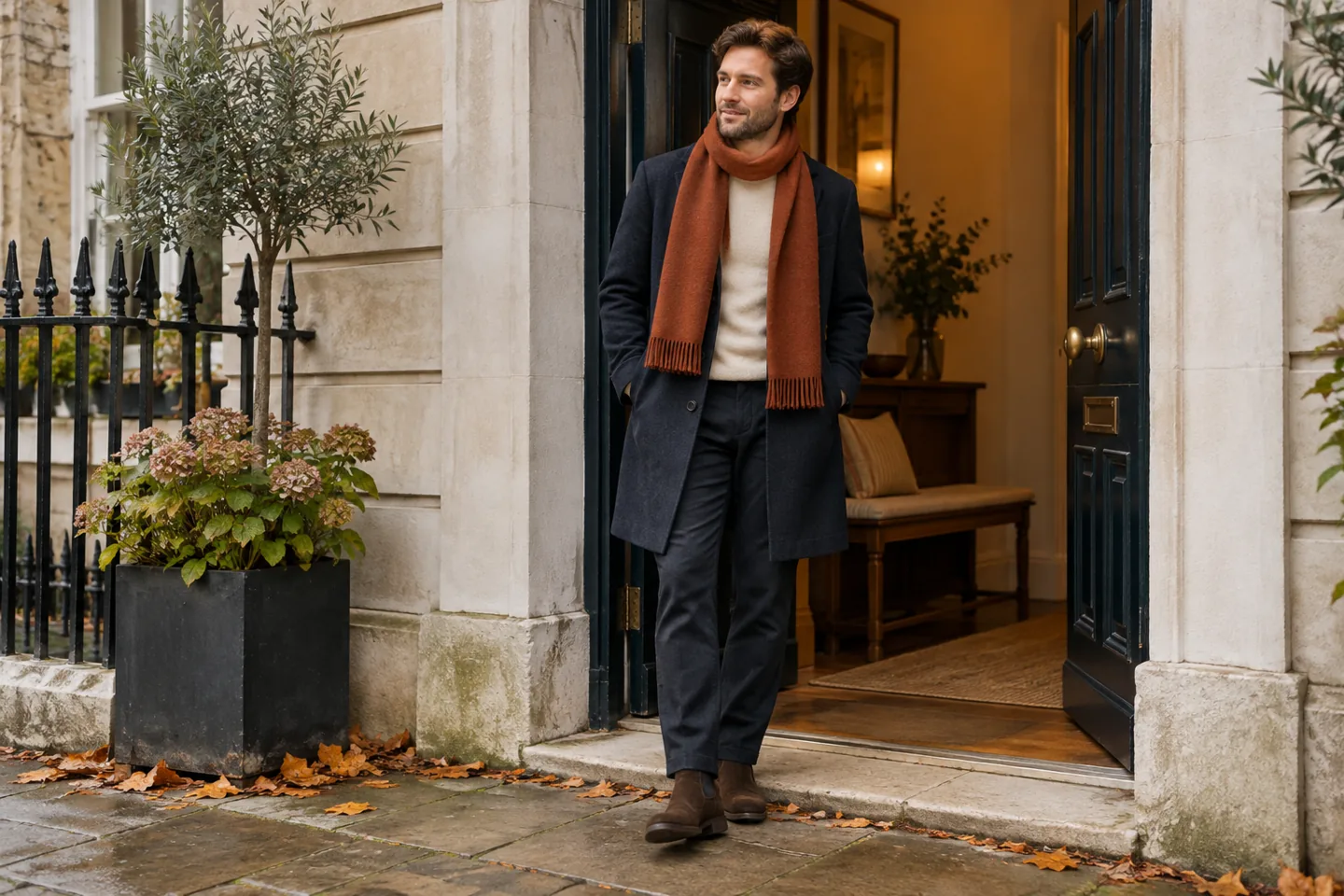
How to wear a scarf: begin with one outer layer
How to wear a scarf becomes easier when you start with the coat or jacket you will actually use. Choose one ordinary rectangular scarf, try a loose drape, then add a single relaxed turn only if its length allows. Close the outer layer and move normally before deciding. The aim is an arrangement you enjoy wearing, not a knot collection or a rule about which face should wear which accessory.
This guide works independently of an app. You need the scarf, your usual outer layer and enough space to check how the two behave together. You do not need a new purchase, a before-and-after photograph or a style score. A scarf can be a practical extra layer, a color you enjoy or simply an optional accessory. Leaving it off is also a reasonable choice when it does not suit the day.
Check which kind of scarf you have
Lay the scarf out and notice its shape, length and thickness. The examples here use a soft rectangle with two free ends. A short neckerchief, a square silk scarf, a closed loop and a very thick blanket-style piece are different starting points. Do not force them into the same arrangement simply because an illustration looks appealing. A short rectangle may work best as an open drape rather than a wrap.
Read the care label before folding, storing or cleaning the piece. This article is about wearing, not a washing method. Also inspect for loose threads or damaged fringe that catches on the coat. The scarf should be ready to use as it is. If it needs repair or care first, make that a separate task instead of hiding the issue inside a tighter knot.
Use an open drape as the starting position
Put on the outer layer and let the scarf rest behind your neck, with both ends in front. Start without a knot. Smooth obvious twists with your hands and let the fabric settle rather than repeatedly pulling it downward. This simple position shows how much length you have available and where the ends meet the coat opening. It is a useful baseline even if you later choose a loose loop.
If the scarf feels bulky immediately, try opening the coat collar before changing anything else. A bulky scarf and a bulky collar may simply be awkward together. The wardrobe fit audit provides a broader way to check how garments work together without turning one accessory into a judgement about your body. Keep this trial specific: the question is whether these particular layers are comfortable and convenient today.
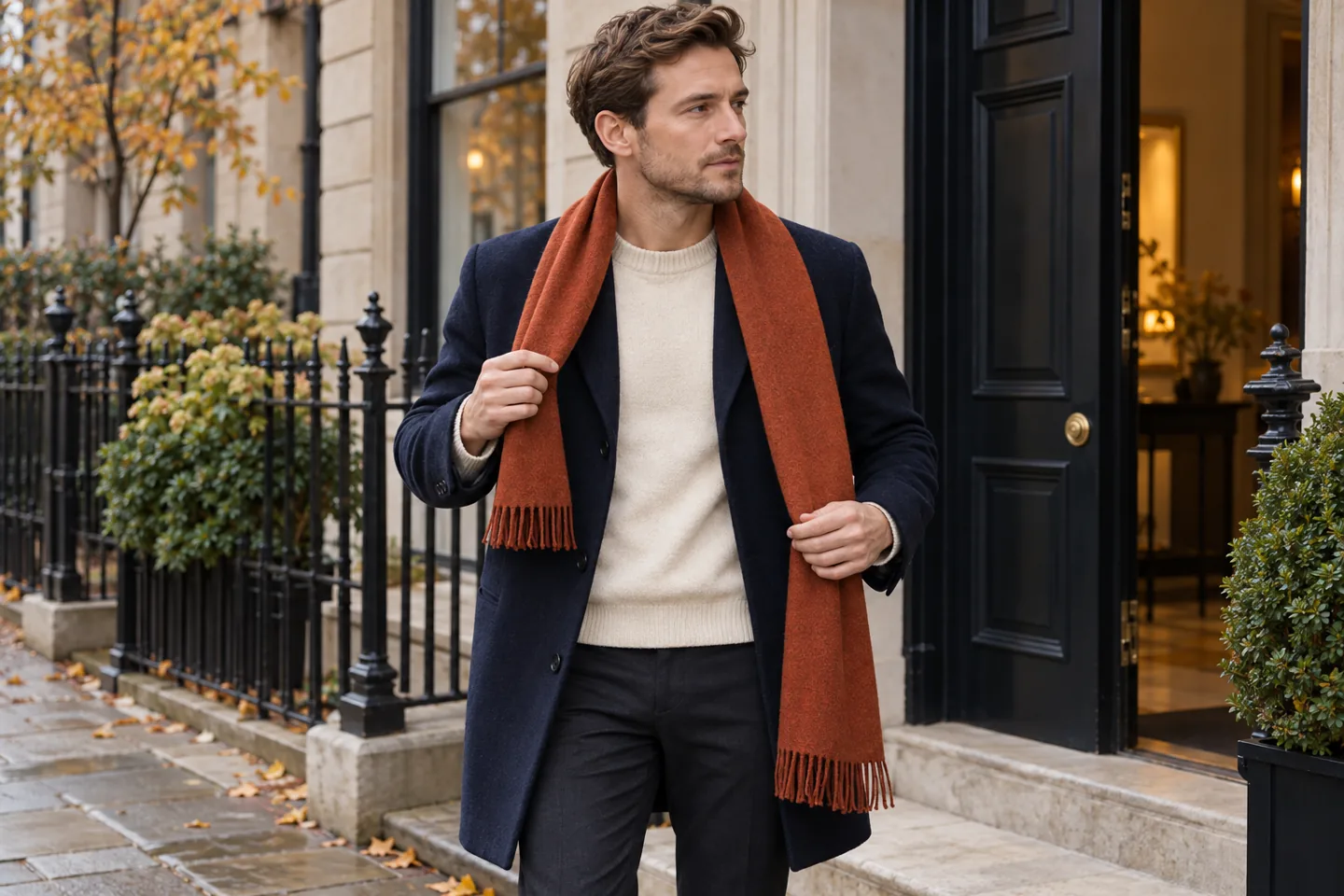
Make one loose turn when the length allows
For a basic once-around arrangement, begin with one end longer than the other. Bring the longer end around the back of your neck and return it to the front. Leave the loop relaxed and let both ends fall forward. Adjust by redistributing the fabric, not by tightening the loop. If the ends become too short or the neck feels crowded, return to the open drape.
The Spanish C&A winter-outfit guide describes a loose wrap with both ends at the front. That is a simple starting option, not a requirement to copy a whole outfit or purchase its products. There is no universal correct loop size or end length. Your scarf and outer layer determine what is practical. A small difference between the ends can be intentional; exact symmetry is unnecessary.
Distribute the fabric instead of chasing a perfect shape
Once the scarf is arranged, look at where the material has gathered. Spread a folded ridge gently across the shoulder or front rather than pulling the ends harder. If the rectangle is wide, a loose lengthwise fold may make it easier to manage. Do not compress it into a narrow rope just to reproduce a photograph. The cloth can retain some ordinary softness and unevenness.
Try one adjustment at a time. For example, spread the front loop slightly, then see whether the collar still sits normally. If you simultaneously shorten both ends, fold the width and change the coat opening, you will not know which change helped. You are learning how your own pieces behave, not proving a styling technique works for everyone. Stop when the arrangement feels usable; small natural folds are not mistakes requiring another attempt.

Close the coat before making the final decision
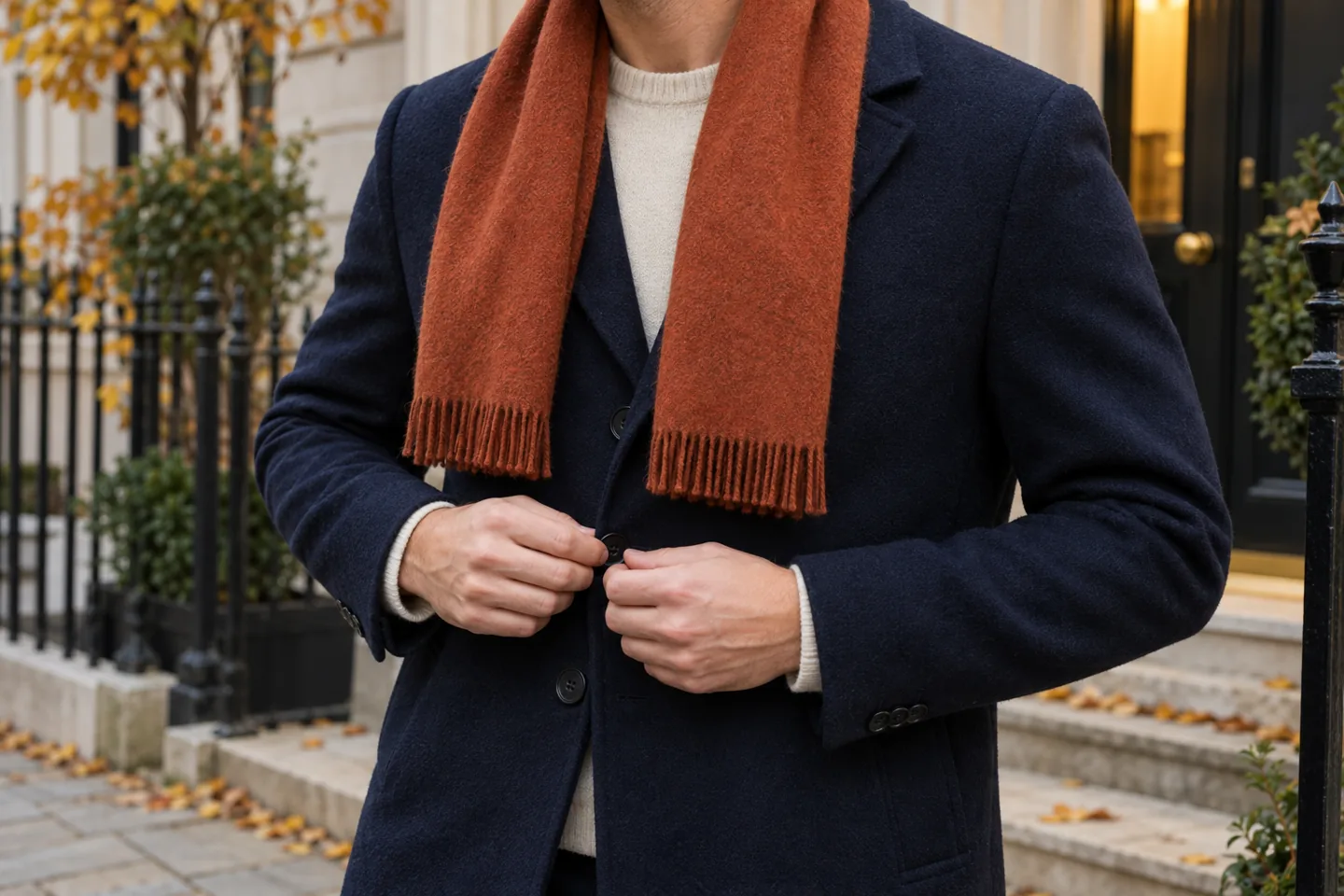
An arrangement that looks fine with an open coat may crowd the closure when you fasten it. Close the coat as you expect to wear it and keep the scarf clear of buttons or a zip. Check whether the front fabric lies where you intended and whether you can undo the closure easily. Do not tighten the scarf to compensate for an outer layer that lacks room for it.
Try the scarf outside the opening first, then consider whether your coat comfortably accommodates the ends inside. Neither position is automatically more polished. The useful distinction is whether the pieces stay accessible without trapping fabric. A short jacket can interact differently with a long scarf than a longer coat does. Make the choice on the actual combination rather than transferring measurements from a model wearing different clothes.
Add the bag you really carry
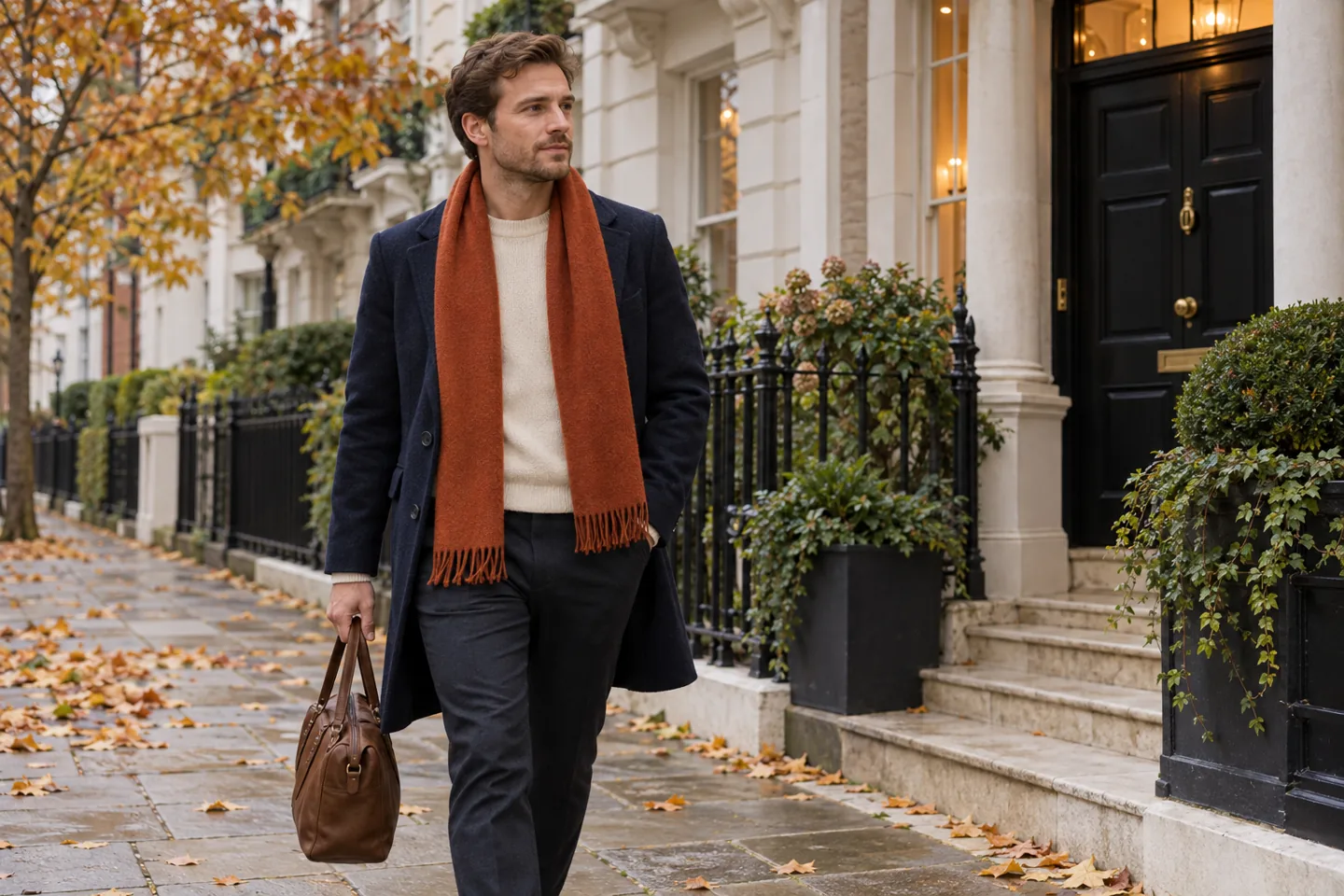
Put on your usual bag or hold it as you normally would. Notice whether a shoulder strap shifts the scarf, catches its fringe or makes one end inconvenient. Move the fabric clear of the strap rather than tying an extra knot to hold everything in place. A hand-carried bag may create a different situation from a crossbody strap, so test the one you actually use.
This is also a good moment to check access to a pocket or coat fastening. If a long end repeatedly covers the place you need to reach, redistribute the length or choose a simpler drape. You do not need a special accessory to solve every small inconvenience. A different starting position may be enough. For sport, cycling or tasks around moving equipment, follow the relevant clothing and safety requirements instead of treating a loose everyday scarf as universally suitable.
Keep color and texture a matter of preference
Begin with one combination you already own. A plain scarf against a plain coat makes it easy to see the arrangement, but a patterned scarf is not inherently a mistake. Ask whether you like the colors together and whether the texture feels appropriate to the rest of your clothes. No complexion category or face-shape label can dictate a single correct answer to that preference.
If there are several patterns, choose which one you want to notice most. You might keep the coat simple because you enjoy a checked scarf, or choose a quiet scarf because the jacket already has a strong pattern. These are ways to narrow a decision, not rules about good taste. You can repeat a familiar combination without making each outing a new styling experiment. The accessory is allowed to be ordinary rather than the focal point.
Check a few normal movements
Turn your head comfortably, take a few steps and sit down if that matches the day's plans. Notice whether the scarf shifts into your face, pulls at the collar or needs constant attention. Make one practical adjustment and repeat the relevant movement. An initial trial cannot guarantee comfort throughout an entire day, but it can reveal an obvious mismatch before you leave.
Look at the whole outfit from an ordinary distance if you want a visual check. A close-up phone image is unnecessary for judging whether the ends interfere with a coat pocket. The guide to tracking style without overthinking explains how to keep observations tied to useful decisions. One note such as “the wider scarf crowds this collar” is more helpful than another appearance score. After the check, let the task end.
Plan the indoor transition
Think about what happens when the coat comes off. Can you lift the scarf away easily and place it somewhere clean? An arrangement that requires careful untying each time may be more work than you want for a day of frequent indoor stops. That does not make the arrangement wrong; it may simply be unsuitable for that particular schedule.
Use the care instructions when deciding how to store the piece. Avoid stuffing it into an already crowded pocket just to keep the outfit intact. If the scarf is damp, follow its label rather than enclosing it automatically with other belongings. The practical goal is an accessory you can put on, remove and carry without a separate performance. For a mostly indoor day, bringing a lighter option or leaving the scarf at home may be the simpler choice.
Troubleshoot the combination without buying a solution
If the ends disappear after one turn, use the open drape. If the cloth feels crowded under the chin, loosen or remove the turn instead of trying to make it flatter by pulling harder. If the coat will not close comfortably, change the layer combination. If the scarf slips repeatedly, consider whether its shape and surface suit that arrangement before adding pins, clips or other improvised fixes.
Choose the smallest change that answers the actual problem. The guide to a realistic personal plan can help you keep a wardrobe task this specific. You are not required to replace the scarf or redesign the entire outfit. An existing alternative may work better, and an open coat may be your preference when conditions allow. Comfort and convenience remain valid reasons to stop using a particular arrangement.
Finish with a choice you can repeat
A useful result is a simple decision: this scarf works as an open drape with this jacket, or as a loose once-around with that coat. You can remember the combination without photographing it. If you do make a note, record the practical detail that mattered, such as clearing the bag strap or keeping the coat fastening accessible. Avoid turning that note into a daily obligation to inspect your appearance.
You may change your mind when the weather, destination or clothing changes. That is ordinary use, not evidence that you previously chose badly. The aim is not a permanent signature look or a promise of being judged more favorably. It is one reversible clothing choice that fits your day. Once the scarf sits comfortably and the actual layers work together, put your attention back on the activity you dressed for.
Frequently asked questions
Do the ends have to be exactly equal?
No. A small difference can be comfortable and intentional. Check whether both ends stay manageable with the coat and bag. Exact symmetry is not a condition of wearing a scarf successfully, and it is not worth repeated adjustment when the arrangement already works.
What if my scarf is too short for one turn?
Use a simpler open drape if it works with the outer layer, or choose another piece you already own. Do not pull a short scarf tightly around the neck to force a specific method. Different shapes and lengths call for different arrangements.
Must I wear it inside the coat?
No. Try the actual combination and keep closures accessible. The scarf can sit outside the opening, or inside when the coat comfortably accommodates it. The choice depends on the garment and your preference, not a universal level of formality.
Do I need an app or a style rating?
No. This guide is complete without either. The optional MogRise card is from our publisher and can support personal organization; it cannot decide your taste or certify a scarf arrangement. A comfortable real-world trial provides the relevant practical information.