
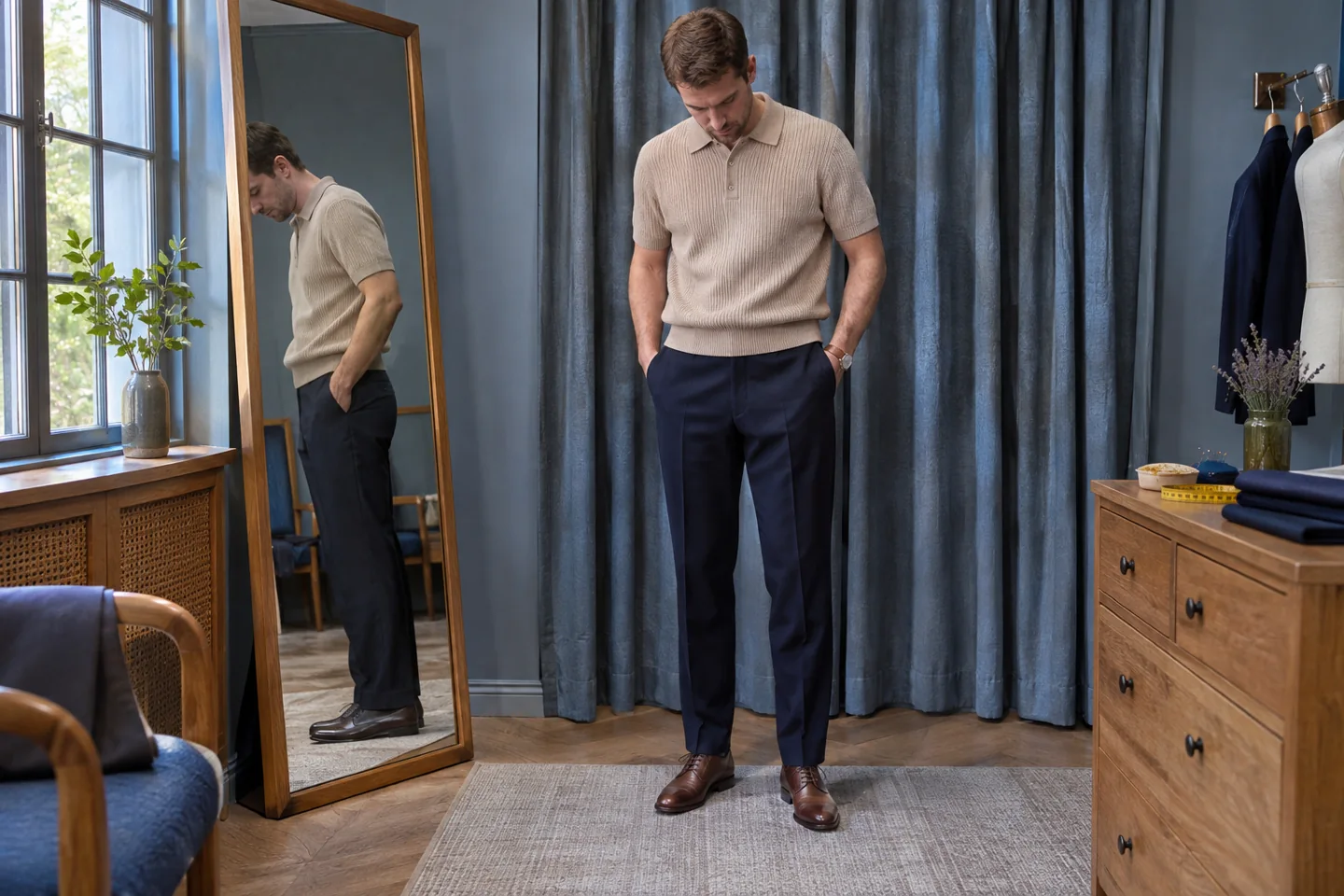
Trouser length with the shoes you plan to wear
Check trouser length with your usual shoes on and the waistband sitting where you actually wear it. Stand on a level floor, take a few steps, then let the fabric settle. Look at the front of the hem, the back above the heel and the way the cloth falls along each leg. A single crease at the shoe may suit your outfit. A shorter hem may also work. The useful question is whether you like the result and can move without catching the fabric under your heel.
Start with one pair from your wardrobe and one reason for the fitting. Perhaps the hem drags on the way to work, or perhaps you want to wear a familiar pair with different shoes. Keep that question in mind throughout the check. It gives you a clearer decision than comparing the trousers with every style of hem you have seen online.
Settle the waistband before judging the hem
Empty heavy items from the pockets and fasten the trousers normally. Put on the belt or braces you intend to use, if either is part of the outfit. Walk a little so the waistband finds its usual position. If you pull the waistband higher just for the mirror, the trousers can appear shorter than they will once you go back to sitting and walking.
Notice whether the trousers stay where you put them. A waistband that slides down changes the position of the hem as you move. Make that a separate note for a fitter. You can still describe what you see at the shoe, but wait until the top of the trousers sits consistently before deciding on a permanent change to the bottom. A basic wardrobe fit audit can help you separate those observations.
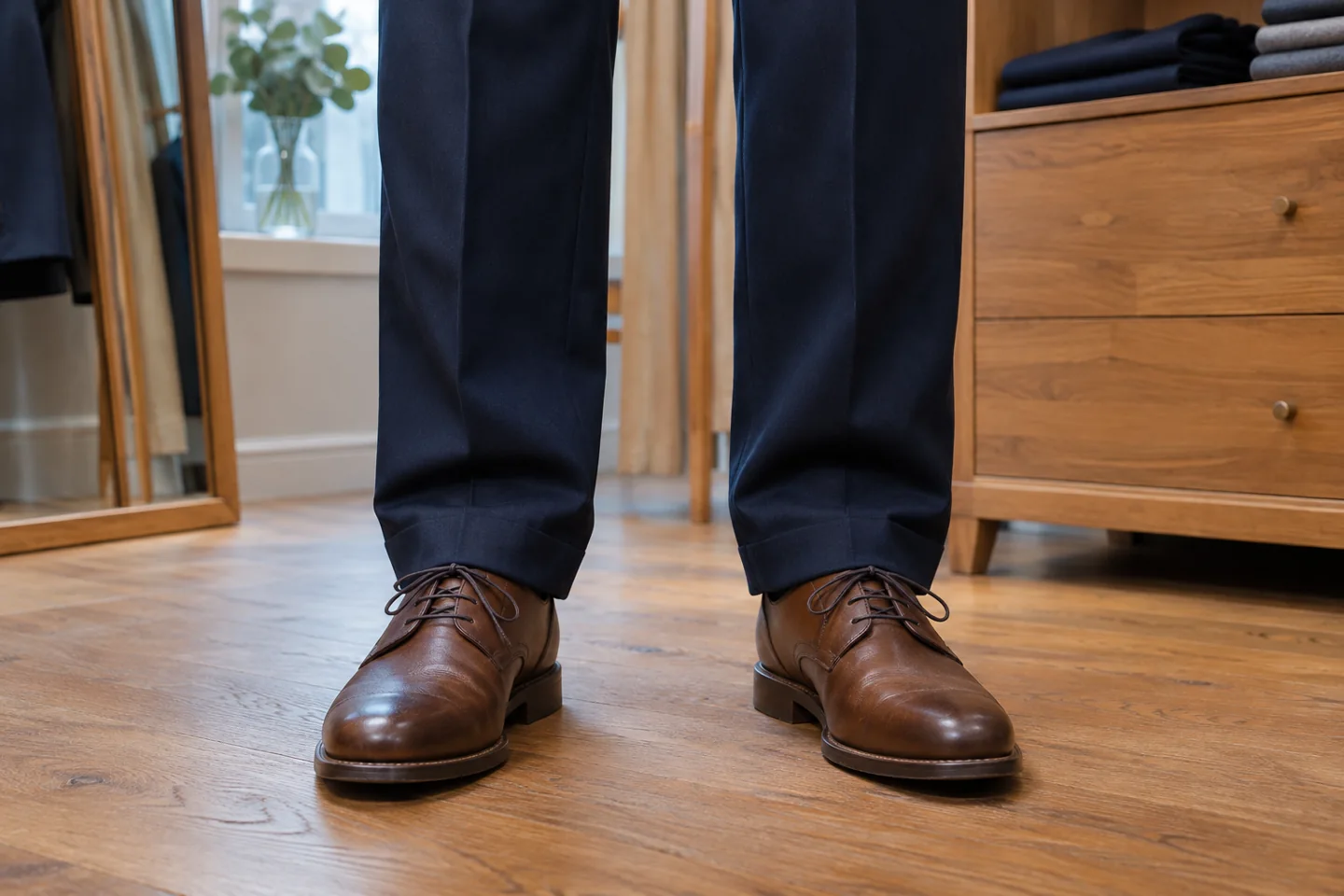
Start at the front of the shoe
Look at the hem where it meets the upper of the shoe. When fabric rests on the shoe and folds, that fold is often called the break. A small fold, a fuller fold and no fold at all produce different lines. Try describing what you see in ordinary words before choosing a label. For example, “the front rests on the laces and folds once” is a useful note.
Check both legs. If one side has more folds, straighten your stance and let the fabric settle again. A trouser leg can catch on the top of a boot or on a high shoe tongue. Gently free it and take a few steps. If the difference comes back, mention it at a fitting rather than guessing how much should be taken off each side.
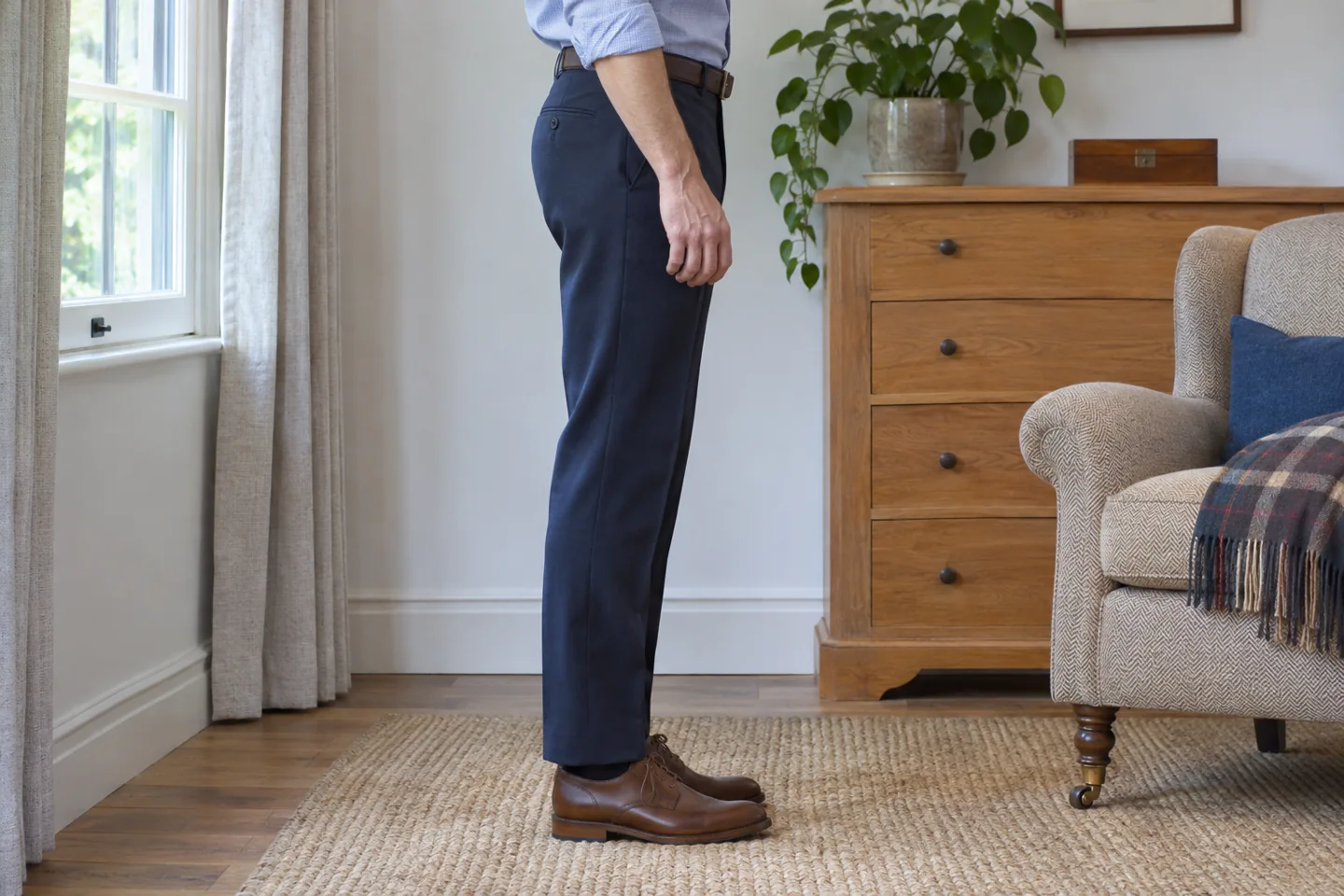
Look at the back and the side
Turn enough to see the rear hem in the mirror, or ask someone to look while you stand naturally. Check whether it clears the floor and whether it catches beneath the heel as you walk. Look at the side too. A narrow opening may sit high on a bulky shoe, while a wider opening may fall around it. That can change the front fold without any change in the actual length.
Keep your feet flat and your weight comfortable. Pointing a toe down or lifting a heel changes the line you are trying to inspect. If you need a photograph to see the back, place the camera where it can show the hem and the floor together. One clear reference is enough. It does not have to be a flattering angle or a full portrait.
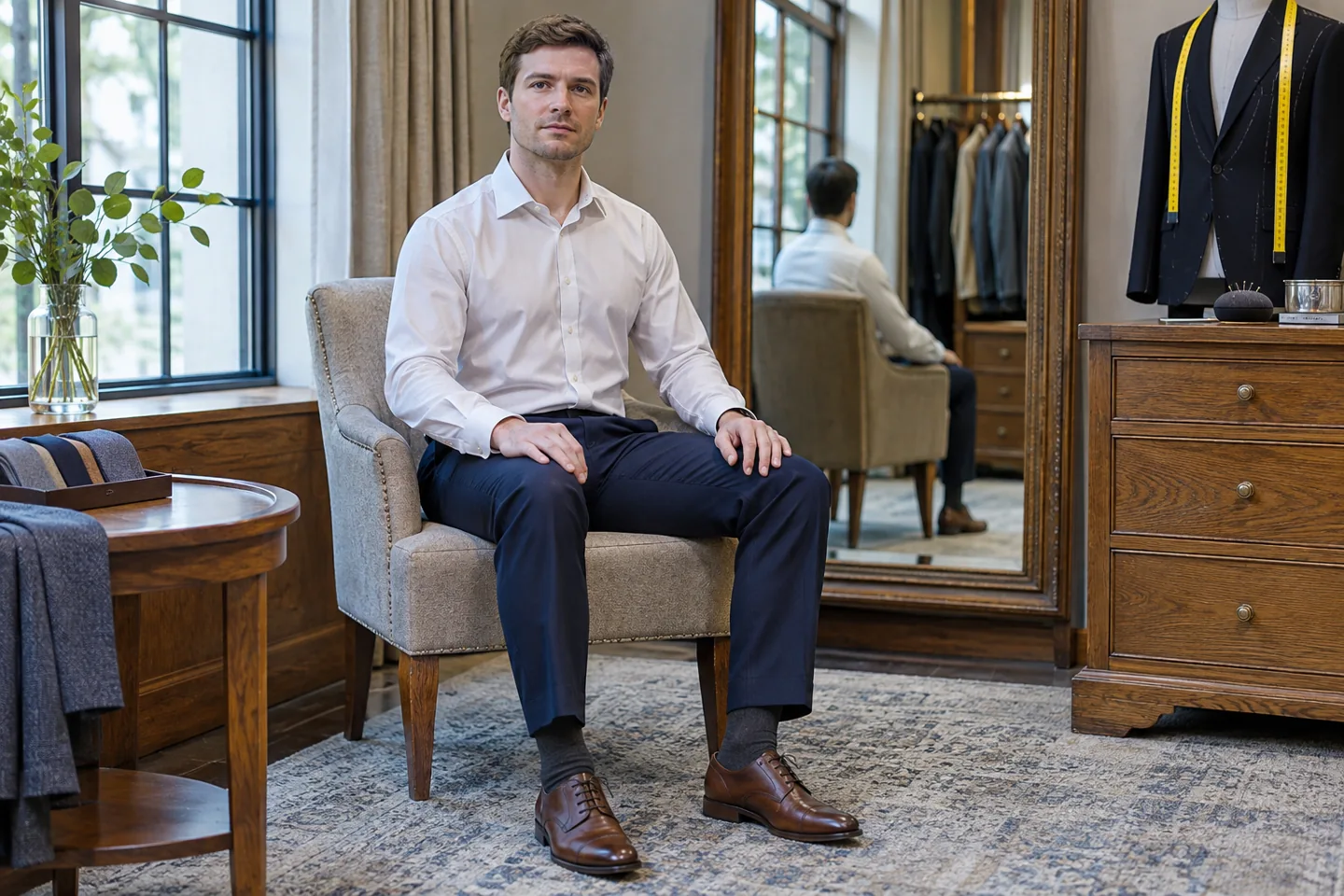
Sit down and take a few ordinary steps
Sit on a chair like the one you use at work or at dinner. Let the knees bend naturally and observe where the hem moves. More sock may show while you are seated. Choose socks you are happy to see with that outfit, then stand and check whether the fabric drops back into place without needing to pull each leg down.
Walk a short distance and turn around. If the hem catches on a shoe, note which shoe and where it catches. A fitting-room stance can hide that behavior because you have just arranged everything by hand. If your trousers have an unfinished long hem that touches the floor, arrange a professional fitting rather than walking around on loose excess fabric.
Compare the two shoes you actually use
You may wear the trousers with derbies during the week and with a different pair at the weekend. Try the second pair only after you have finished the first check. Leave the waistband, socks and posture the same. Notice the height of the upper and the space it leaves for the hem. Two shoes with similar heels can still meet the trouser opening differently.
If both combinations work, there is no need to choose one permanent ideal. If one catches and the other falls freely, decide which combination matters more in your week. Take both pairs to a fitting if you want advice about a compromise. A tailor can look at the actual fabric and opening, rather than relying on a description of your shoe size.
Use measurements to describe the garment
A size label helps when you compare models, but its numbers are only useful with the maker’s measuring method. Charles Tyrwhitt’s trouser size guide separates inside-leg options from other garment measurements. Use the chart for the exact model you are considering. Record the units and whether a number describes the garment or your body.
For an existing pair, write down the label and your fitting observation first. If you also measure the trousers flat, name the start and end points so you can repeat the measurement later. Keep a relaxed garment flat without stretching the seams. A flat measurement can help communicate a reference pair, but the shoe check still tells you how that particular leg opening behaves when worn.
Plan one fitting if you want help
MogRise is our publisher’s app. Its optional personal plans can help you organize a small task, such as bringing your trousers and two pairs of shoes to a fitting. Put the practical question in the plan. For example, “the back hem catches under the left heel with my work shoes” gives you something specific to discuss. You can keep the same note on paper.
Choose the result by wearing the outfit. An app cannot feel how the waistband sits, inspect the available hem allowance or decide what can be altered in a particular fabric. If you use pictures as notes, keep the camera setup simple and stop once they show the issue. The guide to tracking style progress without overthinking offers a way to keep comparisons brief.
Bring the whole context to the tailor
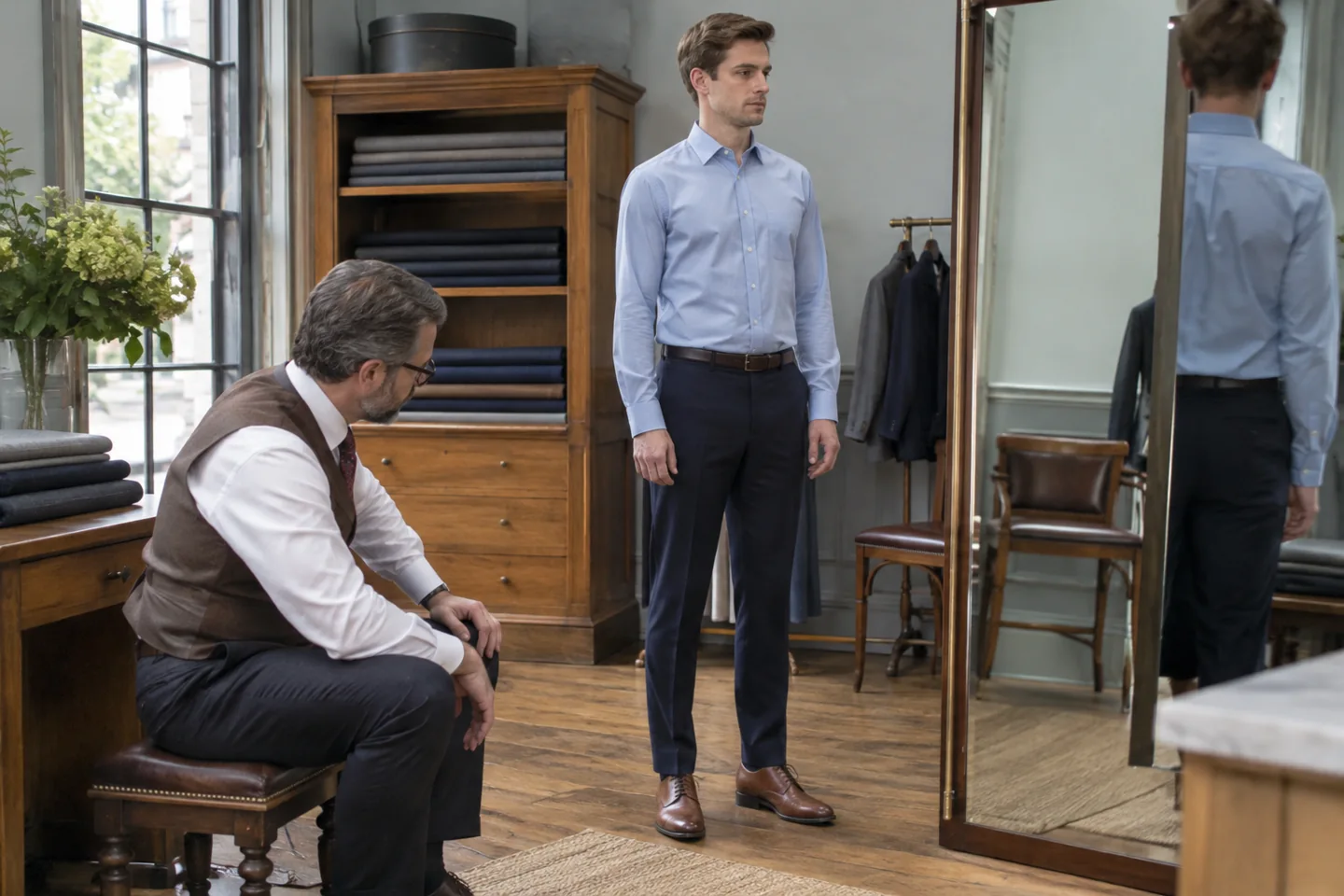
Wear or bring the shoes you expect to use most, plus the belt or braces if relevant. Say whether you want a hem that clears the shoe or one that rests on it. Show the fitter how the trousers sit after you walk and sit down. If you have a reference pair that works, bring that too and explain what you like about its fall.
Ask what is possible before agreeing to a change. Finished cuffs, previous alterations, the amount of spare fabric and the shape of the leg can affect the options. Let the fitter mark the proposed length while you stand naturally. Look at both legs and move as directed before the alteration goes ahead. You can decide to keep the existing hem if the proposed change does not suit your use.
Questions about trouser hems
Does every pair need the same break?
No. A straight dress trouser, a wide casual pair and a narrow ankle-length model can have different intended lines. Judge each with the shoes and setting you have in mind. If the fabric moves freely and the result suits the outfit, a different fold at the front is a styling choice.
Why does one leg look longer in the mirror?
Check the stance and whether either hem is caught on a shoe. Let the waistband settle and try a few steps again. If the difference remains, show it to a fitter while wearing the pair. A mirror observation alone does not tell you which part of the garment needs attention or how much should be changed.
Can I just use a cuff as a temporary test?
A loose turn-up can help you picture a shorter outline on some casual trousers. It also adds weight and changes the opening, so it does not precisely show what a plain altered hem would do. With tailored trousers, ask a fitter to demonstrate the proposed length using a method suited to the fabric.
What if the trousers look fine standing but catch when I walk?
Use the walking behavior as the question for the fitting. Bring the shoes that cause it and show the movement. Check that the waistband stays in place too. A fitter may discuss length, the opening or the way the fabric falls. Decide after seeing the garment in motion rather than shortening both legs from a single standing photo.