

- Keep baseline care separate from optional appearance experiments.
- Start with one facial priority and a routine that fits an ordinary day.
- Review what you can maintain before adding another step.
Softmaxxing is informal looksmaxxing language for improving appearance through non-invasive care, grooming, styling and everyday habits. For a useful starting routine, separate daily maintenance from one deliberate appearance comparison. The aim is a plan you can repeat and understand: what each step does, what it costs in time and when you will review it.
Softmaxxing vs hardmaxxing: understand the scope
Softmaxxing commonly includes skincare, shaving or beard maintenance, brow grooming, hair framing and clothing choices. Hardmaxxing is community shorthand for more invasive interventions, often including cosmetic procedures. The terms are not clinical classifications, and calling something softmaxxing does not establish its safety or usefulness for an individual.
This routine focuses on basic care and appearance choices you can describe and review. Keep prescribed treatment on its own instructions, and take medical concerns to an appropriate professional. Your daily checklist should not become a place to collect every technique associated with the niche.
Choose a facial priority before building the routine
Start with one observation in each area: facial proportions, jawline and beard outline, eyes and brows, and skin. Then choose the one with the clearest next action. ‘My glasses cover the brow shape I want to show’ is a framing question. ‘I cannot describe what my skincare products do’ is a routine question. They do not need the same solution.
Keep the target specific enough to review. Decide whether you are comparing forehead exposure, reducing beard bulk, organizing skin care or making a photo baseline. Write the result you want in ordinary terms. Avoid building a schedule around a promised rise in an attractiveness score, because completing a task does not guarantee a particular number.
A simple daily softmaxxing routine
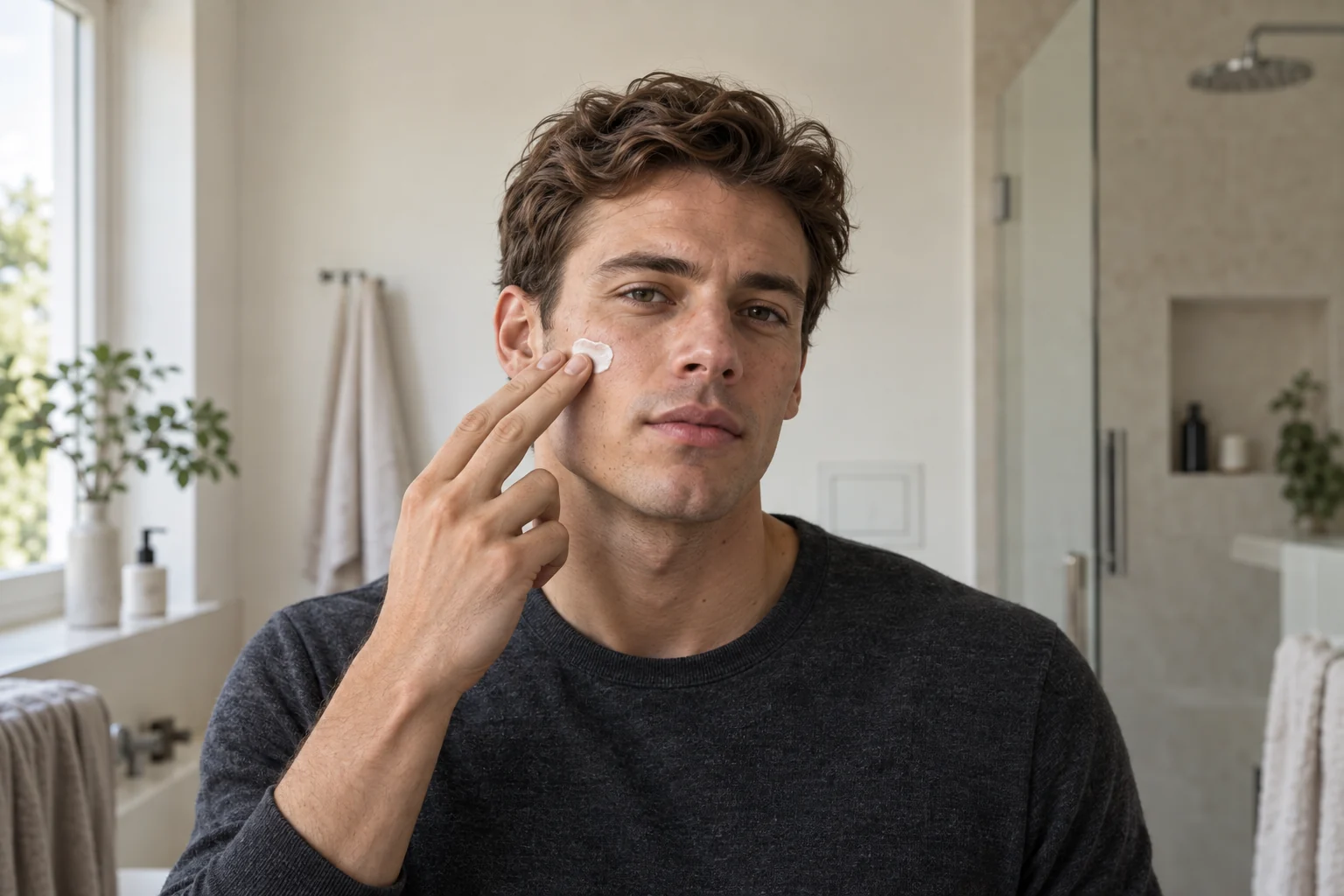
Build the care foundation around your skin and existing needs. The American Academy of Dermatology recommends mild facial cleansing, daily moisturizing and sun protection. Outdoors, use broad-spectrum, water-resistant SPF 30 or higher and reapply every two hours and after swimming or sweating. If you are unsure about products or persistent concerns, ask a dermatologist.
For grooming, put the essentials in a repeatable order. Set the hair framing you have chosen, brush brows into their usual position and maintain the beard or shave according to your own needs. A daily check does not mean cutting or plucking every day. Use it to notice whether the existing shape remains easy to manage.
In the evening, follow your planned care steps and record a new product or any relevant discomfort. You do not need a fresh face score after each routine. A brief dated note is more useful when it explains why a step changed or what you want to ask at the next appointment.
Your weekly routine: one comparison and one decision
Reserve one short check-in for the plan. Review what you actually did, which part took too much time and whether your original question has become clearer. A week is a scheduling interval; it is not a promise that skin or facial structure will change within seven days.
If your chosen framing change is ready to compare, use matching references. If it is not, review the preparation instead. For a barber appointment, that might mean finishing the brief. For glasses, it might mean identifying the rim position you want to compare. Preparatory work counts when it advances a specific decision.
| When | A concrete action |
|---|---|
| Morning | Complete your planned care and set the hair, brow or beard frame you are maintaining. |
| Evening | Follow your care instructions and note relevant changes or discomfort. |
| One weekly check-in | Review consistency, practical effort and the question behind your appearance experiment. |
| When a comparison is ready | Compare the same views, decide what to keep and record the useful details. |
| At a maintenance appointment | Bring a short brief naming what to preserve and the one thing you want adjusted. |
Fit the plan to five, ten or fifteen minutes
Treat the time budget as a limit on extra grooming and planning, not a reason to skip necessary care. With five minutes available, choose one repeatable framing step and keep the audit for a separate check-in. With ten minutes, you might add preparation for the next day or a short routine note. With fifteen, use the extra time for a specific task such as preparing a barber brief—not automatically for more products.
Start by timing an ordinary morning once. A routine that works only when you are in no hurry is not your everyday routine. Simplify the part that regularly makes you late, and distinguish daily work from weekly maintenance. You may find that a better haircut brief saves more daily effort than adding a new styling step.
Review the routine without constantly rating your face
Use three review questions: did I carry out the action, did it address my original observation, and do I want to maintain it? Those questions work for a beard contour, a glasses comparison or an organized product list. They also leave room for a useful answer such as ‘the reference was unclear’ or ‘this takes too much effort.’
Keep, adapt or stop the optional experiment based on that review. Continue basic care and any individual treatment instructions on their own terms. If you want more personalized organization, bring one focused question into MogRise’s analysis and planning workflow rather than turning every report detail into another daily task.
Your best starting routine is the one whose steps you can explain. Write down what stays fixed, the choice you are testing and the next decision. That record makes the next week easier to plan and keeps the work connected to your own appearance preferences.
Divide the routine into daily, weekly and occasional work
Daily work should be simple enough to repeat: the care steps you already need and a manageable grooming finish. Weekly work can include one outfit or framing comparison and a short review of what was useful. Occasional work includes a haircut consultation, a frame fitting or a professional question. Mixing these jobs into one daily checklist makes the plan harder than it needs to be.
Use a calendar only where timing helps. A barber appointment needs a date; a preference between two shirt collars needs a comparison. Do not turn every appearance idea into a habit. The strongest routine has a small daily core and space for purposeful decisions, with enough flexibility to survive a busy morning or a week when your schedule changes.
Create a version for your busiest day
Write the smallest workable version of your routine before adding optional steps. Keep the essentials you need, the tools easy to reach and the hair or beard finish familiar. Time it once under normal conditions. If your supposed five-minute routine regularly takes fifteen, remove friction or reclassify a task as occasional work.
The backup version is not a failure. It protects consistency and helps you see which steps matter. For example, laying out the grooming tools and clothes the evening before may do more for your morning than adding another product. Judge the routine by whether it is comfortable, understandable and repeatable, then add detail only when it serves a specific priority.
Use a budget by decision, not by product category
Before buying, name the decision the purchase will improve. A tool might make a beard boundary easier to maintain; a consultation might clarify the haircut; a well-fitting basic garment might solve an outfit problem. An item with no defined job belongs on a waiting list. This keeps softmaxxing focused on visible and practical outcomes rather than collecting a complete set of products.
Include recurring costs and time. A finish that needs frequent appointments may not fit your current budget even if you like the first result. Compare it with a version you can maintain between visits. You can start with references, notes and clothes you already own, then spend where the missing piece is clear.
| Candidate action | Question before adding it |
|---|---|
| Another grooming product | What specific job does it do that my current routine does not? |
| A new haircut | Can I maintain its everyday silhouette and appointment schedule? |
| A new wardrobe item | Does it solve a fit or proportion problem in outfits I already wear? |
| Another analysis | What decision or meaningful comparison will this review support? |
Review a month of softmaxxing by what became easier
At the end of a review period, sort your actions into useful, uncertain and unnecessary. A useful action made a preference clearer or improved the way you maintain your appearance. An uncertain action needs better comparison conditions or more appropriate guidance. An unnecessary action did not serve the priority you started with and can leave the list.
Keep examples beside the labels: quicker styling, a more consistent trim, a better haircut brief or a skin-care question answered by a professional. These are meaningful outcomes even if they do not produce a dramatic before-and-after portrait. Your next month can then build on what worked, rather than restarting with another long routine copied from someone with different features and constraints.
A routine with room for one useful comparison.
A fictional reader has ten minutes for extra morning grooming and a long list of possible appearance changes.
They keep their care routine, choose one repeatable hair-framing step and move the barber brief to a weekly planning slot. At the check-in, they review whether the styling fits the available time. If it does not, they simplify the brief before buying another product.
Your daily and weekly softmaxxing plan
Use the prompts to turn this guide into your own next step. The examples are suggestions; write what fits your situation.
Check purpose, consistency and effort. Review care or treatment outcomes on the timeline appropriate to that care.
Add a note to any prompt to continue. Your notes stay on this page. Download a text file before leaving.
A few useful clarifications.
01What should a beginner include in a softmaxxing routine?
Start with basic care suited to your needs, the grooming you already maintain and one specific framing or planning task. Name the purpose of each step before adding more. The routine should fit your available time.
02How long does softmaxxing take to work?
It depends on the action. A glasses or styling choice can be compared when the change exists. Skin care has its own timeline, and treatment should follow individual advice. A weekly check-in reviews the process; it does not guarantee a visible transformation.
03Do I need to buy products to start softmaxxing?
You can begin by organizing your current routine, making a clear reference and preparing a framing brief. A purchase should answer a specific need. Buying more items does not make the plan more precise.
04What belongs in a five-minute softmaxxing routine?
Keep a small core of necessary care and a familiar grooming finish. Put comparisons, shopping research and appointments outside the daily routine. Time the steps you actually do so the plan reflects an ordinary morning.
05Should I follow someone else’s full routine?
Use it for ideas, then assign a purpose to each step for your own situation. Different skin needs, hair behavior, beard growth and schedules mean the same routine may not be useful for everyone.
06What is a good sign that my routine is working?
You can explain what each step does, maintain it comfortably and name the practical result. Clearer decisions and easier upkeep are useful feedback; you do not need a daily appearance score to recognize them.
Where your next question leads.

How to looksmaxx: a beginner’s guide to your first plan.
Learn how to looksmaxx with a face audit, clear priorities and practical steps for facial harmony, jawline, eyes and skin. Build your first plan.
Skincare for looksmaxxing: build the base before adding more.
Build a simple looksmaxxing skincare routine. Separate skin texture, irritation and breakouts, then track care without photo-filter confusion.

Your looksmaxxing plan: baseline, priorities and progress.
Create a looksmaxxing plan for your facial priorities. Connect your baseline, chosen action, routine and progress review.