
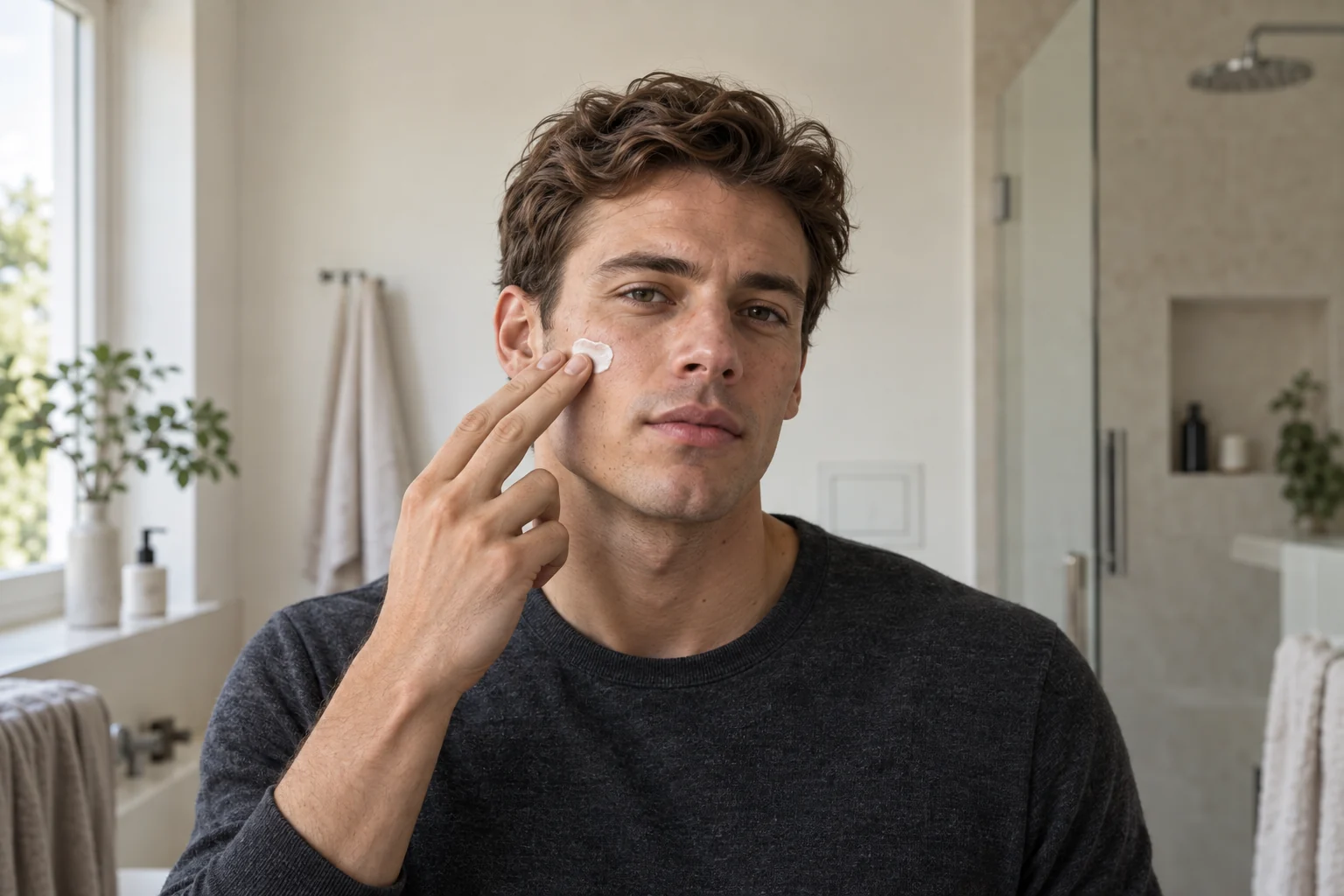
- Identify the skin concern before choosing additional products.
- Build a consistent cleansing, moisturizing and sun-protection base.
- Keep product changes and photo conditions in your review notes.
Skincare is a core part of looksmaxxing because skin is visible across the whole face. Start with the concern you want to address—such as dryness, irritation or breakouts—and a routine you can explain. A long product list is not a strategy, and a filtered image is not a useful skin benchmark.
Describe your skin concern precisely
Separate surface shine, dry-feeling patches, redness after shaving, active spots and marks left by earlier breakouts. These descriptions help you ask a more useful question at a pharmacy or dermatology appointment. They are not diagnoses, and several can appear at once.
Look in ordinary light, without a beauty filter or a heavily sharpened crop. Keep one reference at a normal viewing distance. Note symptoms and where they occur, rather than assigning an overall skin score. ‘The skin around my mouth feels tight after cleansing’ gives you a detail to investigate.
Give the basic routine a clear job
The American Academy of Dermatology recommends mild cleansing, daily moisturizing and outdoor sun protection. Choose a broad-spectrum, water-resistant sunscreen with SPF 30 or higher; follow its instructions, including reapplication. Product choice should take your skin’s needs and tolerability into account.
Make a short inventory with three jobs: cleansing, moisture and sun protection. Write the product already doing each job and when you use it. You may discover that a missing routine step matters more than buying another specialist serum. If a product causes a reaction, do not treat discomfort as proof that it is working.
- Morning: identify the care and sun protection needed for your day.
- Evening: record your cleansing and moisturizing steps.
- Keep treatment instructions separate and follow professional advice where relevant.
Give breakouts their own plan
Acne care is not a contest to use the most active ingredients. The AAD advises gentle care, avoiding picking or scrubbing and allowing a treatment time to work. Persistent acne can benefit from a dermatologist’s assessment. A beauty score does not select a treatment or tell you which product caused a breakout.
List current products and when you started them. Bring that timeline, the main concern and any irritation to a professional conversation. Instead of replacing the whole shelf at once, make changes deliberately enough that you can describe what happened. Do not promise yourself clear skin by the end of a seven-day challenge.
Make shaving part of the skin conversation
If discomfort appears around beard maintenance, include the shaving step in your notes: tool, product, frequency and where irritation appears. A beard-framing decision and a skin-comfort decision can overlap. A sharper-looking outline is not a useful result if the process repeatedly leaves the skin uncomfortable.
Ask for an approach compatible with your skin rather than copying the closest possible finish from a reference. Keep tools clean according to their instructions and follow product directions. Persistent irritation deserves a specific assessment instead of another improvised routine.
Review care without chasing smooth-looking photos
Use similar light, distance and exposure when you take a comparison photo. Keep pores and normal texture visible. A brighter exposure or smoothing effect can make a photo look more even without telling you anything about how the routine is working.
Review the notes alongside the image: what you actually used, how the skin felt and what changed. For a first week, the useful outcome is an organized routine and a clear question about any ongoing concern. Longer-term results depend on the concern and care involved. Your next action may be to continue, simplify or seek treatment advice.
Audit your shelf before adding another product
List each product you currently use, when you use it and why it is there. A cleanser, moisturizer, sunscreen and targeted treatment have different jobs. If you cannot explain a product’s purpose, mark it for review rather than automatically replacing it with a more expensive option. Include shaving products because they touch the same skin and can affect comfort.
Next, note recent changes. Starting several products together makes it harder to know which one helped or caused discomfort. Keep a simple timeline of additions and reactions. This record is useful whether you are simplifying a routine or preparing for a dermatologist appointment, and it gives you something more reliable to discuss than a shelf full of unrelated recommendations.
Make shaving and skin care one coordinated routine
A close shave, uneven beard boundary and uncomfortable skin can become one mixed looksmaxxing problem. Separate the finish you prefer from the way your skin feels afterward. The American Academy of Dermatology recommends preparation, attention to shaving direction and suitable razor care. Review those fundamentals before treating every rough-looking patch as a reason to add a stronger skin-care product.
For your own audit, write down the tool, shaving frequency, products and areas that feel irritated. Keep the routine stable enough to understand a change. If a recurring concern persists, ask a qualified professional about it. A beard style that gives a sharp-looking contour but repeatedly causes discomfort may need a different maintenance approach or a less close finish.
- Record the shaving tool and frequency.
- Keep track of discomfort and the area involved.
- Discuss persistent concerns rather than guessing from a selfie.
Use skin photos to record a concern, not to chase texture-free skin
Natural skin has visible texture. Phone processing, window direction and screen brightness can make the same skin look very different. Use unfiltered references and compare the same region at a similar distance. Avoid extreme close-ups as your only record: a wider image helps you see whether the concern affects the overall portrait or only becomes prominent when magnified.
For breakouts, dryness or irritation, pair the reference with a short note about timing, routine and comfort. Do not infer that a treatment failed because one photo looks less polished. The review should answer the care question you started with. If you need a treatment timeline or diagnosis, get that guidance from an appropriate clinician rather than inventing a universal looksmaxxing deadline.
Build a skin-care brief for your next appointment
A useful brief names the concern, when it started, what you have tried and what happened. Include the product names and frequency rather than saying only ‘I tried skin care.’ Mention shaving, hair products that contact the face and any changes you think may be relevant. The aim is to make the conversation specific enough for an appropriate assessment.
Keep your desired appearance result separate from the clinical question. ‘I want a more even-looking complexion’ is a preference; recurring irritation is a concern that needs context. You can organize both in your looksmaxxing plan while leaving diagnosis and treatment decisions to a qualified professional. A more complete brief often moves the decision forward more than buying another product.
| Record | Useful detail |
|---|---|
| Main concern | The area, appearance and whether there is discomfort. |
| Routine | Product names, frequency and shaving method. |
| History | When the concern began and what changed around that time. |
| Next question | What you need assessed or explained before changing the routine. |
A clear job for every step.
You have several products but cannot explain which concern each one addresses.
List the products, instructions, purposes and start dates. Identify the basic care steps and any prescribed treatment. Bring unresolved irritation or breakouts into a professional conversation with that timeline.
Your skincare routine map
Use the prompts to turn this guide into your own next step. The examples are suggestions; write what fits your situation.
Review comfort, consistency and the concern’s history. Keep photo conditions comparable.
Add a note to any prompt to continue. Your notes stay on this page. Download a text file before leaving.
A few useful clarifications.
01Do I need a long skin-care routine for looksmaxxing?
No. Give each step a clear job and consider what you can use consistently and comfortably. A longer product list does not automatically create a better routine. Use professional guidance for an ongoing skin condition or treatment question.
02How do I tell whether a skin comparison is fair?
Use the same region, camera distance, lighting and unfiltered capture method. Keep a product and care history beside the photos. If the setup changed, label the comparison as uncertain instead of interpreting it as a treatment result.
03Can AI face analysis tell me which skin condition I have?
No. An appearance report is not a clinical diagnosis. Use it to organize questions if helpful, and bring persistent skin concerns to an appropriate qualified professional.
Where your next question leads.

Eye-area looksmaxxing: brows, under-eyes and the whole frame.
Understand brows, under-eye shadows, puffiness and canthal tilt. Build an eye-area looksmaxxing plan around clear observations.

How to looksmaxx: a beginner’s guide to your first plan.
Learn how to looksmaxx with a face audit, clear priorities and practical steps for facial harmony, jawline, eyes and skin. Build your first plan.

Track looksmaxxing progress with a feature-level record.
Record looksmaxxing actions, comparable references and feature observations. Review what changed without relying on a score alone.