

Choosing a shirt colour for the outfit you actually wear
Choosing a shirt colour is easier when you give the decision a real setting. Pick two shirts you already own, keep the rest of the outfit steady and look at each option in ordinary light. You are choosing clothes for a day, not finding a permanent label for your appearance. A useful result is simply knowing which shirt you want to wear with those trousers and that jacket tomorrow.
Start with a small question: would you prefer a quieter combination or a more noticeable shirt? Both can work. The answer depends on your plans, the clothes available and your own taste. There is no need to assign your face a score, diagnose an undertone or buy a whole palette before trying an existing garment. The short comparison below gives you a way to make the choice, record one useful observation and finish.
Name the occasion before opening the wardrobe
Describe the actual day in one sentence. Perhaps you will work at a shared desk, meet a friend for lunch and travel home in a coat. That is more useful than deciding whether a colour is universally flattering. Check any stated dress requirements first. If the occasion calls for a particular kind of shirt, start with garments that meet that requirement instead of hoping a colour alone will make another style appropriate.
Consider what you will really keep on. A shirt mostly covered by knitwear presents a different amount of colour from an open-neck shirt worn on its own. Choose the jacket, trousers and shoes you expect to use. Put them within reach so the comparison stays connected to your day. If the weather means adding an overcoat, the guide to trying a coat over your layers can help you check the finished outfit separately.
Select two comparable shirts from your own clothes
Choose two options that let you notice the colour without changing everything else. A pale blue shirt and a muted burgundy shirt with similar collars are a workable example. If one is a shiny patterned evening shirt and the other is a soft plain work shirt, you are comparing several features together. That can still be useful, but describe it as an outfit choice rather than evidence that one colour always suits you better.
Check that both shirts are ready to wear. Wrinkles, a folded collar or an uncomfortable sleeve can pull your attention away from the colour question. You do not need perfect styling, just a fair enough starting point. Hang the shirts separately so each is visible. Leave the rest of the wardrobe closed. Two clear options make it possible to decide; pulling out ten more shades often turns a practical task into an afternoon of unresolved alternatives.
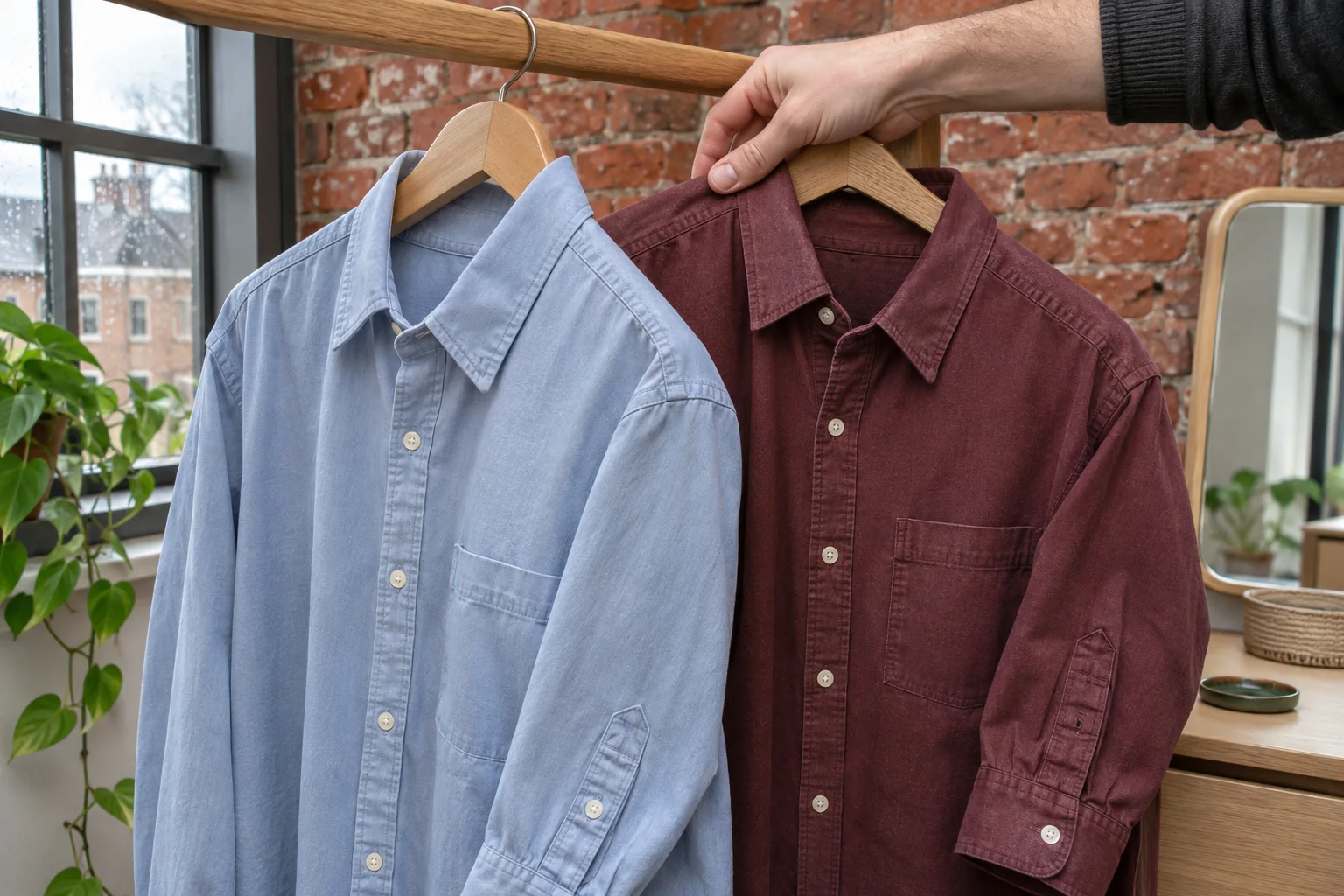
See the fabric in the light you normally use
Stand where you have enough soft light to see the shirt and the surrounding clothes. A window can be a useful starting point, provided you are not standing in a sharply divided patch of sun and shadow. Look at the fabric itself as well as the mirror. Move the hanger or change into the shirt rather than judging a tiny shopping thumbnail against an image of a different garment on your phone.
Then think about the setting where you will wear it. A room with warm lamps may give a different impression from the window. You can make a brief second check there without trying to establish which view is the true version of your appearance. Clothes are worn in changing light. The goal is to choose a combination you are comfortable using, not to find a shade that looks identical in every room or on every screen.
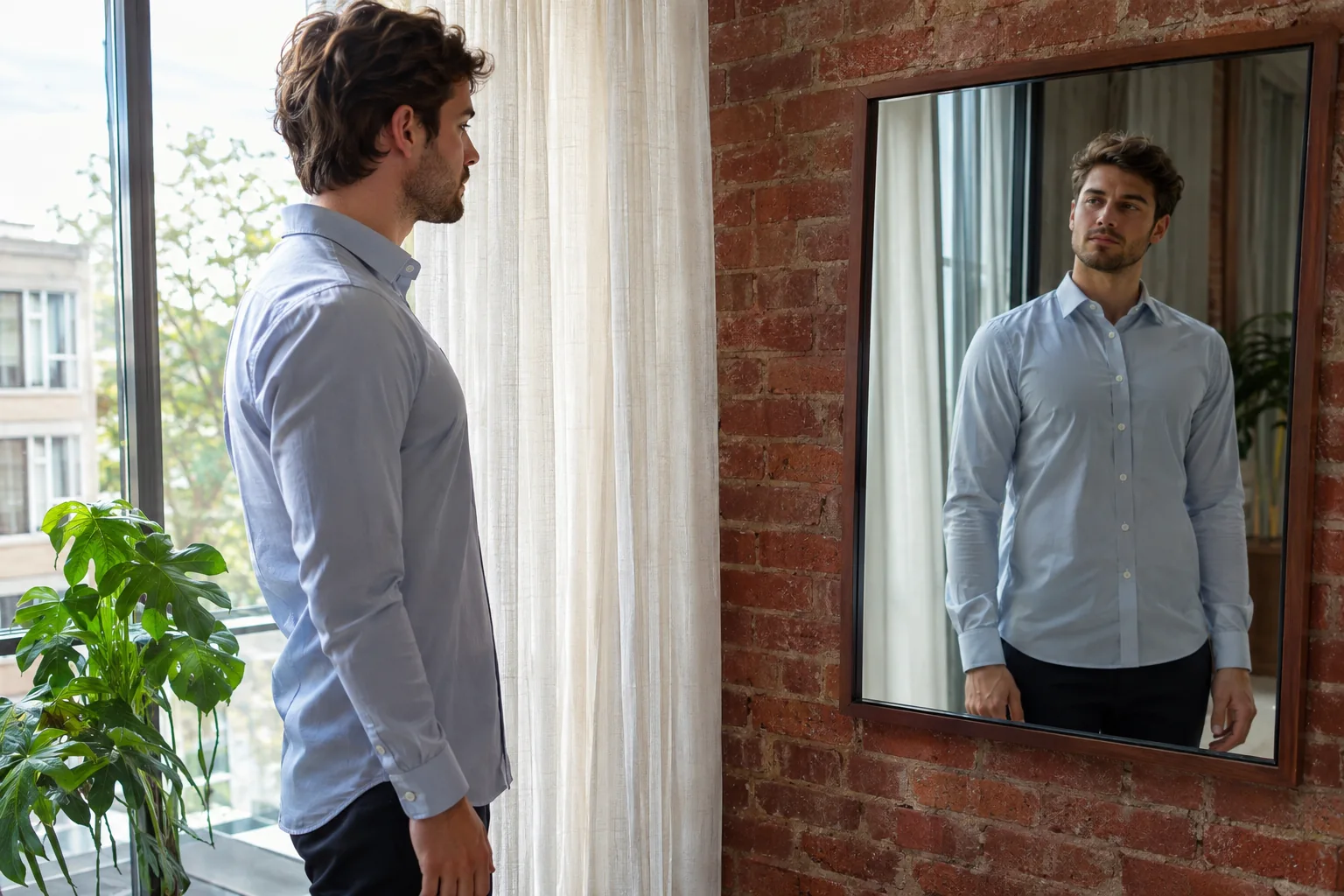
Put each shirt into the complete outfit
Try the first shirt with the selected trousers and any layer you plan to wear. Fasten or open it as you normally would. Let the sleeves and collar settle before looking. Ask a concrete question about the combination: is the shirt the main point of attention, or does it sit quietly with the other pieces? Neither result is a fault. Decide which effect matches the day you described at the beginning.
Change only the shirt for the second attempt. Keep the trousers, shoes and outer layer available in the same places. If the collar is the distracting part, resolve that as a separate fitting question using the guide to checking shirt collar fit. A comfortable collar and a preferred colour are different decisions. Separating them prevents an awkward garment from making you reject a whole colour category you may enjoy in another shirt.
Step back and look at ordinary wearing distance
After checking the details, step back far enough to see the whole outfit. Notice the relationship between the shirt, trousers and shoes. You may prefer the blue because it feels familiar, or the burgundy because you want one stronger area of colour. Say what you notice in plain language. “I prefer this with my charcoal trousers” is more useful than declaring that the other colour is wrong for your face.
Try one normal movement, such as sitting down or reaching for your bag. This is a reminder that you need to wear the outfit, not just hold a pose in front of a mirror. If both combinations feel comfortable and appropriate, there may be no further problem to solve. You can choose the cleaner shirt, the one that is easier to care for today or simply the option you feel like wearing. Preference does not need a technical explanation.
Use an optional plan to keep the comparison bounded
If you already use MogRise, its personal plans can be an optional way to organize this small task. Keep the aim practical: select two existing shirts, try them with one outfit and choose one for a real occasion. MogRise is our publisher’s app, so this is a disclosed suggestion from the same publishing team. You can complete every clothing decision here without an app, and no app assessment determines which colours you are allowed to wear.
Use the plan as a reminder of the next action rather than a request for repeated judgements. One observation might be that you prefer the burgundy with an open jacket but the blue under a particular sweater. That is a note about combinations you tried. It is not a diagnosis, an objective beauty result or a reason to inspect your face daily. End the task when you have an outfit ready; there is no need to keep collecting evaluations.

Treat a photograph as a limited reference
A photograph can help you remember an outfit if you find that useful, but it is not required. If you take one, keep the framing, camera position and light reasonably similar for both shirts. Include enough of the outfit to answer the clothing question. A tightly cropped face leaves out the trousers and jacket that motivated the comparison. Avoid filters or deliberate exposure changes that make the images difficult to compare.
Remember that a camera and screen can show colours differently from the fabric in front of you. If a phone image makes the two shirts look nearly the same, return to the actual clothes rather than forcing a conclusion from the picture. Do not treat a brighter photograph as evidence of a better person or a better face. If taking comparison pictures makes you feel stuck checking yourself, skip the photos and make the choice from a brief ordinary try-on.
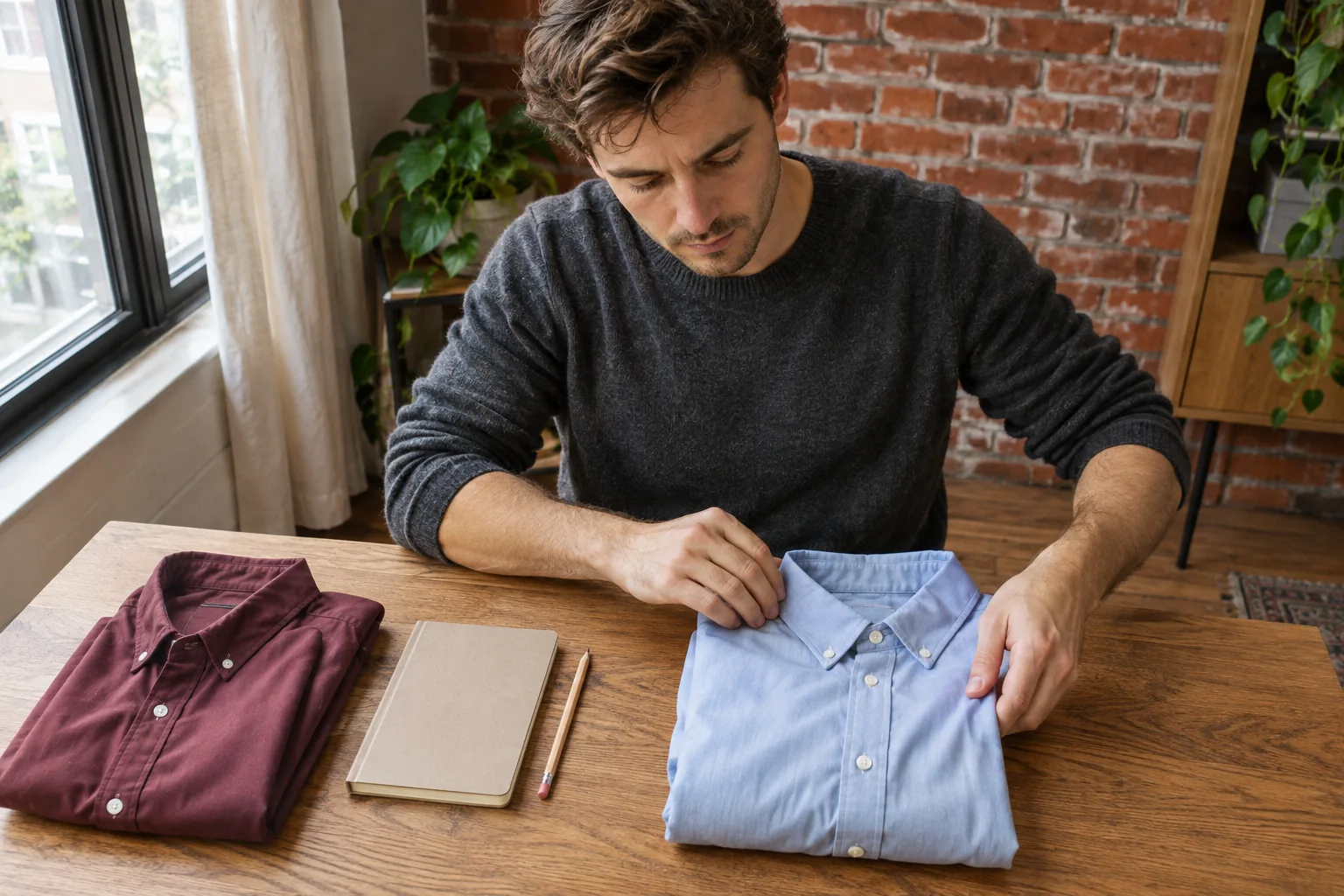
Choose one option and put the alternatives away
Decide what is sufficient for this occasion. Choose the shirt, hang it with the trousers or fold it ready for the morning, and return the other shirt to its place. If both work, keep the second combination as an option for another day. You have learned something useful without needing a winner for all future situations. A colour can remain in your wardrobe even when you do not choose it for this particular outfit.
If neither shirt feels right, name the unresolved issue before shopping. You might need a more comfortable cut, a simpler pattern or a garment that meets a stated dress requirement. Those are clearer shopping criteria than a vague search for the most flattering colour. Try any prospective purchase with clothes you actually use and follow the retailer’s return conditions. The aim is a wearable addition with a purpose, not buying several shades to relieve uncertainty for one evening.
Questions about shirt colour decisions
Do I need to know my colour season first?
No. You can compare two real shirts and choose an outfit without adopting a seasonal category. If you enjoy a styling system, treat it as optional vocabulary. It should not override your comfort, your preferences or the requirements of the occasion.
What if I like both options equally?
Choose either one for today and keep the other combination available. Equal preference is a valid result. There is no need to create a flaw in one outfit to justify wearing the other. A practical tie-breaker such as laundry readiness is enough.
Can a friend help me choose?
Yes, if you want their opinion. Ask about the outfit and the occasion rather than asking them to rate your appearance. A focused question such as which shirt they would choose with these trousers is easier to use than a general judgement about you.
Should I replace colours I did not choose?
No. One comparison only tells you what you preferred with those clothes on that day. Put the alternative away and revisit it when you have a reason to wear it. There is no need to discard a comfortable, useful shirt because another option suited this occasion.