
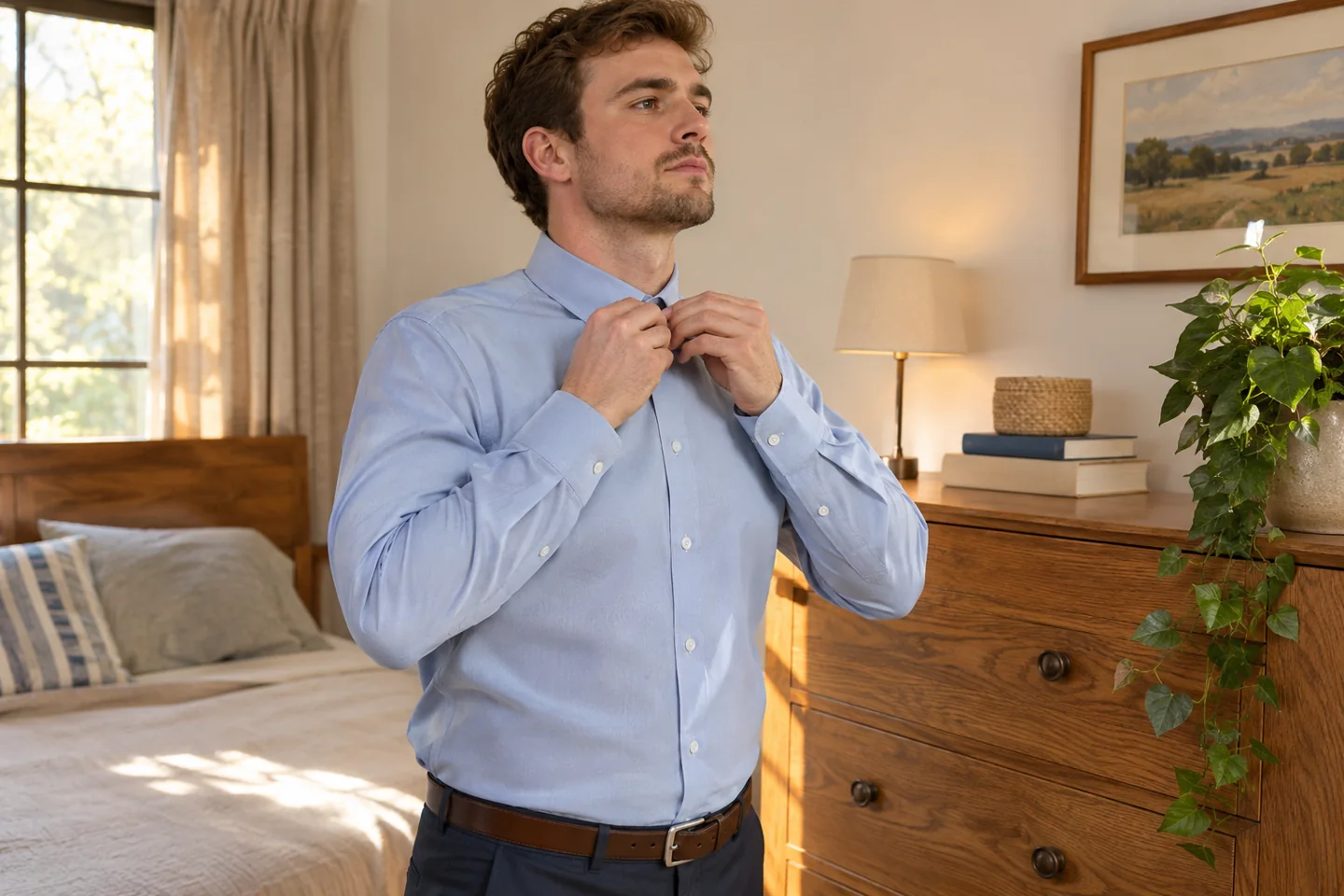
Shirt collar fit starts with how you will wear it
Shirt collar fit is easiest to judge with a real outfit and an ordinary movement. If you need to wear a tie, put on the shirt, fasten the top button without pulling the fronts together, then sit and turn your head as you normally would. If the button is hard to close or the collar presses when you sit, open it. Put aside that shirt for a buttoned occasion and check another one you own. If you always wear it open, try it open before making a decision.
The useful question is whether the shirt works the way you intend to wear it. A collar can look fine in a standing mirror and feel restrictive at a desk. An open collar can also sit differently once a jacket goes on. Decide which version matters before inspecting sizes or taking a picture. That makes a single try-on enough to answer most of the practical questions.
Pick one shirt and set the conditions
Start with a shirt you have worn before, preferably in the condition in which you will wear it next. A damp shirt hanging up after a wash is a poor basis for a comparison. Take it off the hanger, smooth the collar band with your fingers and look at the button and buttonhole. If the stitching is coming undone, deal with that separately. Pulling a loose button through its hole several times will not make the fit easier to judge.
Wear the undershirt you would normally use, if any. Keep a jacket and tie nearby only if they are part of the outfit. For a comparison, change one garment or one element at a time. If you test a different shirt, a different tie knot and a different jacket all at once, you will have a hard time identifying the item that made the difference.
Fasten the button with your shoulders relaxed
Let both arms hang for a moment after fastening the rest of the shirt. Bring the top button and the hole together in their normal position. If you have to lift your chin or pull the shirt fronts toward each other to get the button through, stop rather than trying harder. The shirt has already given you useful information for a day on which you need the collar closed.
With the collar closed, note what you feel at the front and sides. A stiff band may feel noticeable even if it has enough room. Conversely, a soft fabric can press even when it appears smooth in a mirror. If the band feels uncomfortable, undo the button. You can check another collar style or another size without making a claim about how your neck should look. The goal is to choose clothing that you can wear comfortably.

Use a measurement as a reference
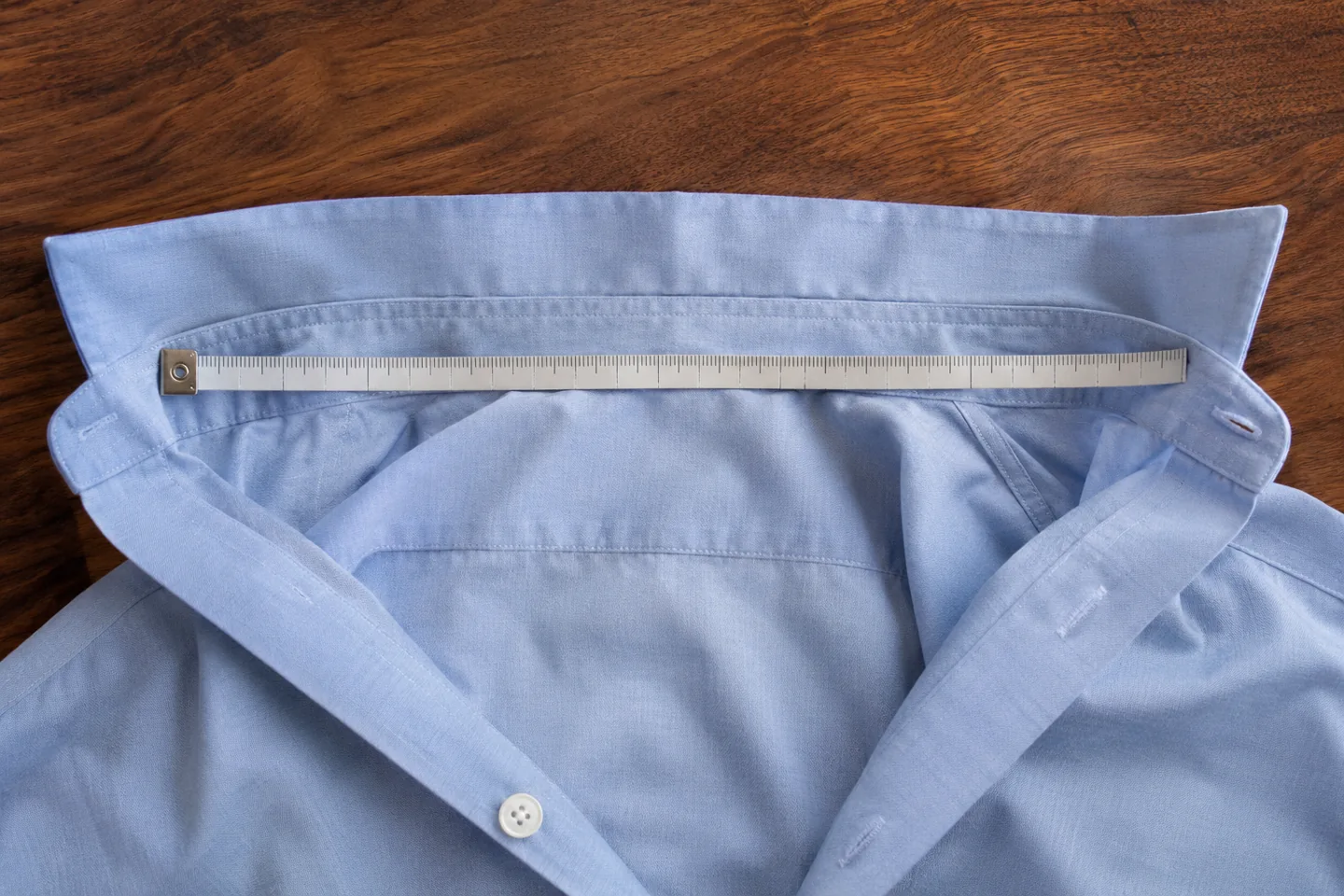
A useful reference is a shirt you already find comfortable buttoned. Lay it flat, open the collar band and follow a maker's instructions for measuring it. Check whether a chart asks for a body measurement, a finished garment measurement or the size printed on the label. Those are three different things. Write the unit next to the figure and record which shirt you measured. If you measure again later, use the same landmarks.
The Charles Tyrwhitt sizing guide shows how one maker presents collar sizes and shirt fits separately. Use the table for the specific shirt and market you are considering. A nominal size from an old shirt is a starting point for trying on, not a conversion that guarantees the same feel in a different cut. Comparing a comfortable shirt with the maker's instructions gives you something more useful to ask about than a size label alone.
Sit down before judging shirt collar fit
Use a chair at the height you are likely to sit at. Let your shoulders settle. Turn to look at something to one side, then look down at a book or notebook as you would during the day. A brief check is plenty. You do not need to hold an exaggerated pose or pull on the collar to see how much it can take. If it bothers you during the normal movement, stop.
Notice whether the collar feels different when you reach for something on the table. Sometimes a shirt pulls through the shoulders when you reach. If the feeling at the neck disappears as soon as you lower your arms, mention the movement when you ask for help choosing a fit. A larger collar might not address a shirt that also pulls across the back. Test the whole garment in the movements that matter to you.

Put on the tie and jacket separately
Try the shirt closed by itself first. If that works, add the tie you actually plan to wear. Bring the knot into place without using it to squeeze the collar. Next, put on the jacket. Look at the collar from an ordinary distance and check how it feels sitting again. If it only feels uncomfortable after adding a layer, remove that layer and repeat the brief check before deciding which part to change.
Sleeves and cuffs are a separate check. If you are dressing for an occasion with French cuffs, make sure you can handle the shirt without rushing, then use the guide to putting on cufflinks to set those up. A shirt can have the right collar and still be awkward at the cuff. Write down the one issue that affects the outfit first so you can resolve it without trying to change everything.

Use MogRise to plan one practical next step
MogRise is our publisher's app. Its optional personal plans can help organize a small action, such as trying a spare shirt with the intended jacket before an event. You can ask the Coach to help turn a note into a short preparation list. The app cannot feel pressure, establish your size or assess the construction of the shirt. The try-on and the maker's instructions remain the basis for the decision.
A note might read, “Blue shirt works open. Closed button presses when seated. Try the white shirt with the navy jacket on Thursday.” Keep it in the app if you already use personal plans, or write it with the outfit elsewhere. A picture is optional and cannot replace what you feel. If you do take one, use it only to remember which shirt and tie you tried. Once you have an outfit that works, stop checking and prepare the rest of your clothes.
Choose an outcome you can act on
Keep an open-collar shirt for open-collar occasions if it works well that way. For a closed-collar outfit, use a different shirt if you already own one that works. If neither fits the use, bring the comfortable reference shirt or your measurement note to a fitting. Explain whether the problem happened standing, seated or after adding the tie. That detail helps separate a question about the band from one about the rest of the shirt.
Try the outfit while you still have time to change it. If you keep a simple morning routine, set the selected shirt out with the other items the night before. Finish the check once you can sit, turn and wear the layers comfortably. A shirt that is ready to wear is more useful than a stack of notes about minor differences that will not affect your day.
Questions about checking a shirt collar
Should I use a one-finger or two-finger rule?
Treat finger-width suggestions as rough fitting conventions. They depend on the width of your fingers, how stiff the band is and how you position your hand. There is no reason to force your fingers under a collar. Start with whether the button closes easily and whether you can wear it comfortably during the actual activity. Use the maker's measurement method when a chart asks for a number.
What if the top button closes but I feel pressure with a tie?
Try the shirt by itself again in the same position. If it feels fine, check how the knot was brought up and whether adding the jacket changed the position of the shirt. Change one thing at a time. A tie is not meant to compensate for a collar that already feels tight. If the pressure remains, choose another shirt for that outfit.
Can I decide from a mirror photo?
A photo can show how the collar sits with a jacket or which shirt you tried. It cannot establish how the band feels when you look down at a desk. Use the mirror at a normal distance, then sit and move in the outfit before making the decision. Avoid cropping the image so tightly that you lose the context of the jacket or shirt fronts.
Is it worth moving the button?
Ask a tailor who can examine that shirt if it is a garment you want to keep wearing closed. Moving a button may change where the fronts overlap and how the collar looks under a tie. Explain when you notice the problem and bring the intended tie if useful. Use an existing comfortable shirt for an imminent event so you have time to decide about the alteration.