
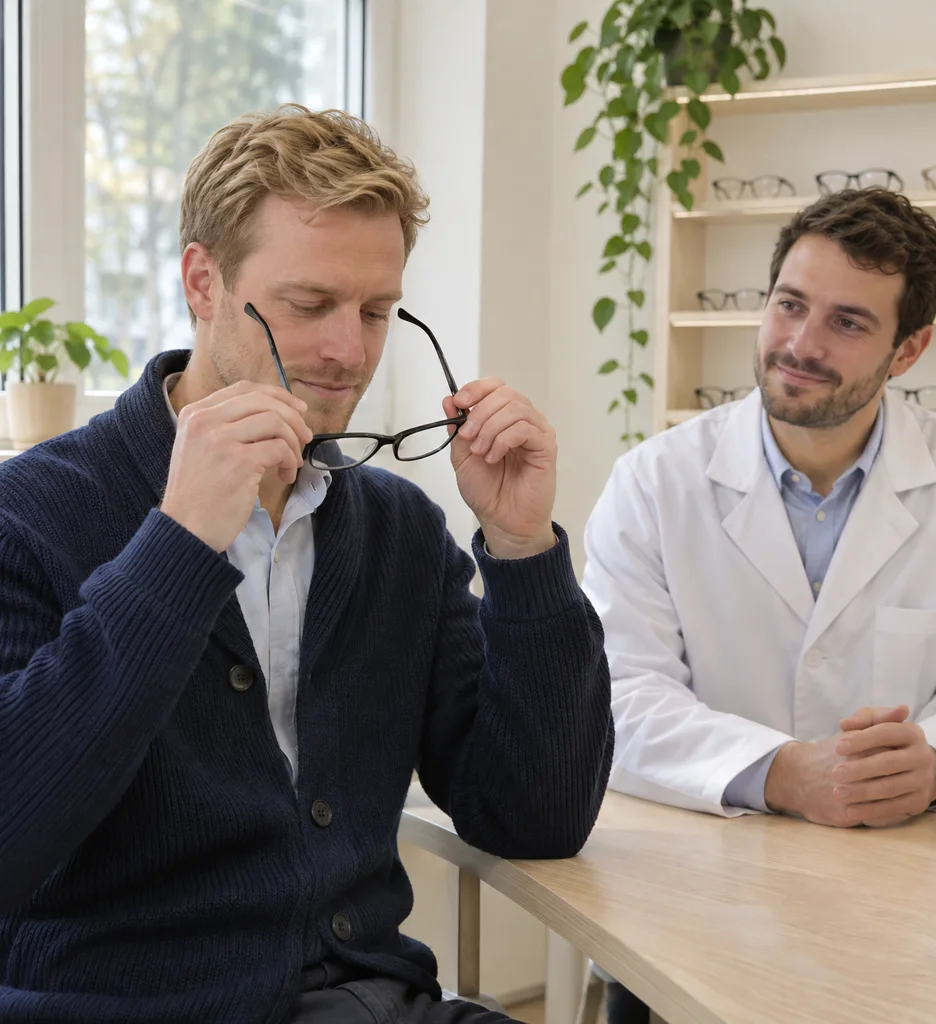
What to do when your glasses keep slipping
If your glasses keep slipping, notice when it happens during an ordinary activity and bring that description to an optician. A frame that moves while you read, walk or look down at a desk can have several explanations. A photo alone cannot tell you which part of the frame needs attention. This guide helps you prepare a fit check with the pair you already own, without heating, bending or changing its parts at home.
Start with an example that you can describe plainly. Perhaps the frame stays in place when you sit upright but moves when you look down to read. Perhaps it feels different after a change in the frame’s condition. The most useful note is what you were doing when you noticed the problem. You do not need to test every possible angle or decide whether the frame looks symmetrical in a close-up.
Stop when the frame is damaged or unsafe to use
Look at the glasses in ordinary light after taking them off with both hands. If you see a cracked frame, a loose lens or a part that no longer moves normally, put the glasses in an appropriate case and ask an optician what to do. Avoid repeated try-ons to see how much the damaged piece can take. If you need the glasses for a task that cannot be done safely with them moving, pause that task and ask a professional about suitable options.
Keep the pair together with any pieces that have already come loose, without trying to reinstall them. Let the optician know what happened, particularly if the frame changed after a fall or being pressed inside a bag. A sudden change can be important context. You do not need to work out exactly which component caused it before asking for help.
If you have a concern about your vision or eye health, discuss it with a qualified eye-care professional. A clothing or accessory routine cannot assess vision or diagnose a symptom. The observations here relate to how the existing frame moves during use.
Describe the situation rather than diagnosing the frame
Choose one ordinary example. Reading a page at your desk is enough if that is when you usually notice the glasses sliding. Keep your normal posture and read normally. You do not need to lean farther than usual or shake your head to make the movement happen. A brief observation during the actual activity is easier to explain than a test that puts the glasses in an unusual position.
Write down whether the movement occurs immediately or after you have been wearing the pair for a while. Include the direction in everyday words. You might say the frame moves down when you look at a notebook or one side shifts when you take off headphones. This does not establish a cause. It gives the optician a situation to ask about and, if useful, reproduce.
If you usually wear the pair with a particular headset, hat or helmet, mention it. Bring that item only if it is useful and practical. An accessory that touches the temples can change the experience of wearing the glasses. Describing that contact is more useful than guessing that the frame needs to become tighter.
Check the condition without adjusting anything
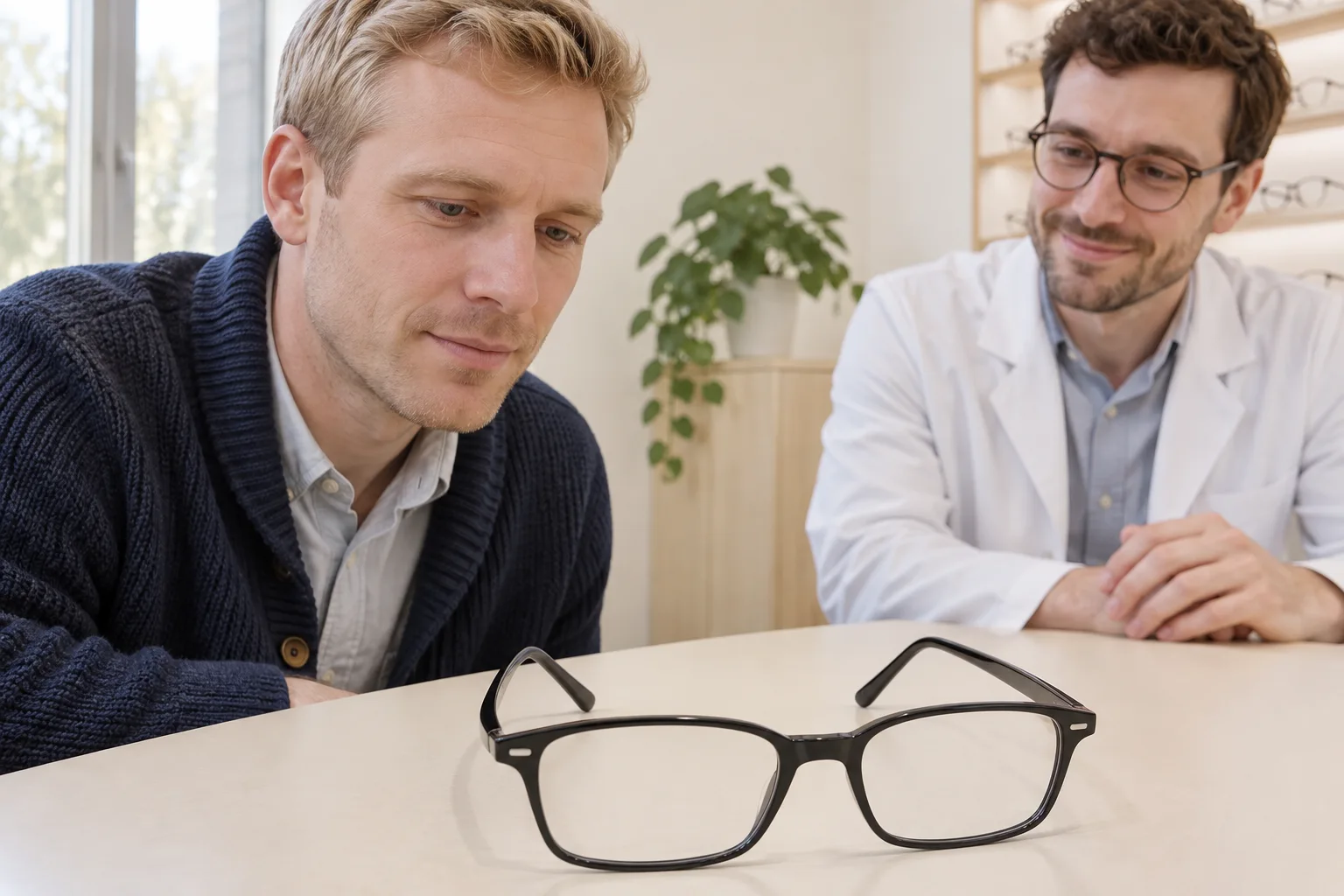
Open the glasses normally and rest them on a clean surface as the maker recommends, keeping the lenses away from rough material. Look for a visible difference compared with how the pair normally appears. Note a missing nose pad, a temple that feels loose or an edge that catches on clothing. Do not press the frame against the table to force the two sides to touch. The design may not lie flat in the way you expect.
If dirt is the only visible issue, follow the manufacturer’s guidance for routine cleaning. The guide to cleaning glasses explains how to handle lenses gently and when to follow the maker’s own directions. Cleaning the frame can make it easier to inspect, but a clean frame may still need a fit check. Avoid treating every instance of slipping as a cleaning problem.
Apollo’s optician guide in German describes checks of the bridge and temples when a frame slips. Use those terms if they help describe where you notice movement. An optician can inspect the actual frame and decide which options apply.

Make a short note for the appointment
Record the pair, the activity and what changed. A sample note might say, “My everyday black frame slips down when I look at a notebook. I noticed it after a trip. I wear it with headphones in the afternoon.” This is more specific than saying the frame is simply too big. It also gives the optician room to inspect the bridge, temples and condition without starting from your guessed explanation.
Mention if the pair is comfortable in one situation but not another. You can ask whether the frame can be checked while you sit as you normally do. It may be useful to show how you put the glasses on or how you take off the headphones. Keep the example brief. If the movement does not happen during the appointment, your note still gives the professional something concrete to work with.
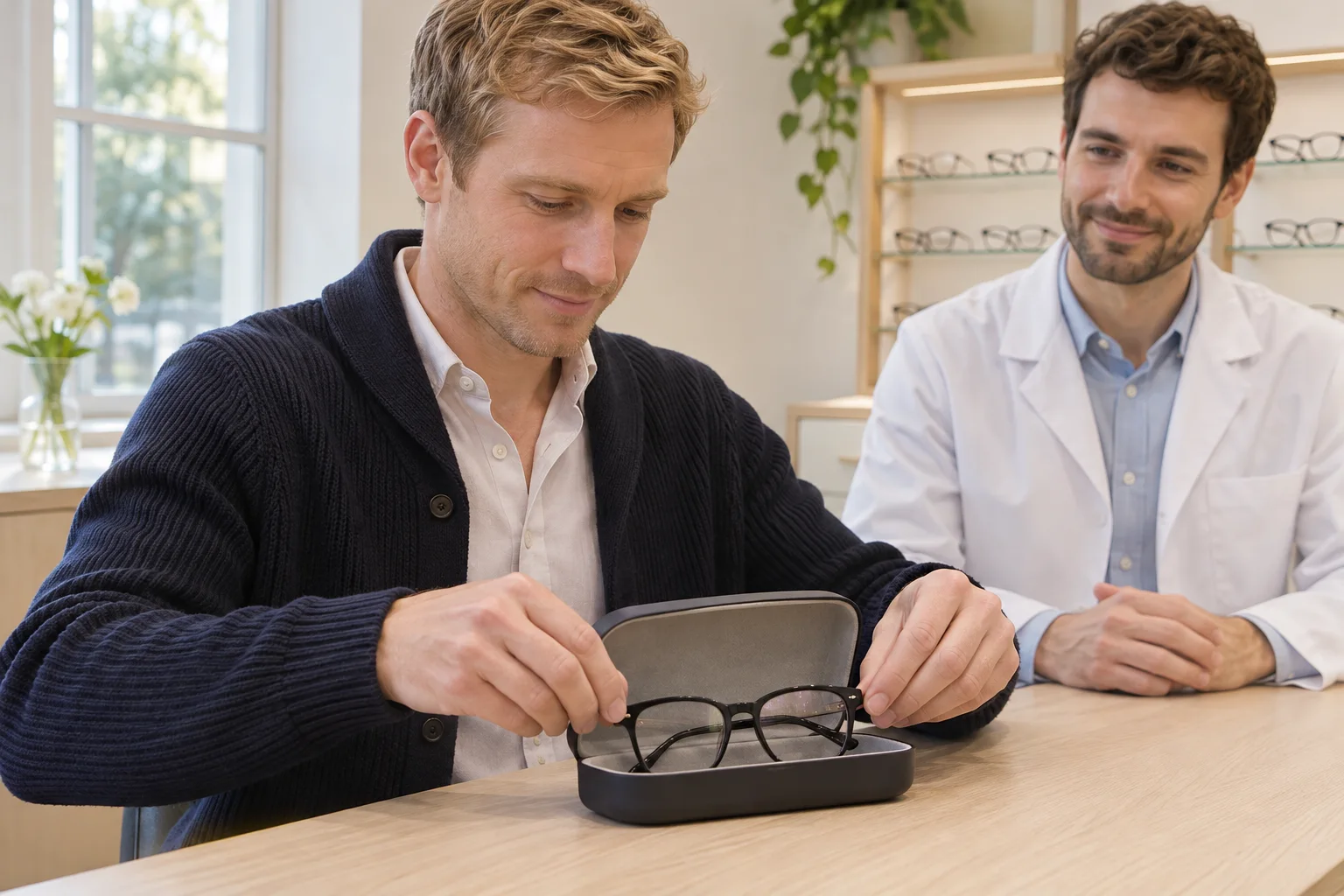
Store the glasses safely on the way. Follow the maker’s instructions for folding the temples and use a case that fits without pressure. Do not put a visibly damaged frame into a tight case that needs to be forced shut. If you have another pair that works for the trip, bring it separately if the optician would benefit from comparing them.
Use MogRise to organize one preparation task
MogRise is our publisher’s app. Its optional personal plans can help organize a specific action, such as putting the glasses in their case and writing down the reading example before an appointment. If you use the Coach, a question can help you decide what to bring or how to keep the preparation manageable. These tools cannot inspect a frame, diagnose why it slips or provide a professional adjustment.
Write the short note wherever it is convenient. You do not need to upload a photo of your face or start a daily tracking routine. A single observation is enough to prepare a question. If you already keep a simple morning routine, you can use it to remember the case on the day of the appointment. The fit concern does not have to become a repeated check each morning.
Finish this preparation once you have a clear description. If there is a delay before the appointment, you can add a new detail only if it comes up naturally in ordinary use. Trying to provoke the movement over and over is unlikely to make the note clearer.
At the fitting, describe what feels usable
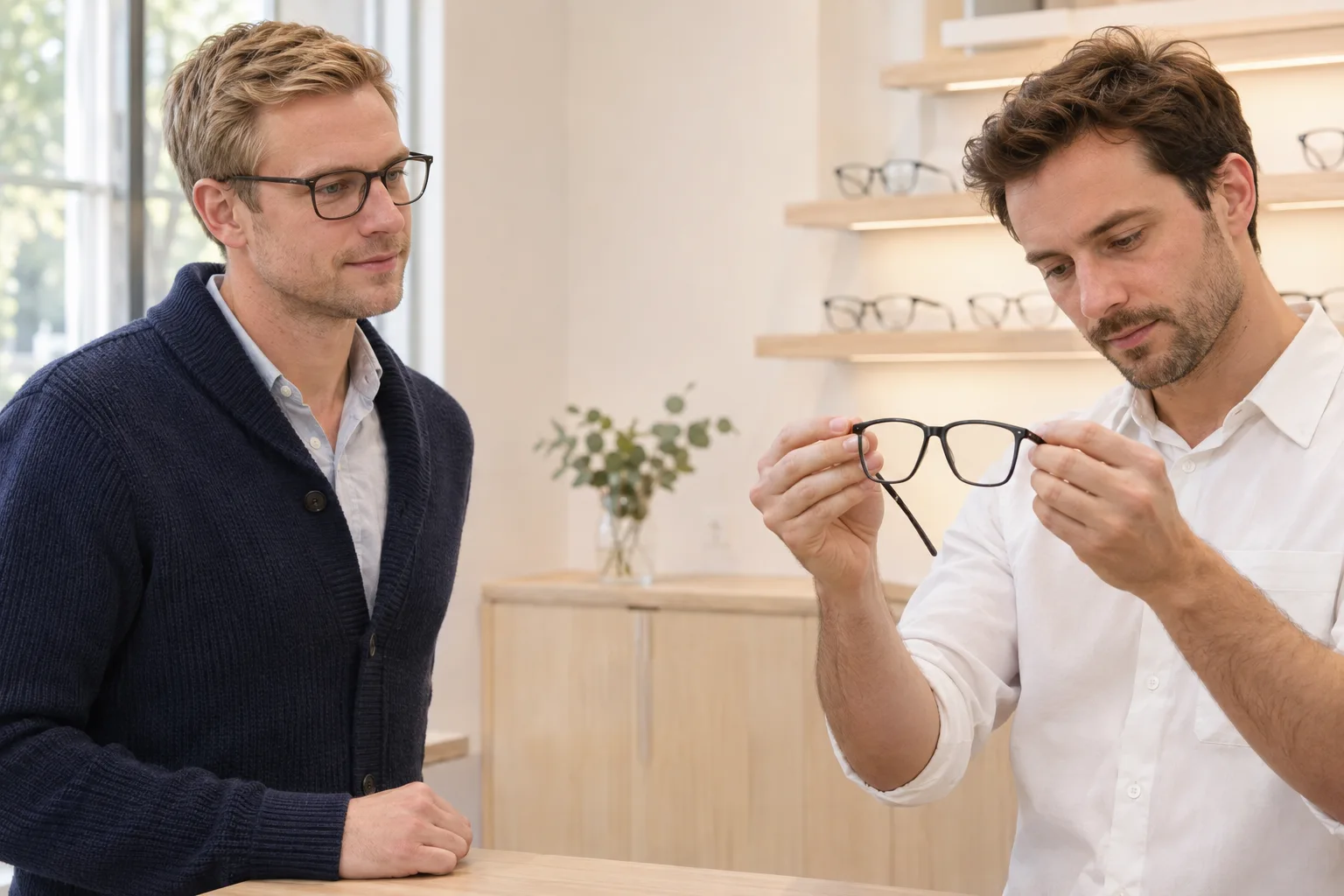
Explain the activity first and let the optician inspect the frame. If an adjustment is made, try the pair in ordinary positions as directed. Pay attention to whether you can read or move comfortably and whether a part now presses or catches. Tell the professional if the experience differs from your usual fit. A frame that stays in place by pressing uncomfortably is not the result you are looking for.
Ask what to do if the movement returns. You may be able to come back for a check or follow specific handling instructions for that frame. Avoid attempting the same adjustment at home from memory. The professional has seen the construction and can assess which parts can safely be moved.
Return to ordinary wear
Once the fit is usable, return to normal wear. You do not need to compare facial symmetry, photograph the frame repeatedly or assign a score. The question was whether the pair works during a specific activity. If it does, you can stop checking.
Questions when glasses keep slipping
Can I bend the temples myself?
Ask an optician about the actual frame. Different materials and hinges allow different adjustments, and forcing a part can cause damage. A short description of the movement is enough to start the conversation without trying a repair first.
Should I buy pads or grips before the check?
Start by asking what the frame needs. An accessory can affect where the frame sits or how it feels. An optician can tell you whether a compatible option makes sense for this pair. You do not have to purchase anything just to describe the problem.
What if the glasses only slip with headphones?
Bring that detail. Say which activity you were doing and whether a temple shifts when you put on or remove the headphones. If useful, bring the headphones along. The professional can inspect how the two items interact.
What if I cannot recreate the movement?
Explain the usual situation and when you first noticed it. You do not need to make it happen in a more extreme position. Your note can still help the optician decide what to examine.