

How to clean glasses without making it a project
Knowing how to clean glasses is useful when a fingerprint interrupts your view or a dusty pair is the last thing you notice before leaving home. The aim is a clear, comfortable pair you can wear, not a flawless object that needs checking all day. Start with the care instructions for your own lenses and frame. Choose a compatible cleaning method, a clean optical cloth and a place where you can handle the glasses safely.
This guide builds a short sequence around those decisions. It also explains how an optional MogRise planning question can make the sequence easier to remember. An app cannot identify a lens coating, approve a chemical or distinguish a scratch from residue in a photograph. Those questions belong with your optician. You can follow the entire practical routine without an app, a face score or a new purchase if you already have the suitable supplies.
Identify the pair before choosing the cleaner
Prescription glasses, sunglasses and specialised eyewear may come with different instructions. Keep the information supplied with your pair, or ask the dispensing optician what is suitable. A bottle marked for a phone screen is not automatically approved for your spectacle lenses. Likewise, a cleaning trick that worked on an older frame does not establish compatibility with a new one. Check the actual product rather than relying on a remembered ingredient.
Use a stable, uncluttered surface. Put the case within reach and keep the glasses away from a precarious edge. If you need them to see the instructions clearly, read the instructions first, then put everything in order before taking them off. This small preparation matters more than assembling an elaborate kit. A compatible cleaner, an appropriate clean cloth and the case are enough for the workflow described here.
Separate surface maintenance from fit. Glasses that slide or press behind your ears need a different conversation from glasses with fingerprints. The existing glasses-fit guide helps you describe fit and comfort without turning lens cleaning into a reason to replace the frame.
Inspect the cloth as carefully as the lenses
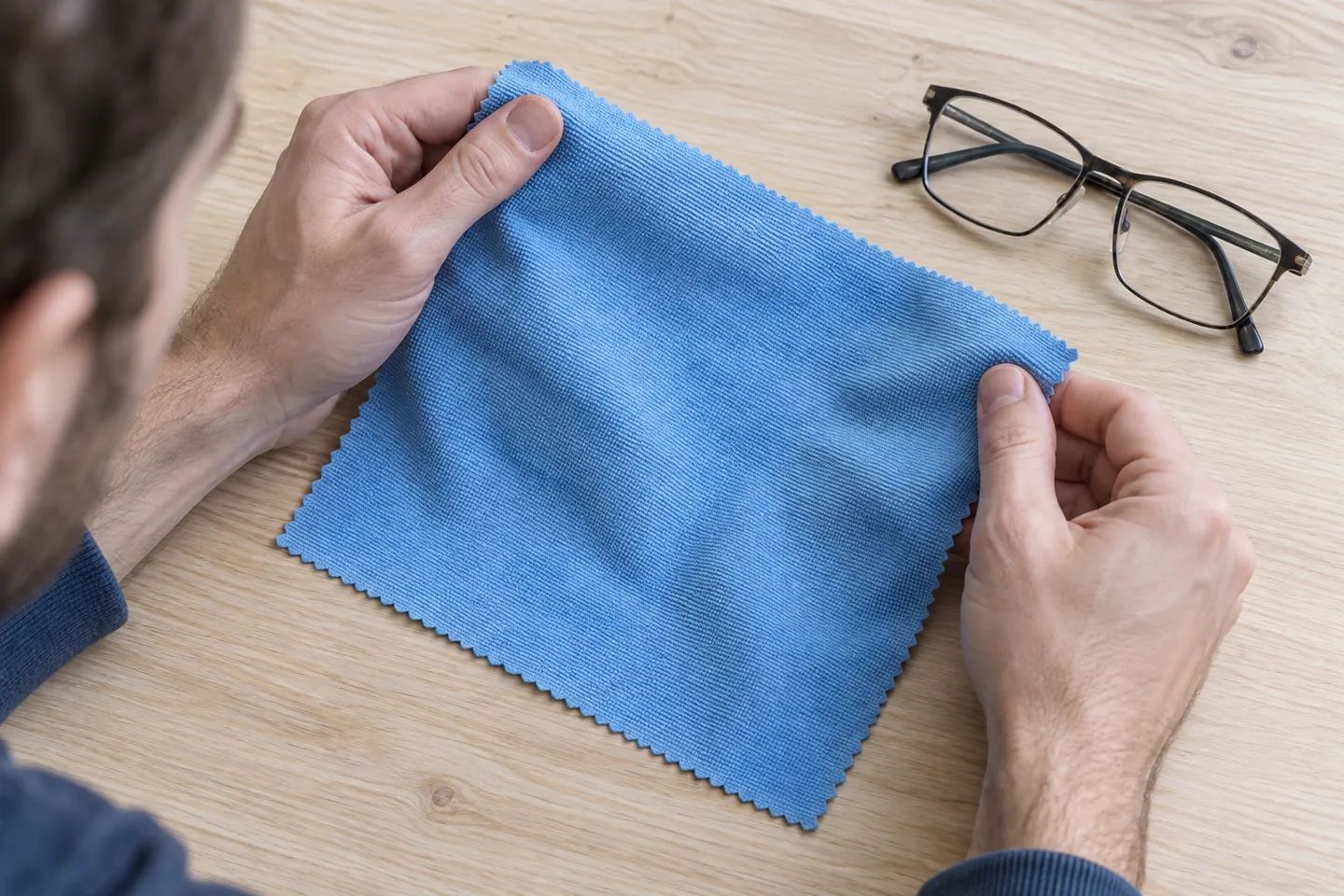
A cloth kept loose beside keys, crumbs or workshop materials should not be treated as ready simply because it looks like microfibre. Unfold your optical cloth and inspect it in ordinary light. If you notice grit, a rough particle or uncertain contamination, stop and use another suitable clean cloth. Do not rub the suspect material across the lens to see what happens. Store the cloth so its working surface stays protected.
Follow the cloth's own washing instructions when it needs cleaning. Keeping it usable is a separate task; you do not need to wash it during every lens clean. If the supplied guidance is missing, ask the optician or manufacturer before improvising with detergents or heat. For travel, give the cloth its own clean pouch rather than sharing the bottom of a bag with coins and toiletries.
Also inspect the glasses briefly. Obvious grit, a loose component or a mark that looks like damage changes the next step. A short check is enough. You are deciding whether an ordinary cleaning session is appropriate, not searching for microscopic imperfections.
Use the approved method gently
ZEISS's lens-cleaning instructions describe dedicated optical spray with a microfibre cloth and gentle handling by the frame. They also caution against treating a sleeve, tie or tissue as a lens-cleaning tool. These are useful manufacturer instructions, not a requirement to buy that brand. Follow the equivalent approved instructions for your own pair and supplies.
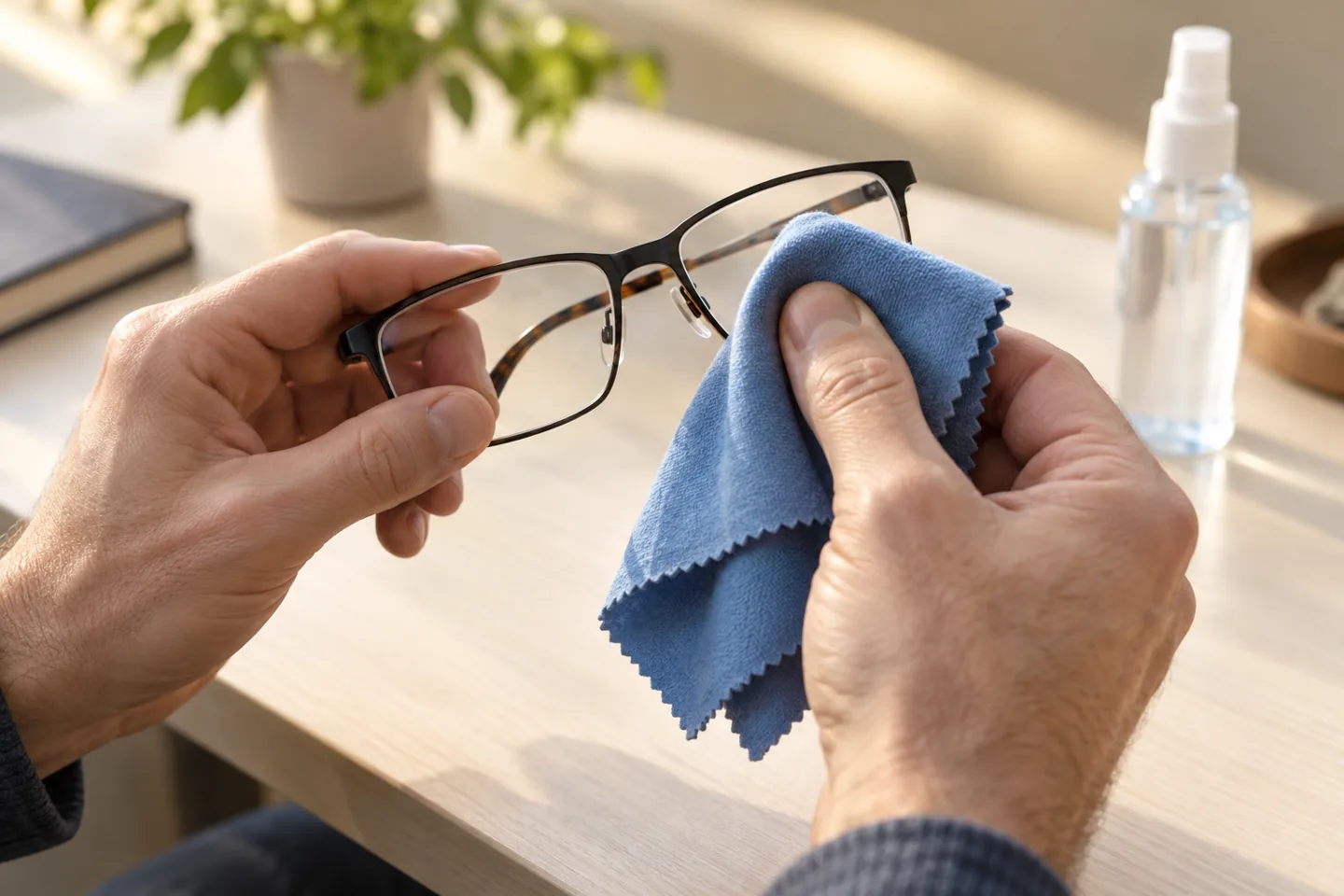
For a spray-and-cloth method that your optician has confirmed is suitable, apply the product as directed, support the frame and clean gently with the clean cloth. Avoid squeezing the bridge or pushing hard on a lens. Complete one side, then the other, using the method on the label. If the pair has visible coarse material, use the manufacturer-approved preparation first; do not grind it into the surface with a dry cloth.
Keep household chemicals and homemade mixtures out of this routine. You do not need to experiment with a stronger substance to complete an everyday clean. If the cleaner's instructions are unclear, postponing the task while you ask a question is more sensible than guessing.
Include the frame without dismantling it
The parts you touch can need attention too, but this does not make the whole frame a DIY repair project. Follow the frame's care instructions for accessible areas. Handle it gently and avoid directing pressure into hinges, nose pads or a loose fitting. Do not remove screws, bend an arm or prise off a component during an ordinary clean. Keep maintenance and adjustment as separate decisions.
For example, fingerprints on a temple are a routine surface issue. A nose pad that moves unexpectedly is a reason to ask an optician. Combining both into an aggressive scrub can make it harder to explain what was wrong originally. When you set the glasses down between steps, use the case or another protected arrangement that avoids resting the lenses on a hard surface.
A practical stopping point is a pair that has received its instructed clean and can be worn comfortably. You do not need to remove every trace around an inaccessible fitting yourself. Leave awkward details to someone who can inspect the actual frame.
Give the routine one useful place in your plan
The real planning question is often simple: you have the right supplies, but never find them when you need them. Choose one convenient home for the cloth, compatible cleaner and case. Then attach preparation to an existing event, such as putting your bag away. This is a cue to keep supplies available, not an instruction to clean lenses repeatedly when they are already usable.
MogRise is the app made by this website's publisher. Its official product description includes a personal plan, daily actions and the LooksMax Coach. If you already use it, bring one implementation question to the Coach: “I wear glasses at work and forget my clean cloth. Help me fit one simple preparation step into my existing morning routine.” Give your time limit and explain which care instructions your optician supplied.
Use the response to organise a habit, not to authorise lens treatment. Check any proposed material-care step against the real instructions. A general app suggestion cannot know an unlabelled coating. The realistic-plan guide offers a useful way to keep the action small even if you prefer paper notes.
Check once in normal light, then move on
Put the pair back on and make one ordinary comfort and visibility check. You are asking whether the cleaned glasses are usable, not whether they photograph perfectly under a spotlight. If a clear smear remains, check whether the cloth or method needs attention before repeating anything. Repeating the same ineffective pass with more pressure is not a troubleshooting plan.
Do not use a face-analysis score as evidence that the cleaning worked. A photograph can contain reflections even when lenses are clean, and it cannot certify their surface condition. There is no need to produce daily comparison pictures for this routine. If the task starts becoming an exhausting search for defects, reduce the checking and return to ordinary use.
A mark that remains after the appropriate gentle clean deserves a different decision. Tell your optician what you used and what you noticed. Avoid promising yourself that another product will erase it. Cleaning, repair and assessment are different jobs, and a persistent problem should not become an endless home experiment.
Build a travel version around availability
At home you may have a convenient desk or counter; outside, a safe place to set things down can be harder to find. Carry the case and an approved clean cloth in a protected location. If you use a packaged optical wipe that is suitable for your lenses, follow its instructions rather than treating every wet wipe as interchangeable. Do not substitute an unknown cleaning wipe because it is the only one nearby.
Before a journey, check that the supplies are actually present. That is a more useful habit than repeatedly inspecting your face in the glasses. If cleaning is needed but you cannot handle the pair safely, wait until you have a stable place. A sleeve is convenient, but convenience does not establish suitability.
Think about one common situation: a fingerprint appears while you are commuting. The useful plan is to have the appropriate tool and a safe opportunity to use it. It is not to carry several competing cleaners or research a different method each time. Keep the travel arrangement simple enough to maintain.
Protect the finished pair and the clean cloth
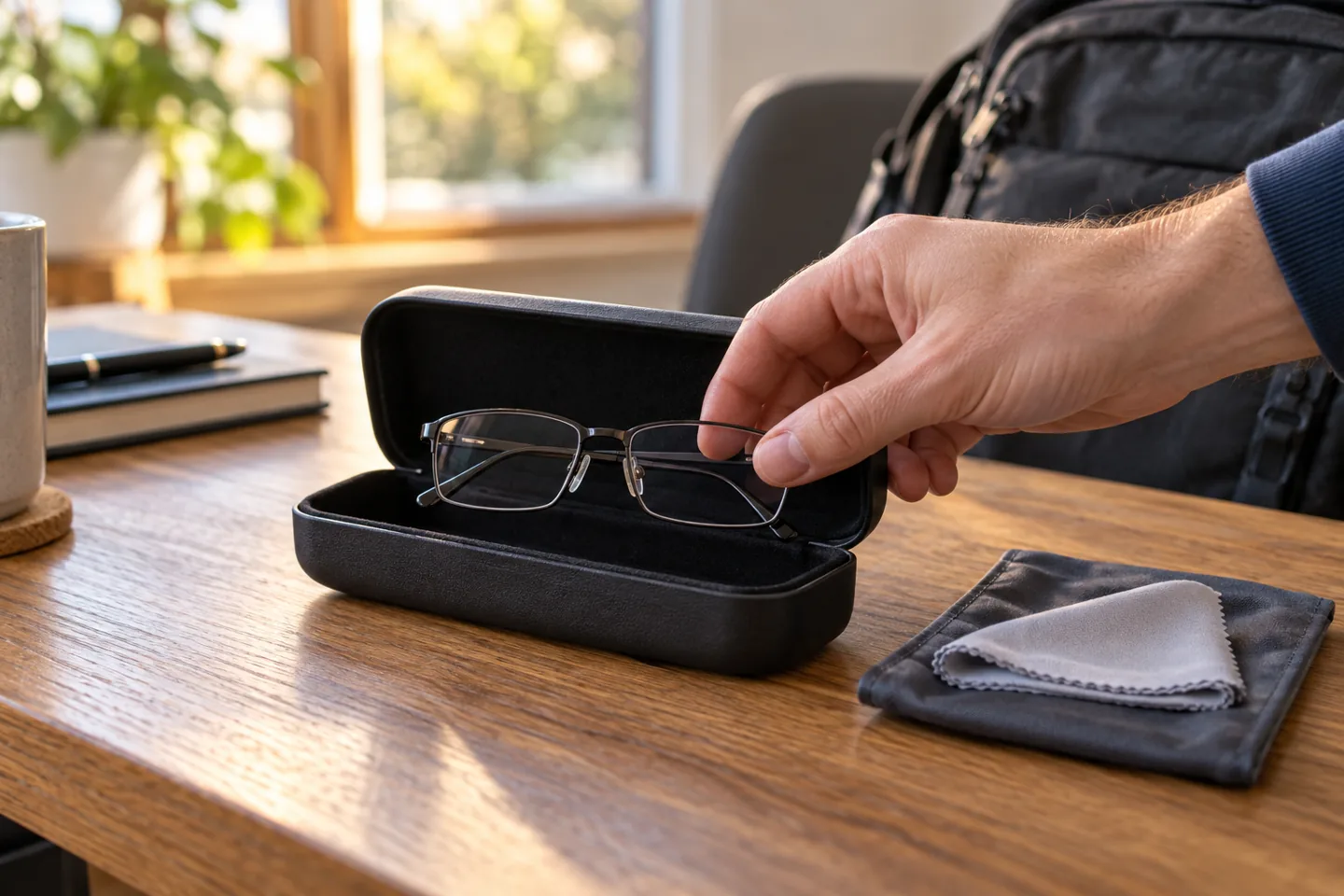
Return glasses you are not wearing to their appropriate case. Store the cloth separately in a clean place so it does not collect grit from the frame compartment or bag. Avoid creating a storage routine that involves balancing the glasses on a table edge while you search for the case. Put the case where you naturally take the pair off.
For someone who changes between prescription glasses and sunglasses, a clear place for each pair can prevent hurried handling. You do not need an aesthetic display or a collection of organisers. Two identifiable cases may solve the actual problem. Check that the frame sits comfortably inside rather than forcing the lid shut.
This is also where the routine can join an existing morning grooming sequence: choose what you need for the day and keep the supplies accessible. The useful result is less searching and less improvisation, not a longer checklist or a new appearance standard.
Know which questions need an optician
Ask for help when a component is loose, the frame has changed shape, a coating looks damaged or a mark persists despite the recommended clean. Explain the sequence you followed and bring the pair itself. “This mark stayed after the approved spray and clean cloth” is clearer than saying you tried everything. Stop adding methods while waiting for advice.
If your vision or eye comfort changes, seek appropriate professional advice rather than assuming the cause is dirty lenses or asking an appearance app to diagnose it. The practical boundaries of this article are surface care and habit organisation. It does not assess prescriptions, eye conditions or material damage.
An adequate routine can be very modest: know the care instructions, protect the cloth, clean gently when needed, check once and store safely. Keep what works in your own day. If a step creates more worry than usefulness, simplify it. Ordinary glasses are tools you wear to live your life, not objects that need constant scrutiny.
Frequently asked questions
Can I clean glasses with my shirt?
Use the approved optical tool instead. Clothing is not automatically clean or suitable for lenses, even when it feels soft. Keep a protected cloth available so the convenient choice is also the one supported by your care instructions.
Do I need to clean them at a fixed time every day?
No universal schedule is needed here. Respond to actual surface dirt and your pair's care guidance. A morning cue can mean checking that supplies are available; it need not become a compulsory cleaning session or repeated inspection.
Can MogRise tell whether a lens is scratched?
Do not use it for that purpose. A personal plan or Coach question can help organise the routine, but a photograph and an appearance analysis cannot certify coating condition. An optician can inspect the physical pair and discuss the appropriate next step.
What if the lenses still look smeared?
Check the cloth and the instructions before doing anything else. If the recommended gentle method does not solve it, stop experimenting and ask the optician. Do not escalate pressure or introduce household chemicals simply because the first pass was disappointing.