
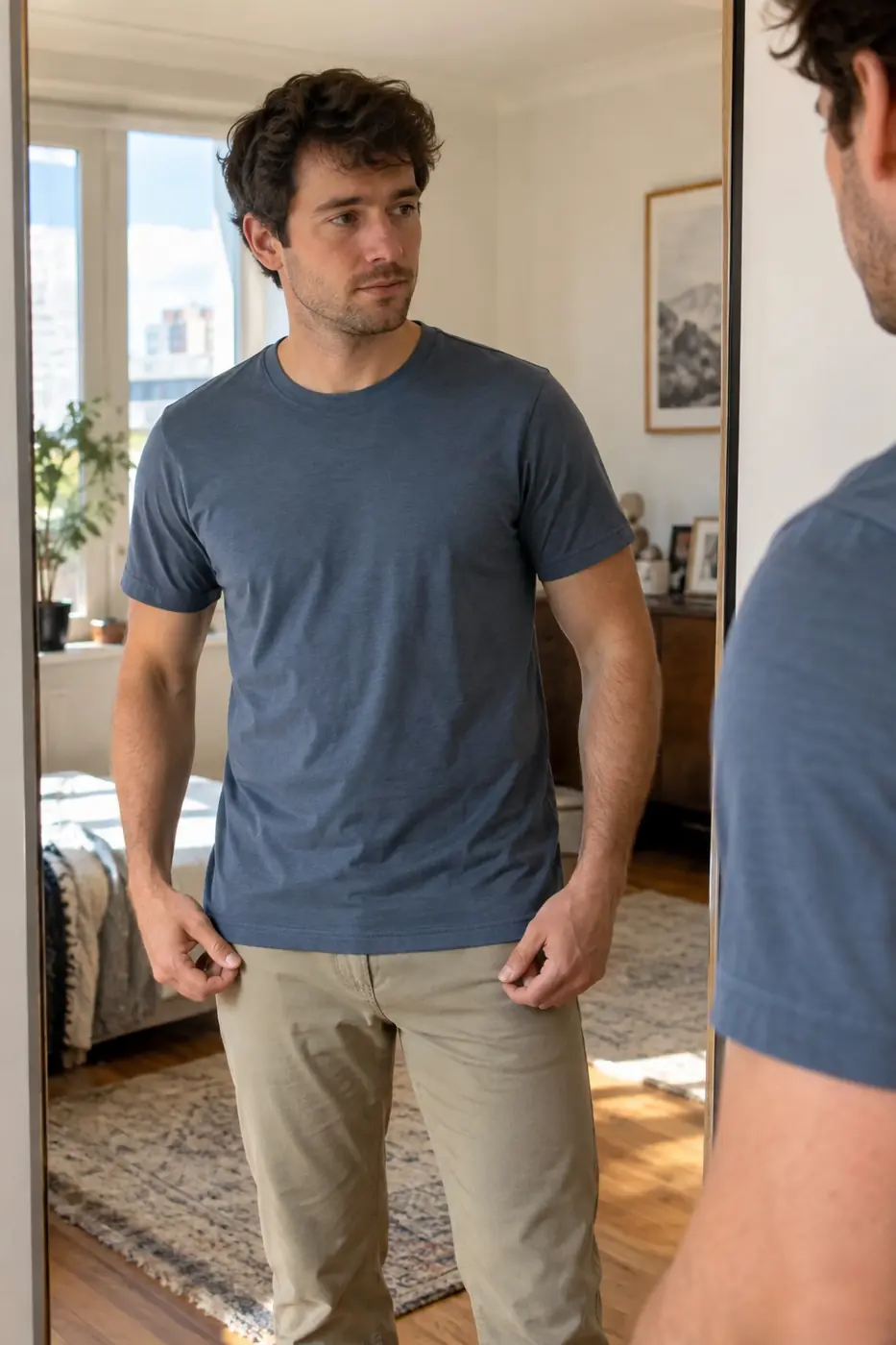
How should a men's T-shirt fit? Start with a shirt you already wear
How should a men's T-shirt fit when a size label tells you almost nothing about the cut? Begin with an ordinary shirt you reach for often. Put it on, stand at a normal mirror distance and name what works: perhaps the shoulders stay in place, the chest has room to breathe and the hem does not need constant adjustment. Then name one irritation. A fit check concerns comfort and movement, not a body rating.
This guide uses five checkpoints: shoulder seam, chest and torso, sleeves, hem and movement. None has a universal measurement that suits every person or every style. Loose and close tees can both fit as intended. Does it work on a normal day? Keep a favorite nearby and test one change at a time.
Find the shoulder seam before judging the size
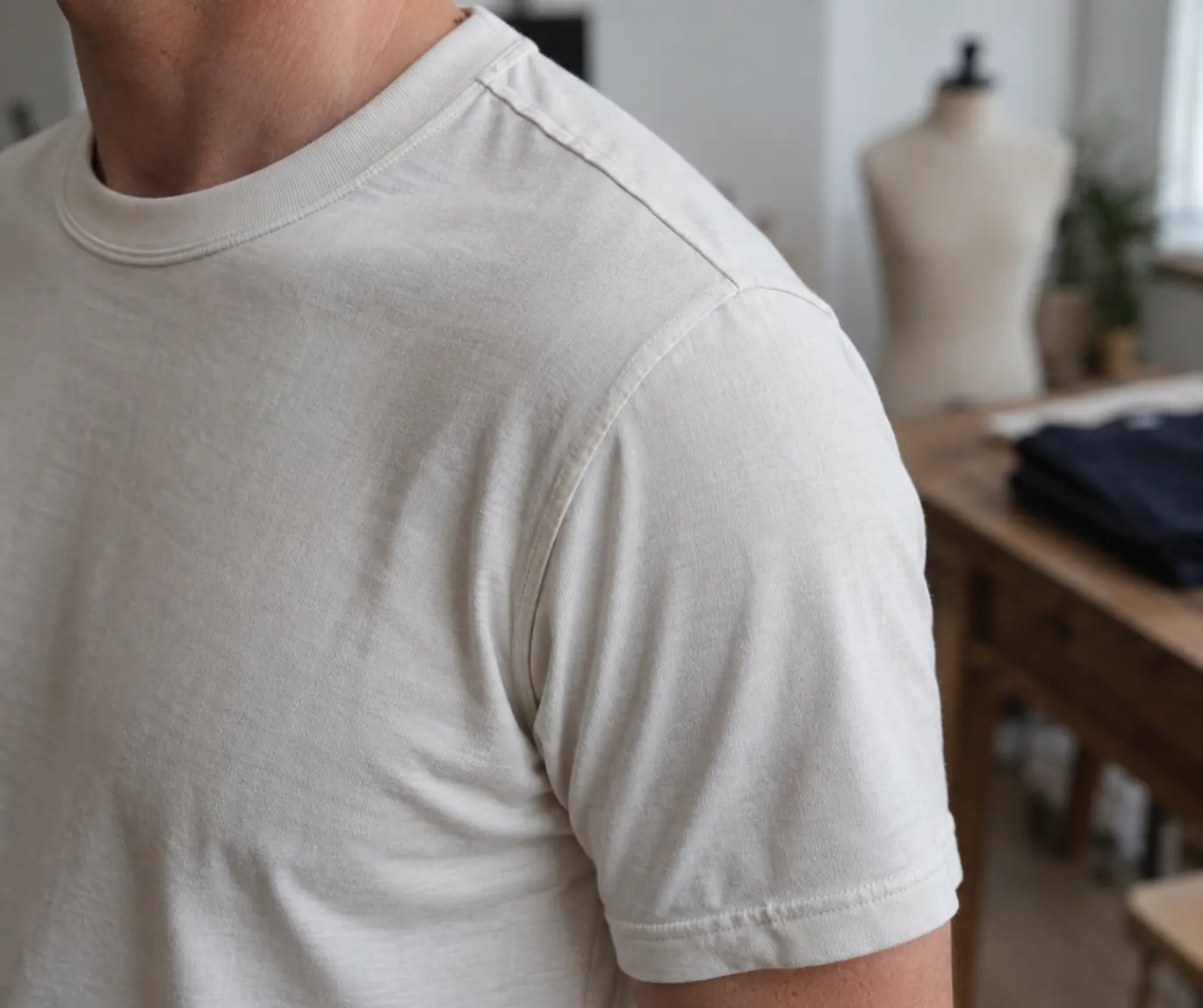
On a conventional set-in-sleeve T-shirt, find where the shoulder panel meets the sleeve. The seam usually sits near the edge of your shoulder when the shirt is meant to look regular rather than oversized. If it pulls inward and the sleeve rides up, the upper body may be too narrow. If it falls well down the arm, that can be an intentional dropped-shoulder cut; do not mistake a design choice for a sizing defect. Look at the product's stated fit and at the rest of the garment before deciding.
Move your arms forward, then relax them. A useful shoulder line stays comfortable without a hard tug across the upper back. If you must keep pulling the shirt down after each movement, try another cut or a larger size. If the seam lands lower but the torso hangs cleanly and movement is easy, the looser shape may be exactly what you wanted. Compare it with your own reference tee under the same light rather than with a cropped photograph of a model.
Give the chest room without losing the intended shape
The fabric across your chest should follow the chosen cut. For a regular fit, it can skim the body without stretching into horizontal tension lines when you inhale or reach. For a relaxed fit, extra ease is part of the design. Pinch a little fabric at the side while standing naturally: the goal is to notice whether there is room to move, not to hit a prescribed number of centimeters. Different fabric weights and knits fall differently even at the same listed chest width.
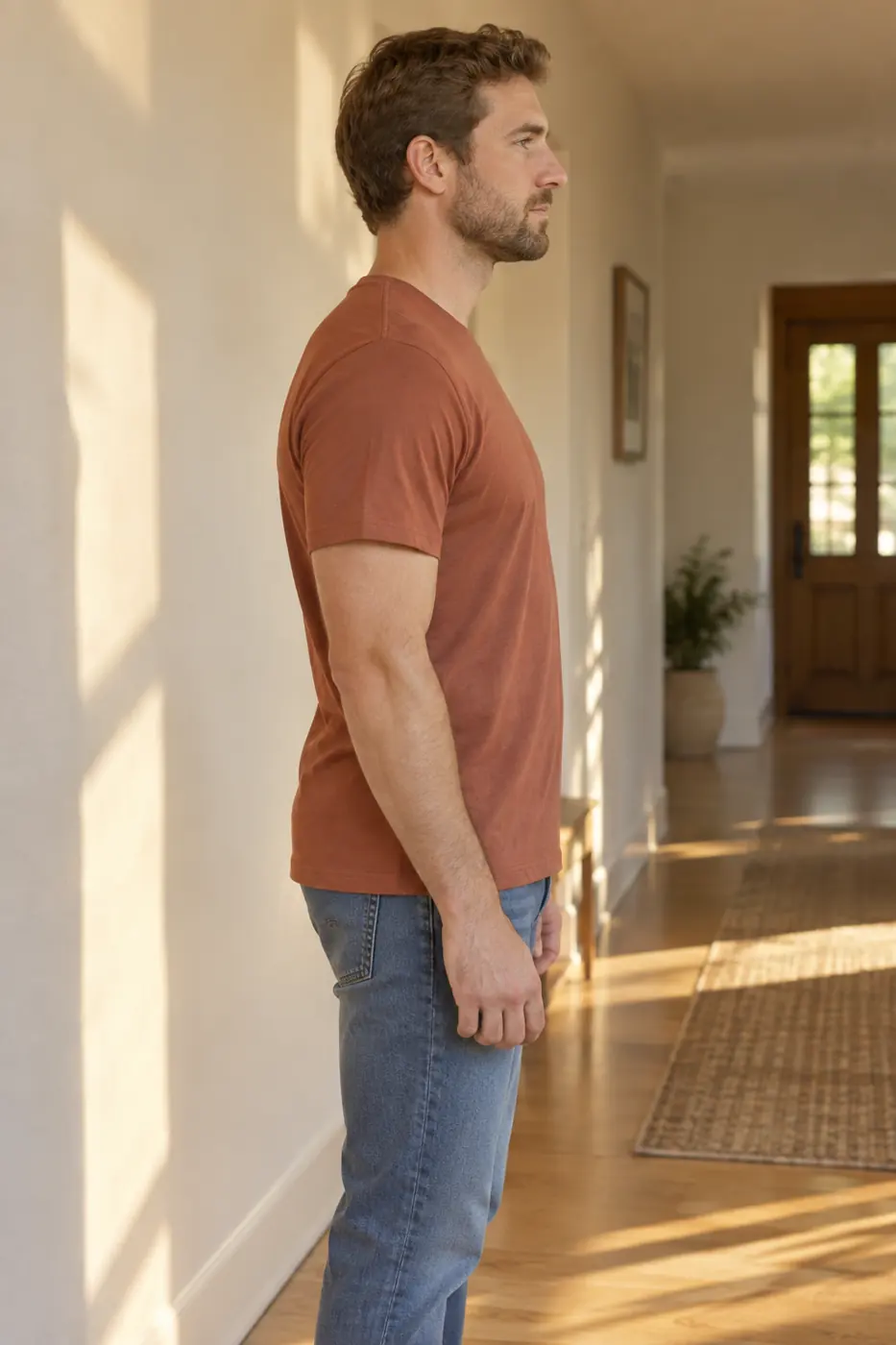
Check the side view as well. A shirt can look generous from the front yet pull across the upper back. Conversely, folds at the waist do not automatically mean the garment is too large; a thicker cotton tee may form softer folds than a thin, drapey one. If you like the shoulders but dislike the torso width, look for another cut rather than sizing down blindly. The wardrobe fit audit helps compare this tee with the rest of the clothes you actually wear.
Read sleeve length as part of the whole silhouette
Sleeves change how a T-shirt reads from a normal distance, but there is no single correct stopping point. A classic short sleeve often finishes around the upper arm; a boxy tee may have wider, longer sleeves. Ask whether the sleeve opening feels comfortable and whether its width matches the body of the shirt. Very tight sleeves on a loose torso can feel disconnected, while a very wide opening on a close body may look like a different garment was attached.
Raise both arms and bend an elbow. If the sleeve pulls sharply into the armpit or restricts movement, the armhole or upper body may be the issue rather than sleeve length alone. If the sleeve bunches, smooth it once and see whether it stays. Photographing a frozen pose rarely reveals this. A simple motion test does. When comparing two sizes, keep the same cut and fabric if possible; otherwise you are changing several variables and cannot tell which one improved the feel.
Check the hem with the trousers you normally wear
The hem should work with your usual trousers, not an arbitrary line on a diagram. Wear the rise you wear most often and let the shirt fall without tugging it down. Does it cover the waistband when you move? Does it bunch below the hip when you sit? A longer tee may be useful for a tucked look or deliberate layering, while a shorter one can make an untucked outfit feel less heavy. The right answer depends on the intended outfit and your comfort.
Check the side and back, since the front can conceal a curved or uneven hem. Some tees are deliberately cut longer at the back. If a regular tee rides up every time you sit, length or body width could be responsible. If it falls over pockets and makes you keep folding it, another length may be easier to live with. Our style-progress guide suggests a restrained way to note a clothing change without turning your appearance into a daily score.
Test movement before deciding that the T-shirt fits
Stand, sit, reach for a shelf and walk a few steps. A T-shirt is not worn only in a straight-on mirror pose. Notice whether the neckline stays comfortable, the shoulders remain settled and the hem returns to a useful position. A slight shift is normal. Repeated tugging, chafing or a seam that twists around the arm is information. Move as you would at work or on a weekend rather than performing exaggerated stretches designed to make any garment fail.
Wear the tee for several minutes if the shop or return policy allows. Heat and fabric feel are easier to notice after the first pose. If the fit is only acceptable while you stand still, a different cut may serve you better. Do not buy a painful or restrictive size as motivation to change your body. Clothing should accommodate the body you have today. If a piece works except for one fixable detail, consider an alteration or a different style, but price that effort into the decision.

Measure a favorite tee, not an imagined body shape
Lay a washed, comfortable T-shirt flat and measure the garment across the chest, shoulder seam to shoulder seam, body length and sleeve. Record how you measured and whether the fabric was relaxed. The numbers are useful for comparing product listings; they are not a beauty formula. Uniqlo's product-measurement guidance distinguishes garment measurements from body measurements and shows how width and length are taken on a laid-flat item. Check each brand's own method because seam positions and measurement points can differ.
When shopping online, compare the same dimensions, fabric composition and fit label. A favorite tee may have changed after washing, so a brand-new product with identical listed dimensions may still feel different. If you are between sizes, prioritize the checkpoint that has been hardest to satisfy, then check the return policy. Save the garment measurements in a note rather than memorizing a nominal size. This turns a vague search for the “right” size into a comparison of known clothing you can actually wear.
Separate cut, fabric and size before making a change
Regular, relaxed and oversized are descriptions of intended shape, not universal standards. Patagonia's men's fit guide explains the distinction between regular and relaxed silhouettes and lists body measurements separately. Use those labels as starting clues, then check the garment in motion. A size up in a slim cut will not always produce the same shoulder, sleeve and hem proportions as a relaxed cut in your normal size.
Fabric matters just as much. A heavier jersey can hold a boxier outline; a thinner knit may cling or drape more. A cotton blend and a pure cotton tee may feel different after laundering. Read the care label and follow it so your comparison is based on the shirt you will actually maintain. If a tee shrinks beyond what you expected, its original fitting-room appearance no longer solves the problem. Choose a material and upkeep routine that fit your life, not just a one-minute mirror check.
Compare two shirts with one clear question
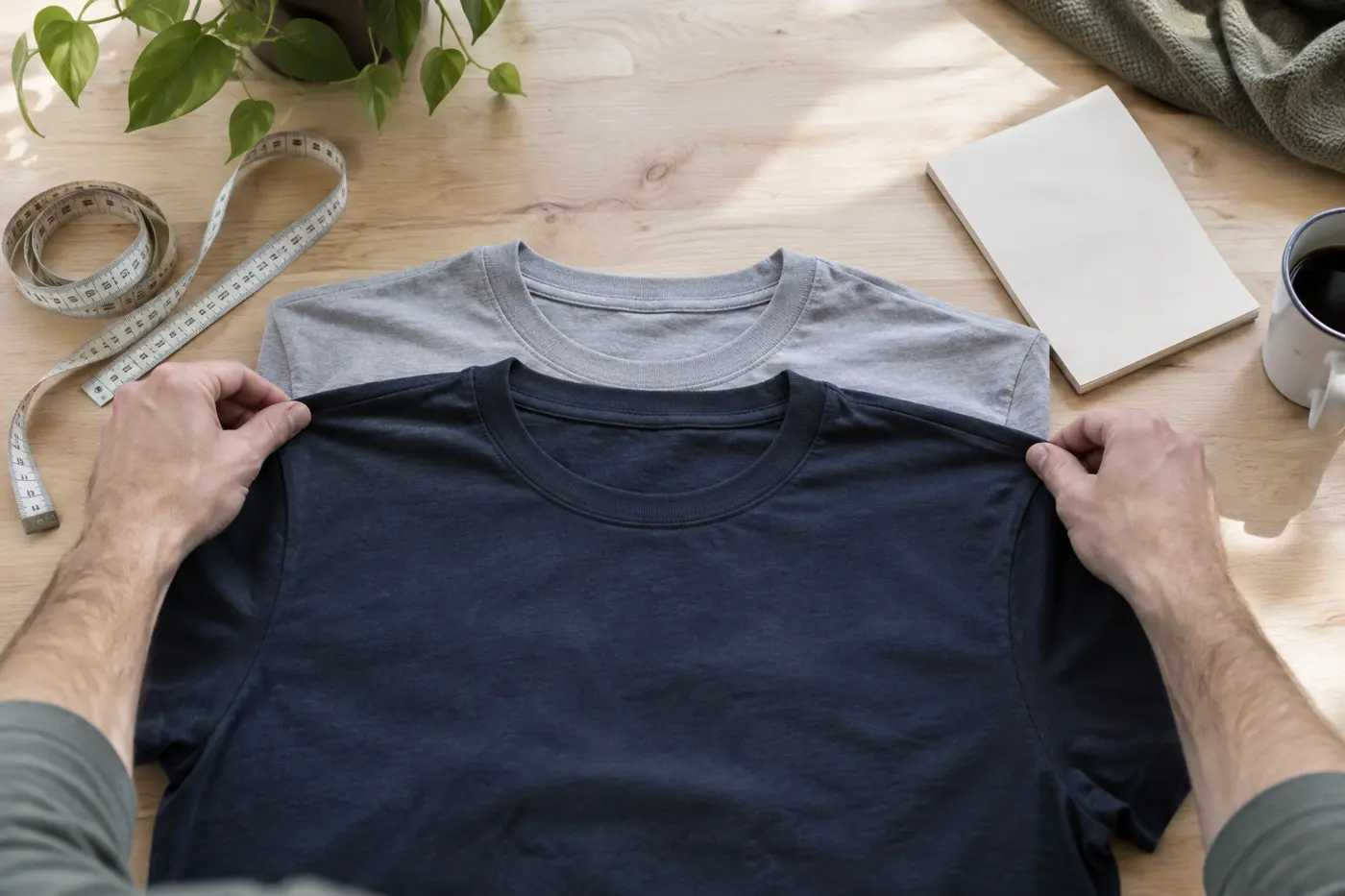
Try your current tee and a candidate in the same trousers and lighting. Ask one question at a time: Does the candidate give more comfortable shoulder movement? Does a shorter hem improve the untucked outfit? Do the sleeves sit more quietly? Avoid comparing a clean, ironed new shirt with a crumpled old one while also changing the trousers and camera angle. That makes a small difference seem larger than it is. You can write a short note such as “new tee: shoulder good, hem too long.”
If a photo helps, take front and side frames at a consistent distance. The photo checklist offers a repeatable setup; use its camera advice for clothing comparison, never as a facial score. A close selfie can exaggerate whichever part of the shirt is nearest the phone. Review the pictures at ordinary size and then put the phone away. The aim is to choose a wearable garment, not to inspect your body repeatedly for flaws.
Make a buying decision that survives an ordinary day
Before paying, rank your needs. One person wants a neat shoulder under an overshirt; another wants enough ease for cycling; another wants a hem that stays put while seated. Choose the two needs that matter most and accept that a single tee may not maximize every detail. If you are testing a new silhouette, buy one first and wear it through a normal day before replacing a drawer of familiar shirts. Keep the receipt and check the return conditions, especially when fit changes after laundering.
Your reflection is a tool for checking clothing, not a referendum on your attractiveness. The most helpful result is knowing why a T-shirt works: the shoulder has room, the sleeve is comfortable, the hem suits your trousers and you do not need to fuss with it. If appearance checking becomes distressing or hard to stop, step away from the comparison and seek support from a qualified mental-health professional. No fit rule or app score can decide your worth.
Frequently asked questions
Should the shoulder seam sit exactly on my shoulder?
For a conventional regular-fit tee, a seam near the shoulder edge is a useful starting point, but exact placement is not a universal rule. Dropped shoulders are deliberate in many relaxed cuts. Judge the seam together with upper-back comfort, sleeve shape and movement. A garment that feels good and has the silhouette you intended does not fail because a seam is a few millimeters away from a diagram.
Is a tight T-shirt always the wrong size?
No. Some people prefer a close cut. The practical boundary is comfort and intended use: breathing, sitting and reaching should not create painful pressure or constant adjustment. If one area pulls while another is loose, try a different cut instead of assuming one number on the label solves both. Buy for the body you have now rather than for a hoped-for change.
How can I compare T-shirt sizes online?
Measure a washed tee that already fits, using flat garment dimensions and the same measurement points as the seller where possible. Compare shoulder, chest, length and sleeve, then read the fit description and fabric care. A body-size chart and a garment-size chart are different things. Check the return policy because listed dimensions cannot perfectly predict drape, stretch or your own comfort.
Should I tuck a T-shirt if the hem is too long?
A tuck can be a deliberate styling choice, but it is not always a remedy for an uncomfortable length. Test it with the trousers you actually wear: sit, stand and move. If the fabric bunches or escapes constantly, try a shorter garment or another cut. If the tucked look feels natural and stays comfortable, a longer tee may work well for that outfit.