

- Comfort and prescription requirements come before a shape chart.
- Compare different frame weights on the same photo.
- Use a preview to shortlist, then confirm the real fit with an optician.
Glasses create a second outline around the eyes. In a looksmaxxing plan, compare their visual weight, brow relationship and width alongside your actual face. A frame can support the presentation you want only if it also fits comfortably and works for your prescription.
Assess the frame around the eye area
Use a straight-on reference with your usual hairstyle. Note where the frame sits relative to the brows and which parts of the eye area it covers. Compare two candidates with one clear distinction, such as a lighter versus a heavier rim, while keeping the pose and hair the same.
Read the whole face before zooming in. The preferred rim still has to work with the nose bridge, temple fit and prescription needs. Use an AI try-on to narrow a visual direction, then have an optician assess the physical frame. The preview and the fitting answer different parts of the decision.
Begin with physical fit
Check whether the bridge feels secure without pressure, whether the sides feel comfortable and whether the frame stays reasonably in place when you move. A frame that constantly slides or squeezes needs a professional fit check. An attractive front-view photo cannot establish those things.
Warby Parker’s fitting guide describes bridge comfort and temple placement as important fit considerations. Use that kind of practical checklist in a store. An optician can assess adjustments, frame dimensions and whether the frame works with your prescription.
Compare visual weight before collecting shapes
Start with one fine frame and one more substantial frame. Keep your expression, camera position and hairstyle similar in the comparison. Look at whether you enjoy the contrast, how the upper edge sits in relation to your brows and how the frame works with the clothes you normally wear.
Then compare shape. You might prefer a rounded line, a more angular outline or something between them. Those are preferences you can test; they do not require a rule that one face shape must always wear its opposite. The useful question is whether you like the whole portrait.
Give each pair a real-world job
Think about where you will wear the glasses most. A pair that feels right with a tailored jacket might not be the one you reach for on a relaxed weekend. Try each shortlist option with a familiar outfit rather than judging it as an isolated accessory.
Use the same set of questions for every pair: Do I like the front and side view? Do they sit comfortably? Am I constantly adjusting them? Do they work with my actual prescription and daily use? Record the answer after wearing them, not just immediately after putting them on.
Use AI previews for a better shortlist
MogRise’s glasses try-on can help you explore optical frame directions using your portrait. Compare a small number of clearly different options first. Once you know which visual weight you prefer, a physical fitting can narrow the details.
A generated picture does not measure pressure, balance or optical alignment. Take the preferred direction to an optician and be open to a similar shape in a better fitting size. The goal is a pair you enjoy wearing, rather than an exact replica of a digital preview.
Inspect the upper rim, lens depth and bridge separately
The upper rim often creates the strongest line around the eyes, but lens depth and bridge placement also change the visible frame. A deeper lens may bring more material into the cheek area; a prominent bridge can add emphasis near the center of the face. Compare these details separately rather than choosing only between labels such as round and rectangular.
Begin with pairs that fit your prescription and face comfortably. Then view each pair in a full portrait, not only a close-up in the mirror. Notice whether the brows remain visible, whether the frame appears balanced with your hair and beard, and whether the lower edge competes with the cheeks when you smile. The aesthetic decision is easier when the physical shortlist is already sound.
Use a two-pair comparison with the same job
Compare two pairs intended for the same daily use. A lightweight everyday frame and a dramatic occasional frame may both be good choices, but they answer different questions. For your main pair, include the activities you actually do: screen work, walking, commuting and wearing headphones. A frame that looks right for a minute needs to remain workable for hours.
Keep the lighting, expression and hairstyle stable while taking the reference. If one pair has tinted lenses and the other does not, record that difference. It can affect the apparent eye frame as much as the rim shape. Your comparison should explain why one pair suits the job, rather than treating a flattering photograph as proof of comfort or fit.
Ask the optician about the details a preview cannot show
A visual preview is useful for silhouette and rim weight, but it does not establish bridge comfort, temple pressure or how the lenses work with your prescription. Use the image to create a shortlist, then ask the optician which real frames can deliver a similar direction. The exact dimensions and lens requirements may change the final choice.
Bring your preferences in words: a lighter upper rim, more visible brows, less lens depth or a warmer frame material. Explain your daily use and any problem with the current pair. A clear visual preference and a practical fit question work together. You do not need to pick a frame that follows a face-shape chart if another comfortable option supports the appearance you prefer.
| Preview can help you compare | Confirm with an optician |
|---|---|
| Rim shape and visual weight | Bridge contact, frame width and temple comfort. |
| Brow visibility | Position when the frame is fitted correctly. |
| Apparent lens depth | Prescription and lens requirements. |
| Overall portrait balance | Stability, adjustment and everyday comfort. |
Review the frame with your normal grooming
Try the finalists with the hairstyle and facial hair you wear most often. A strong rim may work differently with an open forehead than with a dense fringe. Your beard may also shift the visual balance between the upper and lower frame. Treat these as connected choices without redesigning all of them at once.
Keep a photo and a short note for the preferred pair: why it works, what must be fitted and which job it serves. If you want a second pair, give it a distinct purpose rather than buying a near duplicate because another angle looked better. A clear selection makes the next purchase easier and keeps glasses part of a deliberate looksmaxxing plan.
See what
one variable changes.
Explore three framing choices in natural-color portrait pairs. Learn which detail to look for in your own comparison.
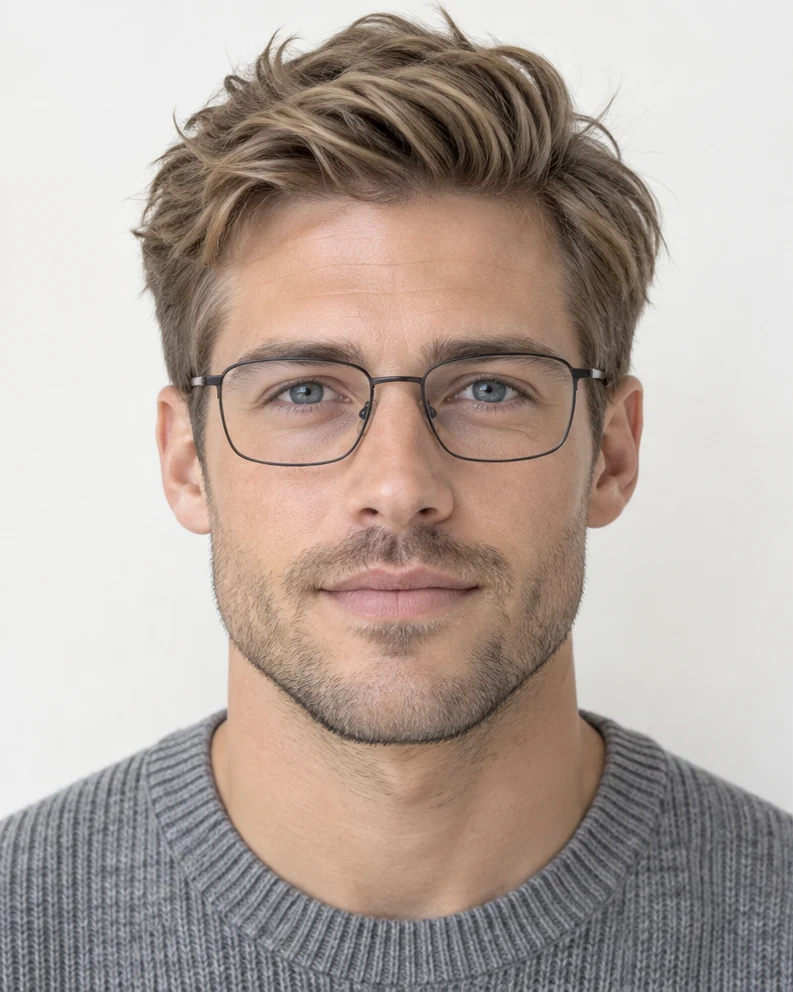

AI-generated editorial portraits · Styling examples, not transformation results
Visual weight changes the boundary around the eyes.
A heavier rim makes a more prominent line around the eye area. Compare it with a lighter frame of a similar shape. Compare that line with the brows and the entire face. Then check physical fit and prescription needs with an optician.
- Look for
- How does the frame relate to the brows and eye visibility?
- Your comparison
- Compare two realistic frames with the same hairstyle and neutral pose. Keep frame fit separate from the appearance preference.
Leave with a visual comparison and a separate fitting checklist.
A heavier rim draws more attention around your eyes, but you have not compared its relationship to your brows or checked the physical fit.
Try a lighter and heavier rim of a similar shape with your usual hairstyle. Compare brow visibility and the complete face. Then have an optician check the actual fit and prescription requirements; the appearance comparison cannot settle those.
Your eye-area framing shortlist
Use the prompts to turn this guide into your own next step. The examples are suggestions; write what fits your situation.
Keep the frame that works in person. A more appealing generated image does not settle comfort or fitting.
Add a note to any prompt to continue. Your notes stay on this page. Download a text file before leaving.
A few useful clarifications.
01Should glasses follow the opposite of my face shape?
That is only a broad styling idea, not a requirement. Fit, rim weight, brow visibility and the effect you want are more useful decision points. Compare comfortable frames on your own full portrait.
02Can an AI glasses preview confirm the fit?
No. It can help visualize a direction, but bridge contact, temple pressure, stability and prescription requirements need real-world assessment. Use the preview as a shortlist for an optician.
03Should I compare glasses with my fringe up or down?
Use the hairstyle you normally wear. If you regularly wear both, check both versions and record the difference in brow visibility and upper-frame weight.
Where your next question leads.

Eye-area looksmaxxing: brows, under-eyes and the whole frame.
Understand brows, under-eye shadows, puffiness and canthal tilt. Build an eye-area looksmaxxing plan around clear observations.

Facial harmony: read the relationships between your features.
Understand facial thirds, midface, symmetry and profile balance. Learn what a face analysis can show and how to use it in looksmaxxing.

How to looksmaxx: a beginner’s guide to your first plan.
Learn how to looksmaxx with a face audit, clear priorities and practical steps for facial harmony, jawline, eyes and skin. Build your first plan.