
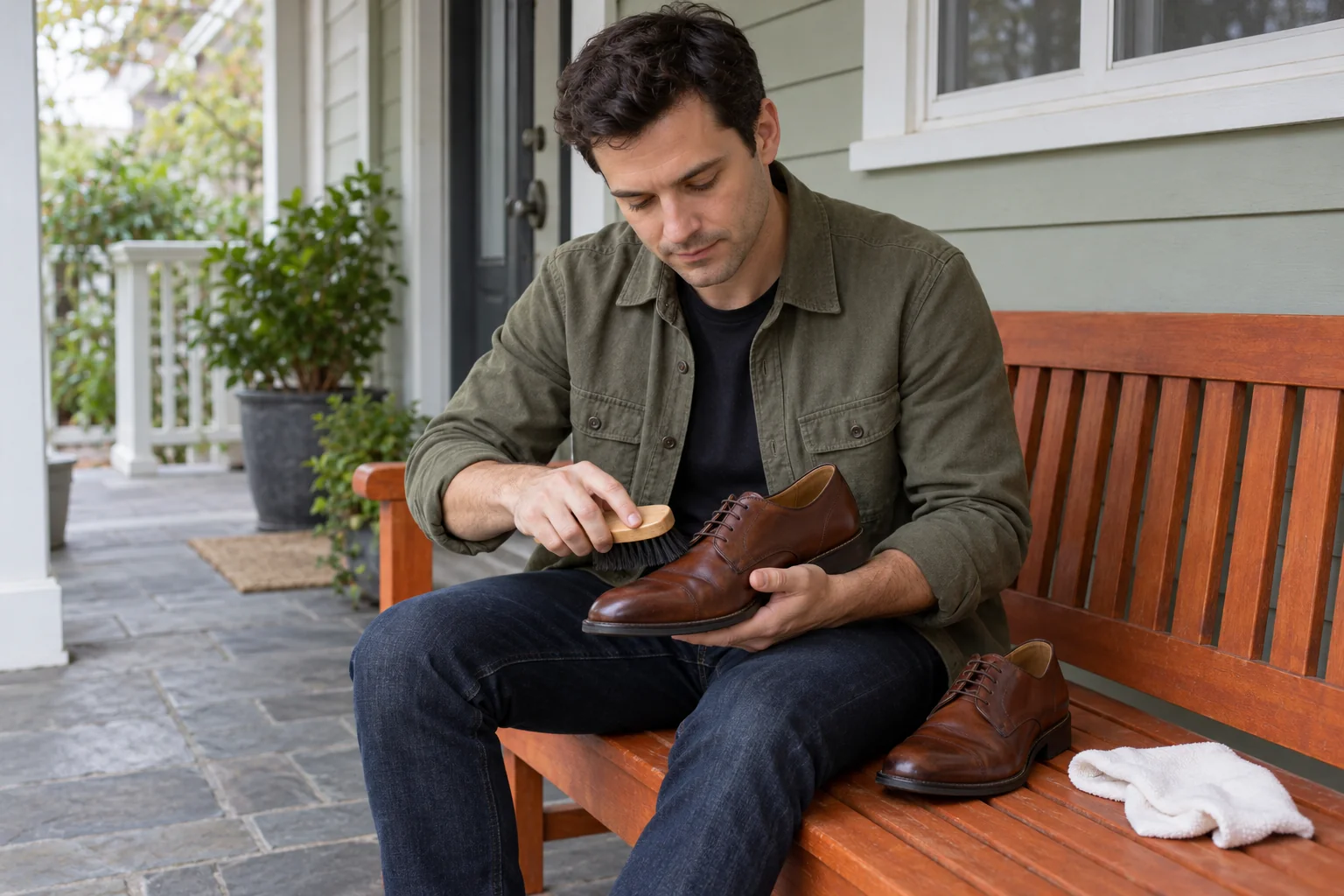
How to clean leather shoes with a clear stopping point
Learning how to clean leather shoes starts with a modest decision: what actually needs removing from this pair today? A little surface dust does not automatically call for a complete polishing session. This guide focuses on ordinary, smooth finished leather shoes and a small maintenance task you can finish without turning your appearance into a project. It does not cover suede, nubuck, patent finishes, delicate decorative effects or unidentified materials. The instructions supplied with your own footwear take priority throughout.
The practical aim is a pair ready for its next ordinary outing, not a showroom finish or the removal of every mark. Normal creases and signs of use are not a failure. If you use MogRise, its personal planning and Coach features can help organize a limited action around your available time. They cannot identify a leather treatment or certify a cleaning product. You can carry out the routine without an app, a photograph or an appearance score.
Identify the material before choosing the method
Check the original product description or care information rather than deciding from colour alone. Smooth brown shoes can have different finishes, and mixed materials need separate instructions. If you cannot establish what the upper is made from, put the cleaning products aside and ask the manufacturer or a shoe repair professional. Finding the correct information is a useful completed task in its own right.
A shoe manufacturer can explain the methods intended for its materials. The Clarks shoe care guide distinguishes leather from suede and nubuck and describes soft brushing for loose dirt. That is a starting reference, not a promise that every Clarks procedure or product suits an unrelated pair. Follow the information for the actual shoe in front of you.
Consider where this pair belongs in your wardrobe fit audit. An occasional formal shoe and a frequently worn everyday pair may need different opportunities for maintenance. Neither has to look permanently unused.
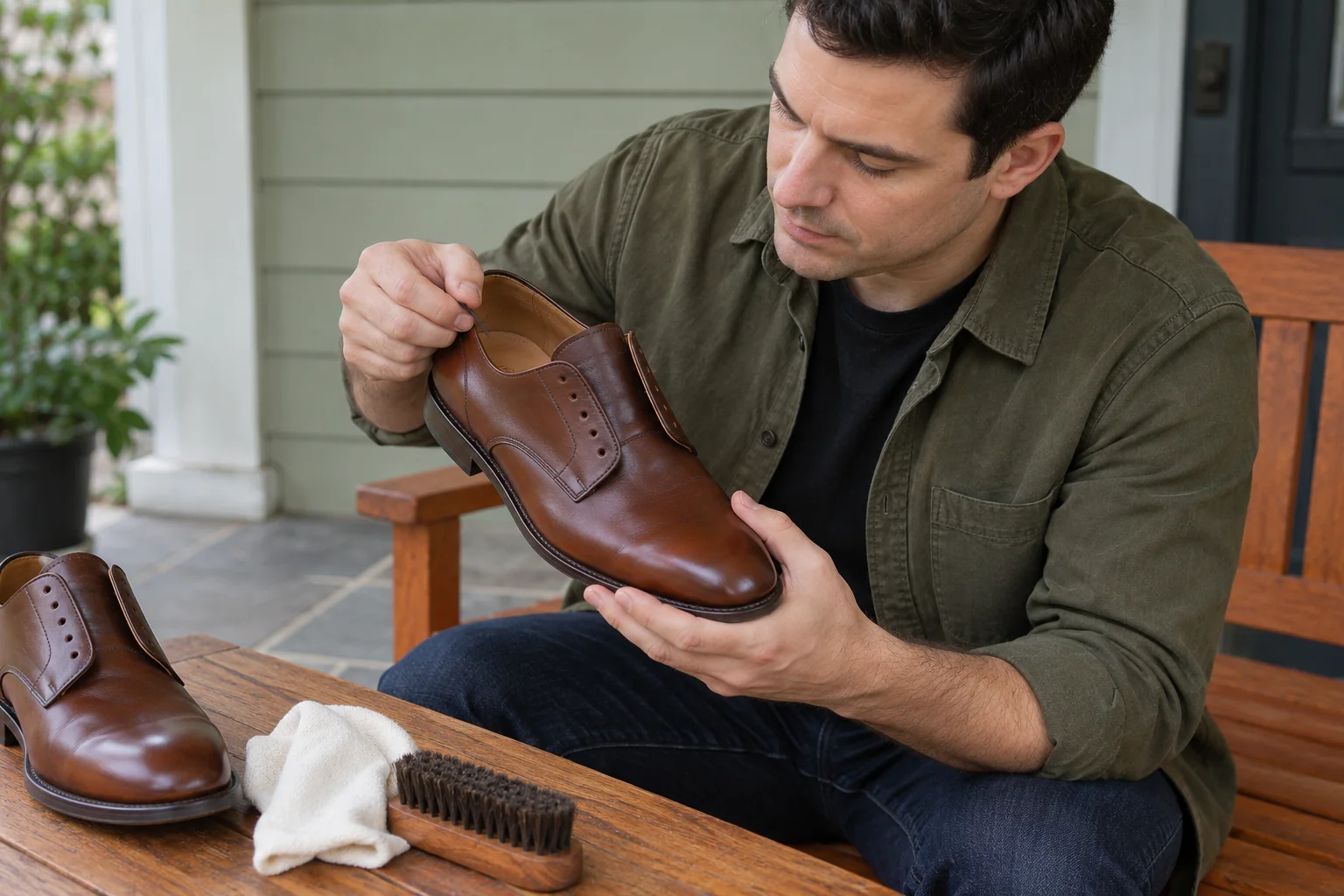
Decide what you will do before taking anything out
Choose one achievable outcome, such as removing loose dust from both uppers. Keep a separate decision for any mark that needs a specialist answer. This prevents a simple wipe from expanding into experiments with several products. A good stopping rule describes an action you can observe: both shoes lightly brushed, loose dirt removed, equipment put away.
Make sure you can leave the pair undisturbed afterwards if the approved method involves moisture or a treatment that must dry. If you need the shoes immediately, the sensible option may be to postpone that part. Do not invent a shorter drying period because you are running late. Having another suitable pair available is a practical scheduling choice, not a requirement to buy something new.
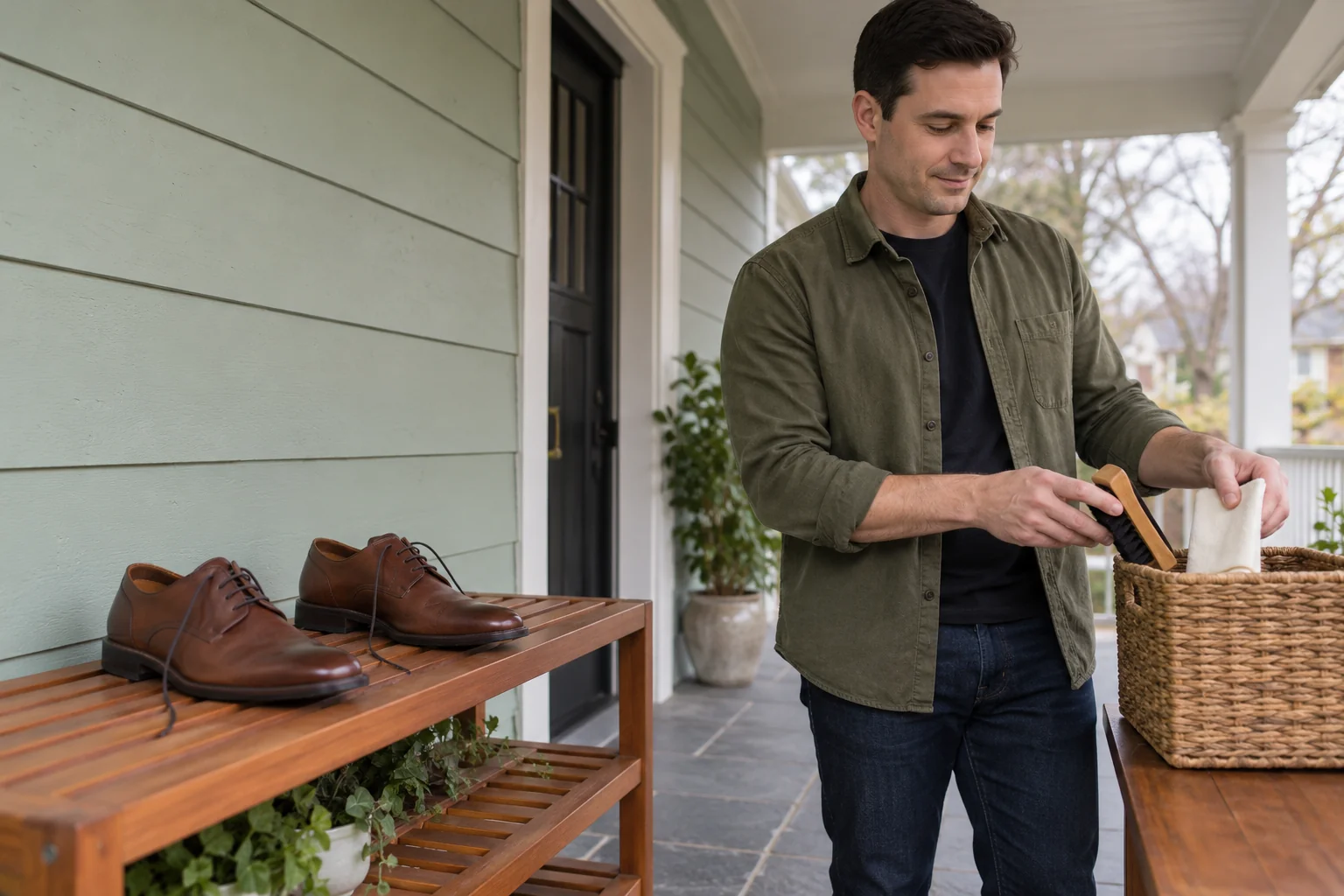
Set out only what the confirmed method needs. A clean protective cloth keeps removed dirt off your work surface. Check that the shoe brush itself has no grit, and keep a cloth used for soles separate from one intended for the upper.
Lift loose dry dirt without scrubbing
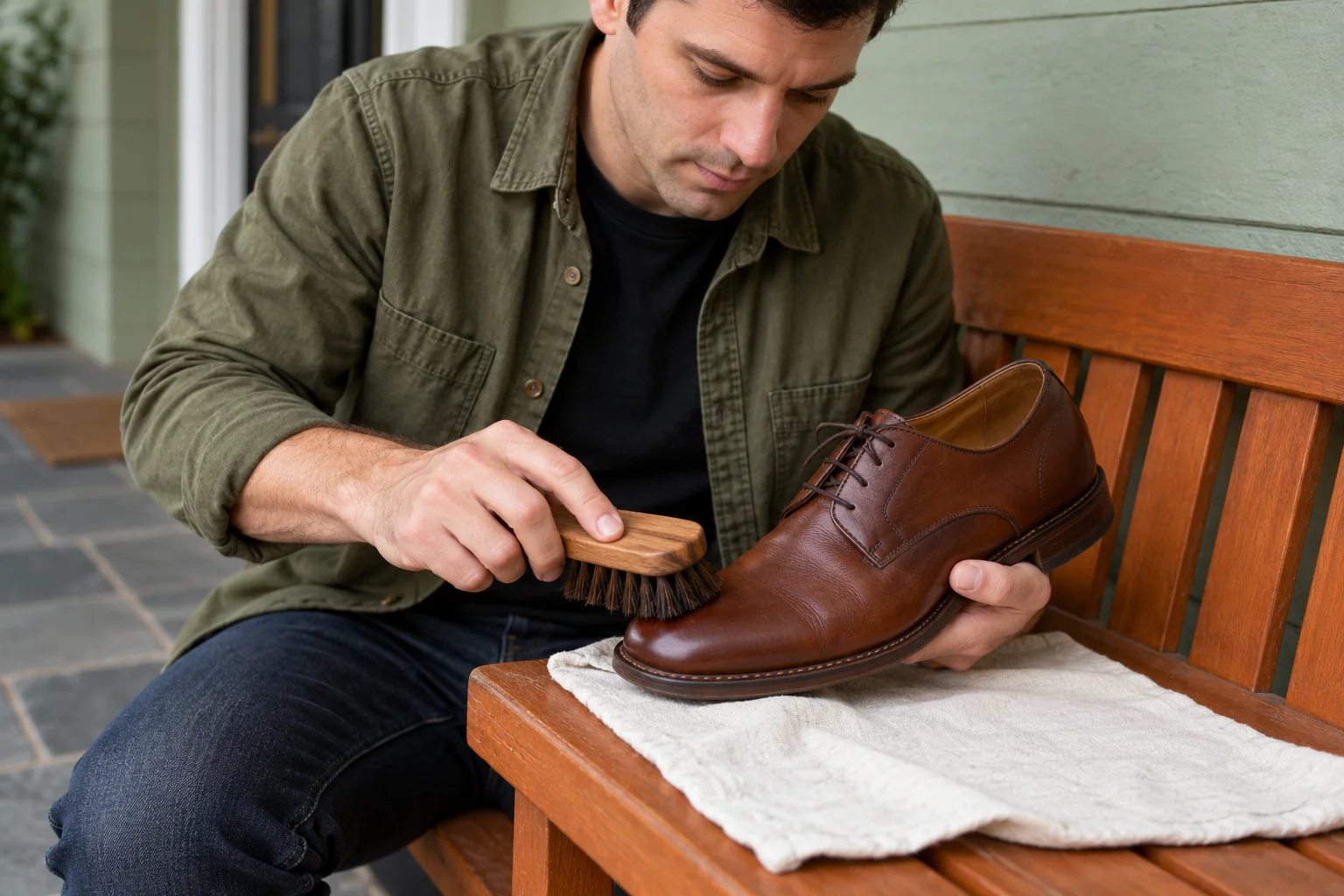
Work with a removed shoe supported securely in your hand or on a stable protected surface. Use a suitable soft brush or cloth with light contact. Move around the upper rather than repeatedly working one tiny patch. If dirt does not lift easily, stop and reconsider the material instructions instead of pressing harder.
If the manufacturer recommends removing the laces, do so before working around the tongue and eyelets. Put them somewhere they will stay clean. Do not pull at fixed decorations, glued parts or anything that does not appear designed to come off. This is external maintenance, not a disassembly job.
A useful first comparison is very simple: is there still loose dust sitting on the surface? You are checking whether a task is complete, not judging the shape of your feet, the cost of the shoes or your presentation against anyone else's. After both shoes receive the same gentle attention, decide whether any further cleaning is actually necessary.
Separate a small mark from an unknown stain
A mark left after brushing does not tell you what caused it. Oil, salt, a change in finish and ordinary wear can look similar in a quick glance. Avoid internet mixtures or kitchen ingredients chosen only because somebody describes them as natural. A product's suitability depends on the particular material and finish, not on how familiar its name sounds.
When a manufacturer-approved cleaning product calls for testing a discreet area, follow that instruction and allow the stated assessment time. Do not treat a hurried dab as permission to cover the entire shoe. If colour transfers unexpectedly, the finish changes or the surface becomes tacky, stop using the method and seek advice.
For a pair with an expensive, sentimental or unusual finish, asking a professional may be the lowest-effort choice. You do not need to prove that you can remove a difficult mark at home. Keeping the pair wearable can matter more than eliminating a cosmetic detail.
Keep any approved wiping step limited
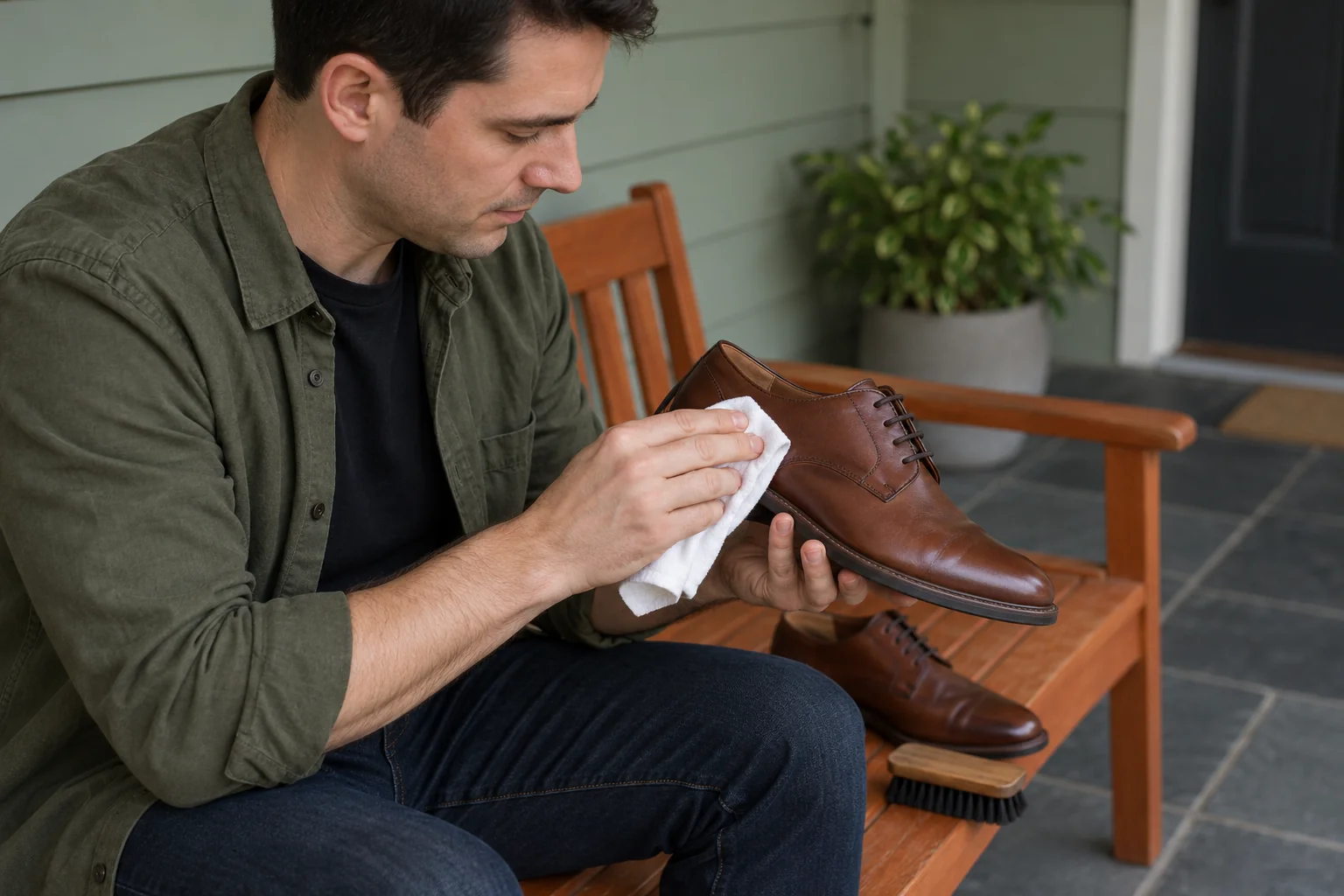
If the shoe's own guidance permits a damp cloth or a particular cleaner, follow its directions for application and removal. A cloth in an illustration is not a universal recipe. Do not soak the shoe, pour water into it or transfer a sneaker-cleaning method onto leather without checking. Keep moisture and products away from components for which the instructions provide no approval.
Fold the cloth so you have a clean working face. Support the shoe, use controlled light contact and check the cloth before returning to another area. If it picks up loose dirt, turn to a clean section instead of moving that dirt back over the upper. Use separate equipment for the sole if that needs attention.
Pause once you have completed the approved pass. Repeating a method immediately because a mark is still visible can make a small task unnecessarily aggressive. Let the material settle as instructed before deciding whether anything remains to be addressed.
Make room for natural drying
Cleaning and being ready to wear are separate stages. Follow the actual product and footwear instructions for drying rather than using a timer from an unrelated tutorial. Leave the shoes in a suitable ventilated place where they will not be knocked over, covered with laundry or needed halfway through the process.
Clarks advises natural drying rather than artificial heat in its leather care guidance. Do not use a radiator, hairdryer or direct heat to force a quicker result. Any further cream, polish or protective treatment is a separate decision requiring compatibility with the pair, not an automatic extra step in this basic routine.
Planning the task outside the rush to leave home helps. If your morning grooming routine is already full, footwear maintenance can happen at another practical time. There is no need to crowd every appearance-related task into the same short morning window.
Finish the task rather than chasing a perfect surface
Look at the pair once in ordinary light after the required rest or drying period. Check for remaining loose dirt and whether the shoes are ready to use according to their care instructions. A natural crease or established scuff can remain visible without requiring another round of work.
Put clean equipment away and deal with used cloths according to the materials and products involved. Keep maintenance supplies where they cannot accidentally be mistaken for personal grooming products. Return the shoes to their normal storage only when the relevant drying instructions have been satisfied.
Your completion note can be factual: both uppers brushed, unknown mark left for advice, shoes resting. That tells you what happened without rating the shoes or your appearance. Do not keep opening the storage area for another check. The stopping point is part of the routine, not a reward you earn after a flawless finish.
Use MogRise to organize the decision, if helpful
MogRise is our publisher's app. Its existing product description includes personal plans, manageable daily actions and follow-up questions to the Coach. Use that scope modestly: explain that you have smooth leather shoes, limited time and the manufacturer's care directions, then ask how to break a small maintenance task into practical actions. Verify any material advice against the manufacturer yourself.
Choose one action from the plan that matches your actual situation. For example, gathering the care instructions might be today's action if the finish is unknown. On another day, brushing both shoes and leaving them in a suitable place may be enough. The app is optional organization; it is not a footwear diagnostic tool or a replacement for a cobbler.
Do not upload repeated shoe photographs or seek another appearance score to decide whether you have done enough. A simple written completion rule works. If planning software creates more checking than it removes, finish without it.
Fit maintenance around real use
After an ordinary outing, notice practical conditions such as visible loose dirt or a pair that needs time to rest. Choose the next action from those conditions and the actual care guidance. Avoid treating a calendar reminder, a streak or somebody else's immaculate shoes as evidence that another cleaning session is required.
A useful note records a maintenance decision, not a performance record. You might note that a particular mark needs professional advice or that your cloth needs washing before it is used again. Keep these notes brief enough to be useful next time. Our guide to tracking style without overthinking explains how to keep observation from becoming repeated appearance checking.
If concern about presentation becomes distressing or difficult to stop, qualified support is more helpful than adding more inspection or scores. Ordinary care should support daily life rather than take it over.
Three situations and sensible next actions
For light dry dust, confirm that the pair's guidance allows a soft brush, complete that small action and stop. There may be no reason to introduce moisture or polish. For dried mud, follow the manufacturer's directions about when and how to remove it; do not automatically borrow a method intended for another material.
For an unknown stubborn mark, leave it alone after the approved basic cleaning and ask for advice. You can still put away the equipment and consider the session finished. These examples separate a manageable task from a restoration job. They do not promise identical results across shoes, finishes or types of dirt.
Questions about a small leather-shoe routine
Does every cleaning need polish?
No. Cleaning, conditioning and polishing are different decisions. Follow the pair's instructions and choose only the steps appropriate to the material and situation. More products do not automatically mean better maintenance.
Can I use this on suede or patent leather?
No. This guide is limited to identified smooth finished leather. Use the relevant material guidance for suede, nubuck, patent leather and mixed uppers rather than adapting these illustrations by guesswork.
What if I have only a few minutes?
Choose a task you can finish safely in that time, such as finding the care directions or removing permitted loose dust. Postpone any method that needs drying or a product assessment you cannot allow for.
Do I need MogRise to know when to stop?
No. A clear practical action and the manufacturer's instructions provide a stopping point. MogRise can optionally help organize the sequence; it cannot establish material compatibility or guarantee a result.