
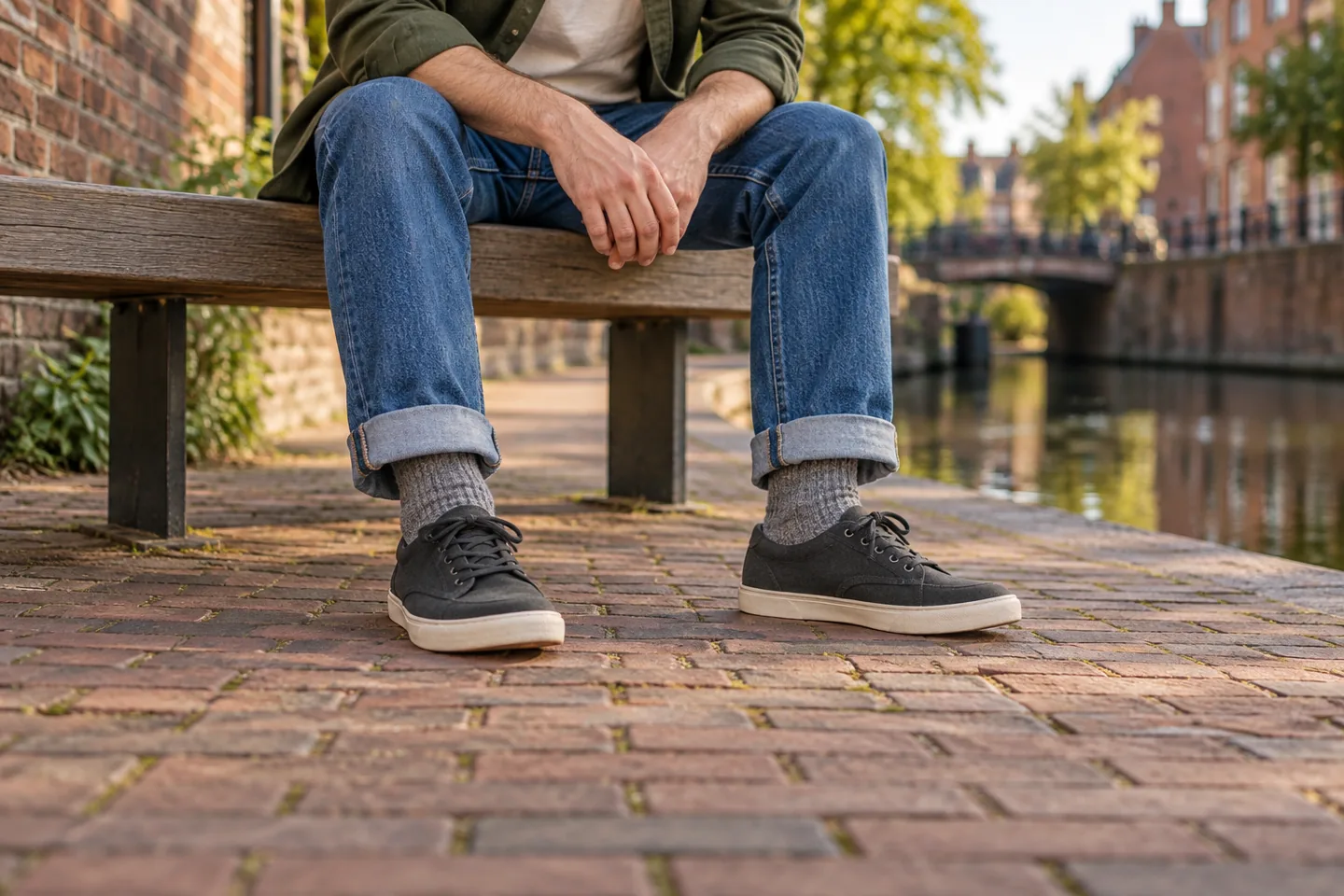
How to cuff jeans without cutting the hem
Learning how to cuff jeans can be as simple as turning the bottom edge outward, checking the result with your shoes and deciding whether to keep it. You are changing the way an existing garment sits for the day. You do not need scissors, a new pair of jeans or a rule about how much ankle a man should show. A cuff is an optional styling choice, not a correction your body needs.
This guide covers a small single turn and an optional second turn on ordinary straight or gently tapered jeans. It does not cover cutting a raw hem, sewing an alteration or narrowing the leg with a pinroll. Start with the pair you already own, the shoes you intend to wear and a comfortable place to sit. The whole decision can finish once the hem feels practical and stays clear of the ground.
Give the hem one useful job
Choose a reason for trying the fold. Perhaps the bottom edge catches under your heel, hides a shoe detail you like or gathers more than you prefer above your sneakers. Any one of these gives you a concrete question to answer. You can also simply enjoy the contrast between the outside denim and its lighter reverse. There is no requirement to make your legs look longer or to follow a seasonal trend.
Keep temporary styling separate from permanent length adjustment. A cuff uses the fabric that is already there and adds layers at the bottom. If the trousers are substantially too long, repeatedly rolling them higher may create a bundle rather than a comfortable finish. That is useful information for a future alterations conversation. It does not mean you have failed at a basic clothing task, and it does not require an immediate purchase.
Check the actual jeans before choosing a fold
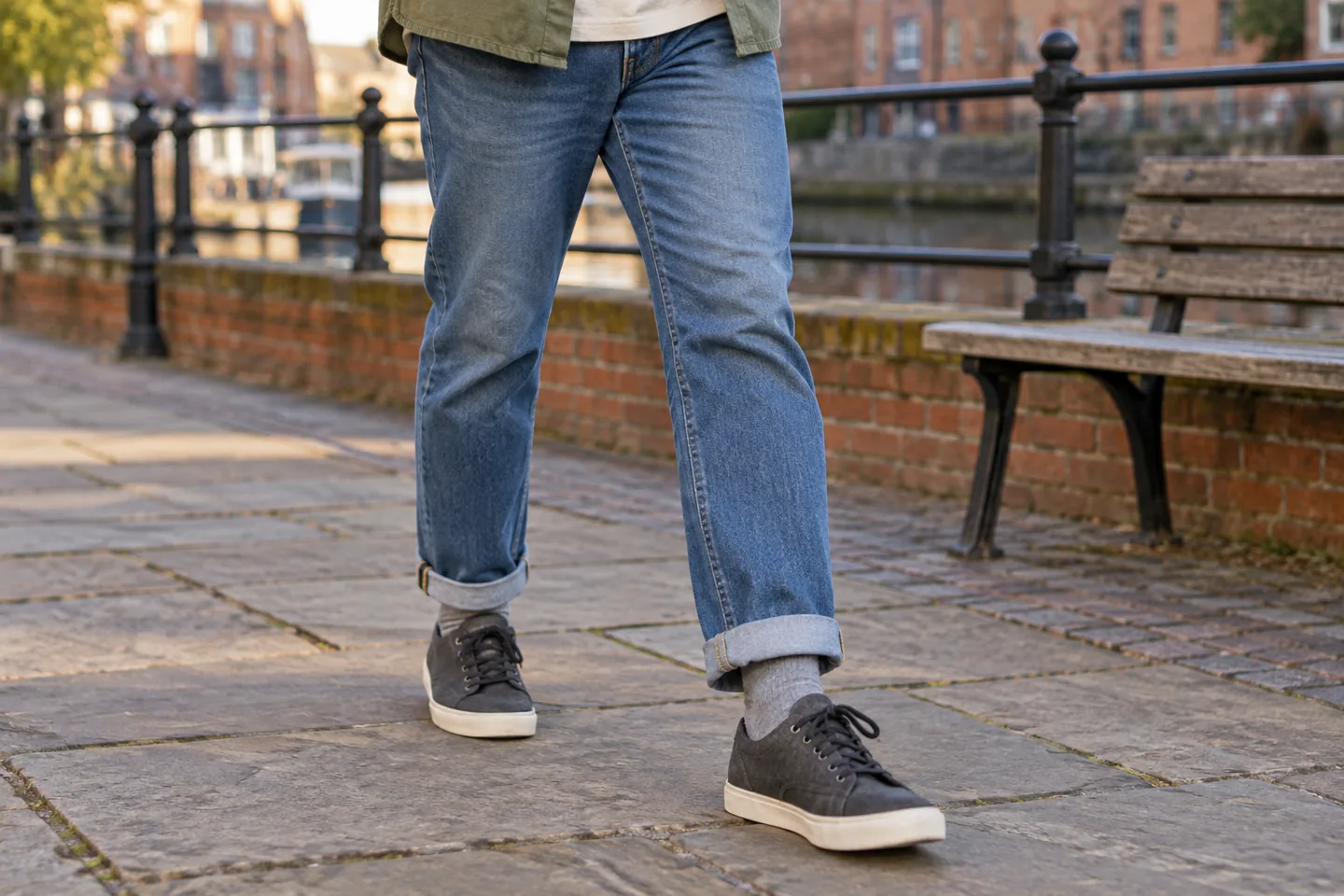
Look at the bottom edge and the side seams. This example assumes an intact stitched hem and a leg opening that has room to turn without being stretched. If there is an existing decorative finish, zip, substantial damage or a construction you do not want to crease, leave that detail alone. A wide or flared leg may behave differently from the straight leg shown in the photographs; you need not force it into the same arrangement.
Check the fit above the hem as well. A fold at the ankle cannot fix a waistband that slips or a knee section that restricts movement. The existing wardrobe fit audit helps separate those questions. For this short task, choose a pair that already feels comfortable through the waist, seat and leg. Then the hem is the one variable you are actually changing.
Establish the starting length with your shoes on
Put on the shoes and socks you plan to wear. Stand on a clear, level surface and allow the jeans to settle normally. Notice where the original edge rests at the front, sides and back. The rear edge matters because a hem can look clear from the front while still falling beneath the heel. You are checking usable length, not searching for a universal gap above the shoe.
Sit on a stable chair or bench before handling the fabric. Keep both feet supported and work on one leg at a time. Do not balance on one foot while pulling at the other trouser leg. If bending to the hem is awkward, take the jeans off and arrange them on a clean surface first, then put them back on for the fit check. Comfort matters more than performing the fold while dressed.
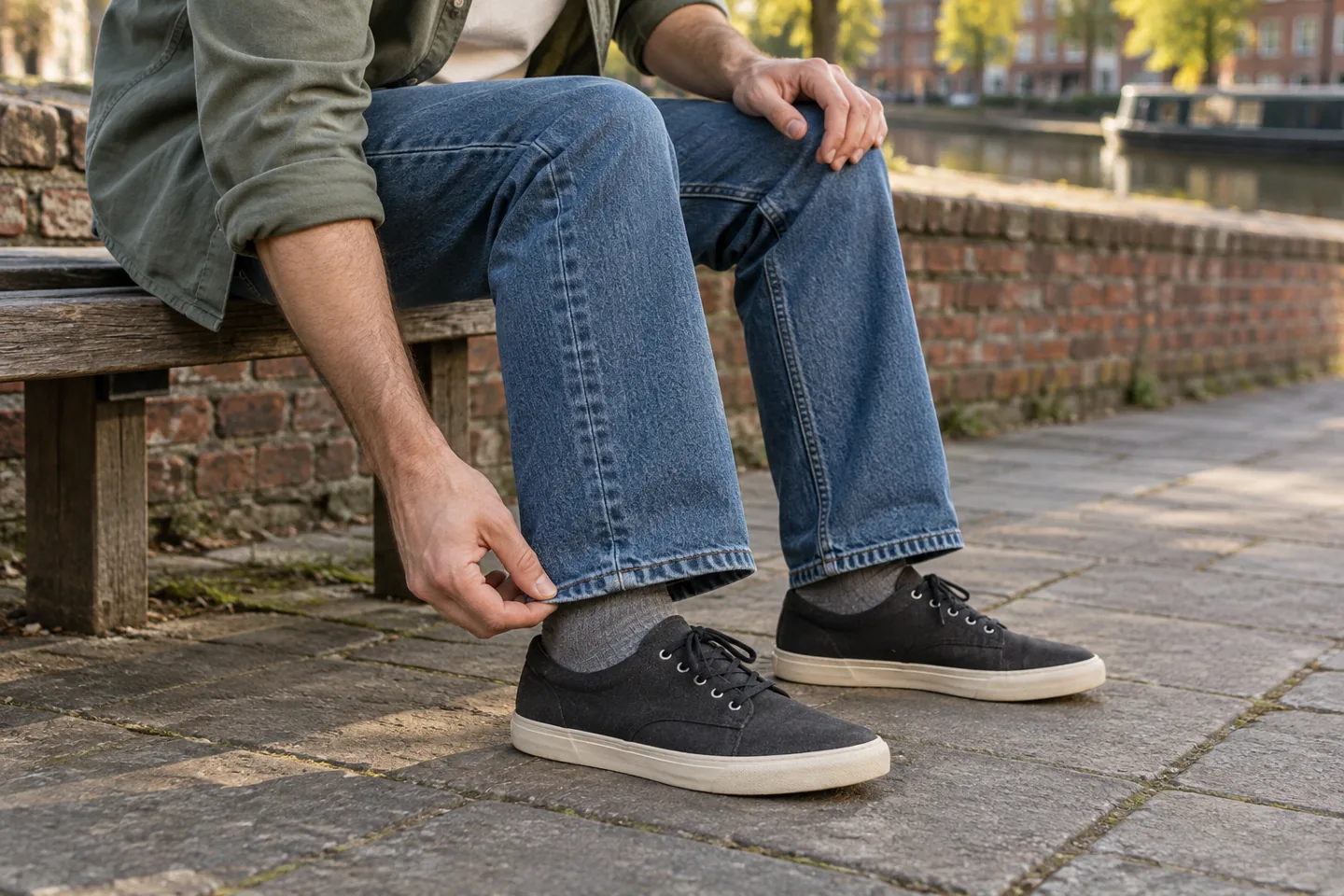
Make a small single turn around the opening
Lift the original bottom edge outward and upward to expose a modest strip of the reverse fabric. Continue around the leg opening instead of folding only the front panel. Use the stitched edge as a visual reference and gently flatten the side seams with your fingers. There is no fixed measurement you must use; start with a small turn that the available fabric accepts easily.
Release the cuff before deciding whether it works. The fold should sit without you pulling it taut or squeezing the opening around your ankle. Check the back as well as the front, because a partly unfolded rear section can remain longer than expected. If the first attempt is twisted, open it completely and begin again rather than adding another roll over the uneven section. A simple reset is often clearer than several tiny corrections to an already tangled fold.
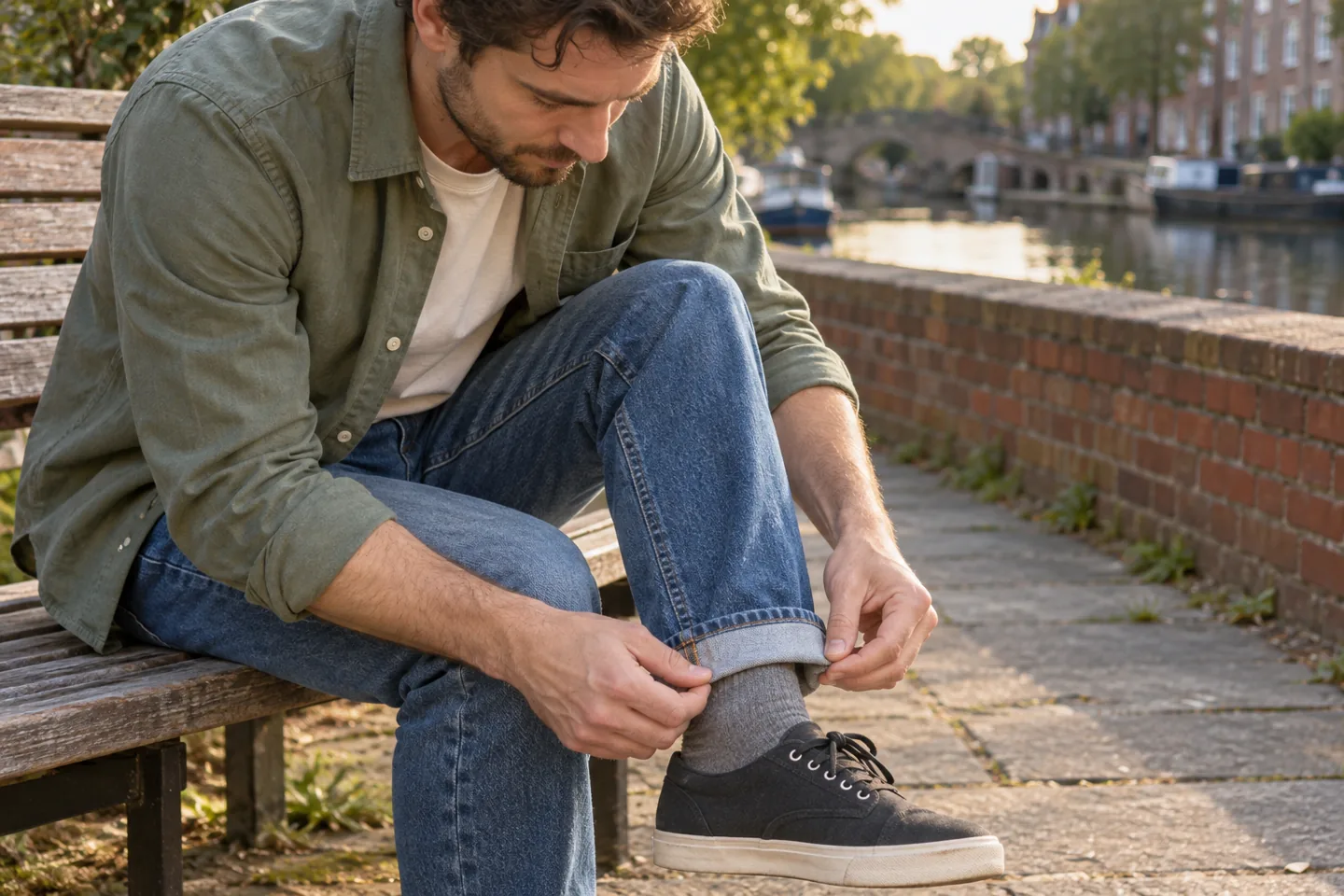
Add a second turn only if it helps
If one turn still leaves more length than you want and the fabric has room, roll the folded edge outward once more. Support the first fold as you work around the opening so that it does not bunch at one side. Notice the extra thickness, particularly where a side seam passes through the roll. Two turns are an option, not a more accomplished version of one.
The official TACO guide to trouser cuffs, in Brazilian Portuguese, describes an outward double fold and checking the fabric for twists or lumps. We use that limited practical basis, without its universal width limits or judgments about which bodies and socks suit a cuff. If the second turn feels bulky or pulls the leg, return to the single turn. Do not keep stacking folds to rescue an unsuitable amount of excess length.
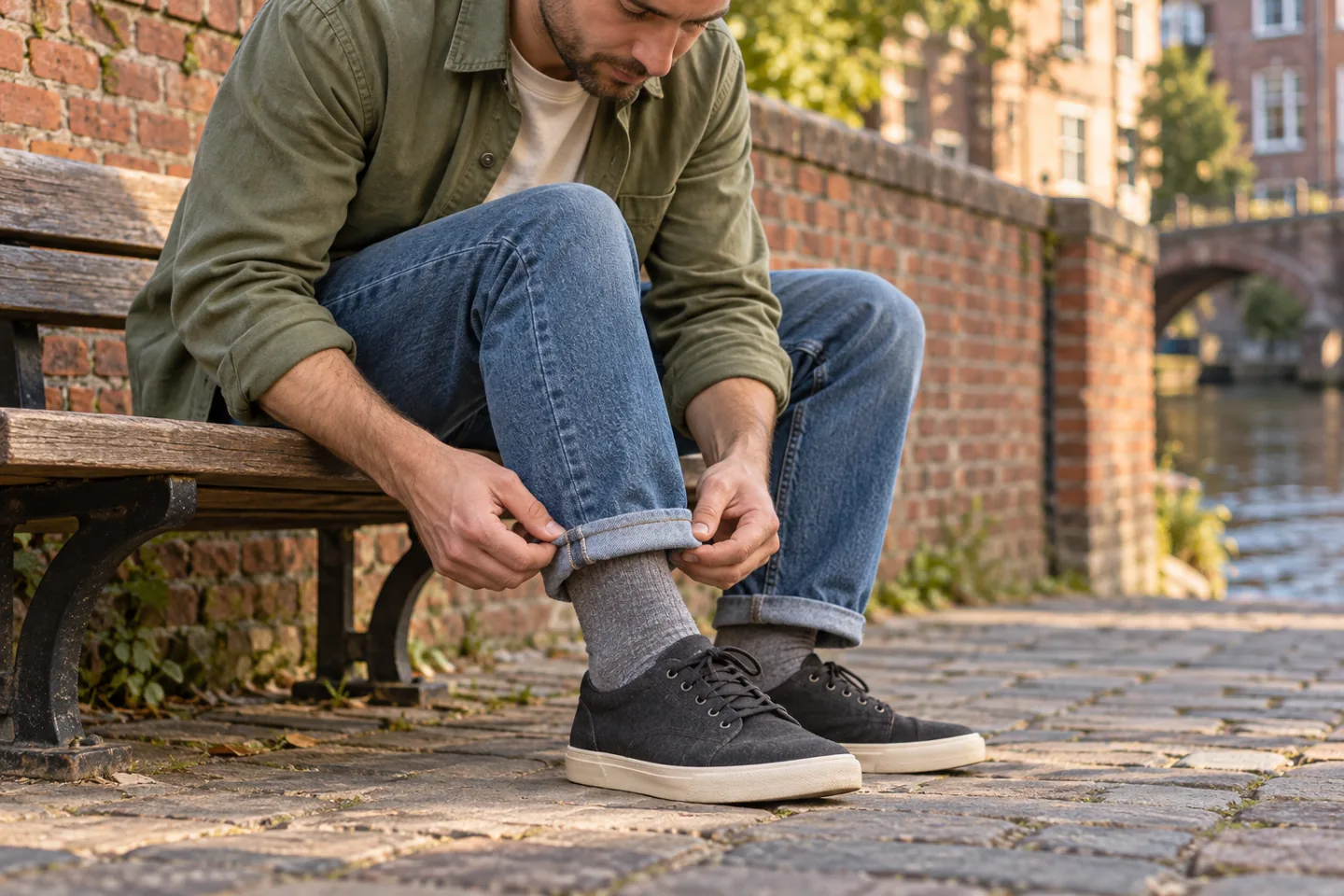
Match the other leg by looking at the result
Repeat the chosen fold on the second leg, then stand up and let both trouser legs fall naturally. Compare the visible heights at the shoes rather than counting finger widths while seated. The jeans may have shifted around one knee or hip during the first attempt. Settle the garment before assuming that the two original hems or your folds are different lengths.
Aim for an arrangement that looks intentional enough for you, without turning the task into exact measurement. A small difference may be irrelevant in a casual outfit. If one side clearly drops farther, unfold that side and adjust its first turn. Avoid solving an uneven cuff by pulling one trouser leg higher at the waistband. That changes the fit elsewhere and makes it harder to understand what the hem itself is doing.
Let the shoes and socks remain practical choices
Look at the combination you will actually wear. A low canvas shoe, a higher sneaker and an ankle boot meet the trouser leg at different points. Changing footwear can therefore change the amount of fabric you want to turn. You do not have to buy shoes for a cuff or arrange every pair of jeans around one shoe silhouette. An unfolded hem can be the simplest choice for another combination.
Socks can show if you want them to. There is no requirement for bare ankles, invisible socks or a particular color. Keep the pair that feels comfortable with the footwear and weather you expect. Broader everyday style choices can remain flexible rather than becoming a list of compulsory matches. The useful check is whether the trouser edge catches, covers something you wanted visible or creates a bulky ring you dislike.
Walk, sit and stand before calling it finished
Take a few ordinary steps on a clear surface. Sit down, bend your knees comfortably and stand again. The cuffs will move with the trousers; they do not need to remain at precisely the same height throughout every movement. Check whether either fold opens, catches against the shoe or feels restrictive. Leave room for your normal movements rather than tightening the opening to make it stay put.
If the hem still falls under a heel, stop and adjust or unfold it before walking farther. Clothing styling does not replace activity-specific requirements, and this casual cuff is not a method for securing loose fabric around machinery or other hazards. For an ordinary outing, once the hems sit comfortably and clear the ground, the check is complete. You can leave without inspecting the cuffs repeatedly as you walk.
Solve the actual problem instead of adding more folds
If the cuff springs open immediately, try a single, gently flattened turn rather than assuming it needs to be tighter. Some fabrics simply do not hold the arrangement you want. If the side seam makes a noticeable lump, spread the fold evenly and decide whether that thickness is comfortable. There is no reason to crush the seam with a tool or introduce glue, pins or a hidden fastening for this experiment.
If the result becomes too short when you sit, remove the second turn or return to the original hem. If there is still excessive fabric after two comfortable turns, consider wearing the pair differently or discussing length with an alterations professional. For example, a jean that needs one small turn with canvas shoes may need no turn with another shoe. That is a response to the outfit you have, not a verdict about which version is fashionable or more flattering.
Undo the cuff when the day is over
Open the turns gently and let the legs return to their ordinary length before following the garment's own care and storage instructions. This guide does not prescribe heat, washing, steaming or pressing to set a permanent crease. If the maker gives specific advice for the fabric or finish, use that advice. A reversible styling choice need not turn into an alteration project once you get home.
If you want to remember a useful combination, one brief note is enough: the jeans, the shoes and whether one turn was comfortable. A photograph is optional, and repeated comparisons are unnecessary. Our guide to tracking style choices without overthinking offers a way to keep a practical observation bounded. Keep the information that makes the next morning easier, then put the clothing task aside rather than seeking an ideal cuff from every angle.
Questions about folding a jeans hem
How wide should the cuff be?
Start small and judge the available length, fabric thickness and comfort with your actual shoes. A measurement copied from someone else's outfit may produce a different result on your jeans. You can use the stitched edge to keep the turn reasonably even without adopting a compulsory width or a fixed amount of exposed ankle.
Is a double cuff better than a single cuff?
No. A second turn takes up more length and adds more layers. It may help one pair and make another bulky or too short. Try the single turn first, add a second only when it solves a practical issue and return to the simpler option if it does not. Neither choice earns a style score.
Can I use this on every pair of trousers?
This example is for ordinary jeans with an intact stitched hem and enough room to fold comfortably. Other cuts, decorative edges and materials may behave differently. Do not force them to match the photographs. A tailored trouser cuff or permanent hem alteration is a different construction and may call for professional advice.
Do I need an app to decide whether it looks right?
No. The steps work independently: choose the shoes, make a comfortable fold, move normally and stop when the practical goal is met. If appearance checking becomes distressing or hard to interrupt, pause the experiment and seek qualified support rather than adding more photographs, scores or repeated inspections.