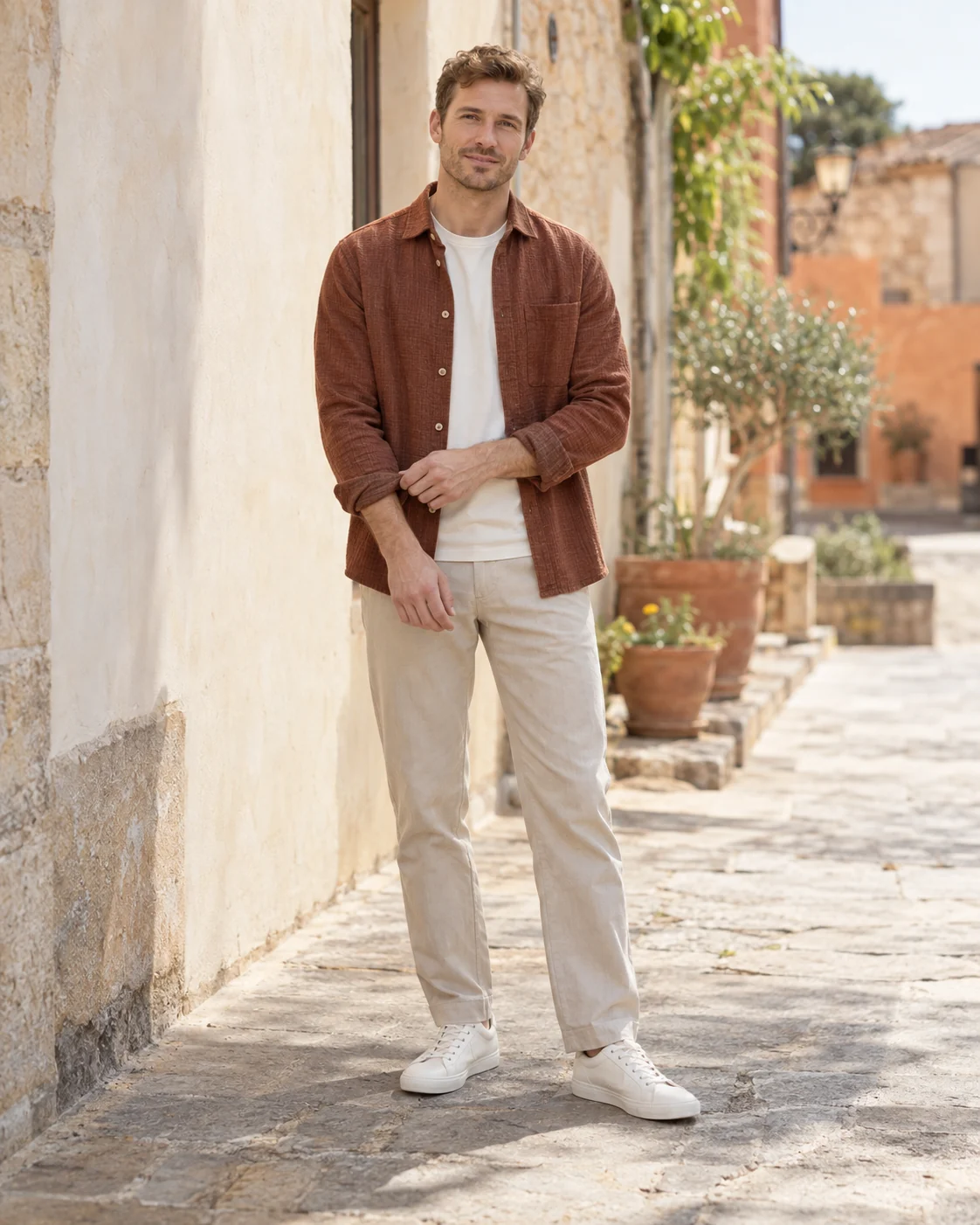
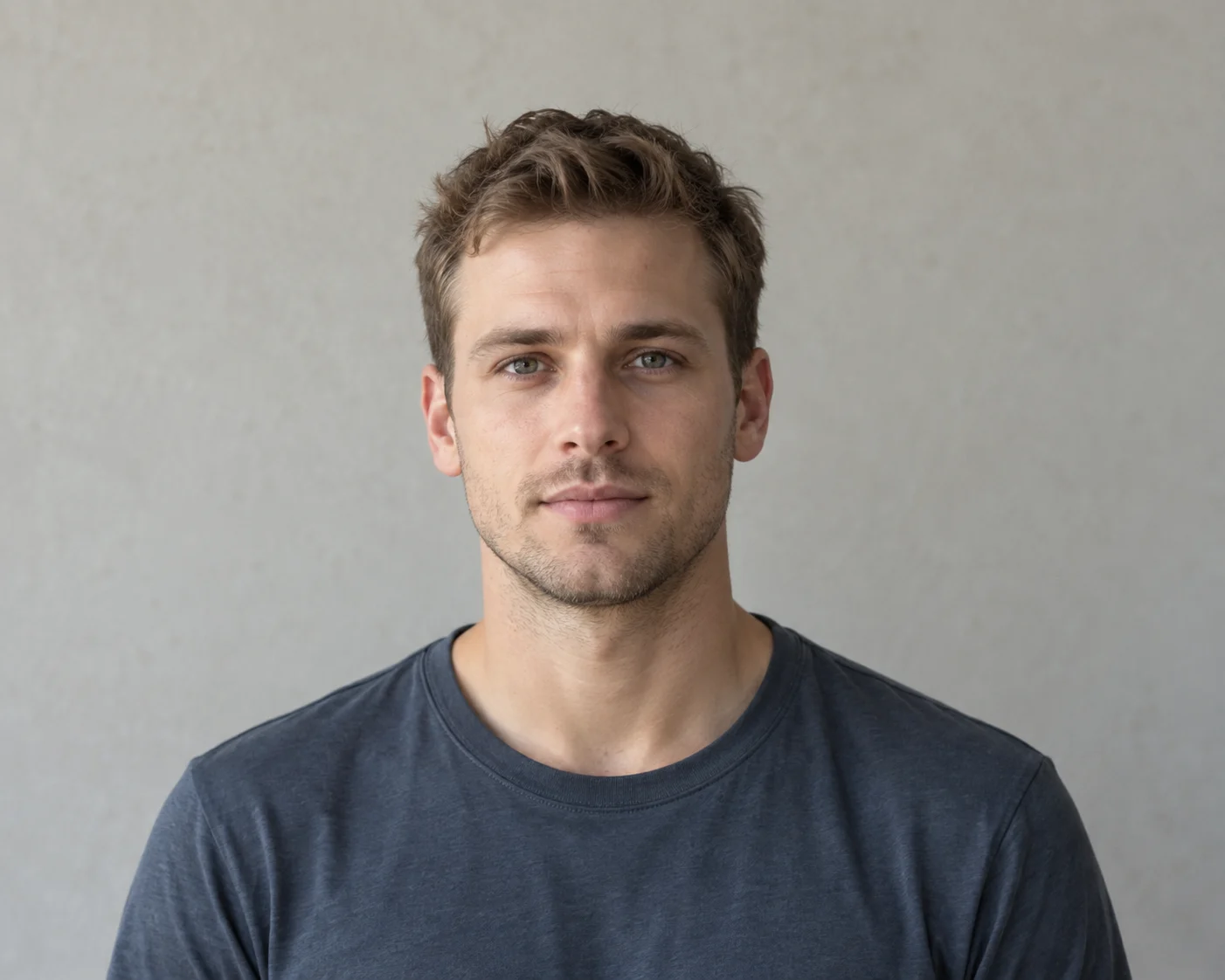
One head-and-shoulders reference and a complete outfit.
Keep
The same hair, camera position and one anchor garment.
Leave with
A style change tied to facial framing or a visible clothing proportion.
THE LOOKSMAXXING CONNECTION
Where does clothing fit into a looksmaxxing plan?
Clothing and glasses influence the frame around your face and the visible full-body silhouette. Start nearest the face—frames, collar and neckline—then assess shoulder fit, layer length and the trouser line. Give each change a visual purpose rather than replacing your wardrobe without a direction.
TWO USEFUL WAYS TO LOOK AT IT
Work from the face outward.
Use the scale of the decision to choose the right reference. A tight portrait cannot answer a trouser-proportion question.
Work from the face outward.
The question
AHead-and-shoulders frame
BFull-body silhouette
Look at
Glasses, collar shape, neckline and the outline around the shoulders.
Layer length, top-to-trouser relationship, hem and shoe weight.
Change
One neckline or one frame direction with the hairstyle unchanged.
One garment length or fit choice with the other pieces unchanged.
Review
Does the detail support the eye area and overall facial frame?
Does the complete outline work while standing and moving?
A useful style upgrade has a visible purpose and still works in the situation you will wear it.
THE LOOKSMAXXING FRAMING LAB
See what one variable changes.
Explore three framing choices in natural-color portrait pairs. Learn which detail to look for in your own comparison.
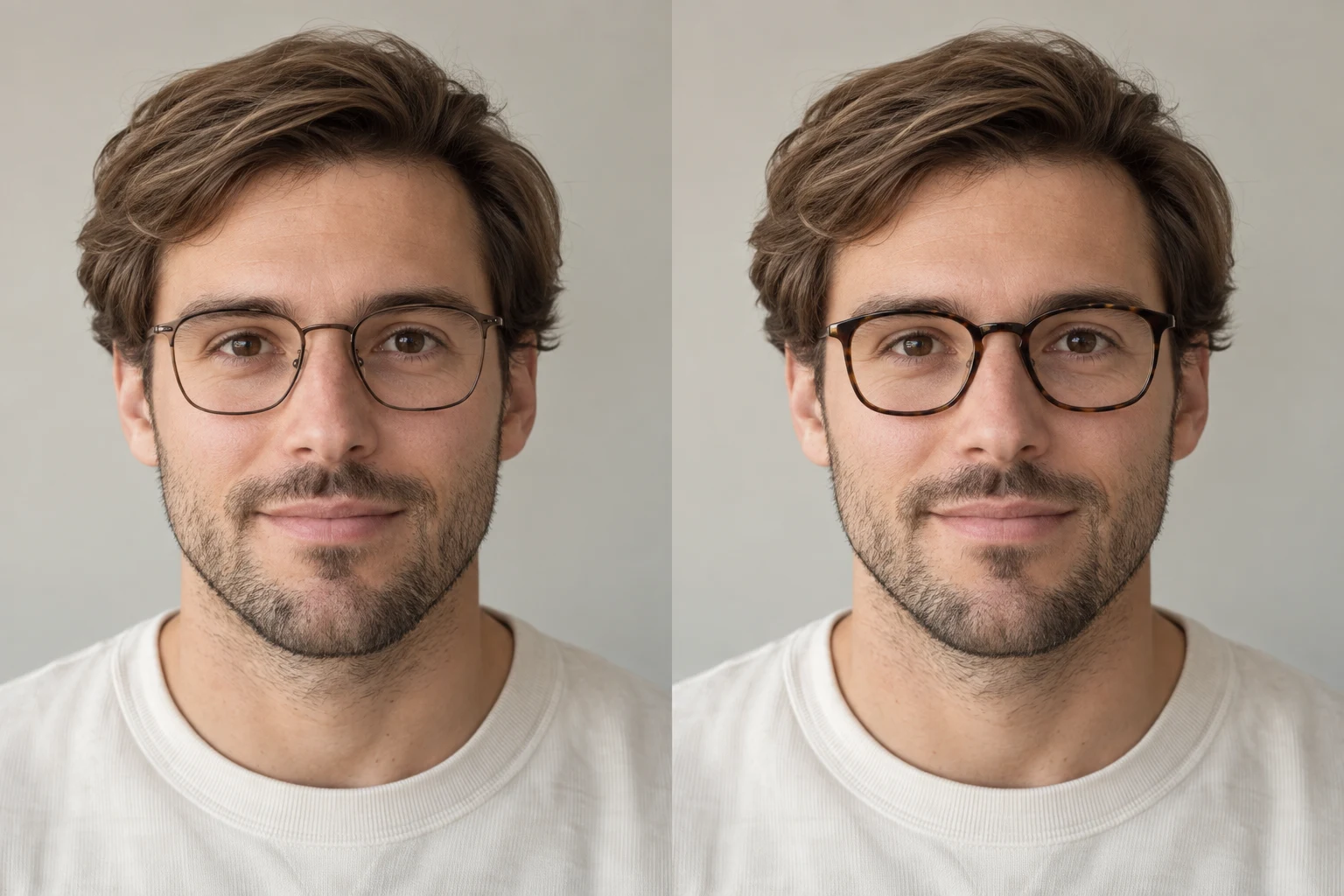
A
A lighter rim
B
A heavier rim
AI-generated editorial portraits · Styling examples, not transformation results
Visual weight changes the boundary around the eyes.
A heavier rim makes a more prominent line around the eye area. Compare it with a lighter frame of a similar shape. Compare that line with the brows and the entire face. Then check physical fit and prescription needs with an optician.
Look for
How does the frame relate to the brows and eye visibility?
Your comparison
Compare two realistic frames with the same hairstyle and neutral pose. Keep frame fit separate from the appearance preference.
Compare the visual weight of glasses and the shape of the neckline with the same hairstyle. A heavier frame emphasizes a different boundary around the eyes. A high, closed collar and an open neckline reveal different amounts of neck. Decide which detail you want to test before changing both.
02
Assess shoulder and torso framing
Look at where the garment sits around the shoulders, how the sleeves hang and where the top ends. First check movement and comfort. Then compare one silhouette choice, such as a shorter outer layer, while leaving the rest of the outfit unchanged.
03
Read the head-to-toe relationship
Use a consistent full-length reference to compare top length, trouser rise, hem and footwear together. Save the combination with a note explaining the visual relationship you prefer. The goal is a repeatable presentation, not a claim that clothing changed your anatomy.
IN DEPTH / 04
Read style from the face outward
Glasses, collar and shoulder structure sit nearest the face and can change where the portrait directs attention. Start there before changing the complete outfit. A strong upper rim, a high neckline and a heavy layer may each work alone but create a crowded frame together. Compare the relationship with your normal hairstyle and facial hair.
Then step back to the full-body view. The upper frame should make sense with trouser length, garment volume and shoe weight. A combination that looks good in a head-and-shoulders crop may feel unbalanced in the complete silhouette. Save both views when the question requires them and explain the difference.
IN DEPTH / 05
Give the item a job before deciding to buy
A wardrobe item should solve a defined problem or fill a real use case. Name the fit issue, proportion preference or activity first. You may need a different layer length rather than a new color palette, or an adjustment to trousers rather than another top. Existing clothes can provide the first comparison.
For glasses, begin with fit and prescription needs, then compare visual weight. For clothing, include movement and comfort. A preferred photo does not establish those details. Trying the item in its intended role keeps the looksmaxxing decision grounded in the version you will actually wear.
IN DEPTH / 06
Create a small set of repeatable proportions
Choose a few outfit arrangements for everyday situations and record why they work. Describe the neckline, shoulder frame, top-to-trouser relationship and shoe weight. You can then vary color or detail without rebuilding the entire silhouette each time.
Keep a purchase note for the missing job. When you shop, compare the candidate inside an outfit you already use. This makes style more coherent and helps the wardrobe support your facial frame without becoming an unrelated collection of statement pieces.
A style audit at three scales
Scale
What to inspect
Near the face
Glasses, collar and the interaction with hair and beard.
Upper body
Shoulder line, layer length and torso volume.
Full silhouette
Top-to-trouser proportion, trouser break and shoe weight.
THE PRACTICAL WORKSHOP
Make the neckline comparison useful.
Keep the hairstyle, facial hair and glasses the same. Try two tops or collar positions that reveal different amounts of neck. Use the same camera height and framing. Describe the change in the boundary around the face instead of making a general judgment about your body.
Once that decision is clear, step back to a full-length view. The neckline you like still needs to work with the top’s shoulder fit and length. Review those separately. Save the final combination with one sentence explaining the proportion you want to repeat.
PUT IT IN CONTEXT
From portrait framing to an outfit
A more open neckline is the preferred frame around the face. Keep it, then compare the outer-layer length with the same trousers and shoes. Two decisions, each with a clear purpose.
AVOID THE DETOUR
Changing frames, neckline and the whole outfit at once without knowing which part improved the overall impression.
A BETTER FIRST MOVE
Compare two necklines with the same glasses and hair, then assess a single clothing proportion in a full-length reference.
THE TAKEAWAY / MAKE IT YOURS
Your looksmaxxing style audit
Connect the outfit to one facial or full-body framing goal.
YOUR FIRST USEFUL MOVE
Compare one neckline or frame choice while keeping hair and the other details fixed.
The check
Does the eye-and-brow frame remain the focus you intended?
No account or upload. Notes stay on this page; download them before leaving.
QUESTIONS ANSWERED
A clearer next step.
01Do I need an entirely new style for looksmaxxing?
No. Start with one framing or fit issue and compare existing options. Keep the parts you already like and buy only when the missing job is clear.
02Should I choose glasses from a face-shape chart?
Use charts as broad ideas, then assess real fit, brow visibility and rim weight on your own portrait. A comfortable frame can support several different aesthetic directions.
03How should I compare two outfits?
Keep the purpose, posture and camera setup similar. Change one main variable and check both the head-and-shoulders frame and full-body silhouette when relevant.
Connect clothes to your looksmaxxing plan. Audit necklines, shoulder fit, layer length and full-body proportions with photographic comparisons and a personal worksheet.