

How to fold a pocket square for a straight edge
Learning how to fold a pocket square is easier when you work toward one clear result: a small straight edge that sits comfortably in the breast pocket of your actual jacket. Lay the cloth flat, fold it into a rectangle, adjust the width and shorten it from the bottom until it rests at a useful height. You do not need an elaborate shape, a new accessory or a rule about the perfect amount of cloth on display.
This guide uses a simple flat fold with an ordinary woven square. The same sequence may need different proportions for a thick cloth, a very slippery material or a narrow pocket. Start with a clean piece you already own. Respect its care instructions and avoid forcing a large bundle into a pocket that cannot accommodate it.
The fold is a reversible styling choice. It does not correct a jacket's fit or determine whether an outfit is objectively attractive. The useful result is a comfortable arrangement you can make, wear and unfold without a long preparation ritual.
Start with a flat cloth and a clear surface
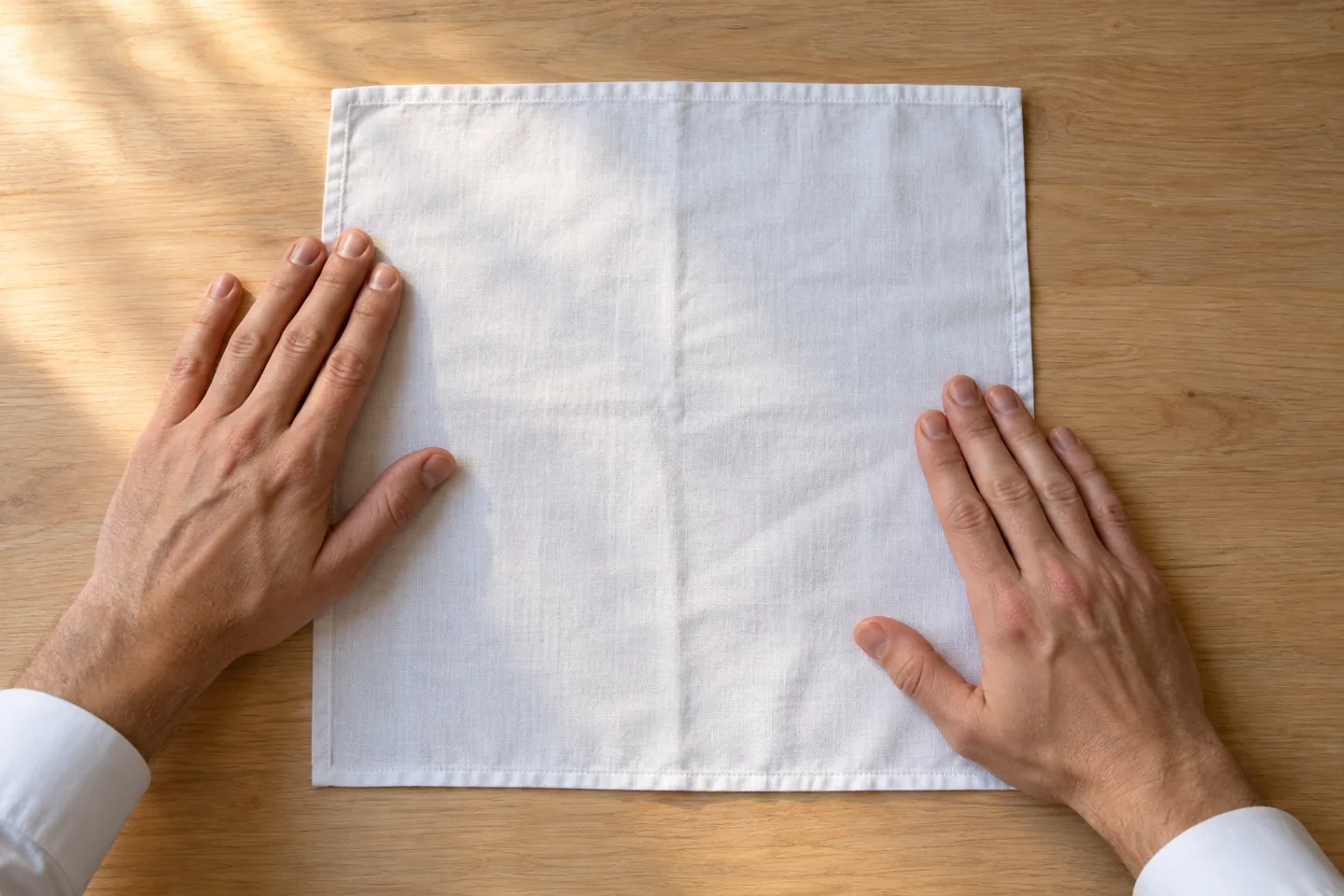
Open the square completely on a clean, dry surface. Smooth it gently with your hands so you can see its edges and choose which edge will remain visible. Check for a loose thread or fragile decoration before making tight folds. If you need to press the material, follow the real care label; do not assume cotton, silk and a blend can all take the same heat.
A plain square is a straightforward practice piece because the fold is easier to see. A patterned one is equally valid, but the side facing outward changes which part of the pattern appears. Decide that before repeatedly turning a finished bundle around. You can learn the sequence without purchasing an exact size or fabric named in somebody else's tutorial.
Charles Tyrwhitt's pocket square guide shows different approaches to a flat visible edge. It is a first-party styling source, not evidence that one fold improves your status or makes a body more attractive.
Check the pocket before making more creases
Find the actual opening of the jacket's breast pocket and make sure it is available for use. Some garments have a pocket held closed by temporary stitching; if you are unsure what is stitched, ask the shop or a tailor rather than cutting threads blindly. A decorative opening or fragile lining should not be treated as an invitation to push cloth through it.
With the jacket off, look at the space available. You want a folded rectangle that can enter without stretching the opening or catching along the side. The pocket's width and depth matter more than the original square's dimensions. There is no need to pull the lining outward to measure every millimetre.
If the jacket already feels tight or twists across your chest, use the wardrobe fit audit to consider that separately. A pocket square adds a small detail; it cannot create missing room in the garment. Keep the fit question and the fold question distinct before adjusting either.
Make the first rectangle
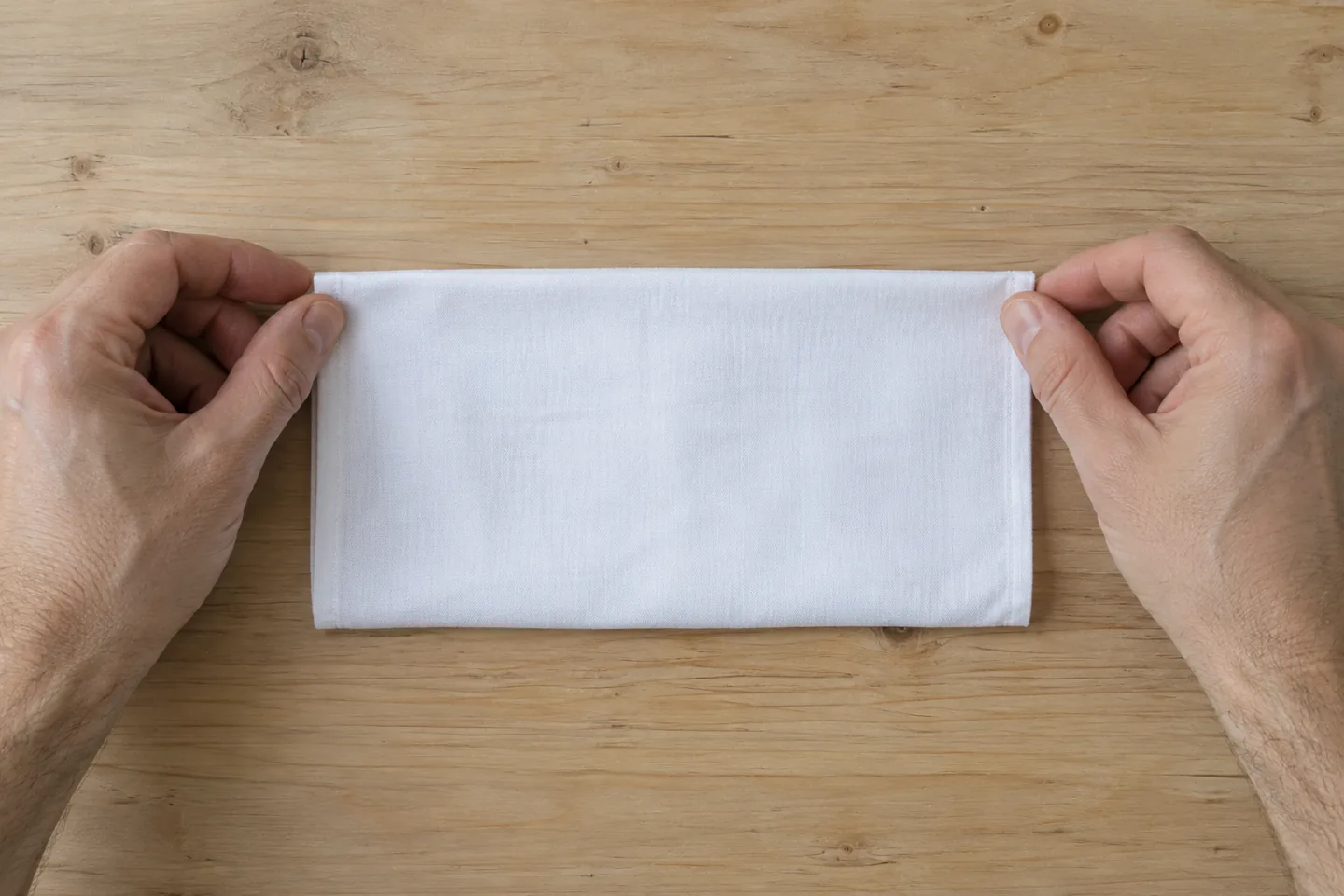
Place the edge you want to show toward the top of your working area. Bring one side over the other to make a rectangle, keeping the chosen top edge as level as practical. Align the corners gently and smooth the fold with your fingers. You are making a clear base, not pressing a permanent crease into an unfamiliar material.
C&A's Spanish rectangular pocket square instructions provide another simple folding reference. Different tutorials use different starting turns; the useful feature here is the straight top and a compact lower portion that fits the pocket. You do not have to combine several methods in one attempt.
If the cloth is especially large, begin with a broader rectangle and make the next adjustment gradually. If it is small, avoid folding it into a tiny block immediately. Keep enough height to reach the pocket bottom. Pause here so you can still see which edge should face upward when you insert it.
Adjust width without making a hard bundle
Compare the rectangle with the pocket opening. Fold a side inward if it is too wide, keeping the layers flat and the visible top edge clear. The rectangle should be slightly narrower than the opening so you can insert it easily. Avoid folding every corner into the same spot, which can create a lump behind a smooth-looking front.
You do not need identical side folds. One inward turn may be enough; another square may need both sides adjusted. Use the pocket as your reference rather than memorising a compulsory number of turns. If you cannot slide the result in without pushing, take it out and reduce the bulk or choose a thinner cloth you already own.
Look at the back as well as the front before moving on. Keep loose corners tucked within the folded shape rather than letting them catch on the lining. A small variation in the top edge is normal. It is better to have an easy, comfortable fit than a rigid miniature rectangle held together by excessive creasing.
Set the height from the bottom
Fold the lower part upward behind the rectangle. This changes the total height while leaving the chosen top edge intact. Start with a small adjustment and compare it with the pocket depth. The bottom of the folded square should support the visible edge instead of leaving the whole piece hanging high in the opening.
Do a first insertion with only a modest strip visible. If it sinks too far, open the bottom fold slightly to make the rectangle taller. If too much cloth sticks out, shorten it from below. Adjust outside the pocket so you can understand what changed; repeatedly stuffing the top downward can distort the shape without solving the height.
The amount on display is a personal choice within the occasion's actual clothing requirements. No universal measurement makes every pocket look right. A narrow straight edge is simply an easy starting point. Decide whether it works with this jacket before changing colour, shape and height all at once.
Insert with the folds facing inward
Hold the folded square lightly near its sides and slide the lower portion into the pocket. Keep the neat edge on top and the loose folded layers toward the inside. Ease it down rather than pushing sharply with one finger. If it catches, withdraw it and check for an exposed corner, excess width or a twist.
Once it rests, make one gentle adjustment across the top. A small visible strip can remain slightly relaxed. Do not pull hard on one corner to make it mechanically level, because that may lift the bottom away from its support. You can remove and reset the piece once if the base has become tangled.
Avoid pins, adhesive or improvised hard inserts as a first solution. This guide uses the cloth's folds and the pocket itself. If a very soft square refuses to hold a straight edge, a softer arrangement or leaving the pocket empty may suit you better. The goal is a usable choice, not forcing every material into the same shape.

Try sitting and reaching once
Put the jacket on and move as you would during the occasion. Sit down, stand up and reach gently for your bag or a glass. Notice whether the cloth stays reasonably in place and whether the pocket feels bulky. Standing completely still in front of a mirror cannot tell you how the arrangement behaves during an ordinary movement.
If the square sinks, check the bottom fold and pocket depth before blaming the visible edge. If it rises awkwardly, see whether a thick bundle is resting on something else inside the pocket. Remove unrelated items from that breast pocket if appropriate. Do not keep packing in more fabric to solve a lack of support.
One movement check is enough to make a useful decision. A little change during wear is normal, and a pocket square does not need to remain perfectly frozen. If the arrangement is comfortable and easy to reset, stop inspecting it. It should remain a small accessory rather than the main task of your evening.

Change one thing when the first attempt fails
Imagine a large cotton square that leaves a visible bulge in a narrow pocket. Rather than changing the whole outfit, unfold it and try one flatter width adjustment. If it still feels crowded, use a thinner existing piece or leave the accessory out. More elaborate folds are not automatically a better answer to too much material.
Now imagine a light square that drops out of view when you sit. Increase the folded height slightly from the bottom and test once more. Keep the width unchanged so you can tell what that adjustment did. If it remains unstable, accept the limitation of that cloth and pocket combination rather than repeatedly tugging the top higher.
The simple morning grooming routine offers a broader approach to keeping preparation proportionate. For an event, you can prepare the fold in advance while leaving time for ordinary essentials. A small accessory should not make you late or require you to rebuild every other choice.
Unfold, store and remember the useful choice
After wearing, take the square out gently and open the folds. Follow its own care instructions if it needs cleaning or pressing. Do not assume that a few creases require another wash. Let a damp piece dry appropriately rather than leaving it compressed in the jacket pocket. Store the square separately in a suitable clean place.
Remember a practical description: flat rectangle, slightly narrower than this pocket, bottom folded to support the top. A note like that is more useful than an exact universal measurement. You do not need photographs of every attempt or a ranking of all possible folds. Knowing that a certain cloth works better with a certain jacket is enough.
The guide to tracking style without overthinking connects observations with simple decisions. Keep the fold if it suits the occasion and your comfort; change it only when a real need changes. A jacket with an empty breast pocket is a valid option as well. The accessory does not measure confidence, taste or personal worth.
Frequently asked questions
What is the easiest pocket square fold to practise?
A flat rectangle with one straight edge is a useful starting point. Work with a clean familiar cloth, adjust its width to the opening and set its height from the bottom. The technique is simple enough to undo and repeat without learning several decorative shapes at once.
How much cloth should show above the pocket?
Begin with a modest strip, then decide what works with your jacket and the occasion's real clothing requirements. There is no single amount for every pocket. If the height is wrong, adjust the bottom fold outside the pocket rather than pushing or pulling the visible edge repeatedly.
Why does my square keep disappearing into the pocket?
The folded rectangle may be too short for the pocket depth or too soft to stay in the chosen shape. Open the lower fold a little to add height and check once. If the material still does not behave comfortably, choose a softer arrangement or leave the pocket empty.
Do I need matching accessories or a special holder?
You do not need to buy a matching set or a holder to practise this fold. Start with the jacket and square you own, and follow actual event requirements when relevant. A simple cloth arrangement is enough to learn whether this small detail is useful for you.