
How to pack a dress shirt in a carry-on
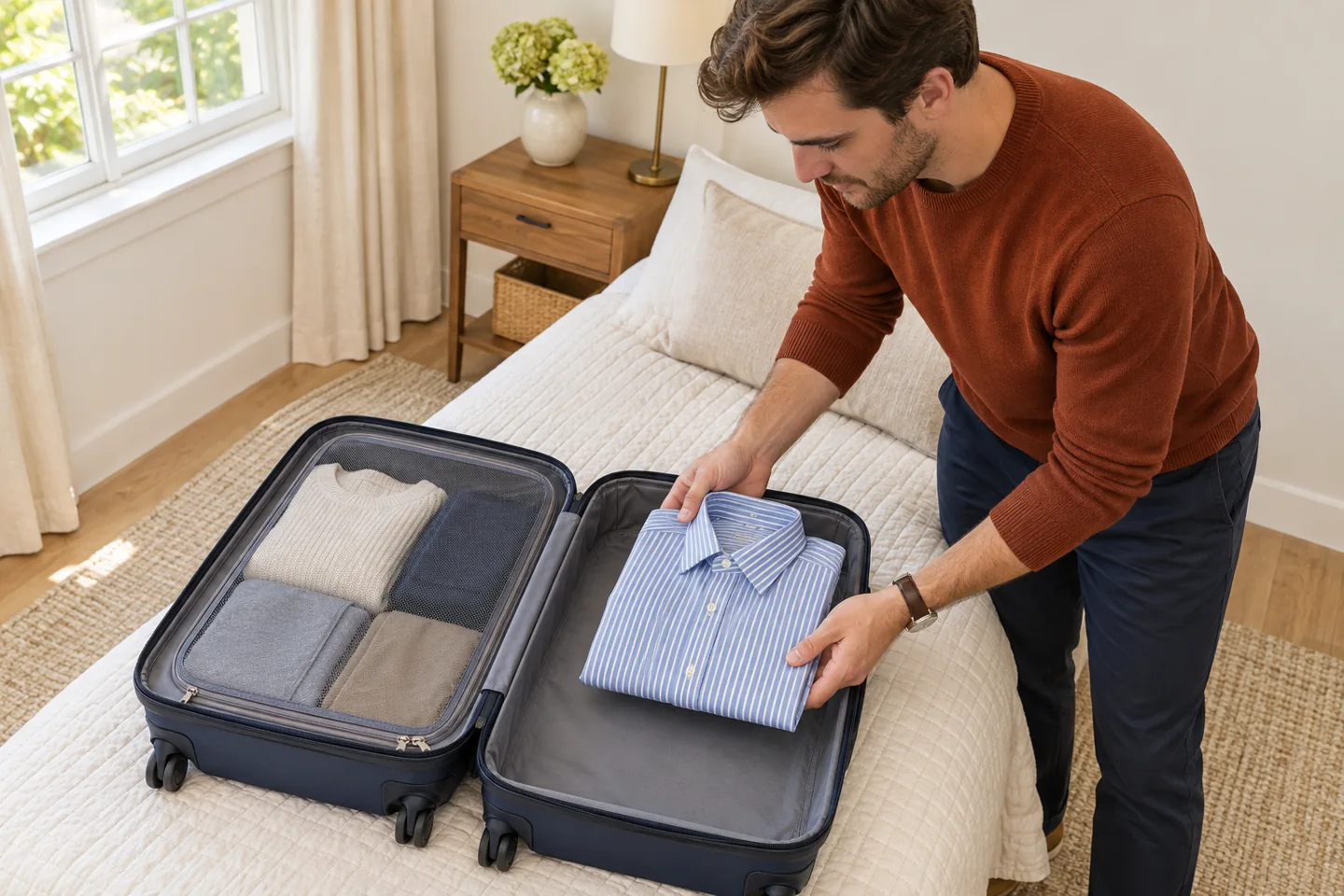
If you want to know how to pack a dress shirt for a trip, start by finding a flat place inside your bag where the folded shirt can lie without a hard item pressing against the collar. Measure the space with your hands before folding anything. A shirt folded to fit that space is easier to lift out in one piece, and you can avoid making an extra fold just because you guessed the width wrong.
Work on a clean bed or table. Start with a dry shirt, straighten the collar with your fingertips, and fasten a few front buttons so the two sides stay aligned. Fold the sleeves and sides across the back, then bring the hem up to suit the length of the bag. Once the shirt is packed, look at how the lid closes. If you have to lean on it, move something before you zip it shut.
Choose the place in the bag first
Open the bag completely and note where the handle rails, straps and pockets stick up. A broad compartment can still have a ridge down the middle. Use a flat layer of soft clothing to even out the base if necessary. In a bag with a zipped divider, check that a full pocket on the other side will not push through when you close it.
Put shoes, chargers and other rigid things where they can stay put. If you are packing a tie, the separate guide to packing a tie covers keeping it away from sharp edges. Give the shirt its own broad area. If you put the tie on top, avoid laying its roll over the collar, where the two items may create a lump against the lid.
Lay the shirt flat and line up the front
Fasten enough buttons to keep the front edges from slipping when you turn the shirt over. On a thin fabric, there is no need to pull on the placket to make it perfectly straight. Lay the shirt front down, with the collar and cuffs open enough to sit in their usual shape. Smooth the back from the middle out with your palm. Pick up any part that is caught beneath the shirt before folding it.
The Tailor Store dress shirt folding guide shows a flat folding method. Use the width you actually have available when deciding where to fold each side. A roomy suitcase lets you make a broad rectangle. A small backpack may need a narrower fold, but avoid pressing a thick cuff directly under the collar just to fit an extra item next to it.

Fold the sides and sleeves without bunching
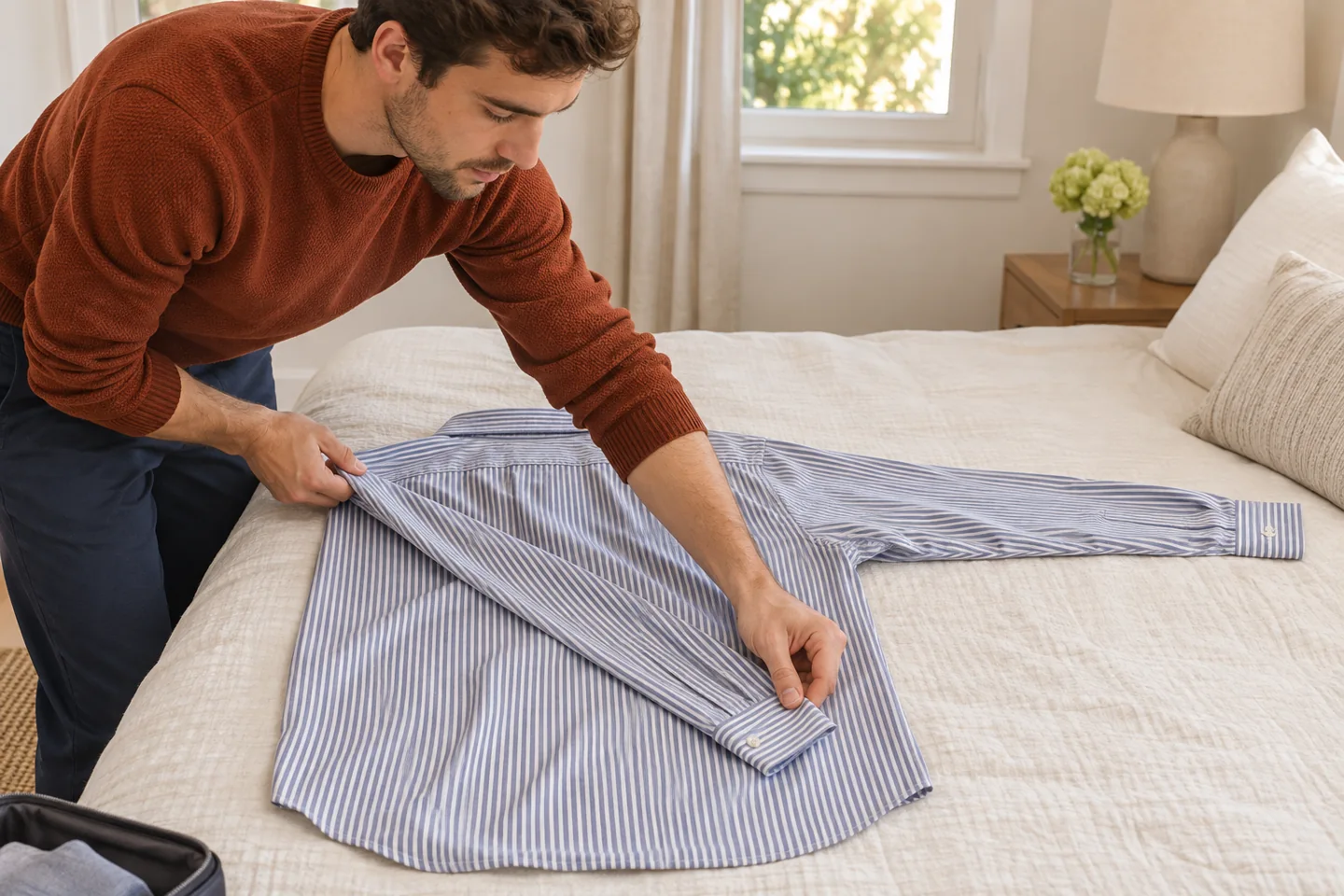
Bring one side of the shirt inward. Guide its sleeve diagonally across the back, then fold the sleeve back down so the cuff lies within the new rectangle. Keep the sleeve flat by lifting the fabric at the elbow if it bunches. Repeat on the other side. If both cuffs land on top of each other, shift one fold slightly so the thick seams do not make a single hard point.
Compare the width with your intended space. The fold should be narrow enough to fit but broad enough that the collar still sits flat in its normal position. A small mismatch is easiest to fix at this stage. Unfold the last side and move its fold line a little. If you try to squeeze the whole bundle later, the cuffs and collar can shift out of place.
Bring the hem up to fit the bag
Fold the bottom of the shirt up toward the shoulders. For a large bag, a single broad fold may be enough. For a shorter compartment, first turn a small section of the hem inward, then bring the rest up. Leave a little space below the collar so the thickest layers do not stack directly behind it. Turn the bundle over with one hand supporting each side.
Look at the front now. The collar should have room around it and the front edges should still line up. If the fold ends in a ridge underneath the collar, turn the bundle over and move the hem fold lower. A little extra length in the bag is better than a tight, thick square if you have the room. A folded shirt can still develop creases, particularly along a fold that stays compressed for a long time.

Pack with the collar facing a free space
Lower the shirt into its compartment with both hands. Position the collar toward an area where the lid or divider has room above it. Put flat, light layers nearby and keep buckles, toiletry bottles and shoe heels away. A packing folder or a clean cloth can help keep the shirt separate from the rest of the bag. Its usefulness depends on having enough space to close it easily.
Check any internal strap before tightening it. If it crosses the collar, move the shirt or route the strap elsewhere if the bag allows. Close the lid slowly and notice where it meets resistance. Reopen the bag if you have to press down over the shirt. Moving a charger to a side pocket may solve the problem without changing the fold.
Adapt for one shirt or a stack
If you need one shirt soon after arriving, pack it where you can reach it without taking out your shoes. For two shirts, place them side by side when there is room. If you need to stack them, offset the collars so the stiffest parts do not sit on top of each other. Keep the shirt you will wear first at the top of the stack and lift it from underneath rather than pulling by a cuff.
A long weekend may involve both a casual shirt and a dress shirt. Decide which one really needs the flat space. The wardrobe fit audit can help narrow your packing list to pieces that already work together. Trying the outfit before packing can also reveal that one shirt works with both trousers, which frees space and makes it easier to keep the collar clear.
Unpack and hang the shirt when you arrive
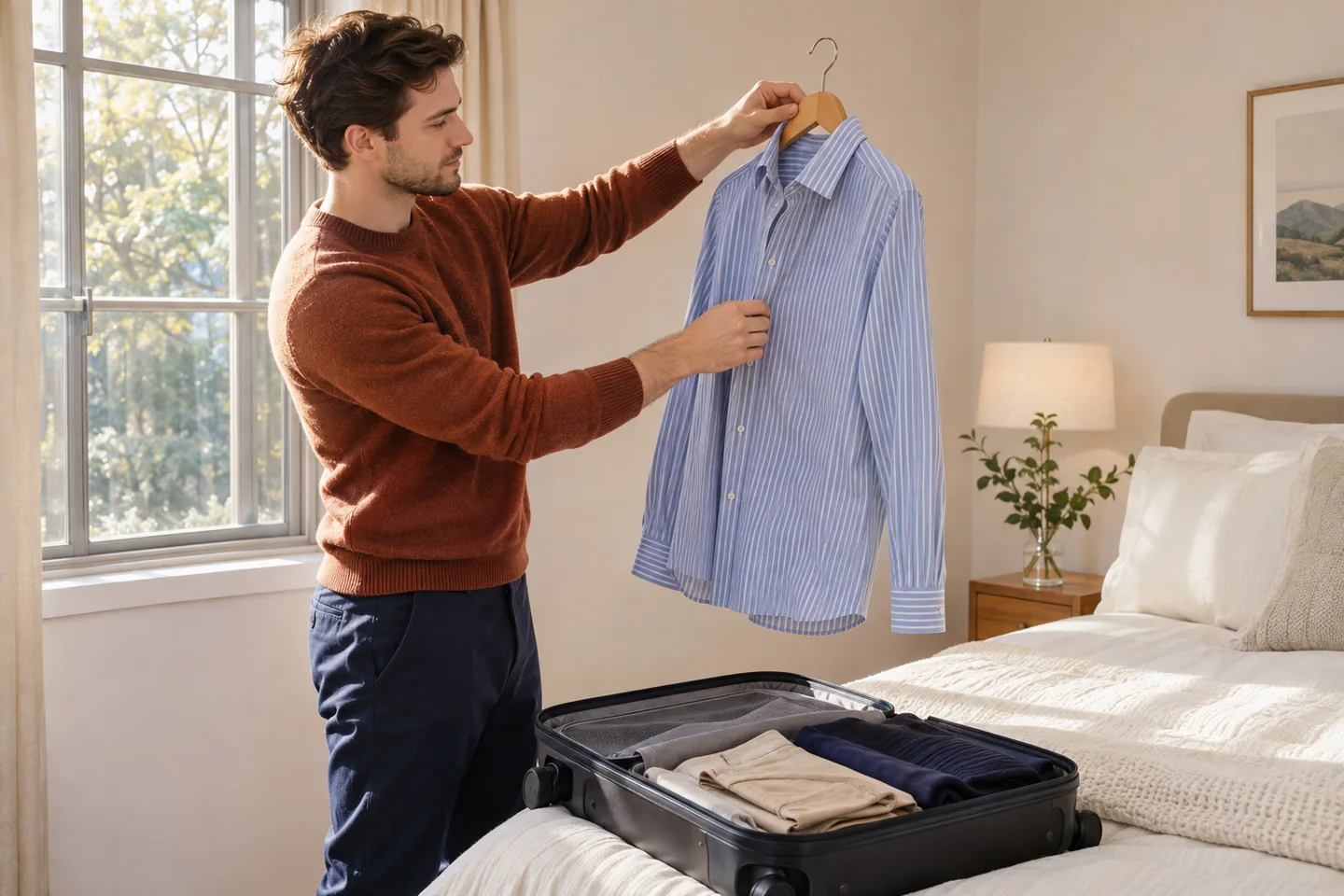
Open the bag on a stable surface and lift the shirt with both hands. Undo the broad hem fold, then open the sides and sleeves. Put it on a suitable hanger and let the fabric hang. If you see a crease that matters for the occasion, follow the care label before deciding what to do. Give yourself enough time to use an iron or steamer only if the label allows it and the equipment is available.
If you will change in a small room or at a venue, plan where the shirt can hang before you need it. A busy changing area may be easier to manage if you take the shirt out of the bag first and leave your other items packed. Keep the shirt away from damp towels and the bathroom floor. This simple unpacking step can be more useful than chasing a more elaborate fold.
If you are arriving in the evening for an early appointment, set the trousers and shirt out together. Check the collar and cuffs in ordinary room light. This gives you time to respond to a crease that matters without having to unpack the whole bag in the morning.
Questions about packing a dress shirt
Should I fold it with every button fastened?
Fasten enough to keep the front panels together while you turn the shirt over. If a button pulls the fabric into a raised ridge, open it and smooth that area before folding. Check the collar after turning the bundle over. A button can help hold the placket, but it cannot make room where the bag is already too full.
Is it better to roll a dress shirt?
A flat fold gives a structured collar its own space. A loose roll can be practical for a soft casual shirt with a less structured collar. Check the care instructions and how the item will sit in your bag. If you plan to put the shirt under something rigid, moving it to a protected space will matter more than the choice between rolling and folding.
Can I pack a shirt I just ironed?
Let it cool and dry completely first. Use that time to organize the rigid items in your bag and clear a surface for folding. If the shirt was pressed with steam, feel near thicker seams and cuffs before putting it away. Leave time on arrival to hang it up rather than expecting the fold to preserve every line from the ironing board.
What if the collar gets flattened on the way?
Unpack and let the collar sit in its normal position on a hanger. Use the garment’s care directions before trying heat or steam. For the next trip, check what was on top of the collar and move it to a separate pocket. A single change to the layout can be more useful than learning a different fold.