

How to roll shirt sleeves without a tight band
Learning how to roll shirt sleeves starts with the shirt you already wear and the movement you need. A comfortable fold keeps the cuff out of the way without making the upper sleeve pull. You do not need a particular arm shape, a new shirt or a rule about the perfect number of turns. Start below the elbow, bend your arm and decide whether the fold works for the next activity.
This guide uses an ordinary buttoned cuff on a casual woven shirt. French cuffs, decorative fastenings and delicate fabrics may need a different approach. A sleeve with a retaining tab should follow its own construction. Work gently and leave the sleeve down if the material resists. A rolled sleeve is an optional styling choice, not a repair for a shirt that is uncomfortable before folding.
The aim is one repeatable arrangement you can undo. Prepare the cuff, make a broad fold, check movement and stop adjusting once it feels useful.
Open the cuff before moving fabric
Undo the cuff button first. If the short opening above it has another button and the fabric cannot move freely, open that button too. Support the sleeve with your other hand rather than tugging at the buttonhole. Let a watch or bracelet sit clear of the fold; temporarily removing it can make the first attempt easier. Nothing should be trapped underneath several layers of cloth.
Look at the seam and cuff edge. An ordinary cuff gives you a convenient width to follow, but it is not a compulsory measurement. A frayed seam, loose button or fragile decoration is a reason to leave the sleeve alone until the garment is checked. Do not use force to pass a narrow sleeve over a larger part of your arm.
For context, shirt maker The Qualis describes different ways of folding shirt cuffs. Treat those as styling options, not rules about confidence, status or which bodies deserve to wear a shirt.
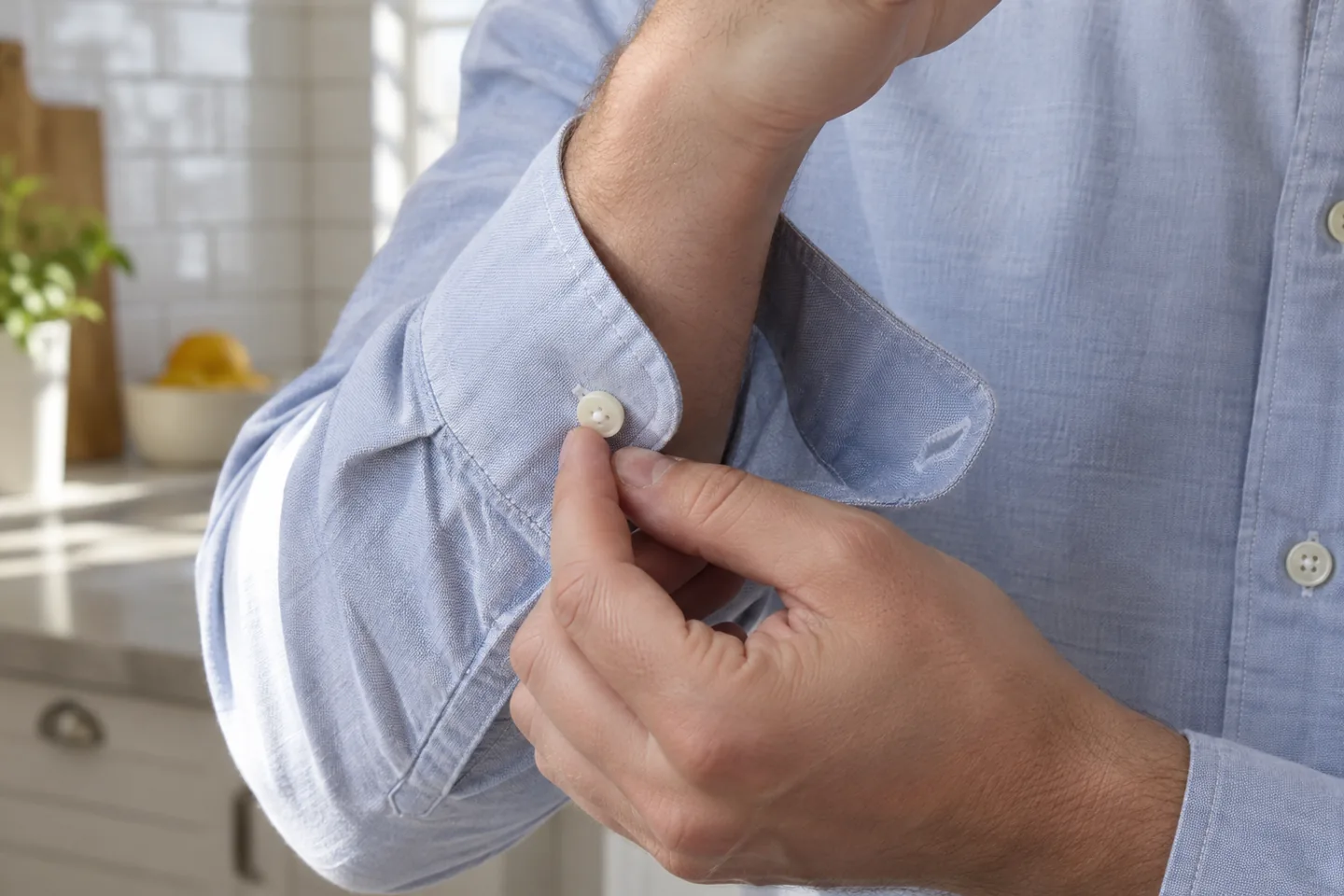
Make one cuff-width fold
Turn the open cuff back over the sleeve so its inside faces outward. Follow the existing cuff edge, then smooth the folded fabric gently with your fingertips. The fold should form a broad band rather than a tightly twisted rope. Check underneath the arm as well as the visible front: that hidden part can collect extra material while the front looks tidy.
Make the next fold over the first, roughly following the same width. Pause after each turn. You may only need enough height to free your wrist. The cuff width, sleeve length and thickness determine how many folds are practical, so copying someone else's count is less useful than looking at your own shirt.
Leave a little room between the band and your forearm. A small unevenness is acceptable. If fixing it requires pulling hard or repeatedly tightening the whole sleeve, unfold it and restart once with a broader, looser first turn.
Choose height for the activity
For sitting, walking or carrying a bag, a fold below the elbow may be enough. It keeps the joint clear and usually leaves more fabric available when you bend your arm. For an activity that needs more of the forearm uncovered, check whether this particular sleeve can move higher without resistance. Do not assume that going above the elbow automatically makes a fold better.
Try the arrangement with the rest of your outfit. A rolled cuff can catch inside a jacket sleeve, so unroll it before putting on a narrow outer layer. At work, follow the actual dress or safety requirements rather than a generic fashion tip. Loose fabric near equipment needs the relevant workplace rules; this article does not provide protective-clothing instructions.
If you are choosing a shirt because its whole sleeve feels wrong, use the wardrobe fit audit to separate length, width and movement. Folding changes presentation; it does not change the original fit.
Smooth the underside, then mirror the second arm
Once you choose a height, turn your forearm so you can see the underside. Ease out any trapped flap with your fingertips. Keep the folds flat enough to sit comfortably, without trying to press every natural wrinkle away while wearing the shirt. A woven sleeve will still show texture, and a linen shirt will not look like a rigid paper band.
Repeat the process on the other arm using the same broad approach. Compare the position relative to each elbow rather than counting visible stripes or measuring with a ruler. Small differences are ordinary, especially when one hand finds the opposite sleeve easier to handle. You need the two sides to feel similarly useful, not mechanically identical.
If the second sleeve keeps bunching, undo it and check that its cuff and opening are released. Changing the first fold is usually easier than adding another turn on top of a twisted base. After one restart, accept a relaxed result or leave both sleeves down.
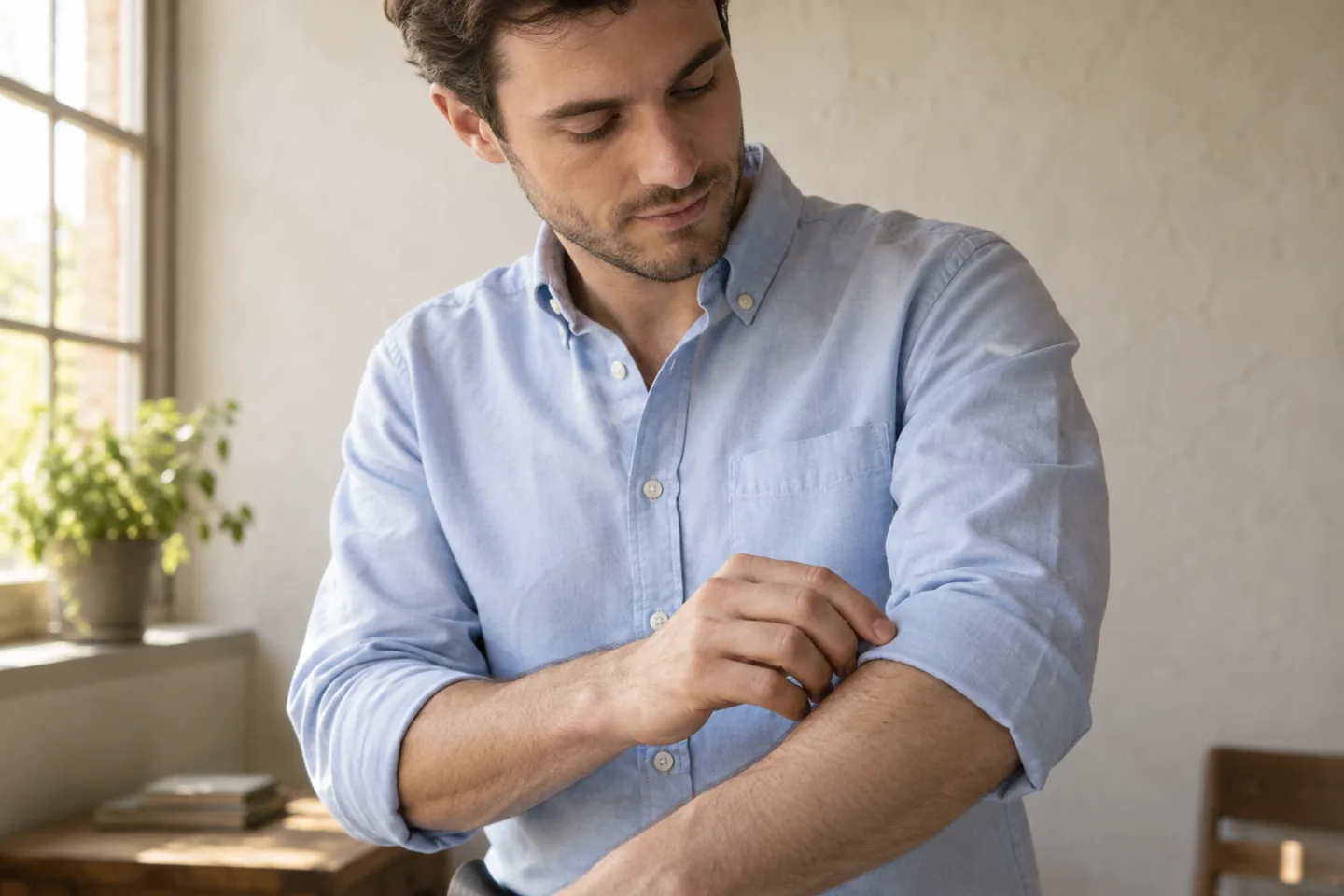
Test an ordinary movement
Bend both elbows as you would when using a keyboard. Reach toward a shelf, pick up your bag and rest your hands in your usual position. Notice whether the shirt pulls across the elbow or whether the folded band presses into your arm. These simple movements tell you more than standing still with your arms straight in a mirror.
If it feels restrictive, lower the fold by one turn or undo it. If it repeatedly slides, check whether excess cloth is tucked into a narrow band; a broader fold may be easier to manage. Do not keep tightening it until it stays in place at any cost. Some combinations of sleeve shape and fabric will simply be less stable.
Use a clear stopping rule: the cuff is out of the way, you can move comfortably and the fabric is not under obvious strain. Once all three are true, continue your day. There is no benefit in checking the sleeve after every small movement.
Adjust for the fabric you actually have
A crisp cotton shirt may hold a fold differently from a soft, lightweight shirt. Thick fabric creates bulk sooner, while a very fluid fabric may fall back down. Try fewer turns on a heavier sleeve and allow a softer sleeve to have a less defined edge. These are practical observations to test on your garment, not promises that one technique suits every textile.
Avoid ironing a fold while wearing the shirt or adding adhesive, pins or hidden fasteners to force it into place. If the shirt has its own sleeve tab, use it only as intended and check the button attachment. Decorative cuffs, unusual seams or a garment marked for specialist care deserve extra caution.
The Brazilian retailer Men's Market also presents a shirt-sleeve folding example. It is a first-party styling demonstration, not an independent test. Your comfort and the garment's construction remain the practical limits.

Solve one problem rather than rebuilding the outfit
Imagine you are preparing for a casual afternoon meeting. Your cotton shirt fits comfortably, but the open cuff brushes your hands when you write. Open the fastenings, make two broad turns and stop below the elbow. Write a sentence and pick up your bag. If the fold stays comfortable, the original problem is solved; there is no need to change the collar, trousers or every other detail.
Now imagine a narrow sleeve that becomes tight after the first turn. The useful decision is to wear it down or choose another shirt for that activity. Adding more folds will not create missing width. Keep the distinction between a styling adjustment and a fit issue clear, so a small inconvenience does not turn into an expensive shopping project.
For a morning with several competing tasks, the simple grooming routine can help you keep this step proportionate. Sleeve folding should take its place among ordinary preparations, not become a lengthy inspection.
Unroll before the next use
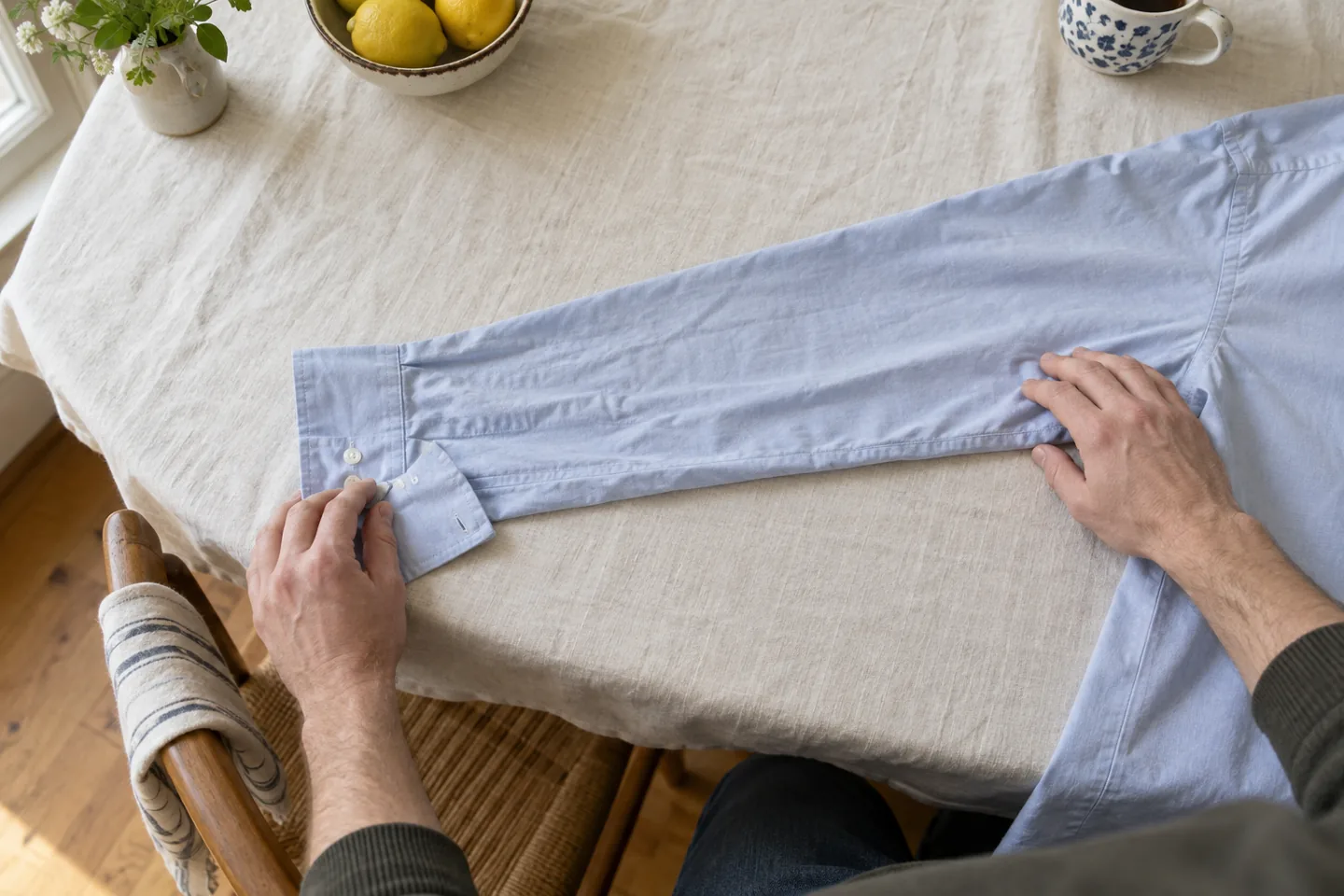
At the end of the activity, open each fold gently in reverse order. Smooth the sleeve with your hands and let the cuff return to its usual shape. Do not pull the whole rolled band sharply down the arm; release the layers individually. If you have taken the shirt off, you can lay the sleeve flat to make this easier.
A fold can leave creases. That does not mean the garment needs another wash. Follow its actual care instructions if it needs pressing or laundering, and handle a delicate shirt accordingly. Let a damp garment dry as its label directs rather than leaving a thick rolled cuff compressed in storage.
Before putting the shirt away, check that no accessory remains caught in the fabric and that the cuff button is secure. Store it in your usual suitable way. Keeping the sleeve open gives you a fresh choice next time instead of inheriting a twisted fold from yesterday.
Keep a useful choice, then move on
If one arrangement worked, remember a simple description: broad turns, below the elbow, comfortable when reaching. You do not need to photograph every attempt or rank the result. A note about the shirt and activity can be enough when you want to repeat it later. If it did not work, remembering to leave that particular sleeve down is equally useful.
The guide to tracking style without overthinking offers a broader way to keep observations practical. Evaluate whether an adjustment supports your day, rather than whether it changes your worth or earns a better appearance score.
For a different occasion, reconsider the fold only if the clothing requirements or activity change. A relaxed lunch, a formal invitation and a workplace task can call for different choices. Your sleeve does not have to communicate a fixed personality. It only needs to suit the garment, remain comfortable and be easy to restore.
Frequently asked questions
How many times should I fold the cuff?
There is no universal count. Begin with one broad cuff-width fold and add another only if you need more height. Stop when the cuff is clear of your hands and your elbow can bend freely. A short sleeve or a thick cuff may need fewer turns than a long, light sleeve.
Should the roll sit above or below the elbow?
Below the elbow is a useful starting point because you can test it without immediately covering the joint. A higher position is optional if the sleeve has enough room and the activity calls for it. If it pulls, presses or feels awkward, lower it or leave the sleeve down.
What if my sleeve keeps falling down?
Unfold it and check the first turn, the open fastenings and any trapped cloth. Try a broader, flatter fold once. If the material still will not hold comfortably, accept that limit. Avoid tightening aggressively or adding improvised fasteners simply to imitate a photograph.
Can I roll the sleeves for every occasion?
No single styling answer covers every setting. Check the real dress requirements, the shirt's construction and your intended activity. An ordinary casual cuff is different from a formal cuff with separate fastenings or specialist workwear. Wearing the sleeve down is always a valid option when you are uncertain.