
How to trim fingernails without making the task complicated
Learning how to trim fingernails does not require a perfect manicure or expensive equipment. The practical goal is a comfortable edge, no unnecessary cutting of skin and fewer rough points catching clothing. If you usually cut extremely short, the first adjustment may simply be stopping before the sensitive area. If you keep a longer edge, choose a length that lets you work, cook or play an instrument comfortably. There is no single shape that determines whether hands look good or deserve approval.
This guide concerns fingernails. Toenails have different considerations, so do not copy every shaping detail to your feet. Prepare good light, make small cuts, smooth the edge and put clean tools away. We will also distinguish routine grooming from changes that need qualified advice. The aim is a brief, repeatable task rather than examining every finger daily. You can complete it without photographs, scores or buying something each time a small corner feels rough.
How to trim fingernails: inspect the free edge first
Put your hand in ordinary good light and identify the part extending beyond the fingertip. That free edge is what you are reducing. If you cannot see it clearly, move toward a window or use a lamp rather than bringing the hand so close that the overall shape is lost. Consider your activities: working in gloves or using a keyboard may make a different length comfortable from playing an instrument. Every finger need not have exactly the same measurement.
Before trimming, notice pain, redness, a wound or a new change in color or shape. Do not turn a concerning change into a grooming experiment. Seek qualified medical advice, particularly if it persists. The American Academy of Dermatology’s nail-trimming guidance provides a conservative sequence for ordinary nails: soften them, use suitable tools, trim fingernails almost straight across and smooth the corners. That framework does not replace an individual assessment when something hurts or looks newly different.
Prepare three useful things and a stable surface
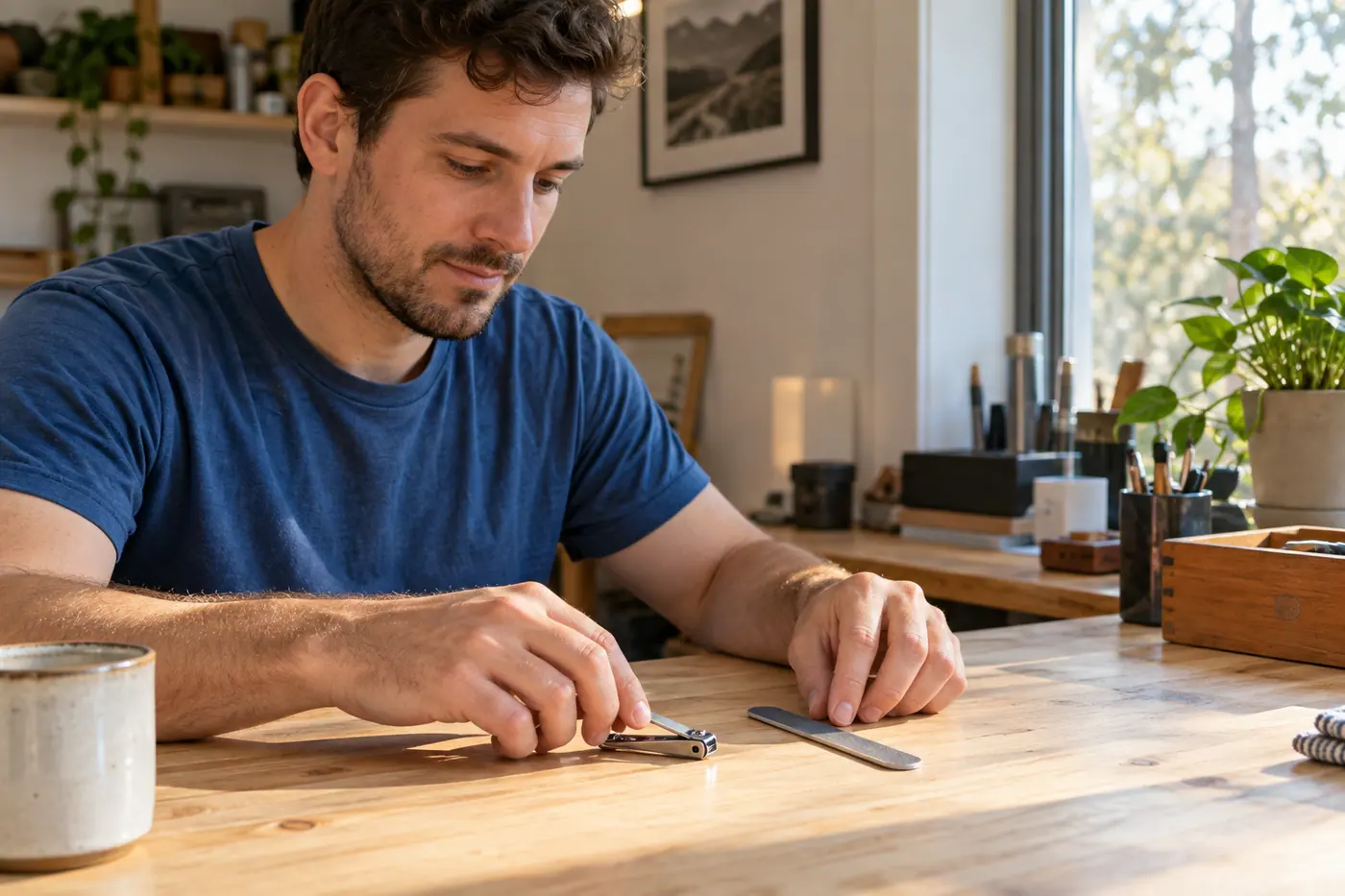
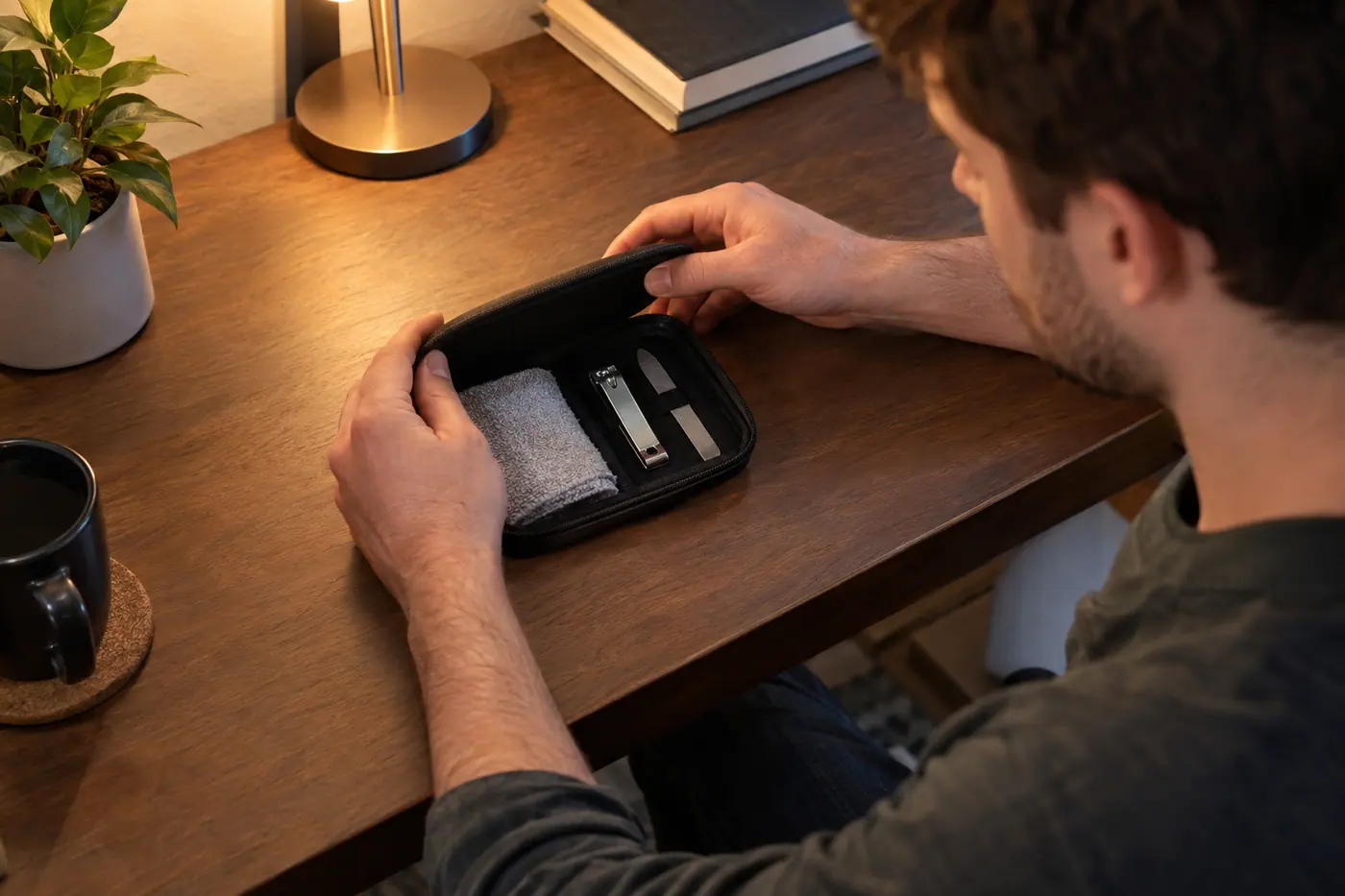
A clean nail clipper, a simple file and somewhere to collect clippings are enough for a basic session. Use a stable table instead of hurrying over a sink or trimming during a journey. Clean and dry the tool according to its instructions, and keep a personal file separate from other people’s equipment. You do not need pointed blades, abrasive products or a collection of gadgets to maintain an ordinary comfortable edge.
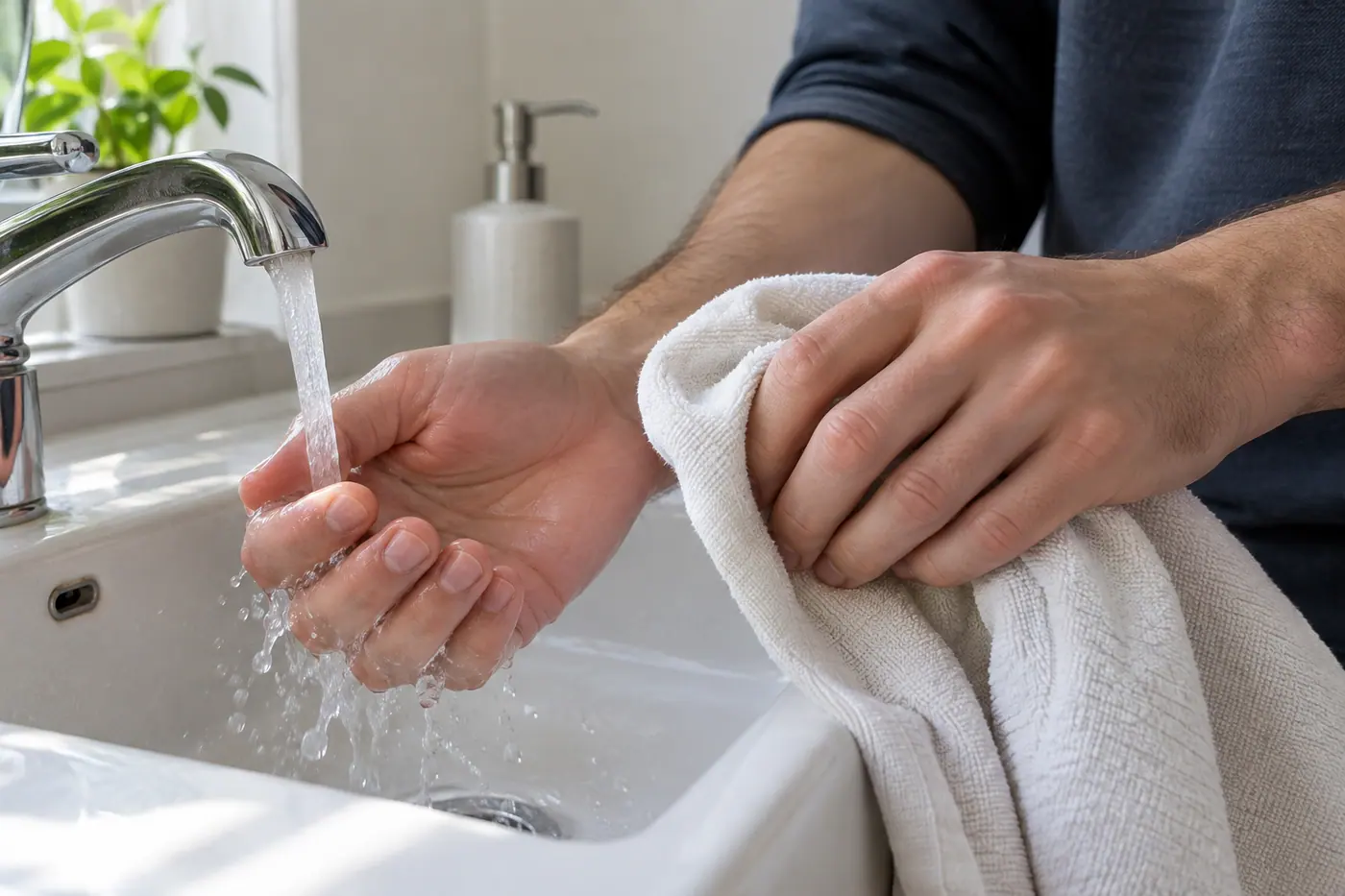
Trimming may be easier after bathing or washing, when nails are less rigid. Briefly soaking in lukewarm water is another option described by the AAD. Dry sufficiently to hold the clipper securely. Allow a quiet moment rather than squeezing the task into the last seconds before leaving. The simple morning grooming guide helps separate daily tasks from things checked only when needed. Nail trimming can belong to that second group without a fixed daily ritual.
Take small cuts and keep a comfortable margin
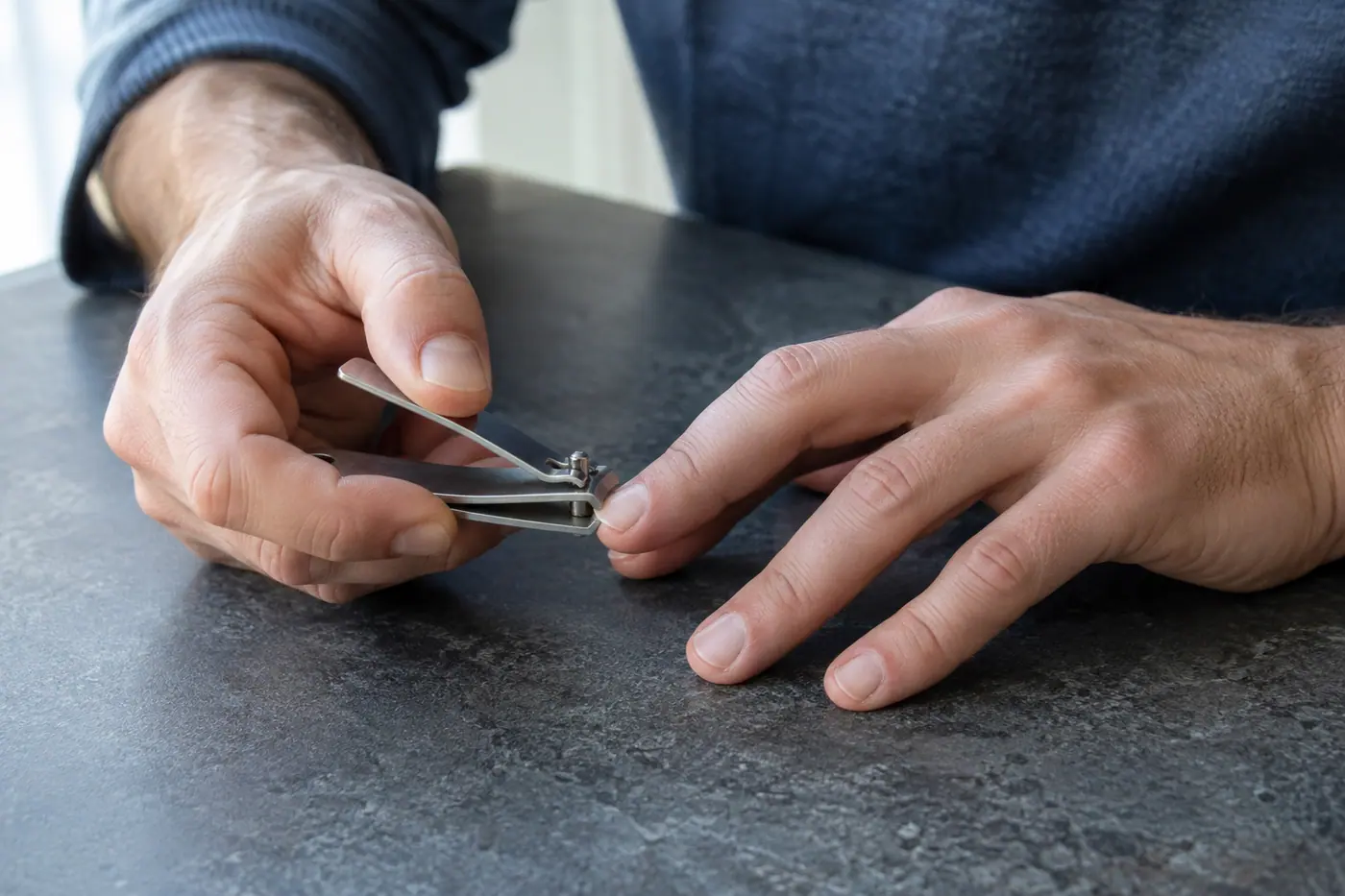
Rest the hand on the table and place the clipper at the free edge, away from the skin. Take a small cut, look again and continue only if there is remaining length you want to reduce. Avoid trying to complete the whole nail with one forceful squeeze. If you have reached the sensitive area or can no longer see a free edge, stop. A little retained length can be adjusted later; filing cannot restore an edge already cut too deeply.
The AAD describes fingernail trimming as almost straight across, followed by a small rounding of the corners. This does not require making every nail a rigid rectangle. Comfort and natural shape matter more than matching a template. If one corner catches clothing, smooth that roughness rather than digging farther into the side. Keep fingernail and toenail advice distinct. You are using a conservative approach for the hands, rather than creating a narrow shape by removing material beside the skin.
Smooth the edge instead of sanding the whole nail
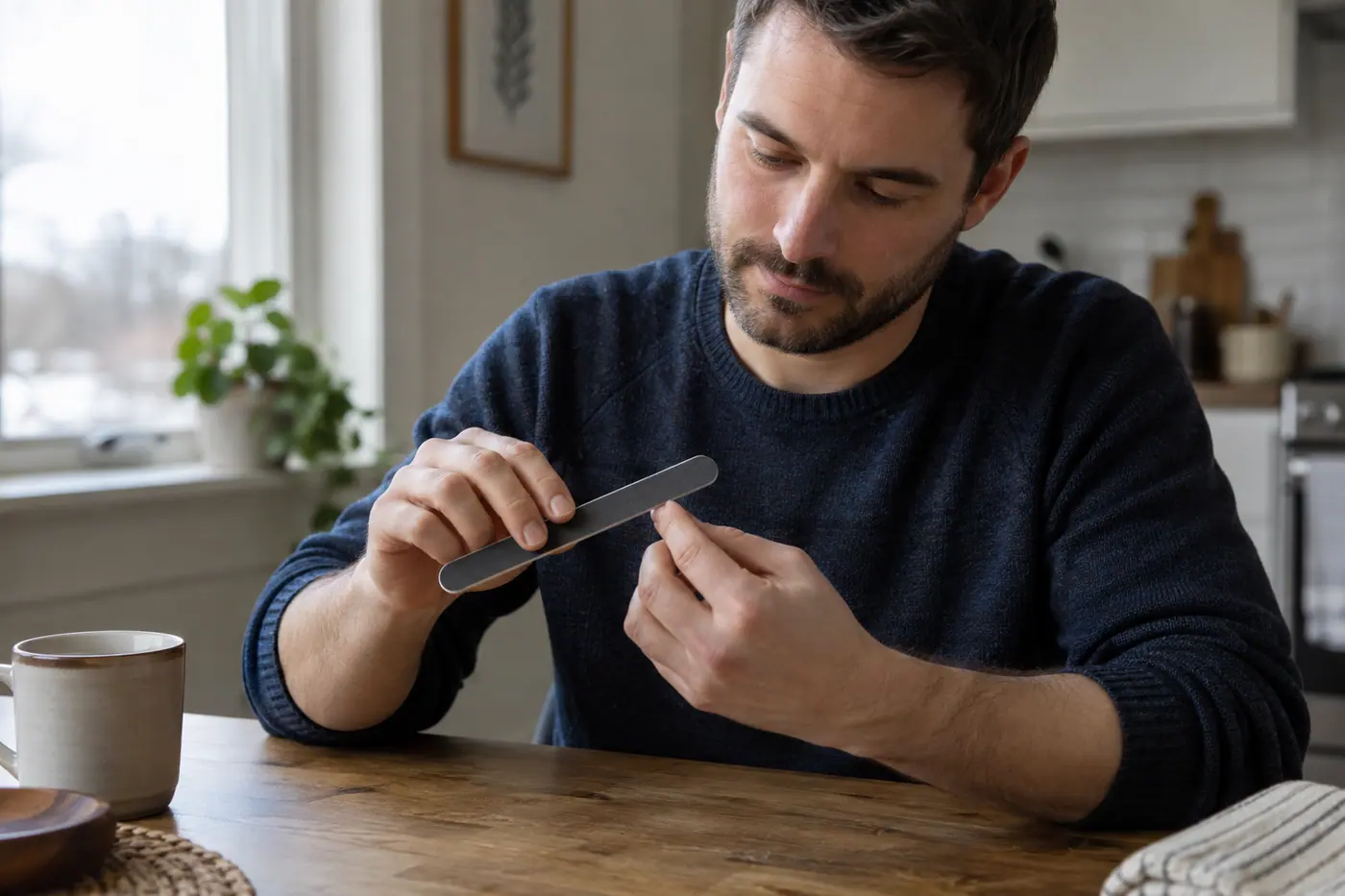
After clipping, feel gently along the edge with another fingertip. If a rough point catches fabric, file that spot and check again. The AAD advises filing in one direction rather than sawing back and forth. The purpose here is an edge that does not snag, not a polished surface. Use controlled light movements, and stop if the file drags or tears instead of making a clean adjustment. Inspect the tool before applying more pressure.
Do not use filing to punish a shape you dislike. Removing the upper nail surface for smoothness is a separate intervention and unnecessary for this basic task. Exact symmetry between fingers is also unnecessary. Look at the hands from a normal distance and try an ordinary action, such as closing a zip or handling a piece of clothing. If the edge is comfortable and catches nothing, you have a usable stopping point. The photograph demonstrates the gesture, not an aesthetic result you must copy.
Leave the cuticle and surrounding skin alone
The cuticle is not an unwanted flaw. The AAD recommends leaving it alone because it protects the area where the nail grows. Cutting or aggressively pushing it can cause injury. Avoid pulling loose skin or biting it away, and do not use pointed scissors to chase every tiny irregularity visible under intense light. Pain or signs of infection require appropriate professional advice rather than increasingly detailed home grooming.
Wash hands normally and dry them, particularly after work with water or dirt. The AAD’s healthy-nail advice emphasizes keeping nails clean and avoiding damage. A hand cream you tolerate may help ordinary dry surrounding skin feel comfortable. Do not assume a mark or color change has one specific cause. New, persistent or painful changes need a qualified assessment. A magnified phone image cannot establish what happened or which treatment is suitable.
Let everyday use decide when to check again
You need not trim on one compulsory day each week. Growth and daily tasks vary. Check when an edge catches, interferes with a glove or becomes uncomfortable during a particular activity. This functional signal is more useful than comparing photographs. Someone using manual tools may choose a different length from a guitarist. Neither choice makes their hands a measure of personal worth. A nail that grows or breaks differently deserves attention to its own condition rather than forced symmetry.
A reasonable session starts with a brief look in normal light, identifies which fingers need attention and ends with putting the kit away. Our everyday softmaxxing guide brings together reversible grooming choices, while this article stays with the free edge. Do not multiply tasks simply because a video presents a complicated ritual. If checking is becoming frequent, ask whether there is an actual functional problem or an attempt to meet an impossible level of perfection. The routine should leave attention for other parts of life.
Store the kit so the next session is simple
Collect the clippings, clean the surface and put the clipper and file away dry where you can find them. A small organized kit avoids buying another tool whenever a corner needs attention. If a clipper no longer cuts cleanly, replacing it may be more sensible than squeezing harder. If it works, it does not require upgrading because a new device is popular. The quality of this task depends more on clear light and a controlled movement than equipment novelty.
In a shared household, identify your own file and avoid mixing equipment with someone who has a known nail infection. Do not improvise treatments with corrosive products or diagnose a nail from an enlarged image. A new concerning line, persistent change, pain or inflammation merits qualified advice. This kit is for ordinary edge maintenance, not healthcare. Before putting it away, ask whether the adjustment made using your hands more comfortable. That gives you a practical reason to finish instead of continuing to search for tiny imperfections.
Use an app only for organizing a habit you already chose
MogRise is our publisher’s application. Its personal plan may help organize a modest task within a broader routine, but you do not need it to cut nails. A facial-analysis feature should not decide nail length; that is not a demonstrated product function. If a reminder such as “check edges when they snag” is useful, a paper note also works. Let the tool follow your practical decision instead of using it to create new grooming concerns.
Avoid daily photographs of your hands to search for small changes. Using an app cannot turn an observation into a diagnosis or an objective appearance grade. If persistent shame, anxiety or compulsive checking is taking over, speak with a qualified person rather than gathering more measurements. After smoothing an ordinary rough edge, store the kit and return to what you were doing. A small grooming task is successful when it supports everyday comfort and then makes room for the rest of your day.
Frequently asked questions
How often should I trim fingernails?
There is no universal interval everyone must follow. Check whether the free edge catches clothing, interferes with typing or makes an activity uncomfortable. If none applies, you do not need to cut just because the calendar says so. Keep the check brief and in ordinary light rather than assessing appearance daily.
Should I cut the cuticle to make it look clean?
No. It protects the nail’s growing area, and the AAD advises against cutting or pushing it. Normal washing and drying, a comfortable free edge and suitable hand cream are simpler steps. Pain, inflammation or a persistent skin change needs qualified advice instead of aggressive grooming.
Should I clip or file a nail that catches?
If the edge is clearly too long, make small cuts with a clean clipper, then smooth the corner. If there is only one rough spot, a file may be enough. Stop before touching sensitive skin in either case. Exact symmetry is less useful than keeping the edge comfortable during normal activities.
What if I notice color changes or pain?
Do not hide the change with additional filing or assume one cause. Nail shape, texture and color can change for different reasons, and a photograph cannot diagnose them. A new change that persists or comes with pain or inflammation calls for a qualified medical assessment rather than a longer grooming session.