

How to use hair wax with a small first amount
Knowing how to use hair wax is less about finding a dramatic hairstyle and more about controlling a small amount of product. Start with a familiar haircut, read the instructions on your own container and choose one section to arrange. Spread a little between your hands, work it through that section and stop before another scoop becomes an automatic response. You can decide whether the routine is useful without changing the haircut or buying several products.
This article focuses on an ordinary cosmetic styling wax that you already have. Wax, paste, clay and gel-wax names do not guarantee identical instructions. The label takes priority over a general technique. Do not use an unfamiliar product on irritated skin or continue with something that causes discomfort. Persistent scalp concerns belong with qualified care, not an app evaluation.
The practical question is simple: can this product help you arrange your current hair with an amount and an effort you find manageable? That gives you a clearer goal than trying to copy every strand of a photograph.
Read the container before choosing a starting point
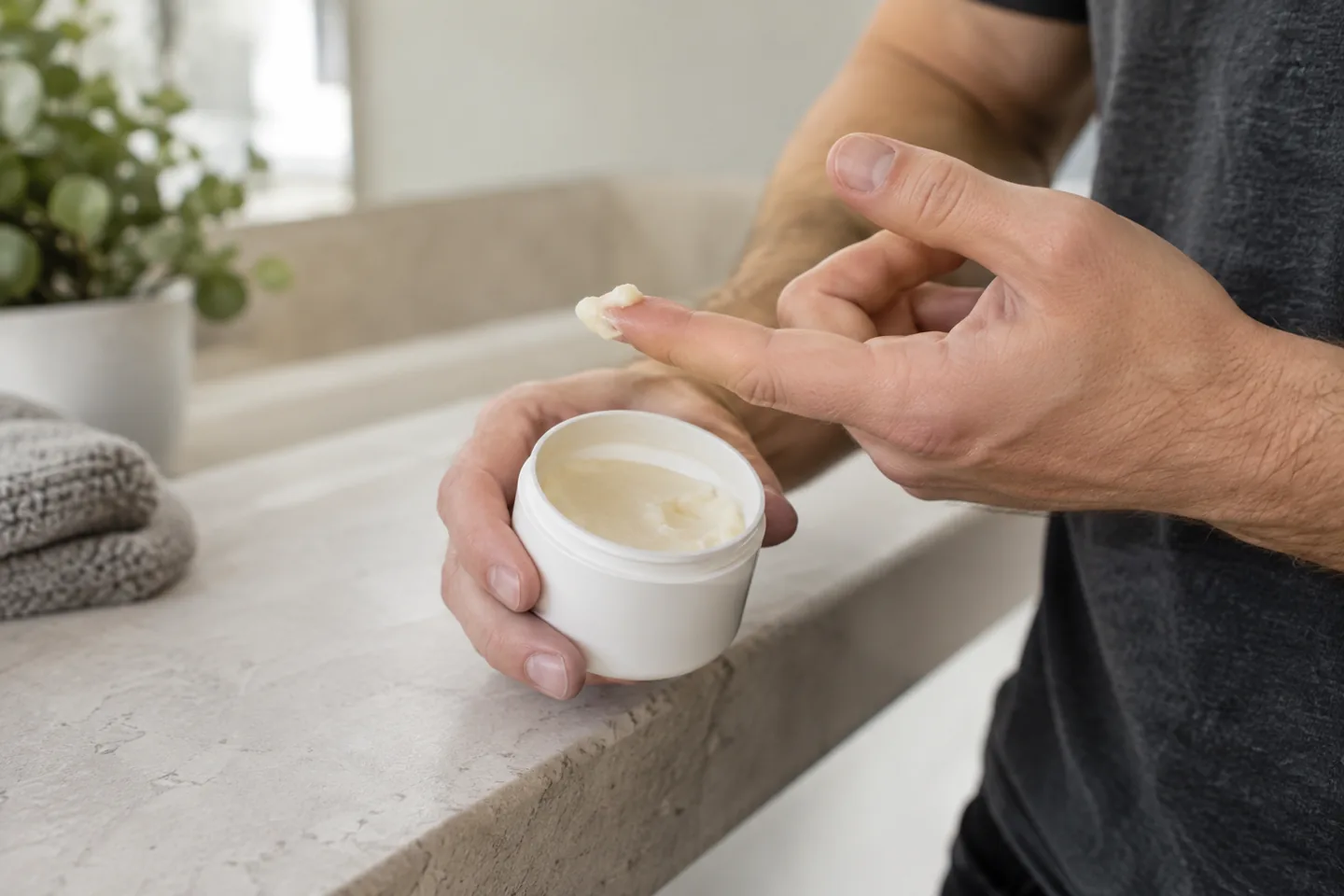
Check whether your product is intended for dry or damp hair, how the manufacturer says to distribute it and how it should be removed. Note any cautions before opening the pot. A product described as wax may feel soft, firm or creamy, and another person's amount is not a reliable measurement for your own formula. Use the smallest starting amount consistent with its instructions.
Schwarzkopf's own styling wax application explanation describes spreading wax across the palms and avoiding an excessive amount. It is a manufacturer's guide, not an independent comparison. Its broad marketing claims about benefits are not a reason to expect the same finish from every product or every head of hair.
Choose an ordinary time when you can wash your hands and leave the house without rushing. Put the container on a stable surface and keep the lid nearby. This small preparation prevents a sticky search for the lid once your fingers are coated.
Separate product amount from the haircut
Before adding wax, arrange the hair loosely with clean fingers in its usual direction. Decide what you want to make easier: keep one front section together, reduce a little untidy separation or give the ends a more deliberate direction. Avoid setting several goals at once. A simple goal lets you notice whether the first application helped without treating every natural movement as an error.
Wax does not give a short section the length of a reference haircut. It also does not make a stubborn section permanently grow differently. If the shape you want depends on missing length or a different cut, the haircut brief for your barber can help you ask a specific question later. Today, work with the hair that is actually there.
For example, choose “the front feels easier to arrange” instead of “my whole face must look different.” That keeps a styling experiment proportionate. The result is a preference and a practical observation, not an objective beauty judgment.
Spread the first amount before touching the hair
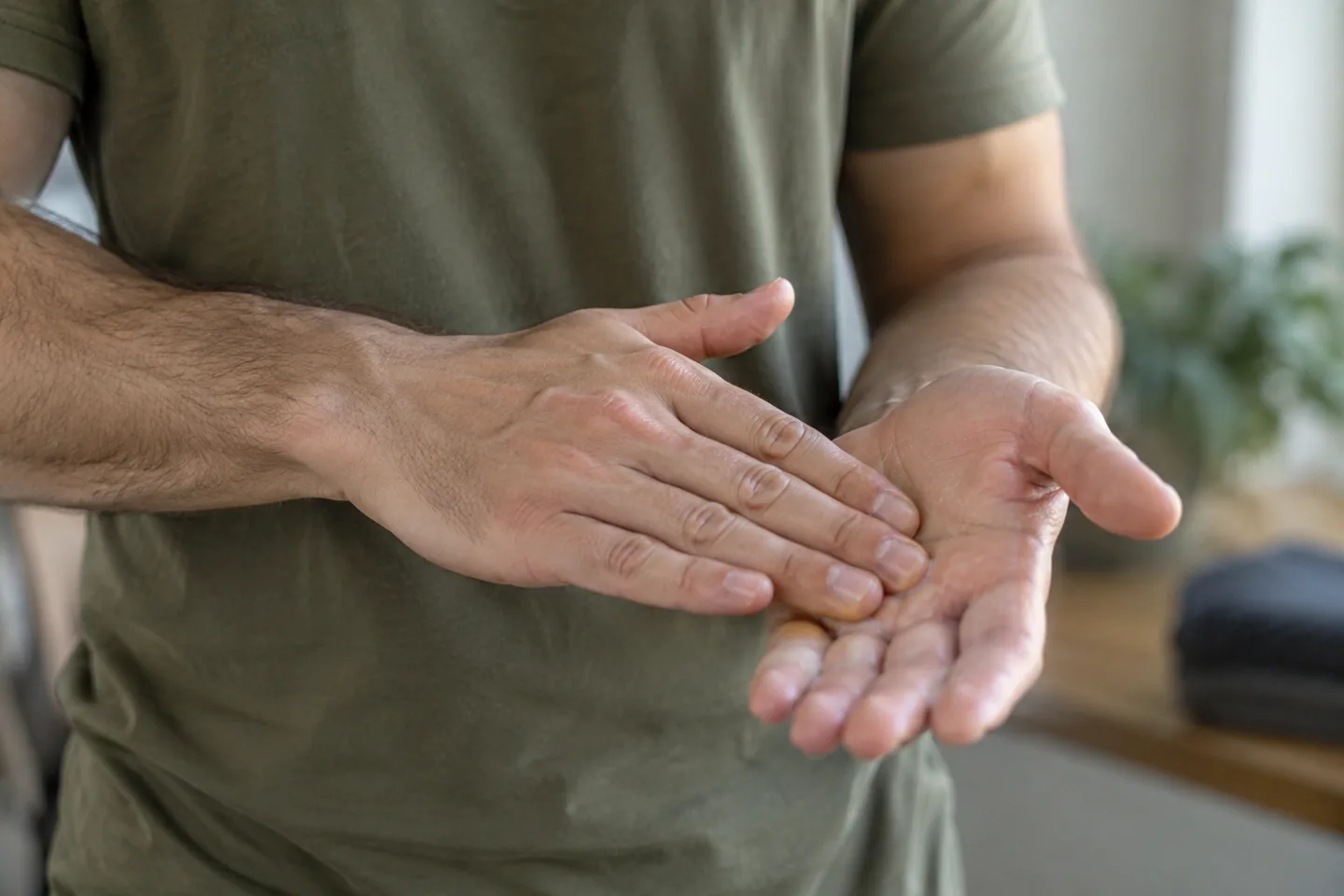
Take a small amount with clean fingers according to the label. Spread it between your palms or fingertips until it is distributed rather than sitting in a thick lump. You are preparing a light coating on the hands, not warming the container with an external heat source. Do not microwave wax, add hot water to the pot or change its formula to make it softer.
Pause and look at your hands. If a visible clump remains, keep distributing it before applying. If the product does not behave as expected, consult its own instructions rather than forcing it. A soft cosmetic wax and a firm paste may need different handling even when they sit on the same shelf.
Work without haste. Starting with evenly coated fingers makes it easier to place a little product where you need it. Dropping a concentrated blob on the front often leads to more touching and more product elsewhere as you try to compensate. Avoid that cycle by preparing the amount first.
Work through one chosen section
Touch the section lightly and move through the hair rather than rubbing the scalp. Use the action described by your product: a gentle smoothing pass or a small arrangement of the ends may be enough. Keep the pressure comfortable. This guide is about placing styling product, not scraping, pulling or repeatedly manipulating skin.
Use a few deliberate passes, then let the hair settle. You can move your fingers through the section to distribute the existing amount before considering more. If the front has received almost everything, pause rather than coating the rest of the head simply to make the amounts equal. The goal is a useful shape, not an equal quantity on every strand.
For a longer top, start with the area that needs the adjustment and avoid unnecessarily coating the entire length. For a shorter cut, work gently with the surface you can reach. If you cannot describe where you are applying the product, make the next attempt smaller and more specific instead of more elaborate.
Decide whether anything more is actually needed
Look once in ordinary light and use your hands for a simple comfort check. Can you arrange the section? Does it feel acceptable to you? Is the amount already enough for your intended activity? A softer finish can still be a successful result. There is no universal requirement for sharply separated strands or a completely fixed outline.
If the product is concentrated in one place, distribute what is already there before adding more. If you genuinely need another small amount, follow the label and repeat the same controlled process. Do not assume that doubling the amount doubles the usefulness. If the hair feels overloaded, stop; more wax is unlikely to make the routine simpler.
The low-maintenance haircut checklist is useful when the daily effort keeps exceeding your time budget. A cut or product routine that needs prolonged correction may not suit your preferences. That is information for your next salon conversation, not a failure to style properly.
Use MogRise for one implementation question
MogRise is our publisher's app. Its existing official product description includes personal planning, manageable daily actions and a Coach for focused follow-up questions. Those tools can help you organise an experiment, but they do not measure grams of wax, identify a formula from a pot or diagnose a scalp problem. Do not use an AI face score to decide how much product your hair needs.
After your first attempt, a practical Coach question could be: “I have a short haircut and only a few minutes in the morning. How can I make a one-section styling trial easy to repeat?” Include your actual time budget and describe what felt difficult. Keep the question about implementation, not about a promised attractiveness improvement.
Use any suggestion as an option to evaluate against your product instructions and real comfort. If it recommends an unsuitable step, leave that step out. You do not need a new app result each morning to repeat an ordinary routine that already works.

Keep one variable steady for the next attempt
If you want another attempt, choose one useful variable: the starting amount, the section you touch or the time you allow. Keep the haircut and the familiar product steady while changing only that variable. Otherwise, switching formula, haircut, hair condition and technique together makes it difficult to know which change helped.
A short note is enough: “small starting amount, front section, comfortable finish, no extra scoop.” You do not need daily photographs, numerical ratings or a complicated log. If a picture serves a specific barber question, keep it ordinary and do not treat lighting differences as evidence that your hair has transformed.
The guide to tracking style without overthinking explains how to keep observations connected to decisions. Ask whether the action is easier to repeat and fits your day. If you find yourself continually touching, photographing or judging the same section, stop the review and return to something else. More scores are not the answer to persistent distress.
Handle excess without escalating the routine
Suppose the front feels coated and the rest of your hair is still loose. First stop adding product. Do not reach for alcohol, washing-up liquid or a household solvent to strip it away. Follow the product's removal instructions and your usual suitable hair-washing routine if you need to restart. Stronger improvised cleaning is not a styling shortcut.
You may also decide that the finish is acceptable for today even if it is not your favourite. A reversible cosmetic experiment does not have to produce a perfect look every time. Record that the next starting amount should be smaller, then leave the correction for the next appropriate occasion.
If using the product causes discomfort, stop and follow its safety directions. Seek qualified advice for persistent or unusual symptoms rather than trying several new products in response. This article does not establish a medical cause or recommend a treatment. An app cannot determine product safety from your hairstyle or a photograph.
Finish with clean hands and a simple reset
Close the container, keep it where its label directs and wash your hands after application. Avoid leaving product residue on a phone, glasses or clothing while you continue getting ready. Store the familiar pot with its lid secure rather than leaving it open for the next morning. Ordinary handling is part of keeping this step convenient.
At the appropriate time, remove the product as instructed. Do not assume that brushing alone removes every formulation or that all waxes need the same washing process. Let the product directions and your usual suitable care determine the reset. There is no reason to add another layer just because a previous application is still present.
Keep a manageable everyday choice
Imagine the routine as three decisions: prepare a small amount, place it deliberately, then finish. If those steps fit your morning and feel comfortable, keep them. If they take too much effort, simplify or skip wax. A clean, unstyled version of your current haircut is a valid everyday choice too.

Frequently asked questions
Should hair wax go on wet or dry hair?
Follow the instructions for your own product. Products marketed as wax do not all have identical directions. Choose the recommended hair condition and keep it similar if you are evaluating a small change in amount. A general article or an app suggestion should not override the label.
How much wax should I start with?
Use a small amount consistent with the manufacturer's directions, distribute it across your fingers or palms and pause after the first application. Hair length, formula and the section you style can change what feels useful. Avoid adopting somebody else's scoop as an exact dose for your hair.
Can MogRise tell whether I used too much?
The workflow here uses planning and a focused Coach question, not product measurement. Describe what you noticed and your time constraints, then evaluate any practical suggestion yourself. MogRise cannot establish the amount, diagnose irritation or replace the manufacturer's instructions from a hairstyle image.
What if I cannot reproduce the same finish?
Keep one variable steady and try a smaller, clearer task on another suitable occasion. Everyday hair movement and different circumstances can change the appearance. You do not need identical strands or a numerical score. If the routine remains inconvenient, use less product, skip it or discuss a manageable cut with your barber.