
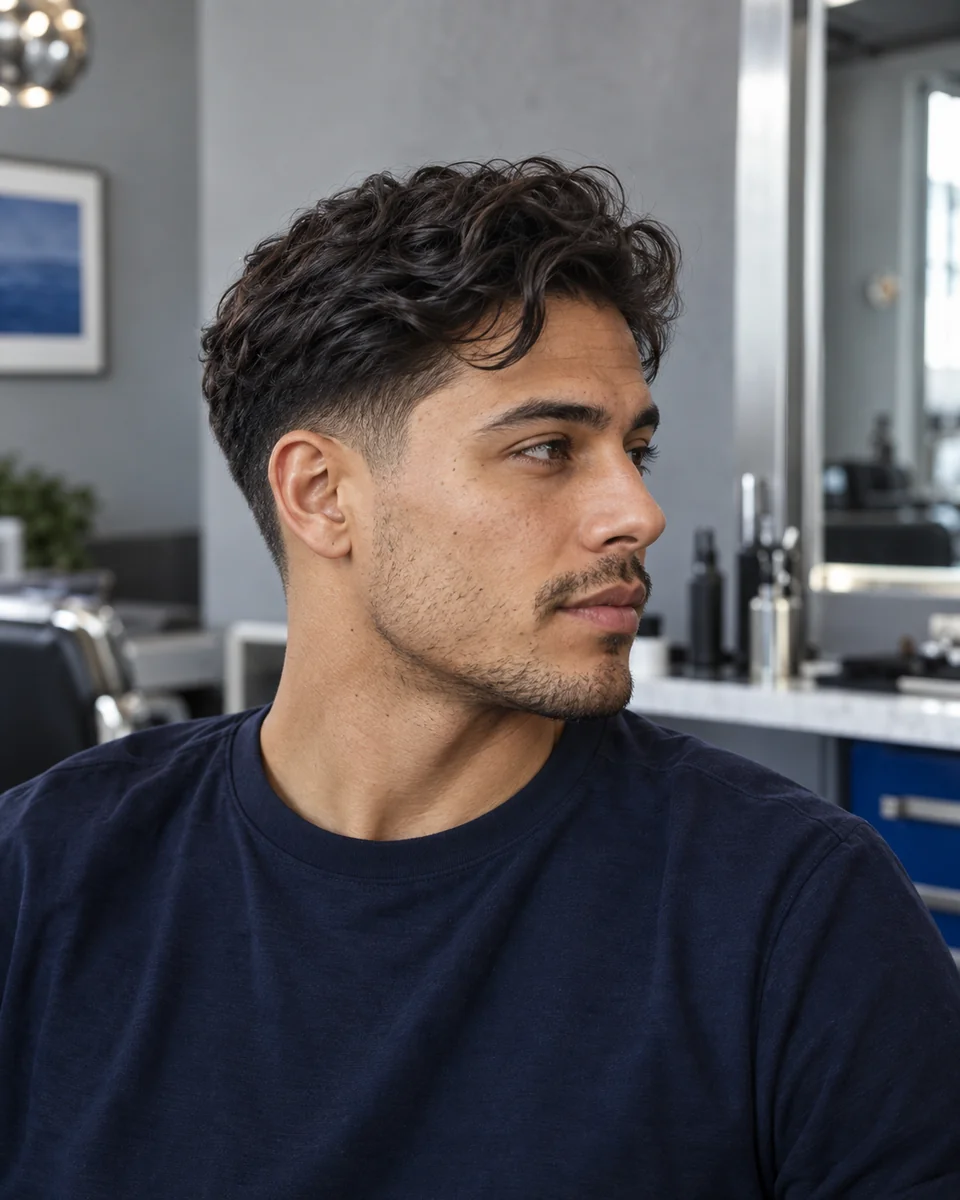
- Explain what you want to keep as well as change.
- Bring a small set of purposeful references.
- Include your real styling time in the brief.
Hair is the frame around the upper face. A useful looksmaxxing haircut brief starts with the relationship you want to change: forehead exposure, top height or width at the temples. Name that goal, compare a realistic direction and explain what your own hair can support.
Give your haircut a facial-aesthetics goal
Start with a neutral front reference and describe the upper-face frame. If the hairstyle adds more height than you want, compare a lower outline. If the sides dominate, inspect temple bulk. If the brow frame is obscured, compare fringe position. These are three different questions; choose one before asking for a new cut.
Write the desired effect in the brief: “Keep my texture, reduce the height and preserve a light fringe.” Then add the actual constraints: density, growth direction, styling time and appointment frequency. The aim is a proportion you can reproduce, not a haircut name that promises the same result on every face.
Describe the silhouette you want
Look at the outline of your current haircut from the front and side. Do you want less width at the temples, more movement on top or a fringe that sits differently? These are useful observations because they describe a visible shape. “Make me look better” leaves much more room for two people to imagine different outcomes.
Choose two reference images rather than a large collection. One can show the overall shape; the other can show a detail such as the fringe or neckline. Say what you dislike as well. You might want the texture from a photo without the very short sides. Make that distinction before the first cut.
Start with the hair you have
Tell the barber how your hair behaves after washing and drying naturally. Mention a cowlick, a parting that keeps returning, areas that lie flat and whether you normally use heat or styling products. A face-shape label alone cannot answer these practical questions.
A generated hairstyle preview is a way to explore a direction. It does not establish that the exact cut is possible with your density, growth pattern or current length. In MogRise, use an AI preview to explain the shape you are considering, then let the professional adapt that idea to your actual hair. Ask which parts would need time to grow out.
Set a realistic maintenance budget
Decide how much time you want to spend styling on an ordinary morning. A look that requires careful blow-drying may be a poor fit if you normally leave with damp hair. Be equally honest about how often you want to return for maintenance and the products you are comfortable using.
Ask to see the minimum routine needed for the result. Watch how the barber directs the hair, how much product is used and what happens before the final finishing touches. Understanding that sequence is often more useful than buying a long list of products.
Leave with a brief you can reuse
Write down the agreed shape, what should stay longer and what should not be cut too short. Before leaving, check the front, both sides and the back. Ask which parts of the look will change most as it grows so that normal growth does not feel like a surprise.
At home, judge the haircut after you have washed and styled it yourself. Keep a short note about what worked and what took too much effort. At the next appointment, that record gives you a specific request: keep this fringe, reduce this bulk, simplify this styling step. A useful haircut plan becomes more personal through those small, clear adjustments.
- Keep: the parts of your current cut you like.
- Change: one or two visible priorities.
- Maintain: your actual time and upkeep preferences.
Prepare a reference set that explains the whole cut
Use one front reference, one side reference and a photo of your own current hair in its ordinary finish. The first two explain the target silhouette; the third gives the barber the starting conditions. Avoid a folder of ten unrelated styles. If two references disagree about fringe length or side weight, identify which detail you want from each.
Add a plain-language note beneath every reference. Describe the open forehead, temple coverage, side transition or crown height you like. Include anything you want to avoid, such as a finish that requires daily high-volume styling. The reference should support the brief, not replace it. A barber can adapt a clearly described effect more easily than an unexplained picture of a model with different hair.
Ask about the transition between haircut and beard
Hair and beard meet around the sideburn and temple, so their visual weights affect each other. Tight sides with a fuller beard can shift emphasis toward the lower face; more side coverage creates a different outline. Decide whether you want that contrast or a smoother transition. Use your front portrait to see the width relationship and your side portrait to inspect the connection.
Explain which part should remain stable. If the beard is the experiment, keep the haircut familiar. If you are changing the upper frame, ask for a sideburn transition that works with the beard you already maintain. Making both substantially different at once can create a striking result, but it gives you less information about which change supported your facial goal.
Use a barber brief with four decisions
A strong brief covers silhouette, boundaries, finish and maintenance. Silhouette explains height and width; boundaries explain fringe, sideburns and neckline; finish explains how you expect to wear the hair; maintenance explains the daily routine and visit schedule. You do not need professional terminology if those decisions are clear.
Ask the barber to reflect the plan back before the cut begins. Where will the fringe sit when dry? How much weight will remain at the temples? What will the ordinary finish require? Which part will change first during grow-out? These questions connect looksmaxxing intentions to the practical details that determine what the haircut will look like in your normal week.
| Decision | Example wording |
|---|---|
| Silhouette | Less crown height; retain some width through the temples. |
| Boundaries | Keep the forehead mostly open and the beard connection controlled. |
| Finish | A natural texture I can style without a long blow-dry. |
| Maintenance | Explain the simplest routine and which area will need the next tidy-up. |
Review the haircut after you style it yourself
The appointment finish answers only part of the question. Style the cut yourself with the agreed tools and sequence, then compare the result after an ordinary day. Record where the shape held and where you needed extra effort. A fringe that falls differently after washing is useful information for the next visit, not a reason to rewrite the entire brief immediately.
Keep a dated front and side reference of the version you liked. Add one instruction to preserve and one to adjust. For instance, ‘keep the side weight; reduce the height slightly next time.’ Over a few appointments, this turns the haircut into a repeatable part of your facial frame. You can then spend less time explaining the whole direction and more time refining the detail that matters.
See what
one variable changes.
Explore three framing choices in natural-color portrait pairs. Learn which detail to look for in your own comparison.

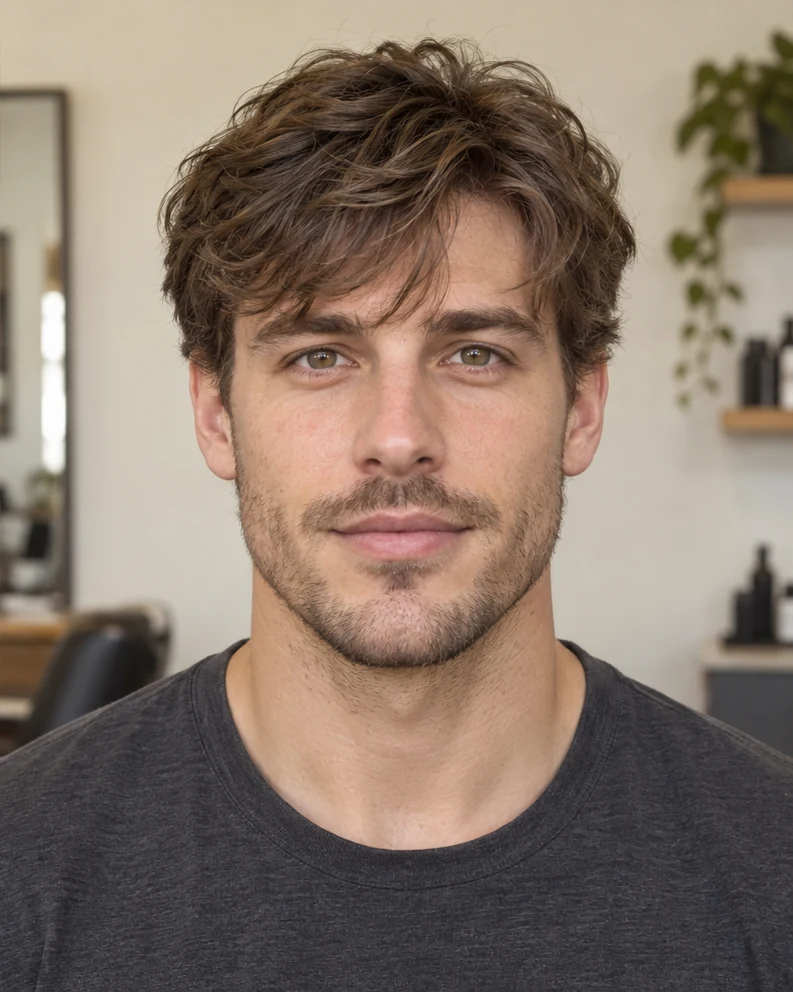
AI-generated editorial portraits · Styling examples, not transformation results
More forehead. A different facial frame.
A fringe covers part of the forehead and introduces a new edge above the brows. Moving it away reveals more of the upper face. Compare the amount of exposure before changing top height or side volume as well.
- Look for
- Where does the hair end relative to the brow frame?
- Your comparison
- Compare your usual fringe with it gently moved aside. Keep expression, beard and camera position unchanged.
Leave with one proportion to discuss and one variable to compare.
You want a more deliberate facial frame but your reference changes the fringe, side width and top height at once.
“I want to compare more forehead exposure while keeping the height and temple width close to what I have. My fringe naturally falls forward and I have five minutes to style it. What would make that direction realistic?” This gives the barber a facial goal and actual hair constraints.
Your facial-framing barber brief
Use the prompts to turn this guide into your own next step. The examples are suggestions; write what fits your situation.
Try the styling sequence yourself after the appointment. Note one thing to keep and one thing to adjust next time.
Add a note to any prompt to continue. Your notes stay on this page. Download a text file before leaving.
A few useful clarifications.
01What should I show my barber for a looksmaxxing haircut?
Bring your current front and side photos, a small set of useful references and a note about the facial effect you want. Explain forehead exposure, height, side weight and maintenance rather than asking only for a haircut name.
02Should I change my beard at the same appointment?
You can discuss the connection between them, but choose which major variable you want to test. Keeping the other familiar makes the new effect easier to evaluate. Make any necessary transition adjustment explicit.
03When should I judge the result?
Review the salon finish and the version you style yourself. Include comfort, routine and grow-out behavior. A haircut that only works with a professional finish may need a more manageable adaptation.
Where your next question leads.

Facial harmony: read the relationships between your features.
Understand facial thirds, midface, symmetry and profile balance. Learn what a face analysis can show and how to use it in looksmaxxing.

Face shape for looksmaxxing: turn proportions into framing.
Read face shape through visible height, width and lower-face outline. Use those observations to compare hair and beard framing.
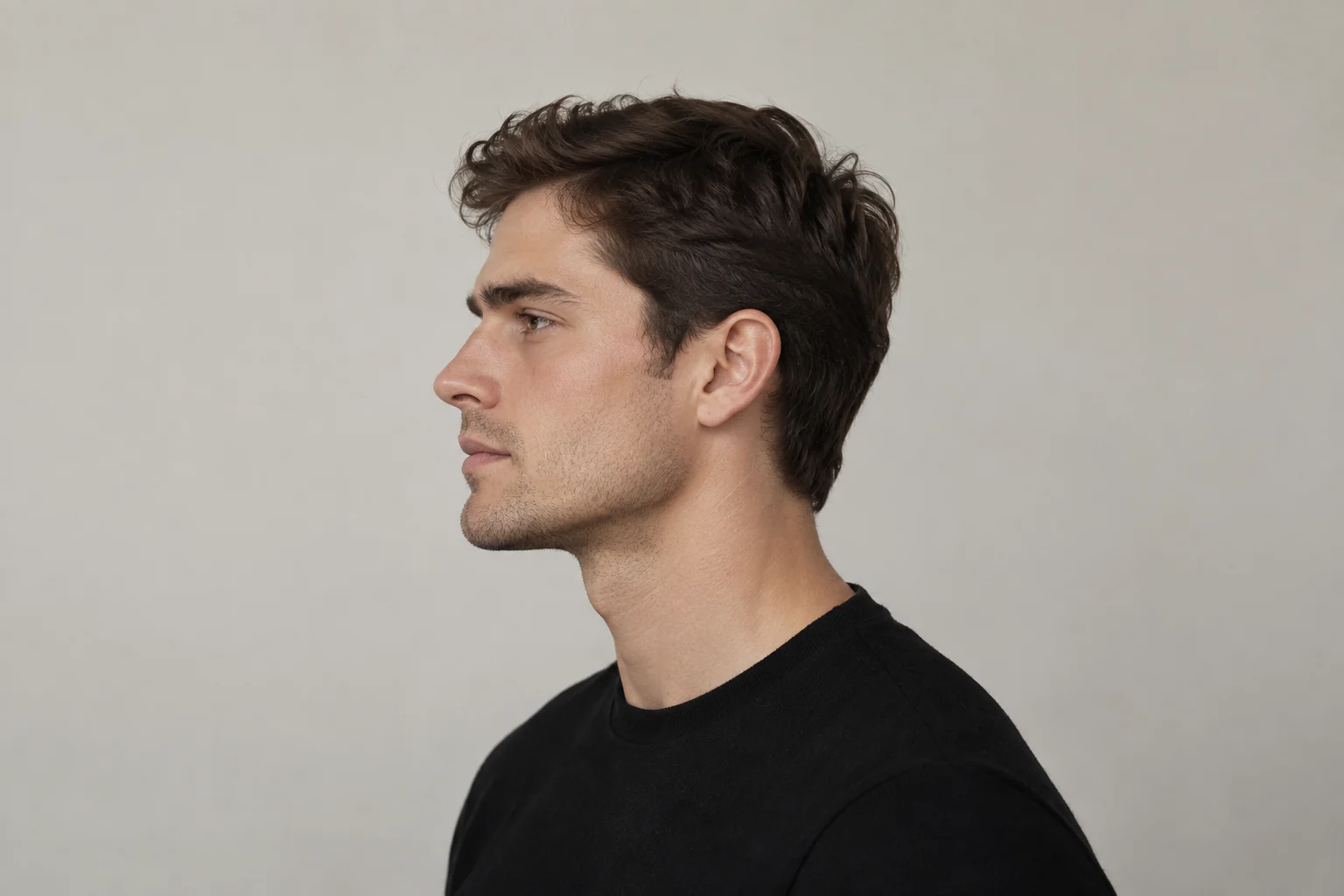
Jawline definition: separate structure, framing and the photo.
Understand jawline definition, chin and profile balance, beard framing and mewing claims before choosing your next looksmaxxing step.