
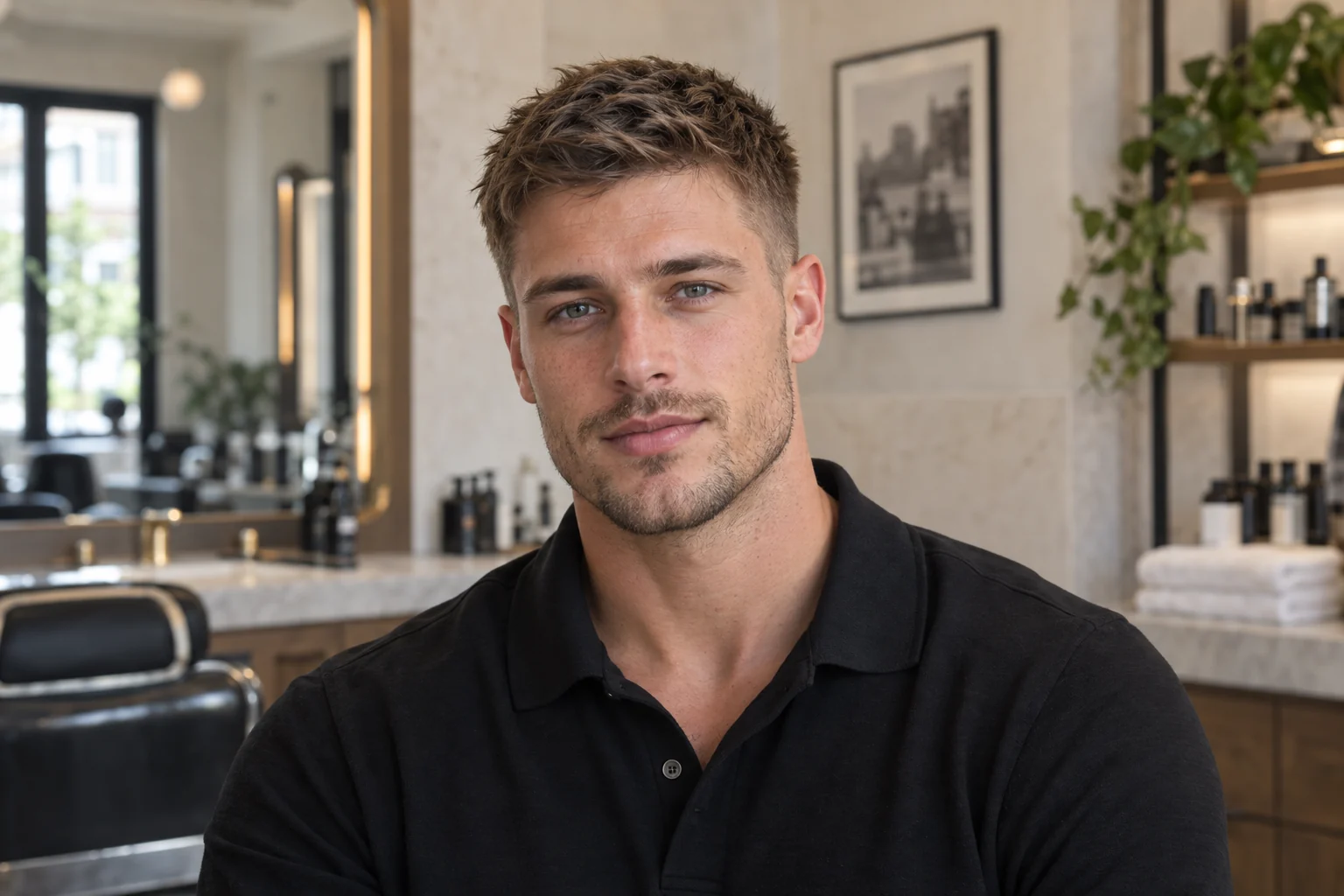
- Daily styling and appointment frequency are different kinds of upkeep.
- Ask for a demonstration you can repeat yourself.
- A short cut is not automatically the easiest cut.
A haircut contributes to looksmaxxing only if you can recreate the facial frame after leaving the chair. Identify the forehead exposure, height and side outline you want to preserve. Then build the simplest routine that keeps those dimensions recognizable between appointments.
Define the silhouette you are maintaining
Save a front and profile reference of the agreed shape. Note where the fringe sits, how much height you create and where side volume begins to change the outline. This is more useful than trying to reproduce every strand of a finished salon photograph.
Ask which styling step produces each part of that frame. If keeping the outline requires more effort than you can repeat, discuss a nearby alternative. The maintenance goal is a consistent presentation of your features, with a clear reason for the styling steps you keep.
Define what low maintenance means to you
One person is happy to book frequent trims but wants no morning styling. Another is willing to spend ten minutes with a dryer if the shape lasts comfortably between appointments. Both can reasonably want low maintenance. Be explicit about which effort you want to reduce.
Count the complete routine: washing, drying, styling, correcting the shape and cleaning up. A routine advertised as two minutes may quietly assume fully dried hair. Try timing a normal morning once, then set a realistic limit rather than choosing an aspirational one.
Ask about the grow-out, not only the finished cut
A crisp, very short transition may lose the exact finish you liked sooner than a softer outline. Longer hair can need less frequent cutting while asking for more work each morning. Neither is universally easier. Your tolerance for the changing shape matters.
Ask your barber what will happen at the sides, fringe and neckline as the cut grows. Explain how often you would actually return. If the recommendation depends on appointments you will not keep, ask for a more forgiving version.
Learn a repeatable styling sequence
Before leaving, ask to see the order of the steps and the amount of product used. Ask what to do when the hair is air-dried, and which part of the shape matters most when you have limited time. A simple sequence is easier to repeat than a vague instruction to “add texture.”
You do not have to purchase everything used in the appointment. First identify the job of each tool or product. If you already own something suitable, ask whether it can do that job. Change one part of your routine at a time so you can tell whether it helped.
- How damp should the hair be?
- Which direction should I dry or comb it?
- What is the minimum version on a busy day?
Review the ordinary week
After you have worn the cut in your usual routine, note how long it took, what you could reproduce and what kept falling out of place. These observations are more useful at the next appointment than a general verdict that the cut was wrong.
Keep a photo when the shape works and a brief note when it does not. You may only need a small adjustment to the weight at the sides or the length of the fringe. MogRise’s hairstyle previews can help describe a new direction, while your own week tells you whether the maintenance fits.
Separate low styling time from low appointment frequency
A very short haircut may take little effort each morning but need frequent visits to preserve the exact outline. A longer cut may need more daily styling yet tolerate more grow-out. Decide which kind of maintenance matters most to you. Calling both options low maintenance without naming the tradeoff can lead to a cut that solves the wrong problem.
Write your limits in concrete terms: how long you will style, how often you can book a visit and which tools you want to use. Include your tolerance for a changing silhouette between appointments. A natural taper, textured crop and longer pushed-back style can have very different routines even when their first-day portraits look equally simple.
Test the routine with the tools you own
Ask for the simplest everyday sequence before buying new equipment. Note whether the hair needs to be damp, how the direction is established and where product belongs. Rehearse that sequence in the order you will use at home. A clear two-step technique is more useful than a vague instruction to ‘add texture’ with several products.
If the preferred silhouette requires heat styling, decide whether that fits your schedule. You may prefer a version that accepts your natural movement rather than forcing a rigid outline. The haircut should support the facial frame you want with a finish you can repeat. More effort is not automatically better; it needs to produce a visible effect you care about.
Review grow-out by zone
Hair does not become inconvenient everywhere at once. The fringe may fall into the eyes while the crown still works; weight near the ears may change before the top needs cutting. Ask the barber which zone will drive the next appointment. This makes the maintenance plan specific and helps you distinguish a small tidy-up from a full redesign.
Keep a short record at a sensible interval, with one front and side view when useful. Describe what became harder and what still works. If the temples repeatedly become too wide for your preferred facial frame, the next brief can focus there. Do not abandon a useful silhouette because one boundary needs a better grow-out strategy.
| Zone | Review question |
|---|---|
| Fringe | Does it keep the forehead exposure I want without constant adjustment? |
| Temples and ears | When does side weight change the face frame? |
| Crown | Can I recreate the height and direction with my normal tools? |
| Neckline | Does the boundary remain acceptable between planned visits? |
Choose your minimum acceptable finish
Define what the haircut should look like on a rushed morning. That might be a controlled outline with natural movement rather than the fully styled reference. Show that expectation to the barber. If the everyday version is acceptable to you, the polished finish becomes optional rather than a daily requirement.
After a week of normal use, record actual styling time and the number of adjustments you made during the day. Compare this with your old routine. Keep the cut when it supports the facial goal with manageable effort; adapt one zone when the shape works but the routine does not. A low-maintenance decision is strongest when it is backed by ordinary use, not just a clean appointment photo.
Leave knowing what “easy” needs to mean for you.
A haircut is described as low maintenance, but the reference was finished with tools you never use.
Separate morning effort from appointment upkeep. You might accept a little styling but dislike frequent visits, or prefer the reverse. Ask for a demonstration using the tools you already have and discuss how the shape changes as it grows.
Your maintenance budget
Use the prompts to turn this guide into your own next step. The examples are suggestions; write what fits your situation.
Time an ordinary styling attempt once. If it does not fit, ask which single step or detail can be simplified.
Add a note to any prompt to continue. Your notes stay on this page. Download a text file before leaving.
A few useful clarifications.
01Is shorter hair always easier to maintain?
Not necessarily. Daily styling and appointment frequency are different kinds of upkeep. A sharp short outline can need regular refreshing, while some longer shapes tolerate more grow-out. Discuss both before choosing.
02How do I know whether a reference is low maintenance?
Ask how the pictured finish was created and how a normal version would behave on your own hair. Include texture, density, growth direction, tools and the appointment schedule in the conversation.
03What if I only want to style for a few minutes?
Make that a firm part of your brief and ask for the simplest workable sequence. Evaluate the version you can create in that time rather than relying on the barber’s finished portrait.
Where your next question leads.

Hair for looksmaxxing: build your facial-framing brief.
Choose a haircut around forehead exposure, temple width and facial balance. Turn your looksmaxxing goal into a precise barber brief.

Facial harmony: read the relationships between your features.
Understand facial thirds, midface, symmetry and profile balance. Learn what a face analysis can show and how to use it in looksmaxxing.

Your looksmaxxing plan: baseline, priorities and progress.
Create a looksmaxxing plan for your facial priorities. Connect your baseline, chosen action, routine and progress review.