

Moustache trimming begins with one decision
Moustache trimming is easier to keep manageable when you decide what needs attention before switching on a tool. Perhaps a few ends now overlap your upper lip, while the rest of the moustache feels comfortable. That is a smaller task than shortening the whole moustache, changing its width and reshaping your beard at the same time. You can also decide that today only needs a comb-through.
This guide sets up a modest first trim with your existing suitable equipment, followed by a clear stopping point. Optional MogRise planning can help organize the preparation. We publish MogRise, so that relationship is disclosed here. Its personal plans and Coach questions support practical organization; they cannot determine safe blade placement, diagnose skin or judge the correct moustache for your face. The tool's own instructions and your ability to see and control it remain essential.
Separate length, lower edge and overall shape
Length means how much hair you retain through the moustache. The lower edge is where the hanging ends sit near your upper lip. Shape includes its width, corners and relationship to a beard. These choices affect one another, but they do not have to become one operation. For a first maintenance session, preserve the existing shape and choose only one concern that you can describe plainly.
For example, “reduce a little overall length with a suitable comb guard” is specific. “Make everything more symmetrical” is an open-ended target that can keep moving. If the main concern is a sharply drawn outline or a complicated curled style, a barber can help establish it. This article does not teach freehand blade edging, scissor work beside the lip or shaving a new perimeter. A natural edge is an acceptable finished choice.
Prepare a visible, unhurried workspace
Use a stable mirror, comfortable light and a dry working surface with enough room for the equipment. Put the tool down before reaching for another item. Avoid beginning when you must leave immediately, when your hand is unsteady or when the mirror forces you into an awkward position. Being able to stop matters more than completing the trim during a particular morning.
Bring the instructions for your actual trimmer, its compatible moustache attachment if supplied, a comb and a towel. Check the stated preparation, guard fitting, direction of use and cleaning requirements. Devices differ; this guide supplies no universal setting or waterproof claim. If you cannot identify a suitable attachment or understand the instructions, keep the tool switched off and ask its manufacturer or a barber. A simple morning grooming routine can include postponing a cutting task.
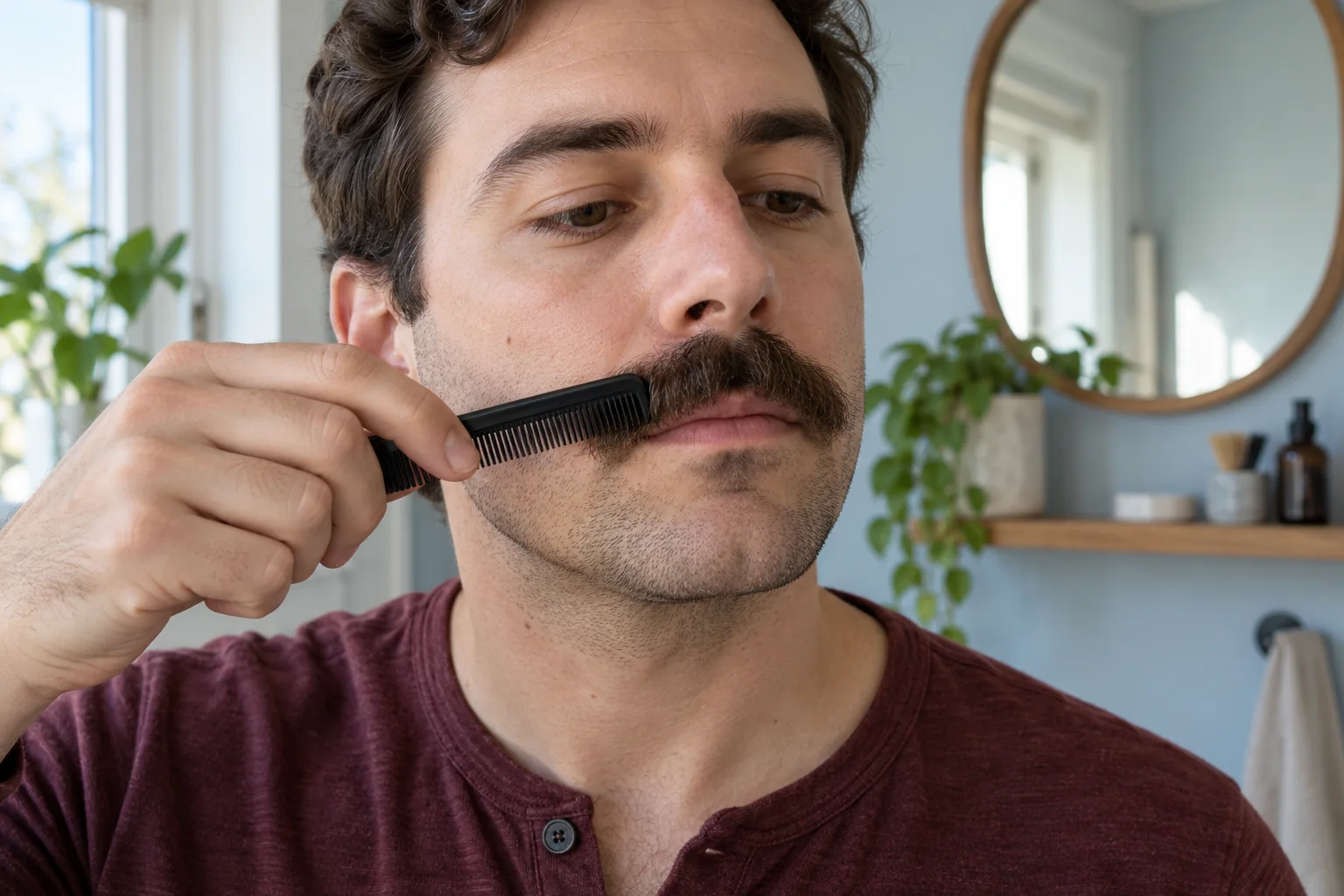
Comb gently before deciding what to shorten
Let the hair settle in the direction you intend to wear it, using gentle comb strokes without tugging. Look with your mouth relaxed. Pulling an exaggerated expression changes the reference you are looking at. Notice whether the concern is actual hanging length or simply a strand that had been pointing in a different direction. Combing may answer the question without any cutting.
Philips' moustache trimming guidance describes combing before shaping and taking the process gradually. We use those limited preparation principles, not its style prescriptions, growth timetable or device promotion. Do not copy a model's outline as a template for your own lip. Decide which existing hair you want to retain before considering a shorter result, and leave unfamiliar shaping techniques for professional help.
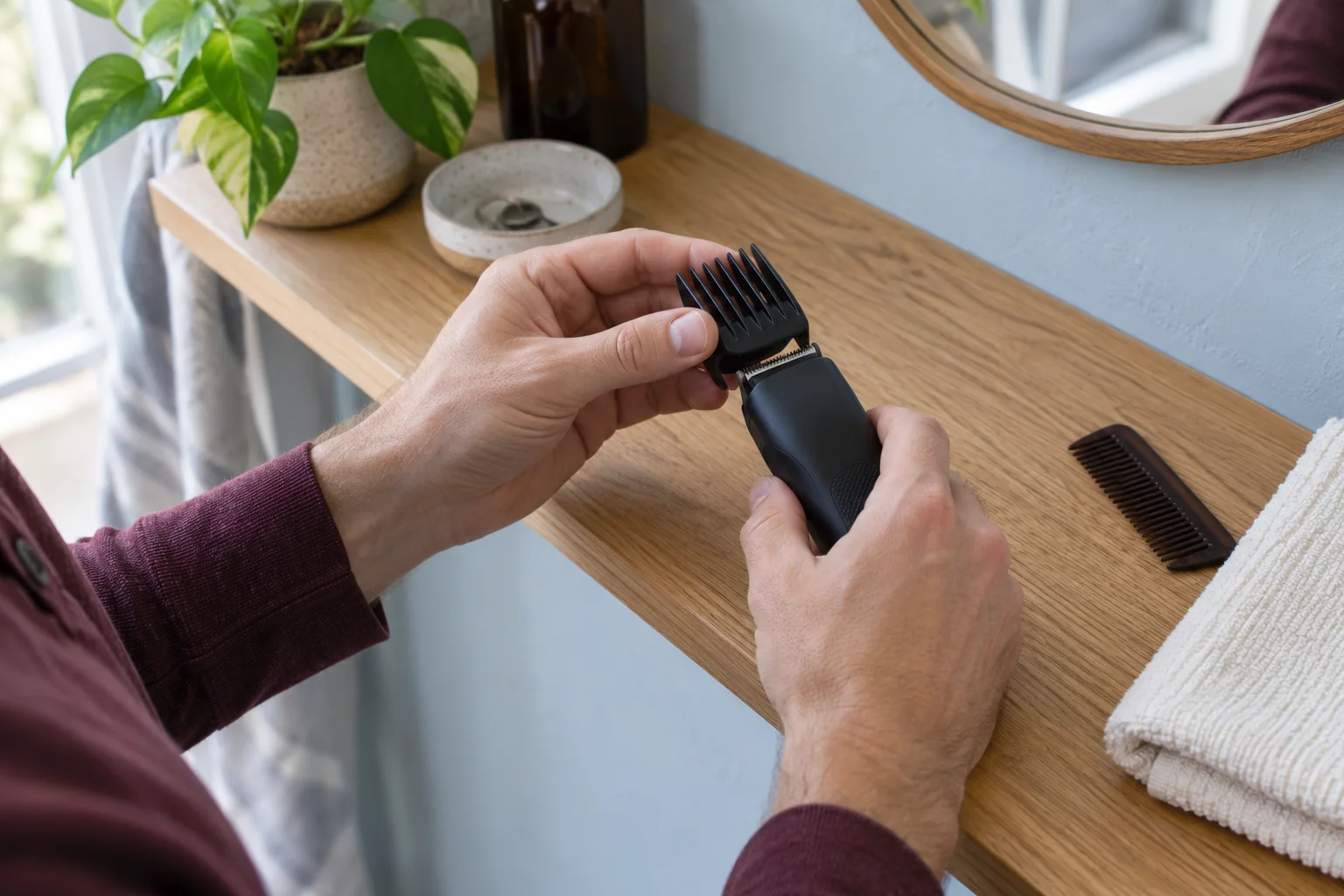
Check the attachment with the tool switched off
For a modest overall length adjustment, use only a compatible guard and method that the manufacturer permits for your moustache. Attach and check it while the device is off. Confirm that it is seated as instructed and that you understand which setting leaves more hair. Numbering is not consistent enough to guess from a photograph, a remembered setting on another trimmer or an app answer.
Begin conservatively with a longer permitted setting rather than jumping to a short one. The attachment still needs to fit the area without forcing it against your nose or lip. If it blocks your view or cannot sit comfortably, do not remove it simply to reach the hair. That changes the method and the amount of control required. Put the tool down and get guidance suited to the equipment you actually own.
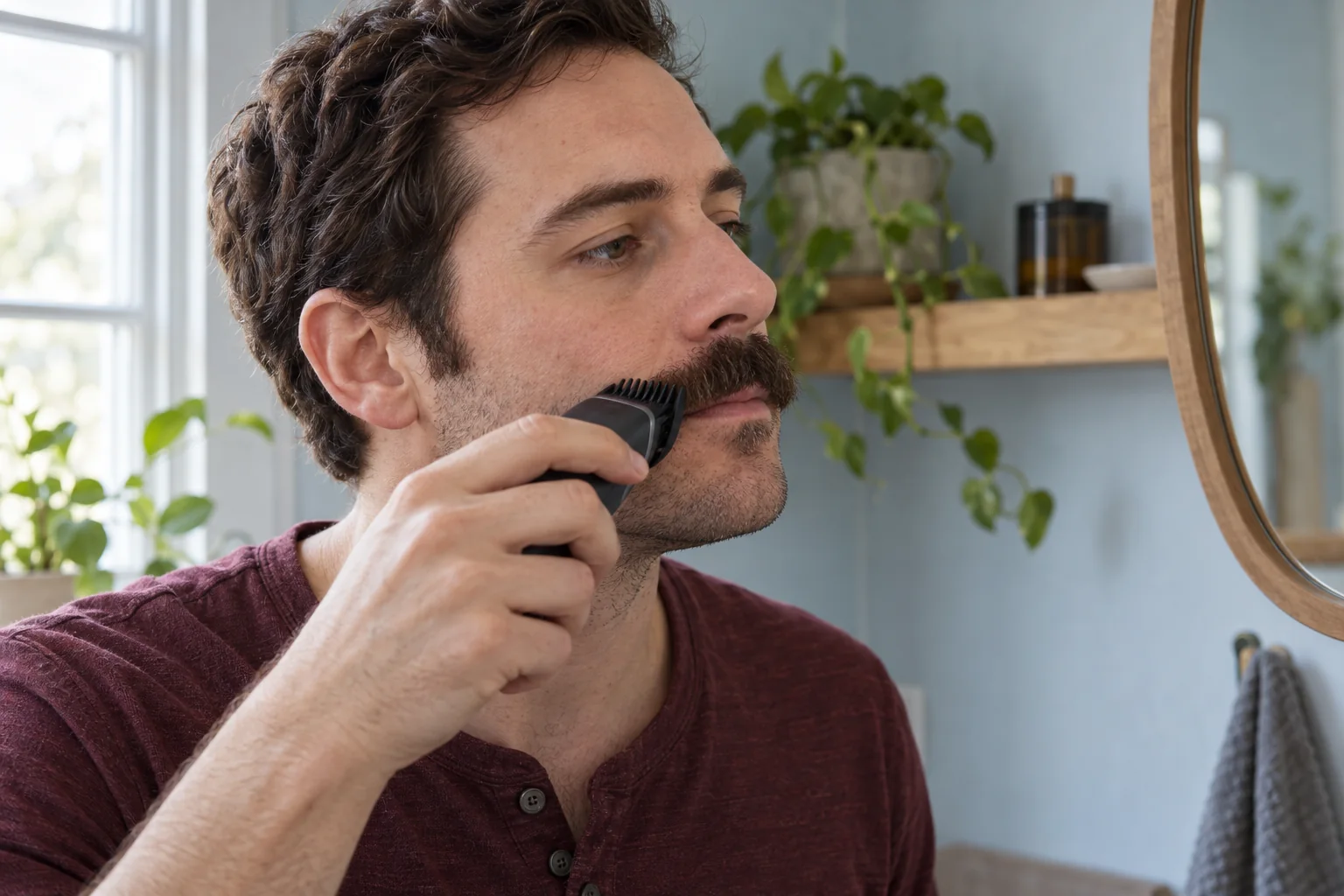
Make a small pass and reassess
Follow the device's instructions for its orientation and direction of travel. Use a light, controlled pass over a small accessible part of the moustache, keeping the tool away from the lip and nostrils. Do not press harder to make a reluctant attachment fit. If hair catches, the device behaves unexpectedly or you lose a clear view, switch off and stop rather than attempting another pass by feel.
After the small pass, put the switched-off tool down and comb the hair into its ordinary position again. You are checking what actually changed before deciding whether to continue at the same setting. A useful result may be that very little was removed. Work gradually through comparable accessible areas only if you remain comfortable. Do not lower the setting repeatedly within the same session simply because a dramatic difference is difficult to see.
Give an optional plan a practical boundary
MogRise's documented personal plans and manageable actions can help with sequence: gather the correct attachment, read its instructions, comb, make a limited adjustment and finish. A plan that says “perfect my moustache” gives no useful endpoint. A better task is “check the guard and keep the existing outline.” The app is optional; a short ordinary note can serve the same organizational purpose.
A focused Coach question could be: “I want a brief moustache maintenance session with my current equipment. Help me organize preparation and a stopping point; I will follow the manufacturer's cutting instructions.” This is an example question, not a tested response. Do not ask a chatbot to certify a blade position or choose a setting from an unclear photo. A plan that fits your life should leave room for doing nothing or booking a barber instead.
Leave the lip edge and corners conservative
If a small number of ends remain near the lip after a guarded length adjustment, do not automatically switch to an unguarded blade. A close outline is a separate skill, and the guard may not be designed for detailing that edge. Keep the current boundary until you have a safe, understood method or professional assistance. Do not cut into the lip, work inside the nose or try to draw a new upper boundary beneath the nostrils.
Check the corners with your face at rest. Their natural appearance does not have to be identical, and chasing a tiny difference can remove more width than intended. Hair that lies differently on each side is not evidence that your face needs correction. If you want a substantially different style, bring a clear description to a barber rather than extending a small maintenance task into a complete redesign.
Step back once, then put the tools away
Look from an ordinary viewing distance with the tool lowered. Ask whether the moustache is comfortable to wear and whether you stayed within the original task. Avoid alternating between extreme close-ups and increasingly short settings. A magnified detail can become the entire project even when it is barely noticeable during normal conversation. You do not need a score, facial measurement or comparison photograph to finish.
If you trimmed more than you intended, stop. Shortening the other side repeatedly can spread the change without restoring the missing length. A barber may help you decide how to leave it while it grows, but an app cannot undo a cut. Our guide to comparing stubble or a beard treats style as a preference; today's small trim does not require a new decision about all your facial hair.

Clean and store according to the actual device
Switch off before removing attachments, then follow the model's maintenance instructions. Some parts can be rinsed and others cannot; a detachable head alone does not establish which method is allowed. Use the cleaning method and any maintenance products specified by the manufacturer. Keep the equipment out of the way until its required drying and storage steps are complete. Do not invent a shared cleaning recipe for every trimmer.
Keep only a useful practical note, such as which attachment you used and whether the preparation felt manageable. There is no need for a daily close-up archive. If the process becomes uncomfortable, compulsive or upsetting, pause it. If distress or repeated self-checking persists, consider support from a qualified mental health professional; another appearance score is not a solution. Persistent skin concerns belong with a qualified clinician, not an appearance-analysis tool. Organization should reduce the attention this task takes, rather than turn a quiet grooming preference into a continuing inspection.
Choose the next session by need
You do not have to repeat the trim on a fixed daily schedule. Notice the ordinary issue that originally prompted it, then decide whether combing, a small maintenance session or no action is appropriate. A saved plan can retain the equipment and stopping rule without demanding new photographs or a stricter target. Keep the frequency flexible around your preferences and the style you are actually wearing.
Consider two situations. If the hair is comfortable but the setup took too long, simplify where you keep the comb and instructions before changing the cut. If you cannot reach the desired area confidently, make the next action a barber question. Neither situation calls for a lower setting. The useful lesson is about a workable process, not how closely you can reproduce a reference photograph.
Questions about a first moustache trim
Must I use the same length as my beard?
No. Matching lengths is a style choice rather than a requirement. Keeping the existing moustache length while considering another part of the beard is also possible. Separate the decisions so that you know what you intended to change, and ask a barber if you want help establishing a new overall shape.
What if my trimmer guard feels too large?
Do not force it into a cramped area or remove it to improvise a closer pass. Check whether your model has a compatible attachment intended for the task. If the instructions do not resolve the fit or visibility problem, stop and seek manufacturer or barber guidance before cutting.
Should I keep trimming until both sides match exactly?
No. Compare once with your mouth relaxed, then keep the original stopping rule. A small difference in how the hair lies does not demand another cut. Removing more from both sides can create a larger change than you wanted, especially when you keep moving closer to the mirror.
Can an app tell me where the moustache should end?
An app cannot establish a safe cutting boundary or an objectively correct style. Optional planning can help you prepare equipment and limit the task. Your tool's instructions, clear visibility and professional assistance when needed matter more than an image-based suggestion or a generated appearance score.