

- Compare styles on your own face and growth pattern.
- Keep the photo conditions similar.
- Include comfort and upkeep in the decision.
A beard can reveal or redraw the visible outline of the lower face. For looksmaxxing, begin with chin length, side width and coverage rather than a style name. Compare a realistic contour in front and profile views, and separate the grooming effect from the jaw structure beneath it.
Read the beard as a lower-face silhouette
Look at where the beard ends beneath the chin and how far it extends at the sides. More length creates a lower outer boundary; more side bulk widens the beard frame. If you change both together, it becomes harder to explain which adjustment produced the balance you preferred.
Choose one dimension to discuss with your barber. Keep the coverage and contour you already like, and ask which adjustment is practical with your growth. Review the complete face after the change. A crisp beard edge can be a successful styling result without being evidence of a new jaw shape.
Begin with your current growth pattern
Look at where your facial hair naturally grows more densely and where it is lighter. A reference style may depend on coverage you do not currently have. That does not make your growth pattern a problem; it changes which shapes are easy to maintain. Pick options that work with the visible pattern.
Choose a small comparison set. If you already have a longer beard, photograph it before trimming so you can compare shorter options later. If you are starting clean-shaven, allow for the time your hair actually needs to grow. There is no universal number of days that produces the same stubble length on every person.
Keep the haircut and camera consistent
A new hairstyle, a different neckline on your shirt and dramatic lighting can all change the comparison. Use the same camera setup and look at front and profile views. Keep your expression relaxed and avoid pushing the chin forward for one style but not the other.
Evaluate the face at a normal viewing size first. Notice where the eye goes, how the lower-face outline meets the haircut and whether the style feels like something you would enjoy wearing. Only then look at smaller details around the cheeks and moustache. A cropped close-up of the chin cannot represent the whole impression.
Include comfort and upkeep in the decision
Record how the style feels as well as how it looks. Consider how frequently you want to trim it, whether the edges need frequent attention and how well it fits your work or daily routine. The best photo is not automatically the most practical everyday choice.
If shaving irritates your skin, do not keep repeating the same process just to complete a style experiment. The American Academy of Dermatology recommends shaving with the direction of hair growth and preparing the hair and skin beforehand. Persistent irritation deserves qualified advice rather than a tighter shaving schedule.
Use previews to narrow the options
MogRise can help you explore beard directions with an AI preview. Treat the image as a visual sketch: it may not accurately reproduce your density, texture or the line a professional can create. Choose a direction from the preview, then check what is feasible with your real growth.
Finish with a simple decision statement: I prefer this length because it works with my haircut, feels comfortable and needs a level of upkeep I can maintain. That is more actionable than trying to prove one style is universally more attractive. Keep the comparison photos for your next grooming conversation, and change one detail at a time.
Map coverage before choosing a beard shape
Look at the cheeks, mustache connection, chin and sides separately. A reference beard may rely on dense coverage in an area where yours grows differently. Use your own growth pattern as the starting map. The goal is to create a deliberate outline from the coverage available, not to treat a generated image as evidence that every area will fill in.
Write down the region you want to emphasize and the region you want to keep lighter. For example, a controlled chin with shorter sides creates a different frame from evenly full coverage. Take a front and profile reference before the next trim. This gives the barber enough context to discuss a realistic silhouette and helps you preserve useful details when you repeat the cut.
Separate length, boundary and density
These three variables often change together, but they have different effects. Length changes the distance of the visible beard edge from the face. The boundary changes the shape of the cheek and neck lines. Density changes how continuous the coverage appears. If you adjust all three, the outcome may look different without explaining which detail you prefer.
Begin with the smallest useful comparison. Keep the boundary familiar while comparing a different chin length, or preserve length while refining side bulk. Check the full portrait and profile. A sharper-looking outline that feels too rigid or requires constant trimming may be less suitable than a slightly softer shape you can maintain comfortably.
Build a trim brief around the lower-face goal
Describe the silhouette first: broader sides, less added chin length, a cleaner connection to the haircut or a lighter overall frame. Then explain your coverage and how often you trim. Ask which details should be maintained at home and which are better left for the next appointment. The brief should make the desired effect understandable without prescribing a universal neckline.
If your skin is repeatedly uncomfortable, include that in the conversation and seek appropriate care when needed. A trim preference and a skin concern may require different actions. Keep the tool, frequency and products in your notes so you can explain the routine precisely. A workable beard is both a visual choice and a maintenance choice.
| Area | Decision to discuss |
|---|---|
| Sides | How much width do I want around the jaw corners? |
| Chin | Do I want added length or a shorter lower boundary? |
| Cheek and neck lines | Which outline suits my coverage and is practical to maintain? |
| Haircut connection | Should the transition be crisp or more gradual? |
Review stubble and beard as everyday options
A stubble-versus-beard comparison should include the normal state between grooming sessions. Stubble may expose more skin and require a frequent refresh to keep a particular length. A fuller beard may create more visual weight and need different boundary care. Choose the version that supports your lower-face preference and fits the routine you are willing to keep.
After the test, save one front and one profile image with your trim notes. Add whether the result was comfortable and how long maintenance took. If you prefer the beard but dislike the added chin length, adapt that variable rather than switching the entire style. A precise record turns the next comparison into a refinement instead of another start from scratch.
See what
one variable changes.
Explore three framing choices in natural-color portrait pairs. Learn which detail to look for in your own comparison.


AI-generated editorial portraits · Styling examples, not transformation results
The beard can create an outline beyond the chin.
Longer facial hair adds to the visible lower-face silhouette. That is a framing choice. When comparing it, keep side coverage stable so you can tell what the extra length contributes to the full portrait.
- Look for
- Are you reading the chin boundary or the outer beard edge?
- Your comparison
- Describe the dimension to discuss with your barber: chin length or side bulk. Compare one at a time.
Leave with one beard dimension to compare in two matched views.
You want to understand whether chin length or side bulk is creating the lower-face outline you see.
Compare the current contour with one realistic adjustment. Keep the side coverage stable if chin length is the question. Look at the entire face in front and profile, then record the outline and the maintenance involved.
Your lower-face contour comparison
Use the prompts to turn this guide into your own next step. The examples are suggestions; write what fits your situation.
Choose keep, adapt or stop. If maintenance is the problem, discuss a simpler outline before adding more tasks.
Add a note to any prompt to continue. Your notes stay on this page. Download a text file before leaving.
A few useful clarifications.
01How do I choose between stubble and a fuller beard?
Compare the lower-face silhouette, your actual coverage, comfort and maintenance. Keep the haircut and camera setup consistent. The preferred version should work between grooming sessions, not only immediately after a trim.
02Can a beard preview predict my growth pattern?
No. A generated direction can show an outline but may assume coverage you do not have. Use it to discuss the effect and adapt the shape to your real growth with a barber.
03What should I record after a successful trim?
Keep front and profile references, the areas that were adjusted and the maintenance notes. A clear description of side bulk, chin length and boundaries is more reusable than an unexplained photo.
Where your next question leads.
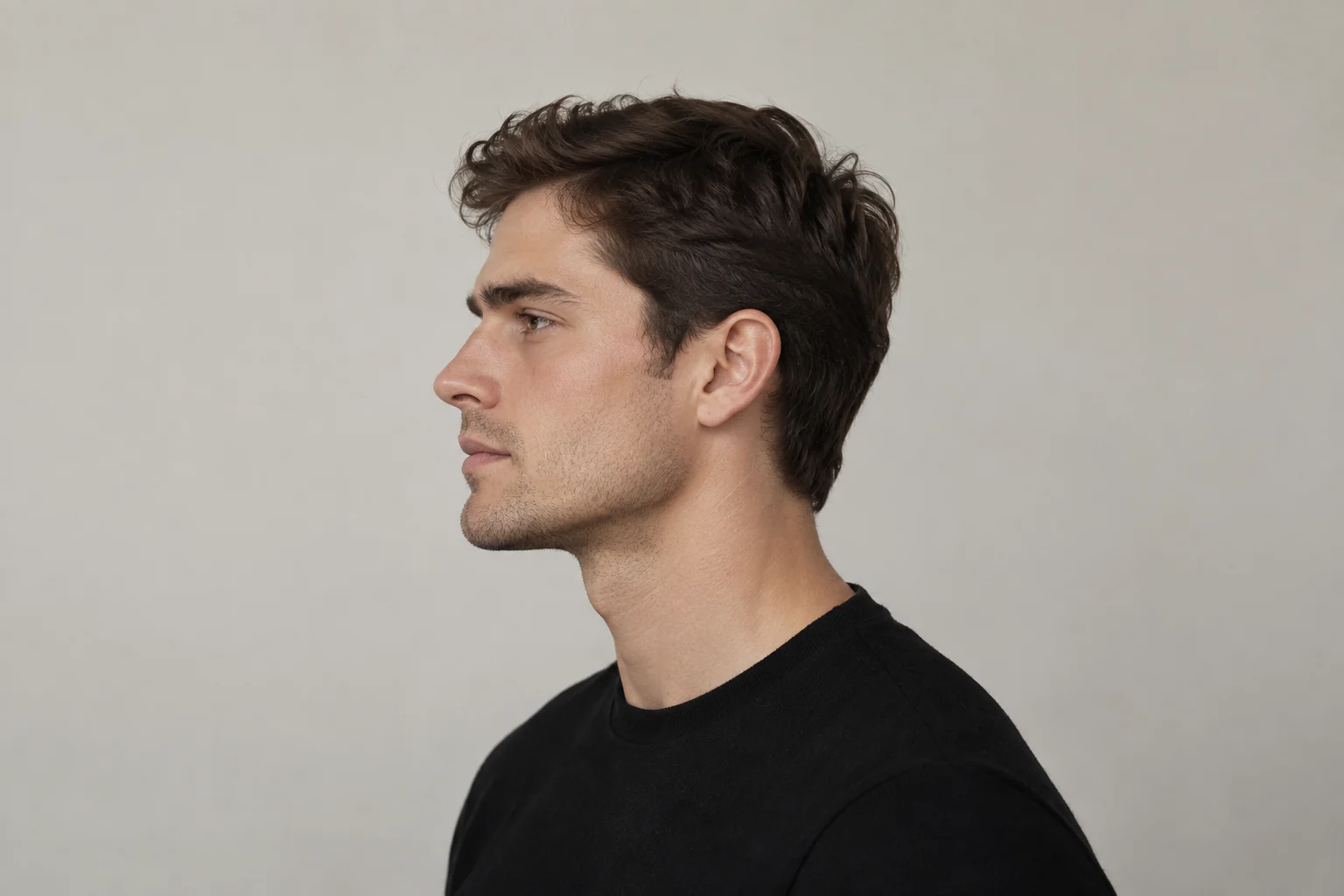
Jawline definition: separate structure, framing and the photo.
Understand jawline definition, chin and profile balance, beard framing and mewing claims before choosing your next looksmaxxing step.

Facial harmony: read the relationships between your features.
Understand facial thirds, midface, symmetry and profile balance. Learn what a face analysis can show and how to use it in looksmaxxing.

Skincare for looksmaxxing: build the base before adding more.
Build a simple looksmaxxing skincare routine. Separate skin texture, irritation and breakouts, then track care without photo-filter confusion.