
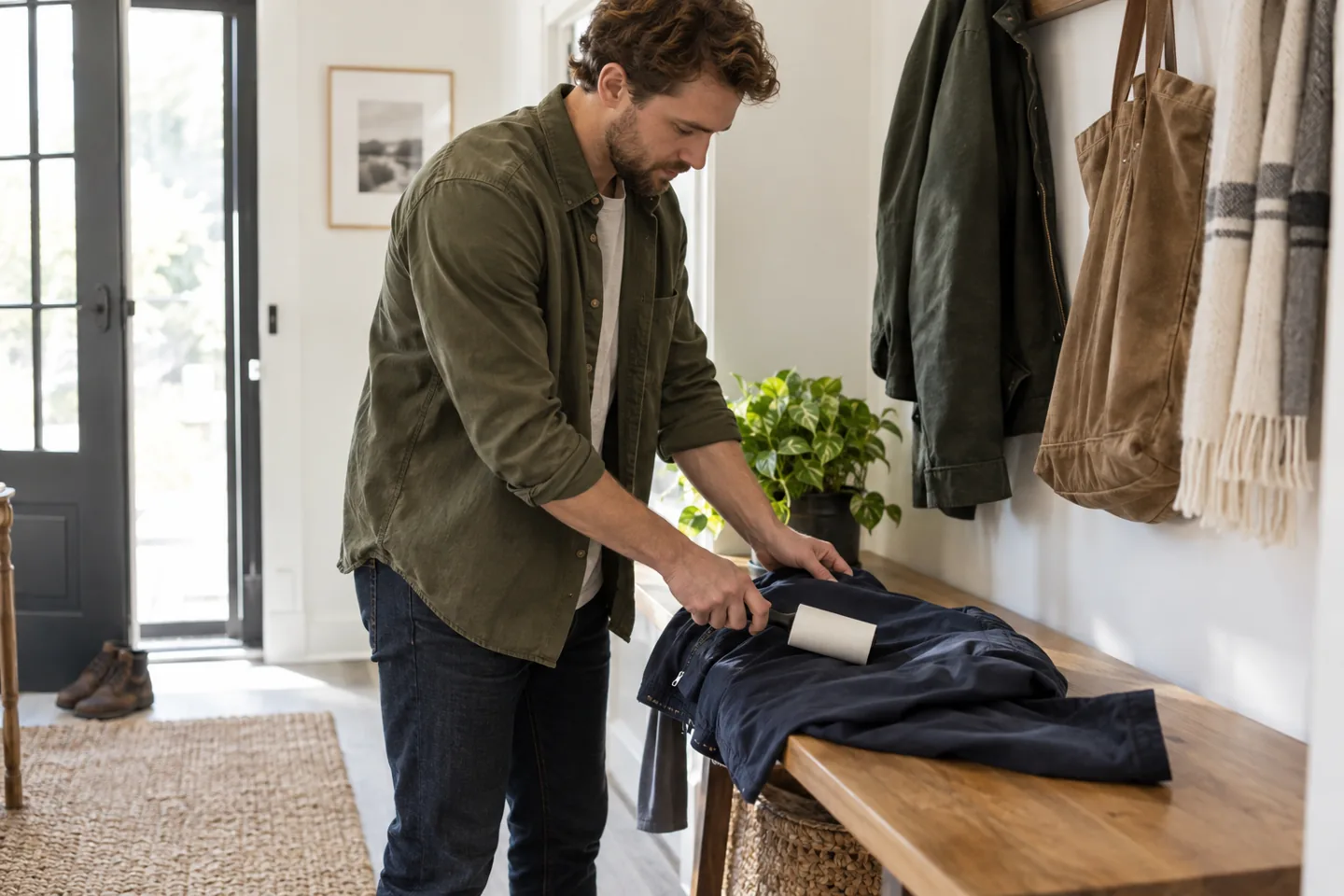
Remove lint from clothes without chasing every fibre
To remove lint from clothes, first decide whether you are looking at loose material or something attached to the fabric. A few pale hairs on a dark jacket usually call for a small surface clean, not a new wash or a stronger tool. The aim is a garment that is comfortable and ready to wear. You do not need to restore every piece to an untouched shop display, and a visible fibre says nothing about your worth or personal discipline.
Start with one garment, good light and a clean place to support it. Read its care label and the instructions for any tool you already own. Work on a small hidden area before touching a visible panel. If the material catches, stretches or changes texture, stop. This guide explains a restrained sequence for ordinary clothing; a fragile, expensive or unfamiliar piece deserves advice from its maker or a professional cleaner instead of an improvised experiment.
Identify what is actually on the surface
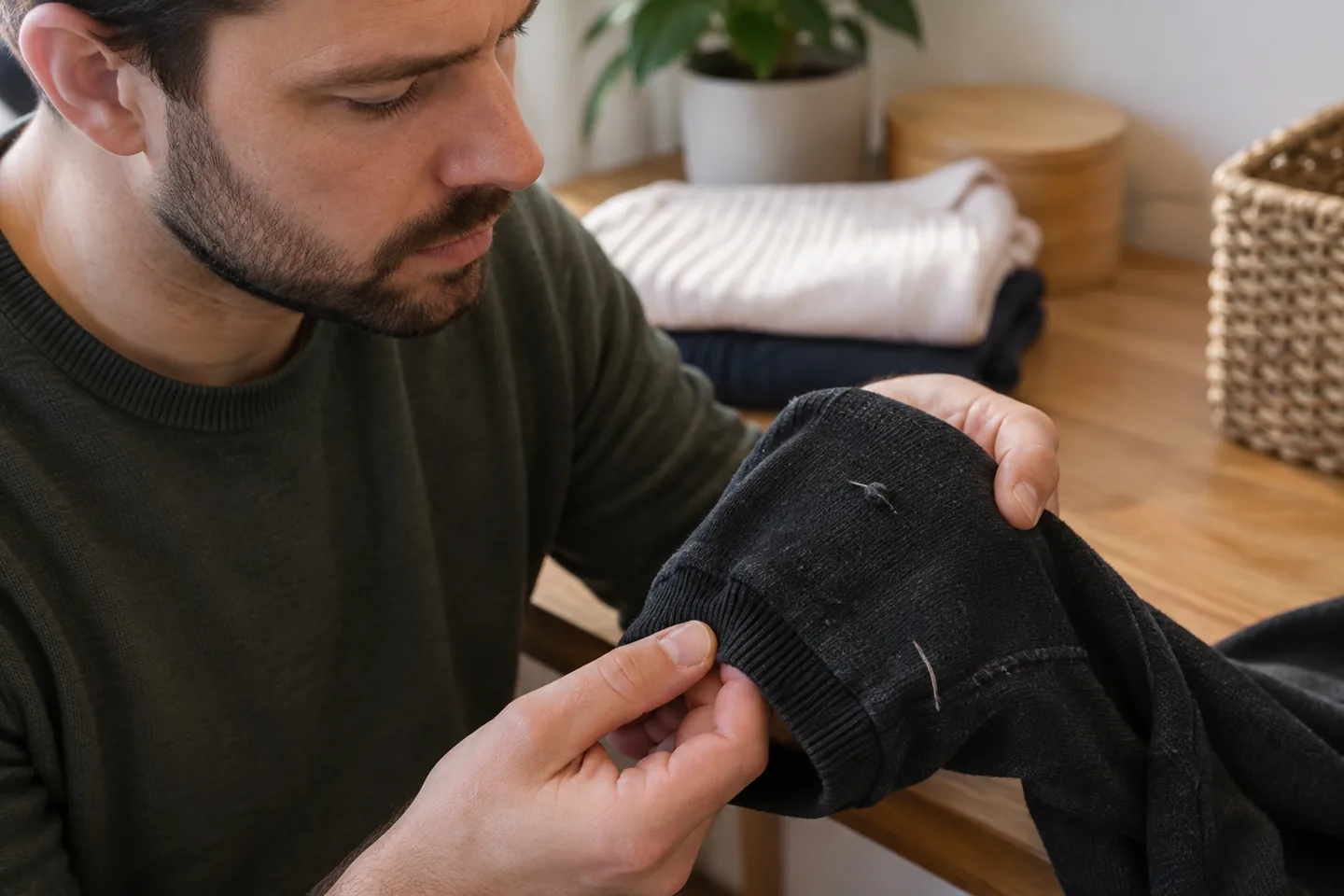
Loose lint, hair and fluff sit on top of the garment. Pilling forms small balls that remain attached to its fibres. A pulled loop, loose seam or damaged thread is different again. Treating all three as removable debris can turn a quick tidy into a hole. Look at the sleeve in daylight without tugging the material. If something appears joined to the weave, leave it in place until you know what it is.
Patagonia's garment-pilling guidance distinguishes surface pills and discusses tools and care labels. Its instructions concern clothing maintenance, not an obligation to erase normal wear. For today's task, keep the scope narrower: remove loose material you can lift gently. If pills remain, consider them a separate decision. A lint roller that does not lift an attached ball is not a reason to press harder or drag repeatedly over the same spot.
Prepare the garment before touching it
Choose a clean, stable surface with enough room for the panel you want to clean. An ordinary table or bench works if it is free of grit, spills and rough edges. Place the garment so you can support the fabric rather than pulling against a hanging sleeve. Move keys, buckles and jewellery away from the working area. A towel beneath the garment may itself shed fibres; use a clean smooth surface or a suitable non-shedding support instead.
Check pockets, fastenings and decorative areas. You do not need to clean the entire jacket just because one shoulder has collected fluff. Separate that panel from a lining or scarf so you can see what changes. If the piece is damp, stained or carrying something sticky, surface lint removal is not a substitute for the care its label requires. Deal with that separate problem through appropriate instructions. Do not add water or cleaning liquid merely because a dry pass was disappointing.
Choose a gentle tool you can control
For loose surface material, a garment-suitable lint roller or clothing brush is a practical starting option. There is no need to buy several devices before checking a small area. The tool must be clean and appropriate for the material; read its instructions rather than assuming that all rollers, brushes and fabrics behave alike. Test beneath a hem or another unobtrusive section, then inspect the texture as well as the amount of lint removed.
Avoid using a shaving razor, kitchen scourer or strong packing tape as an improvised shortcut. Such methods can create a new problem that matters more than a pale hair on a sleeve. This is not a ranking of products, and no particular brand is required. If you cannot identify a suitable tool, leave the garment alone and ask for guidance. Choosing another shirt for an appointment is often a better decision than experimenting on a delicate piece while the clock is running.
Use short passes on one supported panel
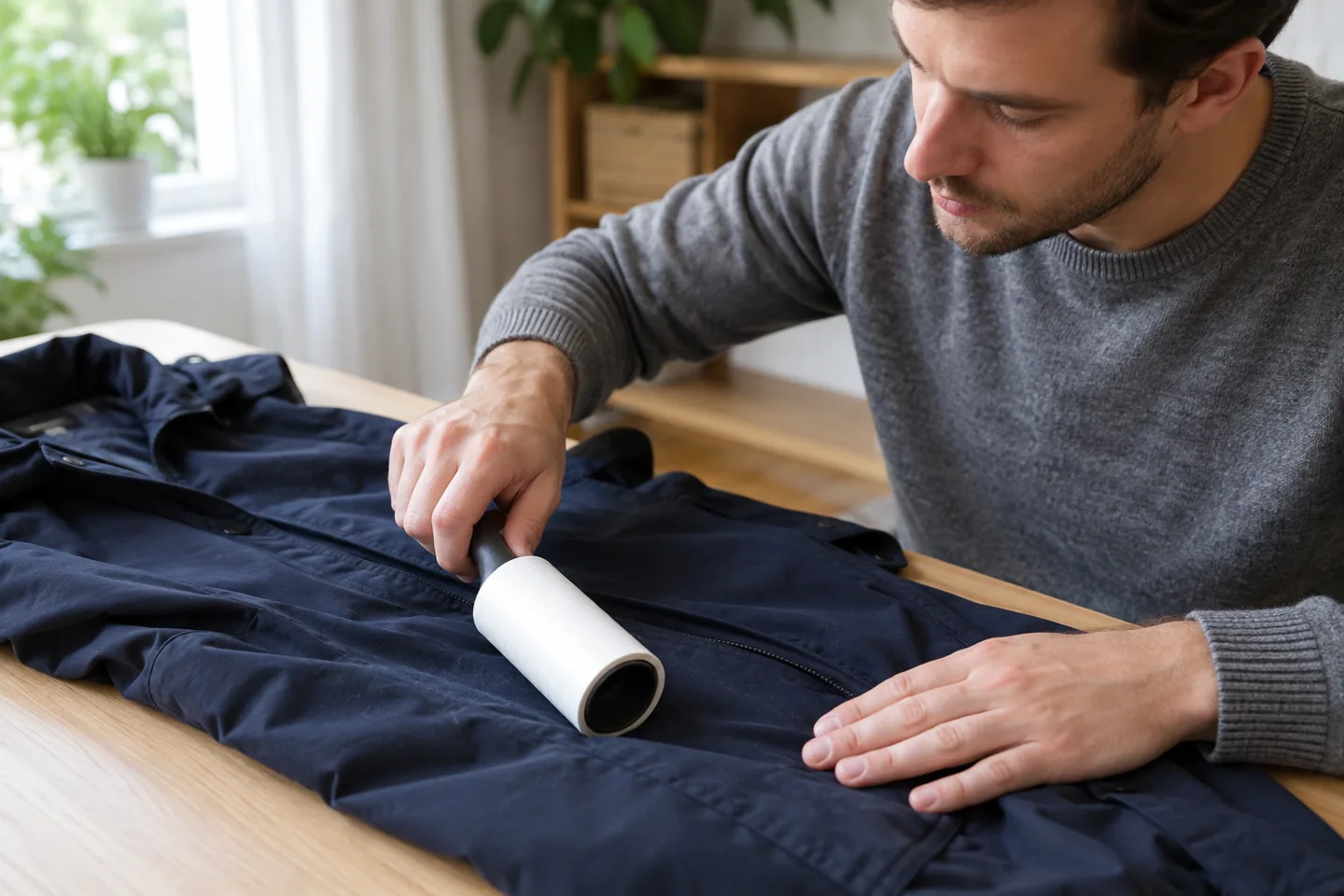
Start at a small, uncomplicated area away from loose threads, embroidery and fragile trim. Keep the fabric supported in its natural shape. Use the tool lightly according to its instructions, then lift it and look at the result. Short passes make it easier to notice snagging than a fast movement across the entire jacket. Do not stretch the material to make it perfectly flat; ordinary wrinkles are not an invitation to increase pressure.
When an adhesive sheet is covered, follow the roller's directions for exposing a clean surface. With a reusable brush, follow its cleaning and directional instructions. A dirty tool can simply redistribute what it collected. Finish one panel before deciding whether another needs attention. A few successful passes are useful; repeated rubbing after no further change is not. Stop immediately if the fabric lifts with the tool, if a loop catches or if the surface starts looking different.
Check at the distance you will actually wear it
Place the garment in ordinary light and look from a normal dressing distance. A phone close-up can magnify a fibre that nobody would notice in a conversation. It is fine to inspect a specific snag closely for care reasons, but do not make every tiny speck a presentation problem. Check that the tool has not left residue and that the material remains comfortable. If the surface looks acceptable and the task is complete, put the tool down.
Clothing maintenance and fit answer different questions. Removing lint will not change a tight sleeve, an awkward shoulder seam or a hem you keep pulling down. Our wardrobe fit audit is not needed for this small surface task; use a fit decision separately when comfort is the actual issue. A useful stopping rule is simple: the loose material you originally noticed is reduced, no damage has appeared and the piece is wearable. There is no benefit in extending the session to reach an imaginary flawless standard.
Keep attached pills and damaged threads separate
An attached pill needs a different assessment from a stray hair. Do not pluck it forcefully or cut around it without knowing the construction of the fabric. UNIQLO's knitwear-care article discusses pilling and urges gentleness with delicate knits. That does not mean a fabric shaver is suitable for everything in your wardrobe. The garment label, device instructions and the condition of the piece still matter.
A thin knit, loose weave, raised decoration or damaged seam is a reason to be especially cautious. This article does not teach cutting fibres from fragile fabric. Put such a piece aside and ask its maker, an alterations professional or a cleaner what is appropriate. If you already own a fabric-care device, do not treat it as a stronger version of a lint roller. Decide on that separate job deliberately, with its own instructions, rather than escalating during a rushed surface clean.
Make washing decisions from the label
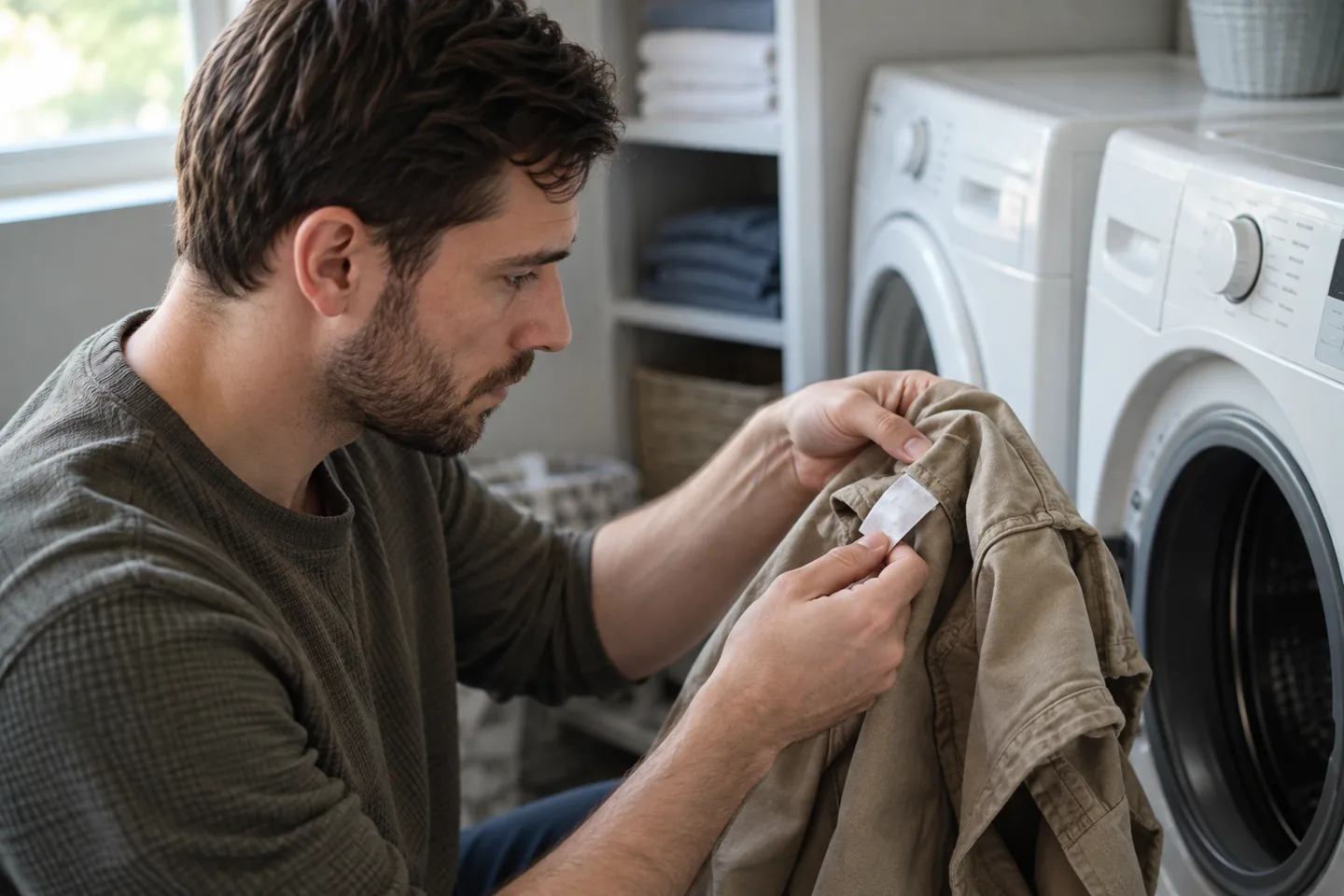
One patch of loose lint does not automatically require another wash. Equally, a surface clean does not make a sweaty or stained garment clean. Read the care label and decide what the piece actually needs. Follow the machine's own maintenance directions too, rather than reaching into filters or dismantling parts from a generic internet tip. If lint transfer appears after washing, look at the load and the materials involved before changing several settings together.
Keep shedding items in mind when sorting a load. A fluffy towel and a dark smooth garment can create an inconvenient combination. Any sorting or washing adjustment must remain within the garment's care instructions. Avoid adding a sponge, abrasive object or unfamiliar chemical because a short video calls it a trick. If the issue keeps returning, write down which garment and load produced it. That practical note is more useful than repeatedly cleaning every item in the wardrobe without identifying a pattern.
Store the piece where the work stays useful
After the check, put the garment in a clean storage area where it is not immediately pressed against a shedding textile. A simple separation from a fluffy towel or blanket may be enough for your situation. You do not need a new wardrobe system or individual covers for every T-shirt. Keep the roller or brush somewhere convenient, following its instructions for protecting the working surface. A sticky roller left uncovered can collect unrelated debris before you use it again.
Think about the next ordinary use. A jacket kept beside a frequently used blanket may collect lint again regardless of how carefully you cleaned it. Change that one contact point first. Our simple grooming routine can help keep presentation tasks bounded, but clothing care belongs in a modest place within the day. The purpose is to get dressed comfortably and leave, not to spend the morning checking whether one fibre has returned.

A realistic example before leaving home
Suppose your navy jacket has picked up pale fluff on one shoulder after resting beside a scarf. You have a few minutes before leaving. Read the label, confirm the roller is appropriate and test a hidden area. Support the shoulder on a clean table, make a light pass and inspect. If loose fluff lifts and the texture is unchanged, finish that panel. Put the scarf elsewhere so the same contact does not undo the result immediately.
Now suppose a small ball remains attached near a cuff. Leave it for a separate care session rather than reaching for scissors. If the shoulder looks fine at normal distance, wear the jacket. If fit or comfort is the concern, our style decisions guide addresses choosing what works in everyday life. A useful result is a clear next action, not a photographic record of every speck. Your clothes can show ordinary use and still be entirely suitable for the day.
Frequently asked questions
Can I use a roller on every fabric?
No. Check the garment and tool instructions, and test somewhere unobtrusive. Stop if the fabric catches or changes. For delicate, unfamiliar or valuable clothing, ask the maker or a professional cleaner before experimenting. A general lint-removal article cannot assess a particular textile through a description alone.
Why does a small ball stay after rolling?
It may be attached pilling rather than loose lint. Repeated pressure is not the answer. Treat it as a separate care question, especially on a knit or a damaged area. You can leave ordinary pilling in place while deciding whether any further maintenance is appropriate.
Do I need to wash the garment again?
Not solely because of a few loose fibres. Decide from actual cleanliness, the care label and the garment's use. Surface lint removal does not replace laundering when laundering is needed. Avoid changing several washing variables at once; one documented adjustment is easier to understand and reverse.
What if I keep checking the same sleeve?
Set a stopping point after the original loose material is reduced and no damage appears. Normal wear is not a failure. If appearance checks repeatedly disrupt your day or cause persistent distress, seek qualified support rather than adding more close-ups or measurements. Then store the tool and return to your plans.