
FACIAL HARMONY · 9 MIN READ
Face shape for looksmaxxing: turn proportions into framing.
Read face shape through visible height, width and lower-face outline. Use those observations to compare hair and beard framing.
Hair for looksmaxxing: compare forehead exposure, temple width and height on top to build a haircut around your facial proportions.
 SOFTMAXXING / FOREHEAD / TEMPLE WIDTH
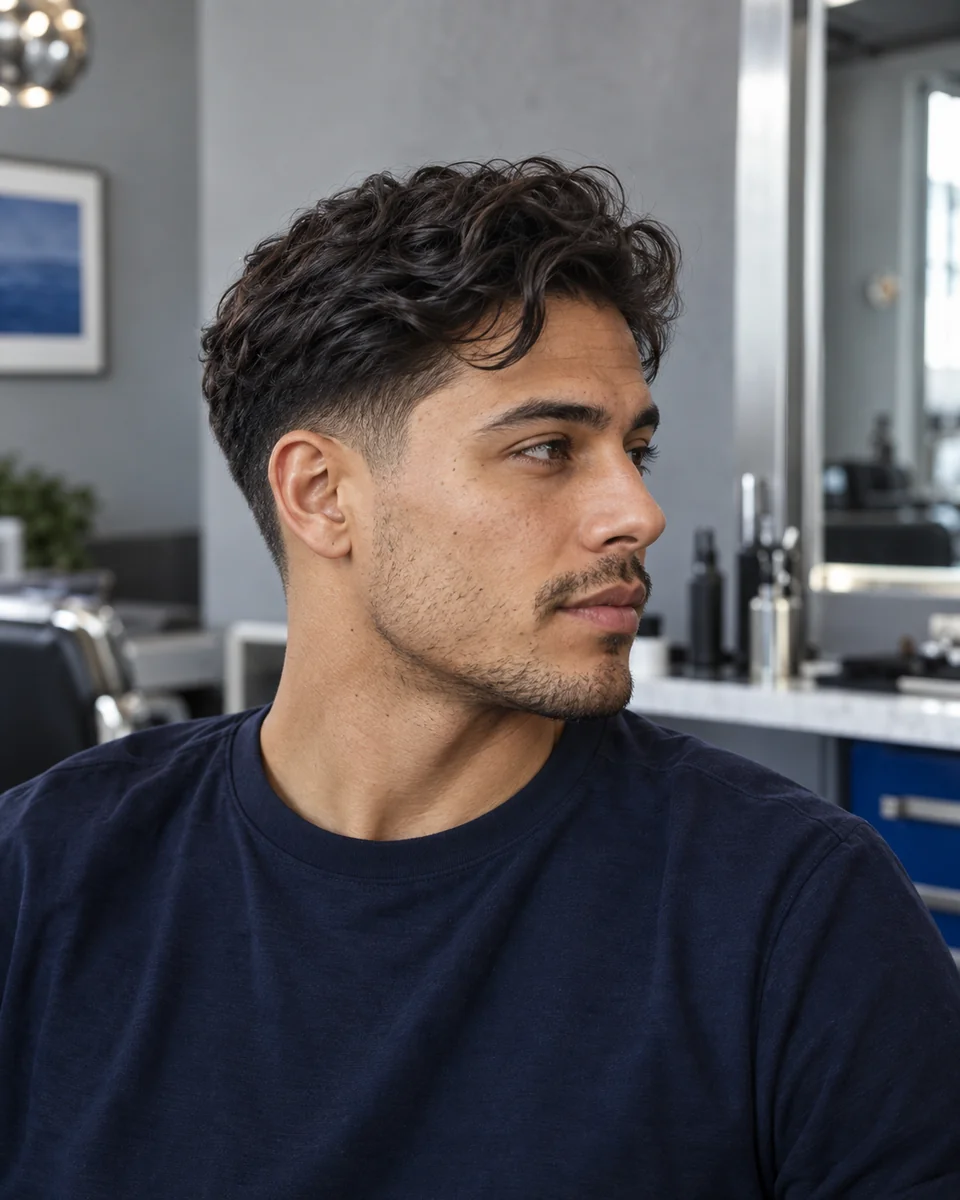
Hair forms the upper and side edges of the portrait. A fringe covers part of the forehead; height on top extends the visible silhouette; side volume changes the outline around the temples. Assess those three variables against your face before choosing a haircut name. The useful outcome is a specific framing choice you can reproduce.
Each choice changes a different part of the visible silhouette. These are comparison directions, not face-shape rules.
| The question | AMore exposure or volume | BLess exposure or volume |
|---|---|---|
| Forehead | Moving the fringe off the brow reveals more of the upper face. | A fringe covers part of the upper face and creates a new visible boundary. |
| Top height | Lift on top adds height to the overall hair-and-face outline. | A lower silhouette keeps more of the visual emphasis around the face itself. |
| Temples | More side volume adds width around the upper-face frame. | Less bulk reveals more of the temple area; assess the transition with the cheek and jaw widths. |
Change one dimension and keep the others steady. That gives the next haircut a clear aesthetic purpose.
Explore three framing choices in natural-color portrait pairs. Learn which detail to look for in your own comparison.
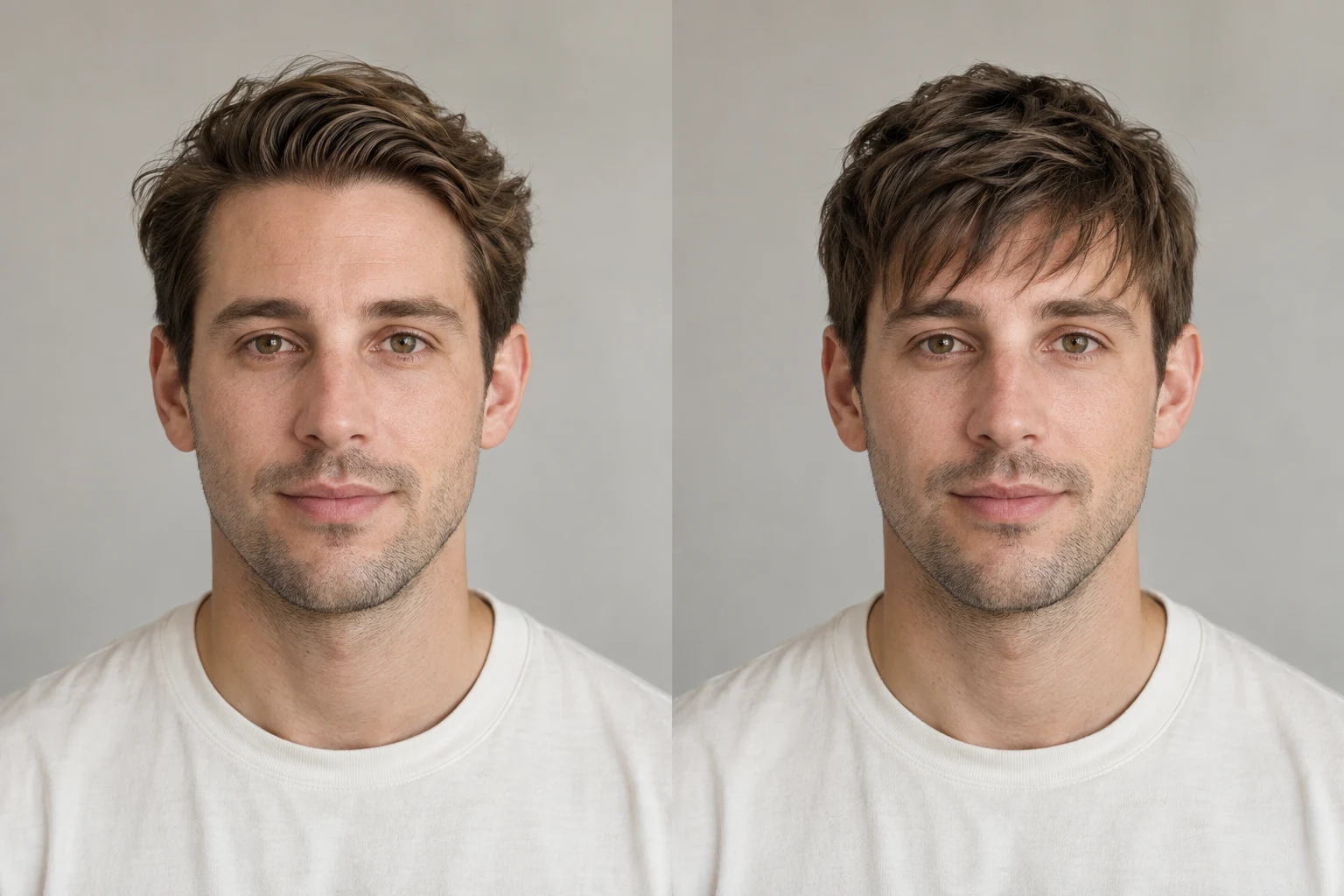
AI-generated editorial portraits · Styling examples, not transformation results
A fringe covers part of the forehead and introduces a new edge above the brows. Moving it away reveals more of the upper face. Compare the amount of exposure before changing top height or side volume as well.
Compare your ordinary styling with the front gently moved away from the brow. Note how much of the upper face is visible in each version. If a fringe is your preferred frame, describe its position and weight. You are choosing how to present the upper face, not correcting it to a universal ratio.
Read the silhouette from the front. Is the change you want less height, less width at the temples or more visible texture? Choose one. A very short side cut changes exposure as well as width, so discuss what the barber can achieve with your density, growth pattern and current length.
Use this structure: the facial relationship I am framing; the hair dimension I want to change; the length I want to keep; and the styling I can repeat. Take front and side references into the appointment. Ask to see the styling sequence that creates the agreed outline.
Hair supports looksmaxxing when the cut has a facial-framing purpose. Forehead exposure changes the visible upper boundary. Crown height adds vertical emphasis. Temple and side weight change how the upper frame relates to the cheeks and beard. Start with these dimensions before deciding which haircut name to use.
Choose one effect you want and one detail to preserve. For example, you might prefer a lower crown while keeping a mostly open forehead, or more temple coverage without a heavy fringe. Those instructions can be adapted to different textures. They also make an AI reference easier to interpret because you know which part of the image is supposed to answer the question.
A reference often includes a polished finish. Your own hair may fall differently when dry, carry different density or need a different styling direction. Include these starting conditions in the brief. Ask what the everyday silhouette will look like and which tools are necessary to create it.
Consider grow-out as part of the frame. The sides may add width before the crown needs attention; the fringe may change forehead exposure before the rest becomes inconvenient. A good consultation identifies the zone that drives maintenance. You can then preserve the facial effect between appointments instead of judging only the first-day result.
Use your current front and side views with one or two target references. Add a note about the facial effect, everyday finish and time limit. Explain which part of each image you like, especially when the references show different side lengths or fringe boundaries.
After the haircut, keep the version you style yourself as the review reference. Record one instruction to repeat and one to refine. This gives hair a deliberate place in your looksmaxxing plan and reduces the need to search for a completely new direction before every appointment.
| Effect | Useful wording |
|---|---|
| Less vertical emphasis | Reduce crown height while keeping the front boundary familiar. |
| More forehead openness | Preserve an open front with a manageable finish. |
| A calmer temple outline | Control side weight and explain how it will grow out. |
| A connected lower frame | Discuss the transition into my current beard. |
Mark the exact reason you saved the reference. Is it the forehead exposure, the height above the head or the width around the temples? Ignore differences that belong to the model rather than the haircut. Then compare that variable with your own front reference. Write what you want to preserve before deciding what to reduce or add.
Bring a side reference as well. A shape you like from the front still has to work with the back of the head and the way the hair grows. Ask your barber to translate the desired silhouette into achievable lengths. The final brief should tell you how to reproduce that outline at home.
Goal: reduce the added height above my face. Keep: natural texture and a light fringe. Change: top lift, not a very short fade. Check: does the lower silhouette still work from the side after my normal wash?
Copying the person in a haircut reference instead of identifying the forehead exposure, height or side volume you actually want.
Take two front references with different styling height but the same fringe position. Compare the full face, then write the dimension you prefer.
Connect the haircut to a facial-framing decision.
Compare a lower styling height while leaving fringe position and beard length unchanged.
Did the overall silhouette change in the direction you wanted?
No account or upload. Notes stay on this page; download them before leaving.
It changes the outline around the forehead, temples and cheeks. The same facial features can read differently under different upper frames. Compare those visual effects without claiming the haircut changed anatomy.
A small set that explains the front and sides is usually more useful than many conflicting pictures. Add your current hair and a plain-language note about the detail you want from each reference.
Review the silhouette you create at home, styling effort and the area that changes during grow-out. Keep the salon finish as inspiration, but judge the everyday version too.
Read face shape through visible height, width and lower-face outline. Use those observations to compare hair and beard framing.
Choose a haircut around forehead exposure, temple width and facial balance. Turn your looksmaxxing goal into a precise barber brief.
Understand facial thirds, midface, symmetry and profile balance. Learn what a face analysis can show and how to use it in looksmaxxing.