
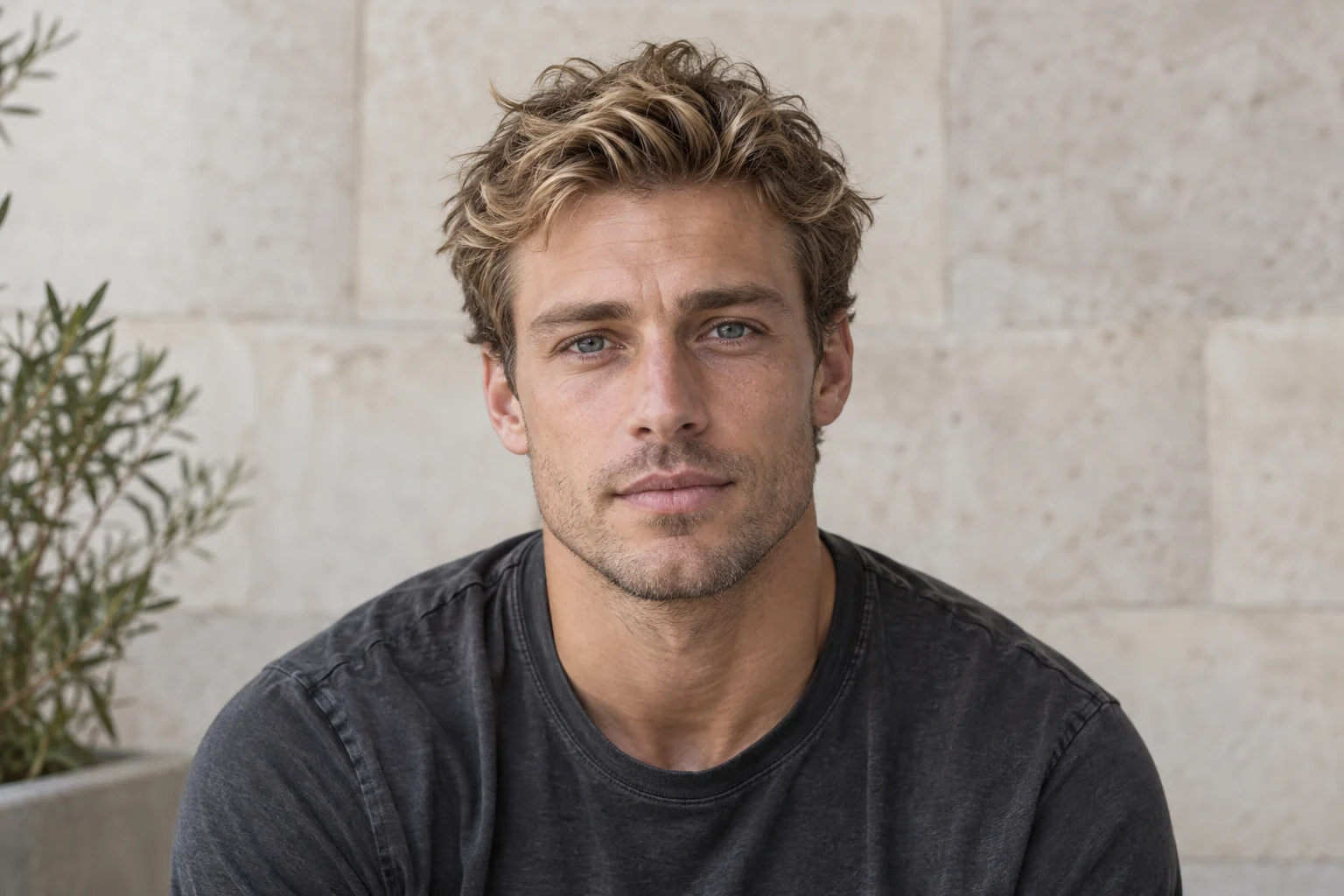
- Separate an under-eye shadow from visible puffiness.
- Keep expression and head tilt consistent when comparing eyes.
- Treat eye-shape terms as descriptions rather than exercise targets.
Eye-area looksmaxxing starts by separating several different observations: brow shape, under-eye darkness, puffiness, eyelid appearance and the angle of the eye corners. They do not all have the same cause or respond to the same action. Begin with the entire eye and brow frame in even light.
Name what you can actually see
Write down whether the issue is brow grooming, a dark-looking area below the eyes, a puffy contour or something about the eyelid shape. Keep the description visual. ‘There is a darker band under my eyes in ceiling light’ is more useful than deciding from a photo that you have a specific medical condition.
Now compare a neutral portrait in even light. Do not squint to narrow the eyes or tilt your head to change the corner angle. If the impression changes substantially with the setup, mark the photograph as part of the explanation. That does not make the observation irrelevant; it changes what you should test next.
Distinguish puffiness from the under-eye shadow
Under-eye bags can involve age-related tissue changes and fluid accumulation. Lack of sleep, allergies, genetics and other factors may contribute. Mayo Clinic notes that bags accompanied by problems such as irritation or vision changes warrant medical assessment. An appearance guide cannot determine the cause from a selfie.
For your own notes, record when you noticed the concern, whether it varies and whether there are symptoms. A clear history is more useful for a clinician than an attractiveness score. Do not assume that every dark area is a sleep problem or that a single product will address every kind of under-eye appearance.
Work with your natural brow frame
Brush the brows into their usual direction and compare the complete face before choosing a shape. Start by identifying the outline you want to keep. A specific request, such as tidying isolated hairs while preserving fullness, is easier to communicate than asking somebody to make the eyebrows perfectly symmetrical.
If you are unsure about the shape, use a professional grooming consultation before removing substantial hair. Save a clear reference and explain which part matters: the starting point, visual thickness or the tail. Do not turn a small difference between the brows into a requirement to redraw both of them.
Understand canthal tilt and ‘hunter eyes’
Canthal tilt describes the angle between the inner and outer eye corners. ‘Hunter eyes’ is an informal internet label, not a clinical diagnosis or a complete description of an attractive eye area. Camera rotation, head tilt and expression complicate casual comparisons of those terms.
This guide does not turn eye-shape labels into exercise instructions. If your goal is presentation, test brows, fringe placement or glasses as separate framing choices. If your concern is a new eyelid change, discomfort or vision, the next step is assessment by an appropriate clinician rather than repeated photo scoring.
Make an eye-area note you can use
Use three lines: what I see, when I see it, and what I will do next. Example: ‘The eye area looks heavily shadowed in overhead light. The effect is much smaller in the window-light reference. I will use the window setup for comparisons and keep the brow style unchanged.’ That is a photo decision, not a claimed treatment.
A different note might document persistent puffiness and irritation for a healthcare appointment. Keep those two paths distinct. MogRise can help organize feature observations and appearance questions, but it cannot establish the medical reason for under-eye changes.
Break the eye area into four visible layers
Read the brows, visible eyelid, under-eye region and surrounding frame separately. A strong brow may dominate the upper frame while glasses hide part of the eyelid. A shadow beneath the eye can look different from the same area in even frontal light. Describe each layer before combining them into a label such as ‘tired eyes’ or ‘hunter eyes.’
Use a relaxed expression and look toward the lens. Avoid comparing a raised-brow image with a narrowed-eye image. Write down which part remains noticeable across ordinary photos and which part changes with expression. This gives you a more useful eye-area baseline than selecting the most intense-looking portrait and trying to maintain that expression all day.
Compare brows and glasses as a connected frame
The upper rim of a pair of glasses can repeat, soften or compete with the brow line. A heavy frame may bring more emphasis to the eye area, while a lighter rim leaves more of the natural brows visible. Compare frames that fit comfortably first; a visually appealing pair that slides or presses is not a good everyday solution.
For a brow decision, preserve the natural shape and begin with a conservative tidy-up rather than removing a large amount of hair to imitate a reference. Compare at normal portrait size. Your goal might be a clearer frame around the eyes, but over-editing a close-up can lead to a change that feels much stronger when seen as part of the whole face.
Keep an under-eye history that is actually useful
If the under-eye appearance is your concern, note when you see it and the conditions involved. Record whether it is long-standing or recent, whether it appears on both sides, and whether the same region looks different in neutral versus overhead light. Include relevant products or routine changes. You are collecting context for a question, not diagnosing the cause from a photograph.
Persistent swelling, irritation or another health concern deserves an appropriate assessment. Bring the brief history and ordinary references rather than a heavily edited close-up. For a presentation preference, consider how lighting, brow grooming and glasses change the frame. Keep those styling choices separate from any claim that they treat the underlying under-eye concern.
Run an eye-area review at normal viewing size
Zooming in changes what draws your attention. Begin with the full head and shoulders, then inspect the eye region once you know the whole-face effect. If you are comparing two frames, use the same expression and camera position. If you are reviewing a brow tidy-up, keep the hairstyle and glasses consistent so you can see the change you actually made.
Finish with a description you can use: ‘the lighter upper rim exposes more of the brow’ or ‘the overhead light deepens the under-eye shadow.’ These notes are more precise than ‘my eyes are worse today.’ Choose an action only when the observation points toward one, and leave unresolved medical questions for someone qualified to assess them.
| Broad label | A clearer question |
|---|---|
| Tired-looking eyes | Is the visible issue a shadow, puffiness, expression or brow framing? |
| Weak eye frame | Would a different well-fitting upper rim or conservative brow tidy-up support my preference? |
| Different-looking eye shape | Were the head angle, expression and camera distance comparable? |
| Persistent discomfort | What history should I bring to an appropriate clinician? |
A specific observation instead of a broad label.
You want to improve the eye area but are combining brow shape and under-eye darkness into one concern.
Record the two observations separately. Test the framing question with unchanged light. Document persistent under-eye concerns and symptoms for an appropriate healthcare conversation.
Your eye-area assessment
Use the prompts to turn this guide into your own next step. The examples are suggestions; write what fits your situation.
Does the action address the observation, and did you keep the comparison natural?
Add a note to any prompt to continue. Your notes stay on this page. Download a text file before leaving.
A few useful clarifications.
01What is the first step in eye-area looksmaxxing?
Identify the visible concern precisely. Brows, eyelid exposure, under-eye shadows and glasses framing are different questions. Take a relaxed, evenly lit reference and decide which observation is stable enough to investigate.
02Should I copy a model’s eyebrow shape?
Use the reference to explain the effect you like, such as a cleaner or stronger upper frame. Your growth pattern and natural brow shape still matter. Begin conservatively and evaluate the full portrait before making a larger grooming change.
03Can better lighting improve the appearance of the eye area?
It can change the portrait by reducing or emphasizing shadows. That may be useful for photography, but it does not prove a change in the eye area itself. Keep assessment photos and presentation photos clearly distinguished.
Where your next question leads.
Hunter eyes vs prey eyes: understand the eye-area look.
What are hunter eyes? Compare hunter eyes vs prey eyes, eyelid exposure, brows and canthal tilt, with practical ways to assess your eye area.
Canthal tilt: positive, neutral and negative, explained.
Understand positive, neutral and negative canthal tilt, how photo measurements work, and why one eye angle cannot explain your entire face.
Skincare for looksmaxxing: build the base before adding more.
Build a simple looksmaxxing skincare routine. Separate skin texture, irritation and breakouts, then track care without photo-filter confusion.