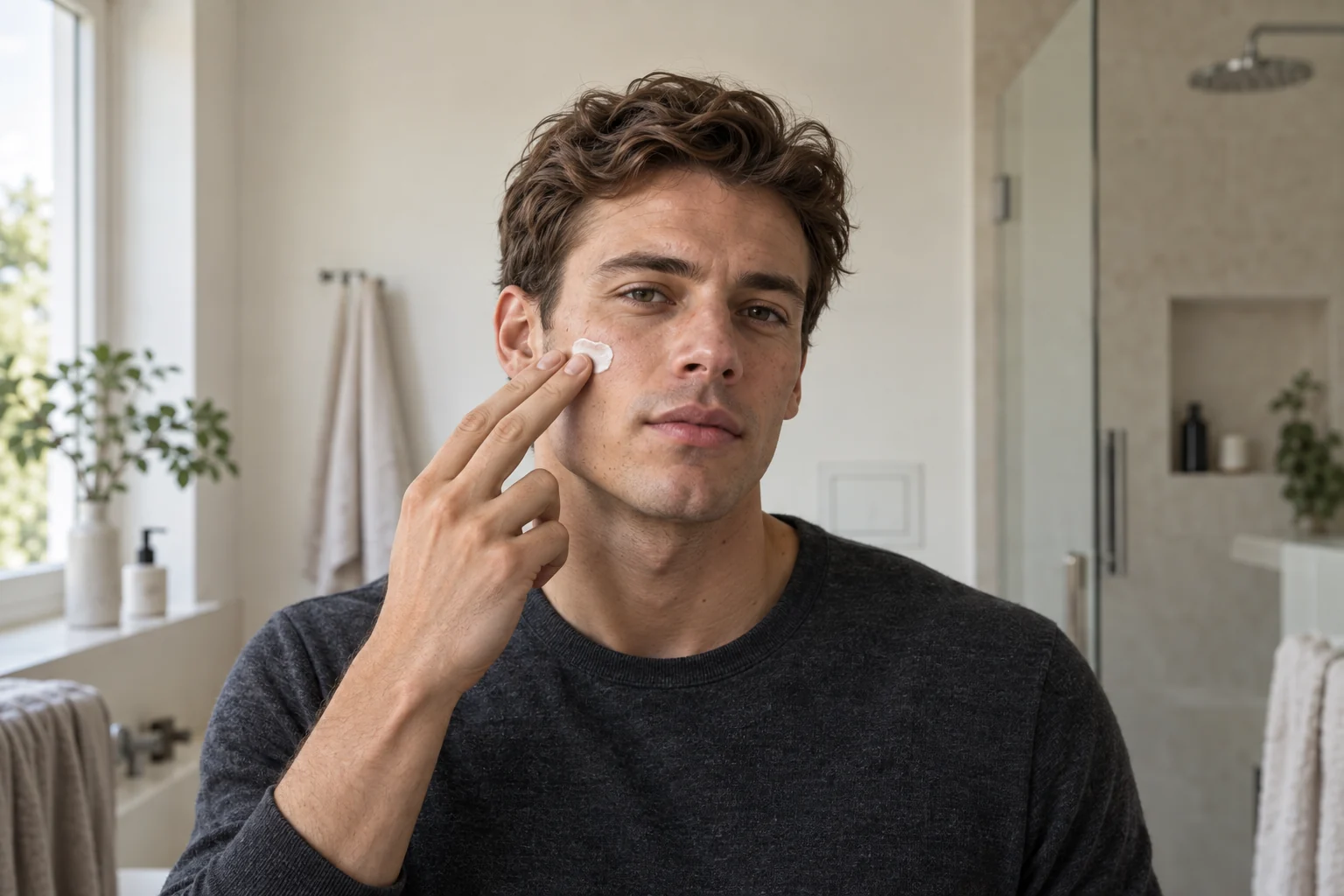
SKIN QUALITY · 8 MIN READ
Skincare for looksmaxxing: build the base before adding more.
Build a simple looksmaxxing skincare routine. Separate skin texture, irritation and breakouts, then track care without photo-filter confusion.
Make skincare a focused part of looksmaxxing: identify the concern, organize your routine and track care under consistent conditions.
 SKIN QUALITY / CARE / CONSISTENCY
Give skin its own clear priority instead of burying it under grooming. Identify the concern, organize the products and habits already involved, and decide what needs a professional answer. Review comfort and consistency alongside photos. Normal skin texture should remain visible in the reference.
A useful routine review includes more than whether a photo looks smoother.
| The question | AThe action record | BThe response to review |
|---|---|---|
| Routine | Which products did I use, and when? | Was the routine comfortable and possible to repeat? |
| Change | What was added, removed or used differently? | What changed afterward, and what remains uncertain? |
| Photograph | Which light, distance and exposure did I use? | Are texture and marks being compared under similar conditions? |
A better record helps you decide whether to continue, simplify or ask for treatment advice.
Distinguish dryness, shine, irritation, active breakouts and older marks. Write the location and any symptoms. A precise description makes the next conversation more useful than asking for generally better skin.
List each product and its job: cleansing, moisture, sun protection or a specific treatment. Follow product instructions and professional advice. Identify a missing basic step or an unexplained duplicate before adding more.
Record when a product changed and how your skin felt. Use the same photo conditions for comparisons, without smoothing. A first-week review can assess whether the routine is workable; it is not a deadline for resolving a skin condition.
A skin goal can mean several things: a more even-looking complexion, fewer visible breakouts, a routine that feels comfortable or less friction around shaving. Name the goal in those terms. A photo is useful for appearance, while comfort and the care history add information the image cannot provide.
Do not judge the entire routine from one polished portrait. Camera processing and lighting change how texture appears. Keep the skin-care question connected to the area you noticed and the routine you use. If a condition or treatment question needs assessment, prepare the history for an appropriate clinician.
For every product, record the purpose and frequency. Include cleanser, moisturizer, sun protection, treatments and shaving products as relevant to your routine. Look for recent additions and duplicate jobs. If you are uncertain about a treatment, ask for guidance rather than adding another product to cover the uncertainty.
A small, clear product map helps you explain what has happened. Starting several things together makes the history harder to interpret. Keep the routine understandable and use suitable professional advice for a persistent concern. The practical looksmaxxing outcome is a care system with a defined purpose, not a shelf that resembles someone else’s routine.
Use the same region and readable, neutral light for a comparison. Add the timing and relevant changes in products or shaving. If the conditions differ, note that limitation. A smoother-looking picture alone cannot tell you whether the care strategy is appropriate.
Write the question you need answered next. It may concern tolerability, a recurring issue or which step belongs in the routine. Keep the appearance preference and medical question clear so the next conversation can address both appropriately.
| Evidence | What it contributes |
|---|---|
| Comparable unfiltered photo | The visible region under consistent conditions. |
| Product map | What you used and how often. |
| Comfort note | Information that a photo cannot show. |
| Care question | The decision that needs clarification or assessment. |
Write one row per product: name, purpose, instructions and start date. Avoid ranking the shelf by popularity. If two products have the same intended job, record that before deciding whether the routine needs both. Keep prescribed care clearly identified so an editorial exercise does not overwrite medical advice.
Bring unresolved questions into a professional conversation with your product list and a short history of the concern. For the website plan, choose a practical organizational step: establish when a basic product is used, document an irritation pattern or prepare for the appointment.
The routine has a clear morning and evening sequence. The products have stated purposes. An ongoing concern is documented with its timing and symptoms, ready for assessment.
Changing several products at once and then being unable to explain what helped or irritated the skin.
Give every product one stated purpose and write down the question your current routine has not answered.
Map the routine you have before deciding what to add.
List the basic care jobs and check which your current products already cover.
Can you explain why each step is present?
No account or upload. Notes stay on this page; download them before leaving.
No. Lighting, processing and distance can make texture more visible. Compare the same region under similar conditions and include comfort and care history before interpreting the image.
A clear history is easier to understand when changes are deliberate and recorded. Give every step a purpose and seek suitable guidance for ongoing conditions or treatment questions.
Record the tool, frequency, products and any recurring discomfort. The beard finish and skin comfort are both part of the routine, but they may need different actions.
Build a simple looksmaxxing skincare routine. Separate skin texture, irritation and breakouts, then track care without photo-filter confusion.
Understand brows, under-eye shadows, puffiness and canthal tilt. Build an eye-area looksmaxxing plan around clear observations.
Record looksmaxxing actions, comparable references and feature observations. Review what changed without relying on a score alone.