

Beard neckline: begin with the beard you actually wear
A beard neckline is the lower boundary of facial hair where the beard meets the neck. If you are looking for a way to define it, the useful starting question is not “Where should every man shave?” but “What length and density am I keeping above this boundary?” A line that suits short stubble may disappear inside a fuller beard. The neckline should support your chosen style in normal light, not manufacture a new jaw shape. This guide covers a conservative at-home decision, the trimming sequence, and a way to compare the result without confusing camera angle with change.
Before touching a trimmer, let the beard sit as you normally wear it. Look straight ahead in a mirror, then turn gently to each side. Notice the hair under the chin, the growth toward each ear and any patches that already create a natural lower edge. If you are still deciding between stubble and a beard, use our stubble-or-beard comparison guide first. The present task is narrower: keeping one existing facial-hair choice looking deliberate around the neck.
What a beard neckline can and cannot change
Trimming the neck can make the end of a beard easier to read. It can also keep loose growth below the chosen boundary from competing with the beard itself. It does not change bone, chin projection or the structure of your jaw. A photograph with the head lifted can make almost any line appear lower than it looks at eye level, while a close phone image may overstate a small asymmetry. Judge the result with your head relaxed and your collar in view.
A high line directly under the jaw can leave the underside of the chin exposed when you speak or look down. A line placed too low may leave a broad band of neck hair that you did not intend to keep. Neither observation sets a universal ideal. Beard density, length, skin comfort and personal preference decide the practical range. If your beard grows unevenly, a soft transition is often easier to live with than a sharply carved edge. The aim is a repeatable grooming choice, not a score for facial harmony.
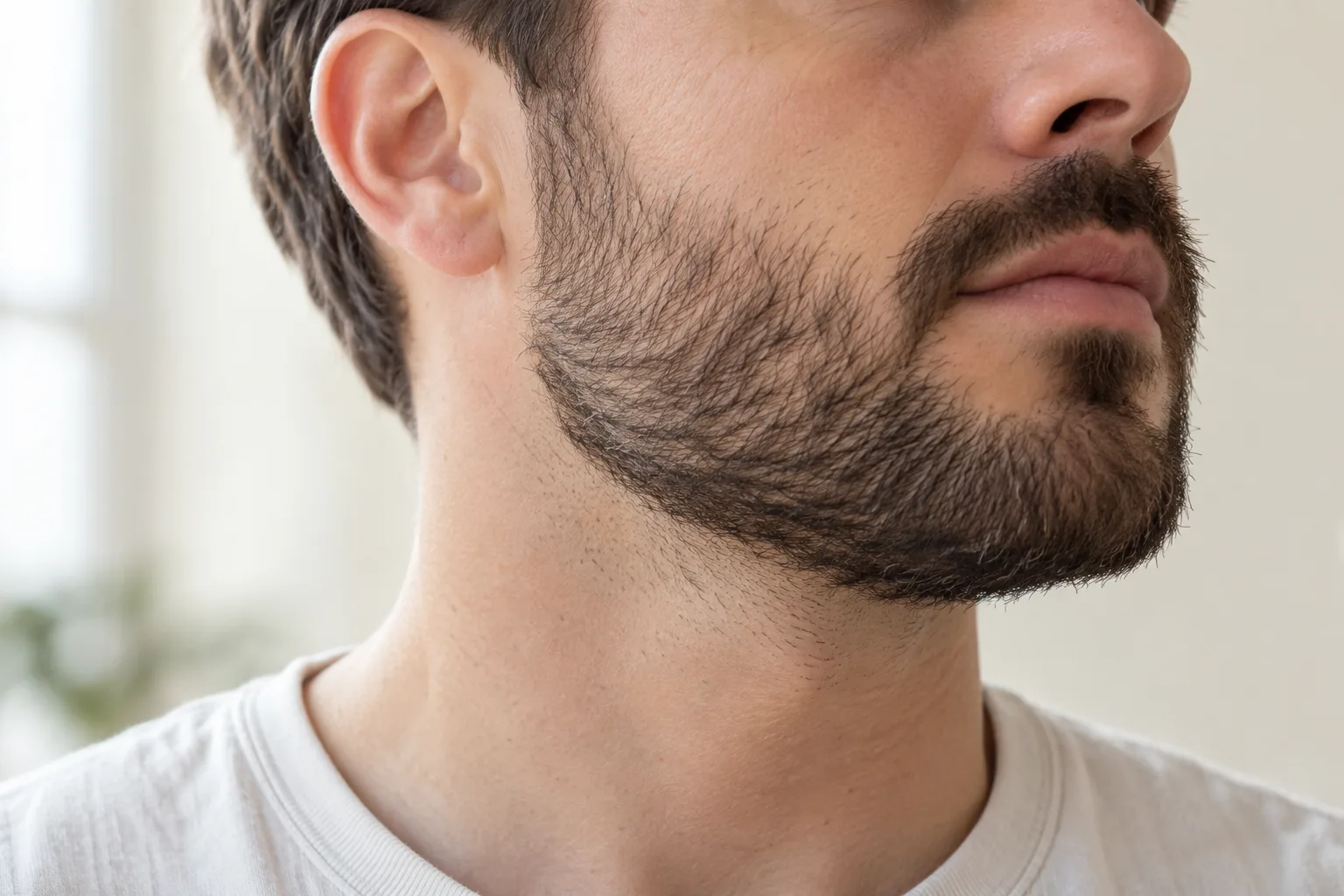
Mark a starting boundary before you remove hair
Stand upright and keep your chin in a neutral position. With a comb, settle the beard downward. Find the point where the hair under your chin still reads as part of the beard when viewed from the side. Follow that broad curve back toward the area below each ear. A commonly published finger-above-the-Adam’s-apple rule is only a rough prompt; neck length and beard length vary, so do not cut to a fixed measurement. The Philips beard-trimming instructions describe locating a neckline before clearing hair below it. Use the idea of a planned boundary, not a branded tool requirement.
If you are unsure, begin lower than the line you imagine. You can lift a lower boundary in small steps, but you cannot put hair back that afternoon. You may mark two tiny points with a washable cosmetic pencil, one on either side, and check them in a mirror from the front and profile. Do not draw a perfectly straight stripe across the throat. A gentle curve that follows your actual growth is easier to maintain than an engineered angle copied from another person’s photo.
Use MogRise for one question, not a verdict
MogRise, made by the publisher of this guide, offers photo-based face analysis, style previews and a personal plan. If you use it here, bring a specific question: “Does this beard length and lower boundary work together in my ordinary front and profile photos?” Take the photos in similar light, at a comfortable distance and with a neutral head position. A preview can help you consider the overall facial frame before you cut, but it is an estimate. It cannot locate a medically correct neckline, assess your worth or replace a real mirror check.
Keep the workflow small. Note the current beard length, explore one relevant facial-hair direction, then decide whether to keep the lower edge, tidy only the neck below it or ask a barber for help. Do not compare a dozen generated versions until one receives a higher appearance score. The benefit of a personal plan is remembering the choice and its upkeep, not generating an endless list of perceived defects. Our face-analysis photo checklist explains the repeatable front-and-profile setup in more detail.
Prepare a controllable trimming setup
You need a clear mirror, even light, a clean comb and a trimmer with a guard that you know how to use. A small handheld mirror helps you view the underside without twisting your neck into a pose you would never hold normally. Put a towel where you can see fallen hair and charge the device before starting. Check that the guard is attached and that the blade is clean. If you have never used this trimmer for beard edges, test it on a less visible area before bringing it near the boundary.
Start by trimming the body of the beard to your chosen length with the guard fitted. Brush loose hairs away, then reassess the natural lower edge. Only after that should you consider the neck. Using an unguarded blade to define the line first can create a boundary that no longer fits once the beard above is shortened. A narrow, deliberate pass is easier to correct than a wide sweep. If lighting is poor, skin is irritated or you feel rushed, pause. A beard line is not urgent.
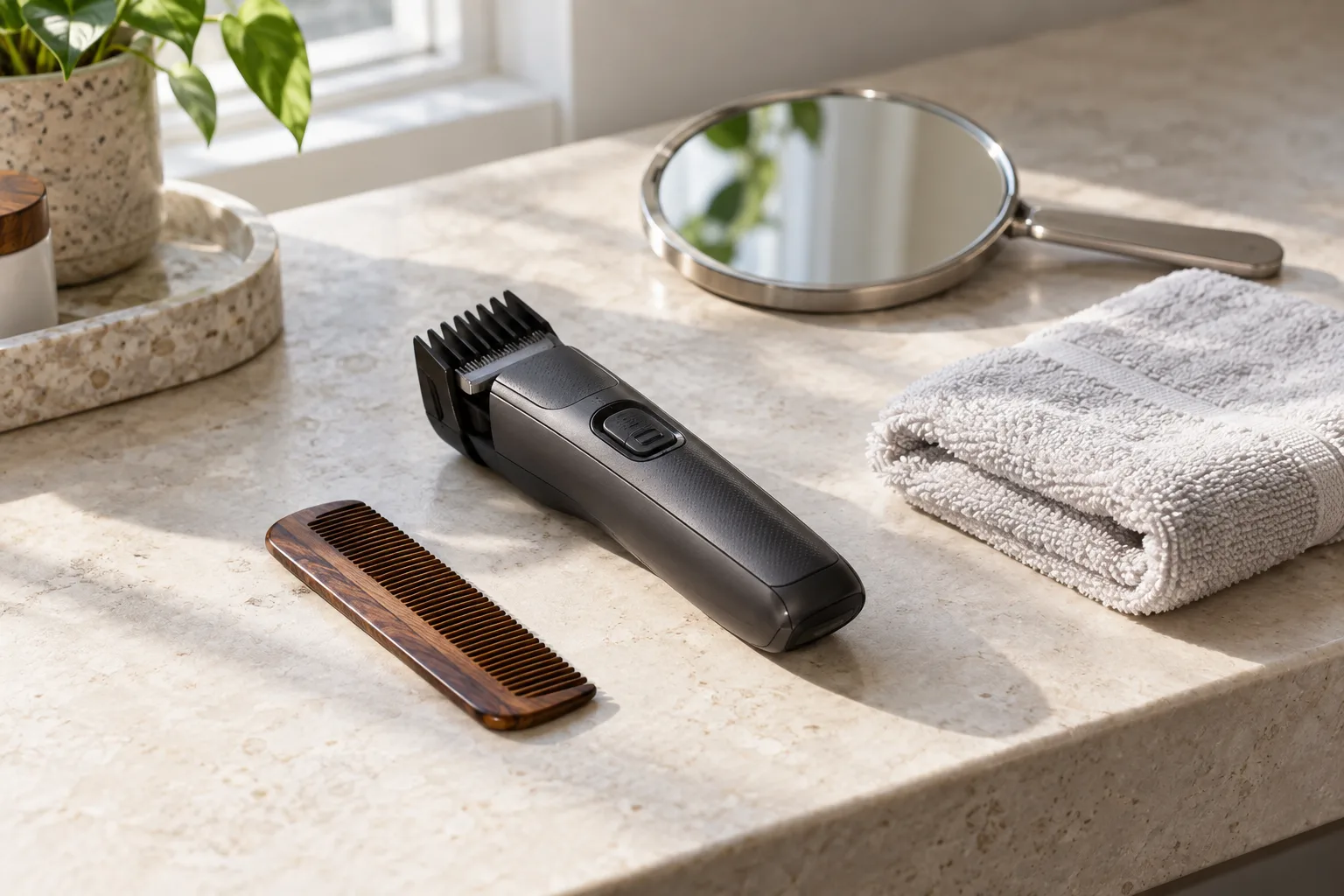
Trim below the line in short stages
Begin in the center, below your proposed boundary, with the appropriate attachment for your trimmer. Make a short pass downward into the neck area, not upward through the beard. Stop, clean away loose hairs and check the line with your head level. Work outward a little at a time. Repeat on the other side while comparing the position of the line below each ear. Natural growth need not be mirror-perfect: similar visual weight is more useful than measuring identical millimeters from a photograph.
Do not hollow out the beard beneath the jaw to chase a sharper profile. Preserve enough hair under the chin for the upper beard to connect visibly to the neck edge. If you prefer a softer appearance, use a longer guarded setting near the boundary rather than forcing the shortest cut everywhere. Once you are satisfied, put the trimmer down and view the result from conversation distance. You can always do a second careful pass after a pause; repeated passes while staring at a close mirror tend to move the edge higher.
Shave only as close as your skin tolerates
Some people simply trim the neck short; others want skin below the line clean-shaven. Neither finish is required. If you choose a close shave, wet and soften the area, use a suitable shaving cream and work with the direction of hair growth. The American Academy of Dermatology’s shaving guidance recommends these steps to reduce razor bumps and irritation. Rinse the blade between strokes and avoid pressing hard to erase every visible dot. The neck often has changes in growth direction, so check what your hair actually does before each pass.
If the skin is already inflamed, broken or painful, skip the close shave. A guarded trim or leaving the area alone is a reasonable choice until it settles. Persistent bumps, bleeding, an unusual rash or worsening discomfort deserve advice from a qualified clinician, not another attempt with a sharper blade. Keep aftercare simple and avoid experimenting with several strong products at once. The looksmaxxing skin-care guide explains how to build a routine around comfort and consistency rather than adding products for a single photo.
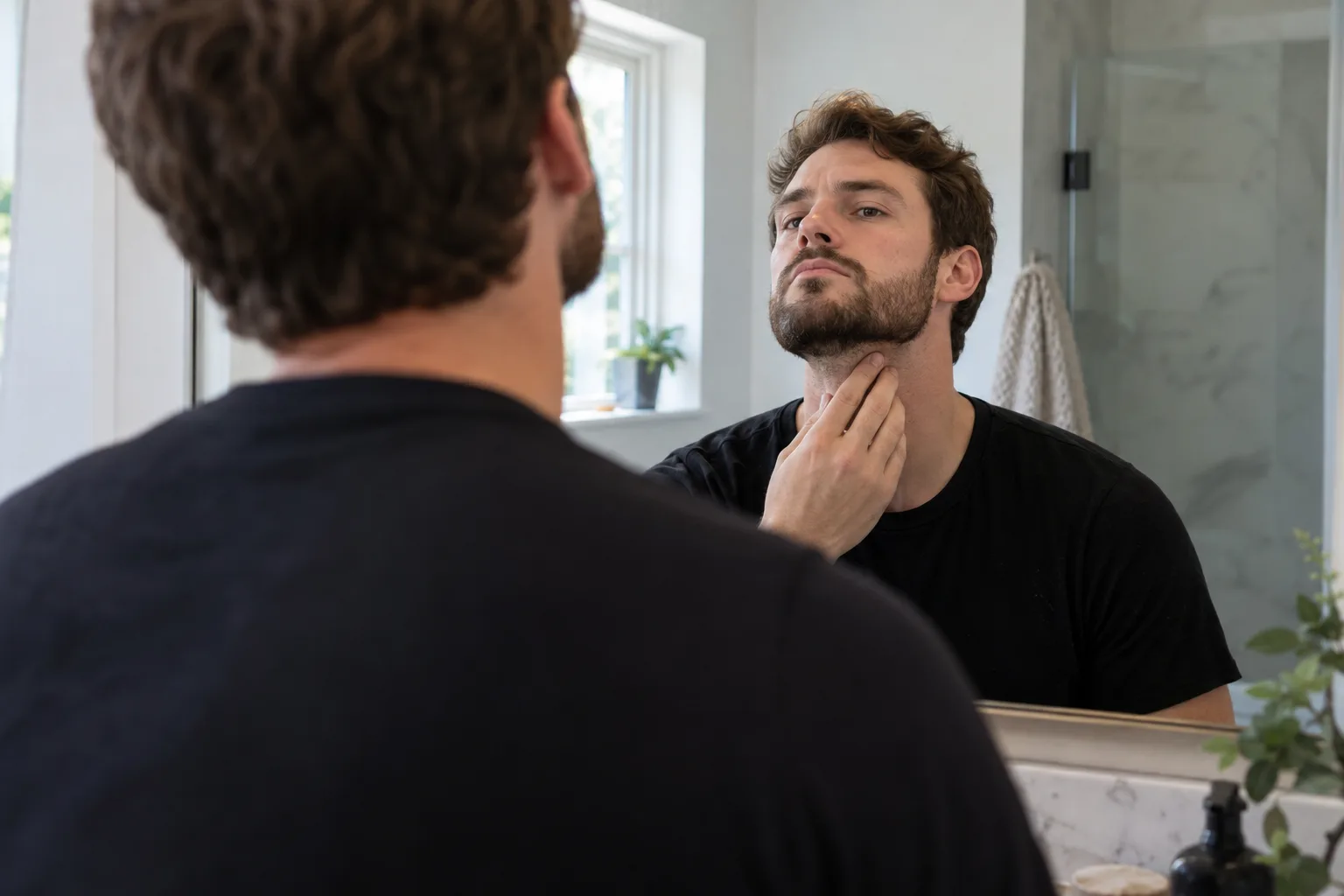
Check the line at normal distance and in two views
Put your shoulders down and look straight ahead. From the front, the beard should read as one connected shape rather than a dark mask floating above a bare neck. From the side, notice whether the lower edge travels naturally from behind the jaw toward the center. A third view, slightly below eye level, can reveal accidental gaps, but do not use a dramatic low-angle selfie as your decision-maker. Normal conversation and normal daylight are the better reference.
If you take photos, keep camera distance, light and head position similar to your starting images. Compare only the question you set at the beginning: does the lower boundary look intentional while the beard above remains intact? A one-day photo cannot prove a change in bone structure or attractiveness. If the image disagrees with what you see in a mirror, inspect the setup before moving the line. One short check after trimming is enough; repeated daily photo audits can turn an ordinary grooming task into an unhelpful preoccupation.
Give your barber a precise brief
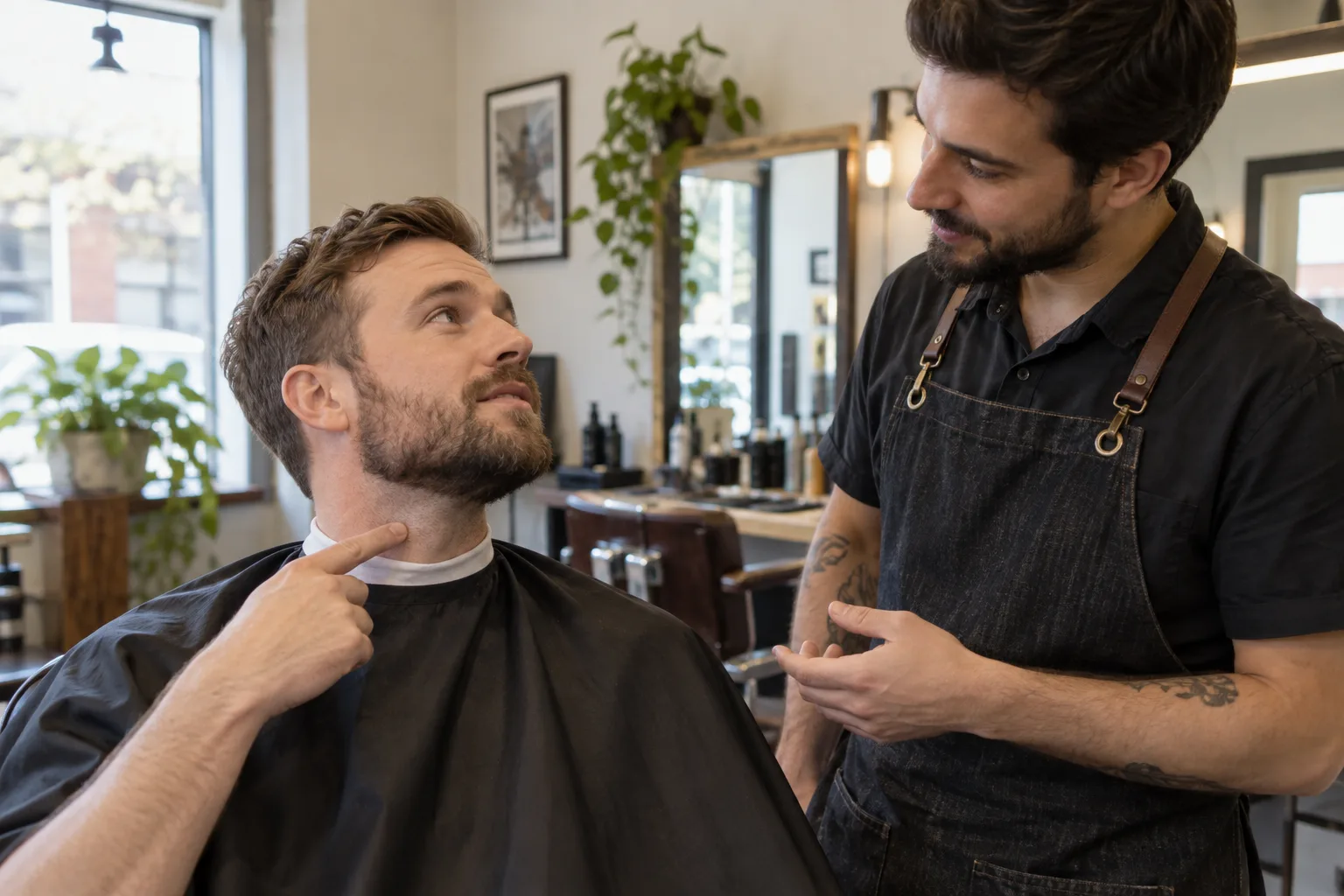
If reaching the underside is awkward, the growth pattern is confusing or you simply prefer professional help, ask a barber to establish a conservative line. Say what you want to keep: the present beard length, fullness under the chin and a soft transition if that suits you. Then specify what should change: “Please tidy only the loose neck hair below the natural edge, and show me the proposed line before shaving.” That is clearer than asking for a “perfect” or “more masculine” jawline.
Take one ordinary front photo and one profile photo if your usual beard shape is hard to describe. Ask which guard setting was used and where the lower edge begins so you can maintain the same decision later. You can decline a very sharp line or any cheek work you did not request. A good barber brief is a small agreement about a repeatable style, not a surrender of the choice to someone else’s formula.
Keep the result without constant correction
Looksmaxxing works best here as a modest presentation decision: observe, choose, make one reversible or low-commitment change, and stop. The beard edge is only one part of your appearance and says nothing about your value. If you find yourself checking it compulsively, chasing AI ratings or feeling distressed by small asymmetries, step away from the comparison. Ongoing appearance-related distress is a good reason to speak with a qualified mental-health professional rather than increase the number of assessments.
Frequently asked questions
Where should a beard neckline end?
There is no universal distance below the jaw. Keep the head neutral and find a gentle lower boundary that supports the beard length you actually wear. Start lower if uncertain, trim in small stages and check the result from front and side at normal distance. A finger measurement is only a rough orientation, never an anatomical rule.
Should I shave the neck completely or just trim it?
Choose according to your style and skin comfort. A close shave can make an edge crisp, but a guarded short trim may be enough and can be easier on sensitive skin. If a razor causes persistent bumps or pain, stop close shaving and ask a qualified clinician for advice rather than repeatedly scraping the same area.
Can an AI beard preview show my ideal neckline?
It can offer a styling idea and help you compare an overall frame, but it cannot certify an ideal line or predict how your real hair and skin will respond. Use ordinary front and profile photos, one specific question and your own mirror check. MogRise is the app from this guide’s publisher, not an independent judge of appearance.
How often should I redraw the line?
There is no fixed schedule. Keep the original decision and tidy only when growth below it becomes noticeable to you in normal conditions. Avoid raising the line a little at every trim: that changes the design over time. A repeatable guard setting, good light and a pause before any second pass make maintenance simpler.