

How to style a cowlick with less effort
Learning how to style a cowlick starts with a modest question: can you make this one section easier to wear without rebuilding your whole haircut? A front strand that lifts, a crown that separates or a part that returns is a styling constraint, not a flaw in your face. The useful outcome is hair that feels comfortable and takes a reasonable amount of effort. It does not have to lie perfectly flat from every angle.
Start with your present haircut, observe the direction the section takes and try one gentle adjustment. Keep the result if you can repeat it without discomfort. This guide explains how to choose that adjustment, when to stop adding product and what to ask a barber. MogRise can optionally help organize a practical priority and a focused Coach question. It cannot establish the physical behavior of your hair from a flattering render or promise that a particular technique will work.
Locate the section before choosing a solution
Look at your dry hair in ordinary light, as you normally wear it. Identify the actual section that bothers you. Is a small piece at the front lifting away from the rest? Does the crown separate when you sweep everything forward? Is the part returning to a slightly different place? Describe one visible behavior rather than saying that your entire hairstyle is wrong. You might find that the rest of the cut already works well.
Use a hand mirror for a brief look at the crown if necessary. Avoid pressing the hair flat while trying to observe it; you would be inspecting the shape made by your hand. Also avoid interpreting a bright patch between separated strands as a diagnosis. A styling article cannot assess new hair loss, irritation or scalp changes. If there is a new or persistent health concern, ask a qualified clinician rather than repeatedly photographing the area.

Decide what a workable result means
Choose a goal you can actually judge. “Keep the front comfortably off my glasses” is specific. “Have hair that never moves” is not a realistic everyday standard. You could accept a little lift, a softer part or a slightly textured crown if it makes the routine easier. A cowlick does not require a perfectly symmetrical silhouette. You can prefer neatness without turning every strand into evidence of success or failure.
Set a time limit before trying anything. Perhaps you have three minutes after getting dressed, and no interest in using several tools. That limit should shape the experiment. Our low-maintenance haircut checklist helps connect a cut with the upkeep you will actually do. Here the question is narrower: can one change to the difficult section make the existing cut more manageable? Leave the rest of your routine familiar so the answer stays clear.
Try direction before adding stronger hold
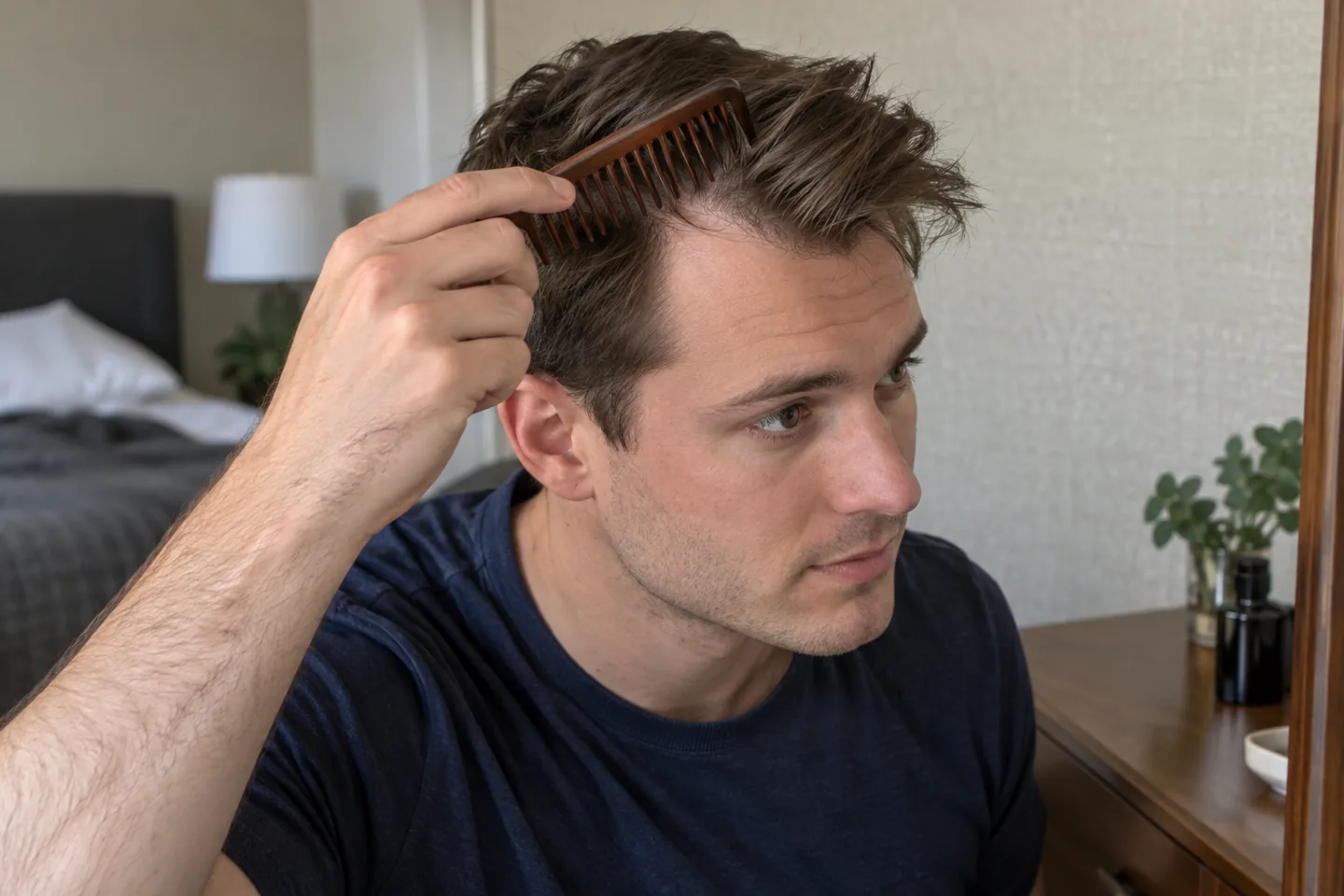
With clean hands, gently guide the section in the direction it seems willing to take. If your front hair opens to one side, try a soft sweep that follows that opening instead of forcing a ruler-straight line across it. A comb with comfortable teeth can help organize strands, but it should pass without tugging. If a stroke catches, stop, release the hair and choose a gentler approach rather than pressing harder.
Treat this as a reversible test. You are moving the hair you have, not changing its growth pattern. Do not promise yourself that daily pressure, tight headwear or repeated pulling will permanently eliminate the swirl. At the crown, a softer arrangement may be more workable than attempting to flatten a small central point. At the front, a slight opening may suit your current length. If neither arrangement feels comfortable, that is useful information for your barber.
Keep drying gentle and optional
You can begin without a dryer. Let the hair settle, then see whether a small change in direction is sufficient. If you normally use a dryer, follow its instructions, keep airflow moving and avoid holding heat against one spot to force a result. Stop if the process feels hot, painful or uncomfortable. Do not add a straightener or an aggressive brushing routine just because the first simple attempt leaves some lift.
The American Academy of Dermatology's hair-styling guidance cautions against excessive heat and tension. That is a safety boundary, not a cowlick-treatment protocol. Texture, length and personal habits differ; there is no universal temperature, brush movement or number of seconds that this article can prescribe for everyone. Choose the least elaborate method that is comfortable for you, and ask a stylist to demonstrate it on your actual hair if drying technique is the unresolved issue.
Use a small amount of a familiar product
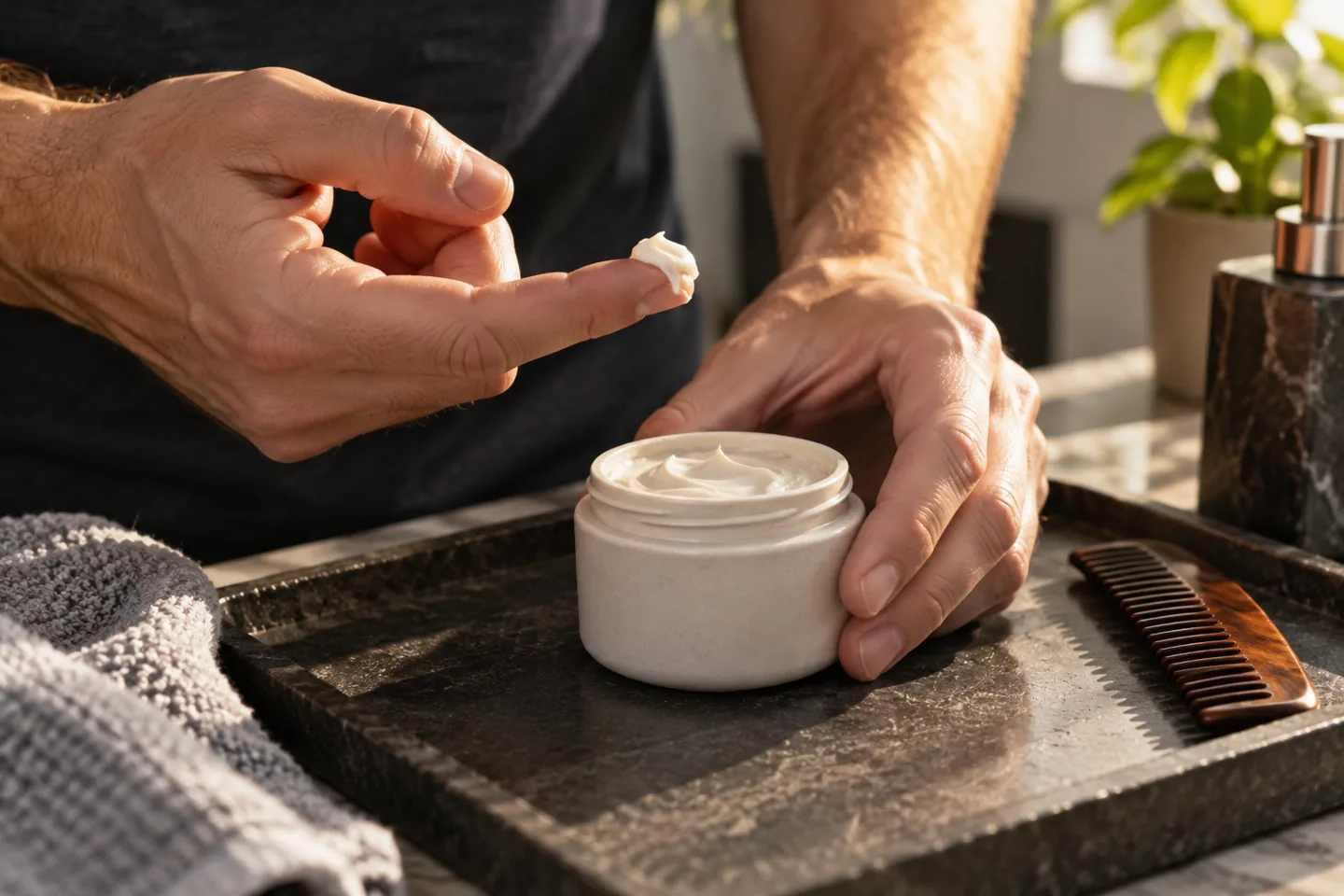
If you already tolerate a styling product, follow its directions and begin with a small amount appropriate to that product. Spread it between your fingers before touching the section, rather than leaving a thick blob at one point. Make one light pass, let the hair settle and decide whether another pass is needed. A stronger hold is not automatically the answer to a direction problem. Adding layer after layer can make it harder to understand what changed.
Keep the product familiar during a direction test. If you change the cut, drying method, product and amount together, you cannot tell which adjustment was useful. Stop using a product that causes irritation, and seek professional advice for persistent symptoms. This guide does not recommend a brand or a medicated preparation. The relevant question is whether your existing product makes the chosen arrangement easier to repeat, without discomfort or an amount of maintenance you do not want.
Compare an ordinary result, then put the camera away
One reference photograph can help you explain the issue, but photographs are optional. If you use one, keep the camera around the same height and distance, with similar light and the whole head visible. A ceiling spotlight may make a crown separation look stronger than it does in a room. A close selfie may change how the front seems to sit. Nikon's portrait guidance discusses how lens choice and lighting affect portraits; a styling comparison also benefits from avoiding obvious changes in those conditions.
Look at the practical outcome once after the hair has settled. Does it stay out of your eyes? Can you move normally? Would you be comfortable repeating the routine tomorrow? Use a mirror at an ordinary distance too. Do not zoom through dozens of photographs hunting for a perfectly hidden swirl. If the result already meets your practical goal, finish the comparison and go on with the day.
Give MogRise one useful question
MogRise is the app of this website's publisher. Its official product description includes a personal plan, daily actions and the LooksMax Coach. Those tools can help clarify priorities and maintenance questions; this guide does not claim that the app measures cowlick direction, tracks individual strands or diagnoses a scalp condition. You can do the physical styling test without uploading a photograph or obtaining an AI score.
If you already use MogRise, bring the limits of your experiment into a focused Coach question: “My front section lifts when I comb it straight forward. I want it clear of my glasses, have three minutes and prefer no extra heat. What should I discuss with my barber?” Review any suggestion against your real hair, comfort and time budget. Keep one feasible action in your planning rather than accepting a new list of things to fix. An attractive generated hairstyle cannot prove that the strands will behave that way.
Turn the observation into a barber brief
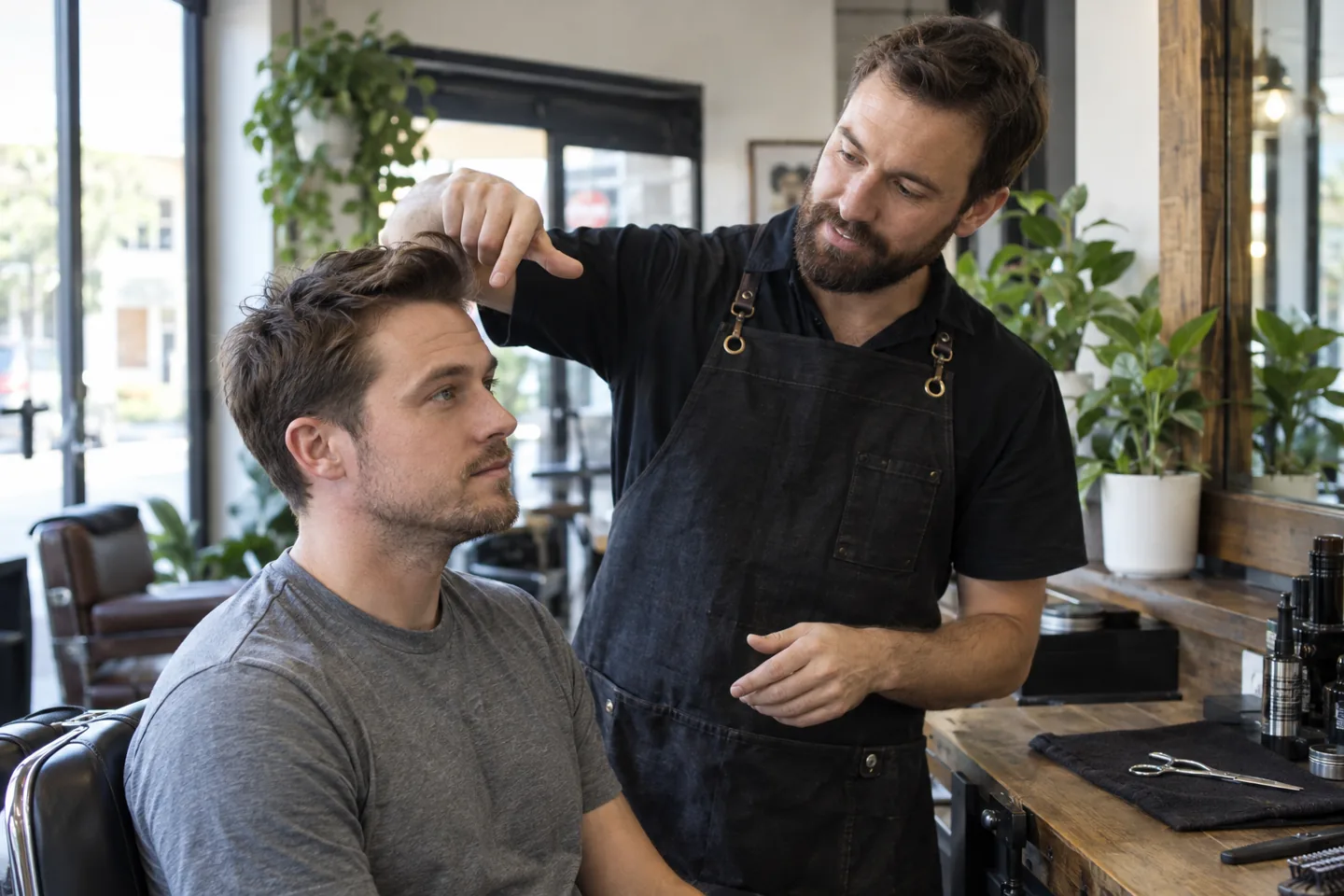
Show the difficult section before the stylist has wetted or rearranged it. Describe what happens after your usual wash and drying routine, and demonstrate the direction that was easiest in your test. Ask which parts of the present cut can be preserved. A useful conversation might concern whether to leave more length in one area, soften the transition around it or style with the existing movement. The barber needs to see your actual hair to advise responsibly.
Bring your upkeep limit as well as a reference. “I like the rest of this cut; can we make this front section easier without requiring a long blow-dry?” is more precise than demanding that the swirl disappear. Our haircut brief for your barber develops that conversation. Do not cut the troublesome section progressively shorter at home to imitate a photograph. Length decisions are harder to reverse than moving a part, and a small appointment discussion can prevent an unnecessary redesign.
Keep a minimum version for rushed mornings
Decide on the fallback before a busy morning arrives. It could be a gentle finger sweep and accepting some lift, rather than restarting the whole process. Put the comb and any familiar product where they are easy to find. The simple morning grooming routine helps keep one hair task in proportion to everything else you need to do. The aim is a usable routine, not a new obligation to inspect your appearance daily.
Review the method after trying it during ordinary life, not after every mirror visit. Keep it if it is comfortable and reasonably repeatable. If it remains awkward, ask for a professional demonstration at your next appointment. If grooming becomes a persistent source of distress or compulsive checking, step back from photos and scores and seek support from a qualified professional. A lifted strand does not determine your attractiveness, worth or social future.
Frequently asked questions
Can I permanently remove a cowlick through styling?
This guide offers reversible arrangements, not a way to alter hair growth. A comb, product or dryer may help you wear a section differently for a while, but that is not evidence of a permanent change. Avoid promises about training the roots with pressure or pulling. Discuss the cut and practical styling options with a barber who can examine your hair.
Should I cut the section very short?
Do not assume shorter is always easier. Explain the current problem to your barber and ask what different lengths would require to maintain. Show the hair in its usual state and say what you want to preserve. Removing more length during repeated home experiments can leave fewer immediate options, so start with the reversible direction test instead.
What if I do not want styling products?
Try a comfortable direction with your fingers or a suitable comb and accept a little natural movement. Tell your barber that you want a product-light routine so the cut can be discussed around that preference. You do not need to buy something to qualify as well groomed, and a small opening or lifted section can remain part of your style.
Do I need MogRise or regular comparison photos?
No. The physical test and barber conversation stand on their own. MogRise can be an optional way to organize a specific question using its existing plan and Coach tools. One useful photograph may explain the section; repeated scores or daily close-up checking do not establish whether a hairstyle is comfortable and manageable.