

How to trim sideburns without changing your whole haircut
If you are wondering how to trim sideburns, start by treating them as the transition between your haircut and your face, not as two isolated strips to make mathematically identical. The useful question is whether their current length and density look intentional beside the hair you already wear. A small, reversible tidy-up can answer that question without turning an ordinary grooming task into a new haircut.
Stand in even light with your head level. Brush the hair as you normally wear it and look from a normal conversation distance before leaning into the mirror. Notice where each sideburn begins at the temple, how it passes the ear, and whether it joins facial hair. Decide what you want to preserve before switching on a trimmer. Hair grows back, but cutting too far on the first pass can leave an awkward transition for several weeks.
Decide what the sideburn is connecting
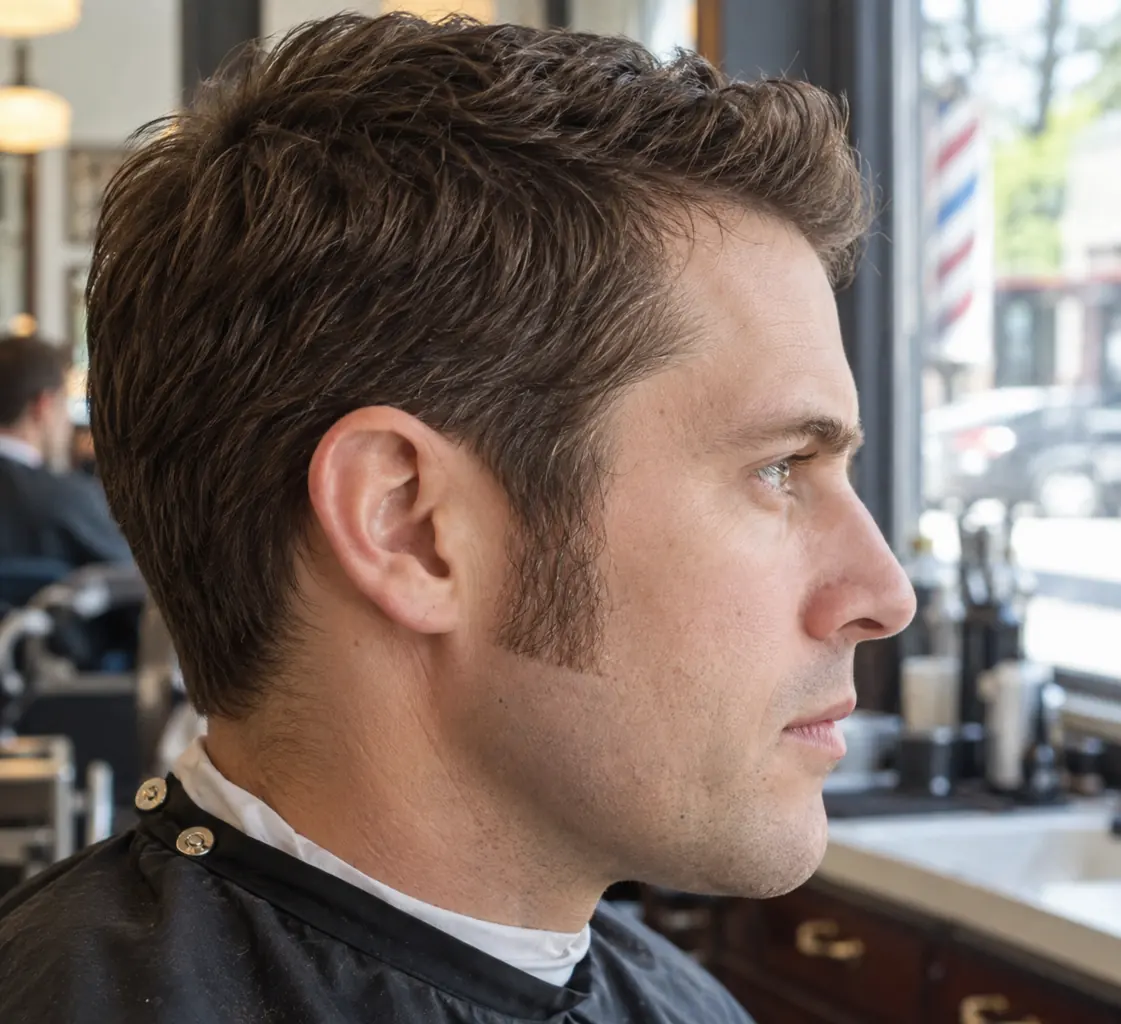
A short haircut often has an obvious edge near the ear. Longer hair may cover the upper portion of the sideburn, while a beard can continue it downward. Those three situations call for different endpoints. If you are clean-shaven, a modest natural end near the middle of the ear can be easier to maintain than a dramatically pointed shape. If you have stubble, let the sideburn meet it without a sudden patch of bare skin. A fuller beard may need a gentle transition in length rather than a hard horizontal cut.
There is no universal ear landmark that makes a sideburn objectively flattering. Ear shape, hair growth and hairstyle differ. Choose an endpoint you can locate again in the mirror. The Philips sideburn guide describes short, long and tapered styles; use those as styling options rather than rules about face shape or masculinity. If your main decision is beard length, settle it first with the stubble-versus-beard comparison. The sideburn should serve the choice, not dictate it.
Check the shape before removing hair
Look at one side, then the other, without stretching the skin or lifting an eyebrow. Ask whether one side appears longer because the hair actually ends lower, or because the hair above it lies differently. A cowlick or a stronger growth pattern can create an apparent mismatch. Comb both sides downward, give them a moment to settle, and inspect again. If you still want an adjustment, decide whether it is the bottom edge, bulk through the middle, or loose hairs outside the outline.
Make one decision at a time. Shortening the bottom and thinning the whole strip in the same session can make it hard to know which change helped. A side profile is useful because it shows the link to your haircut. A front view tells you whether the two sides read as balanced at ordinary distance. Neither view needs millimeter-level symmetry. A normal photograph can record your chosen reference, but a wide-angle close selfie can exaggerate differences. The photo checklist explains how to keep camera distance and head position repeatable.
Set up a controlled trim
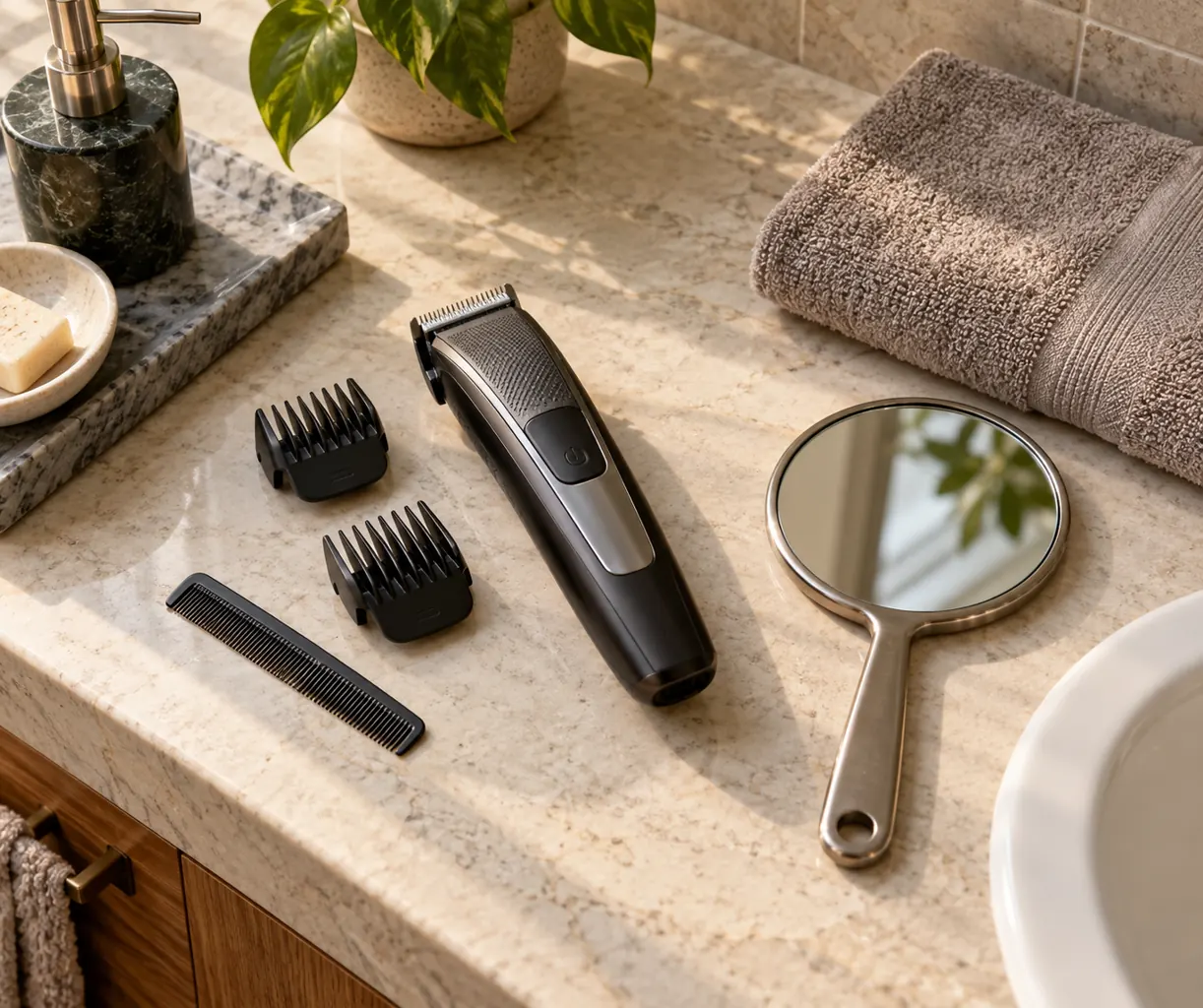
Use a clean, charged trimmer with a guard, a comb, a main mirror and, if needed, a handheld mirror. Place them where you will not have to reach across a wet sink mid-cut. Good light matters more than buying a specialized gadget. Know what length your guard leaves; a numbered setting on one device need not match another. If the sideburn is longer than the guard you plan to use, begin with the longest suitable setting and see how much it removes.
Work with dry hair unless your own device instructions specify otherwise. Water and styling product can change how hairs lie, making the final shape hard to judge. Comb the sideburn in its usual direction. Hold the trimmer gently and keep your head neutral. Do not chase every individual hair with an unguarded blade. The goal of the first pass is to reduce obvious bulk, not produce a razor-sharp border. If you cannot see the cutting edge clearly, change the light or ask a barber rather than guessing.
Trim the length before defining the endpoint
Begin with the fuller or longer side and make a short guarded pass through the middle of the sideburn. Pause, brush away cut hairs and compare it with the untouched side at normal distance. If it still looks too bulky, repeat with the same guard before choosing a shorter one. Avoid pressing the guard into the skin; pressure changes the effective cut and can create a thin patch. Work in small sections around the ear, where the surface curves and visibility is poor.
Then trim the second side using the first as a reference, not a stencil. You may need fewer passes if its hair is finer or grows in a different direction. A gradual transition is usually easier to keep than a sudden change from thick temple hair to a nearly bare cheek. If the sideburn joins a beard, stop before the join and view the whole side of the face. You can soften a bulky junction later, but removing a broad gap is hard to hide. This is also why a sideburn trim should not quietly become a beard redesign.
Choose a modest lower edge
Only after the length is settled should you consider the bottom. Comb downward and identify the lowest hairs that belong to the sideburn, as opposed to scattered cheek growth. Make a tiny test cut slightly below your proposed final edge, then check it. You can move the line upward in another pass; you cannot move it downward until the hair grows. Keep the end soft if that matches your haircut. A rigid, ruler-straight bar is a design choice, not a cleanliness requirement.
Check from the front with your shoulders relaxed. The bottom edges should feel related, though they need not land on identical points of two ears. If you have a short fade, the sideburn may visually taper into the haircut. If you wear medium-length hair, a slightly fuller sideburn may make the transition less abrupt. These are visual observations, not measurements of facial worth. Stop once the original question is answered. Repeated tiny corrections tend to shorten both sides without improving the overall picture.

Finish the surrounding skin gently
You may leave the cheek around the sideburn alone, use a guarded trimmer for stray hairs, or shave a small area for a clearer outline. None is mandatory. If you choose a blade, soften skin and hair first, use a suitable shaving product, and shave with the direction of growth. The American Academy of Dermatology shaving advice recommends these habits to reduce irritation. Do not scrape the same place repeatedly simply to erase a faint shadow.
If skin is sore, broken or inflamed, skip close shaving for now. Use the least aggressive finish that feels comfortable. Persistent razor bumps, bleeding or a changing skin lesion should be assessed by a qualified clinician, not treated with progressively closer grooming. Wash and dry the tool according to its instructions and store it clean. The sideburn is a small part of the face; comfortable skin and a repeatable routine matter more than an edge that looks perfect under bathroom lighting.
Inspect the result in real conditions
Put the trimmer down and step away from the mirror. Look once from the front and once from each side in ordinary light. The useful checks are simple: does the sideburn link the haircut to the face, does the lower edge look deliberate, and is there an unintended gap where it meets any beard? If one side seems different, first comb it again. Hair direction and lighting can account for more of the mismatch than trimming length.
Avoid comparing the result with a heavily edited model photograph or a generated style preview. Those images cannot show how your hair grows or how your skin tolerates shaving. A single baseline photo can help you explain the style at the next appointment. It is not a reason to score your face every day. If the trim went higher than intended, stop cutting, let it grow, and keep the surrounding hair as it is instead of trying to make both sides equally short.
Explain the decision to a barber
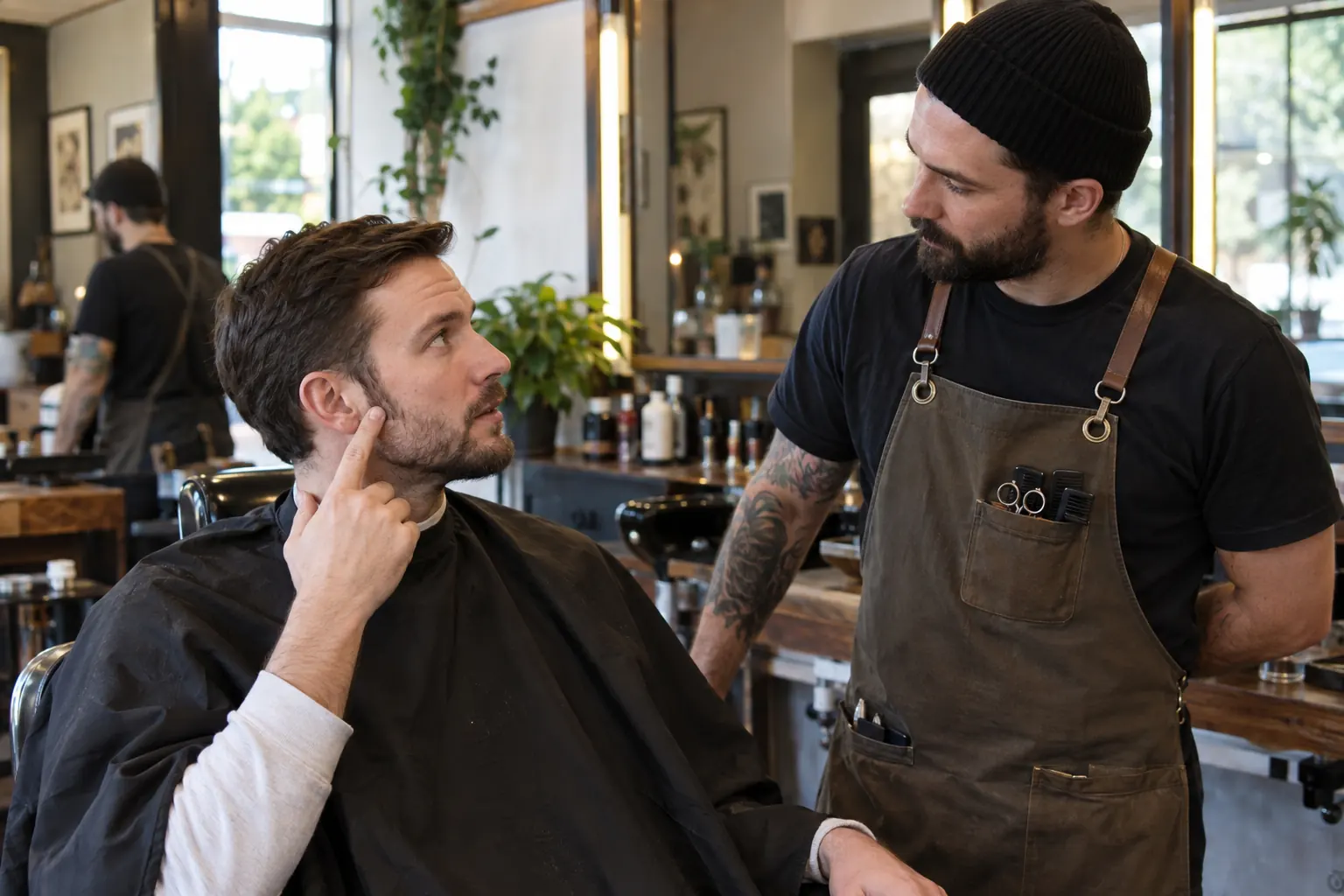
If your haircut has a fade, the barber can blend the upper sideburn into the existing transition. Say where you want it to end, whether it should remain natural or have a crisp edge, and whether it should connect to stubble or beard. Ask them to show the proposed length before removing much hair. “Keep the sideburn full enough to meet my beard, and tidy only the loose lower hairs” is more actionable than “make my jaw look stronger.”
Bring a normal-distance photo of a previous cut you liked, if you have one. Ask which guard or technique made it easy to maintain. The barber briefing guide offers a short way to describe your haircut and face framing together. You can also tell the barber what not to alter, such as the beard neckline or cheek line. That boundary prevents a small maintenance visit from becoming a different style.
Maintain the same choice without constant checking
After the first careful trim, remember the guard, the approximate endpoint and how the result looked in ordinary light. On later days, tidy only when new growth changes that outline enough for you to notice during normal grooming. There is no universal schedule. Hair grows at different rates and a longer, softer style may need less frequent attention than a sharp one. Avoid lifting the bottom edge a little each time; that gradually changes the design.
Treat this as a practical presentation choice. Sideburn length cannot diagnose face shape, create new bone structure or determine anyone’s attractiveness. If checking small differences starts to consume time or causes persistent distress, pause the grooming audit and speak with a qualified mental-health professional. The most useful result is a style you can repeat comfortably, then stop thinking about until it actually needs maintenance.
Frequently asked questions
How low should sideburns go?
There is no fixed ear mark for everyone. Start with the haircut and any facial hair you wear, then choose a modest endpoint you can find again. Begin lower when unsure and shorten in small stages. Inspect from normal distance rather than cutting to a measurement copied from a photograph.
Should sideburns match exactly?
Aim for a related visual length and weight, not perfect geometric symmetry. Hair density, growth direction and even ear position may differ. Comb both sides before judging; trim only the difference that remains obvious in ordinary light. Trying to erase tiny asymmetries often leads to over-cutting.
Can I trim sideburns with a beard trimmer?
Yes, if the attachment and guard suit the hair length and you understand the device. Start with a longer guard, make short passes and reassess before reducing length. Use the manufacturer’s instructions for your model. Keep an unguarded blade away from the bulk until the outline is clear.
What if I cut one side too short?
Stop instead of shortening the other side repeatedly. Comb the hair as usual and check whether the difference is visible at normal distance. If it is, a barber can sometimes soften the transition while the hair grows. A temporary mismatch is less disruptive than moving both sides higher and higher.