

How to try a hairstyle before a haircut
To try a hairstyle before a haircut, separate the decision from the image that first made you curious. A dramatic photograph can show an appealing silhouette without showing the person's natural hair direction, the daily styling work, or what the cut looks like after a week. Your useful question is narrower: which single change would you actually like to carry into an ordinary morning? It might be less weight at the sides, a fringe worn forward, or more length left on top. Name that change before collecting references.
Move your existing hair in a different direction, compare a clear photograph with a style preview, and ask a barber what your present length can support. None predicts an exact result. Together they turn an appealing image into a workable request about hair.
Start with the hair you have today
Look at your hair after it has dried and settled in the way you normally wear it. Notice where it parts without being forced, whether the crown pushes strands forward or outward, and how much length is already present at the front, sides and back. A reference with a long, heavy fringe is not an immediate haircut option when your current front hair is very short. It may be a longer-term direction, but a preview cannot create the months of growth that the reference required.
Hair density and texture affect how a silhouette sits. Straight fine hair can fall differently from dense waves even when the outline looks similar in a photograph. A cowlick may make a polished side part require more daily effort than the picture suggests. Describe these observations without turning them into a verdict on your face. If you want help identifying the practical limits of your current cut, use the low-maintenance haircut checklist as a companion. It focuses on upkeep rather than a supposedly ideal face shape.
Choose one variable and a realistic reference
Pick one change to investigate. “Should I keep more length across the forehead?” is more useful than “Would a completely different hairstyle make me look better?” Keep the rest of the comparison steady where possible: similar hair color, a neutral expression and an ordinary camera angle. A photograph of a professional model under hard studio light can be inspiring, but it is a poor promise for your own hair. Look for a reference with a visible side view and enough light to understand where the volume comes from.
Note what you want to change and keep. You might want a softer front but keep easy-to-style sides; or reduce side bulk while preserving enough length to tuck hair behind an ear. Record your time limit too. If you will not spend ten minutes using a dryer each morning, a look that depends on careful blow-drying may be the wrong first experiment even if its preview is attractive.
Take a usable front and profile photograph
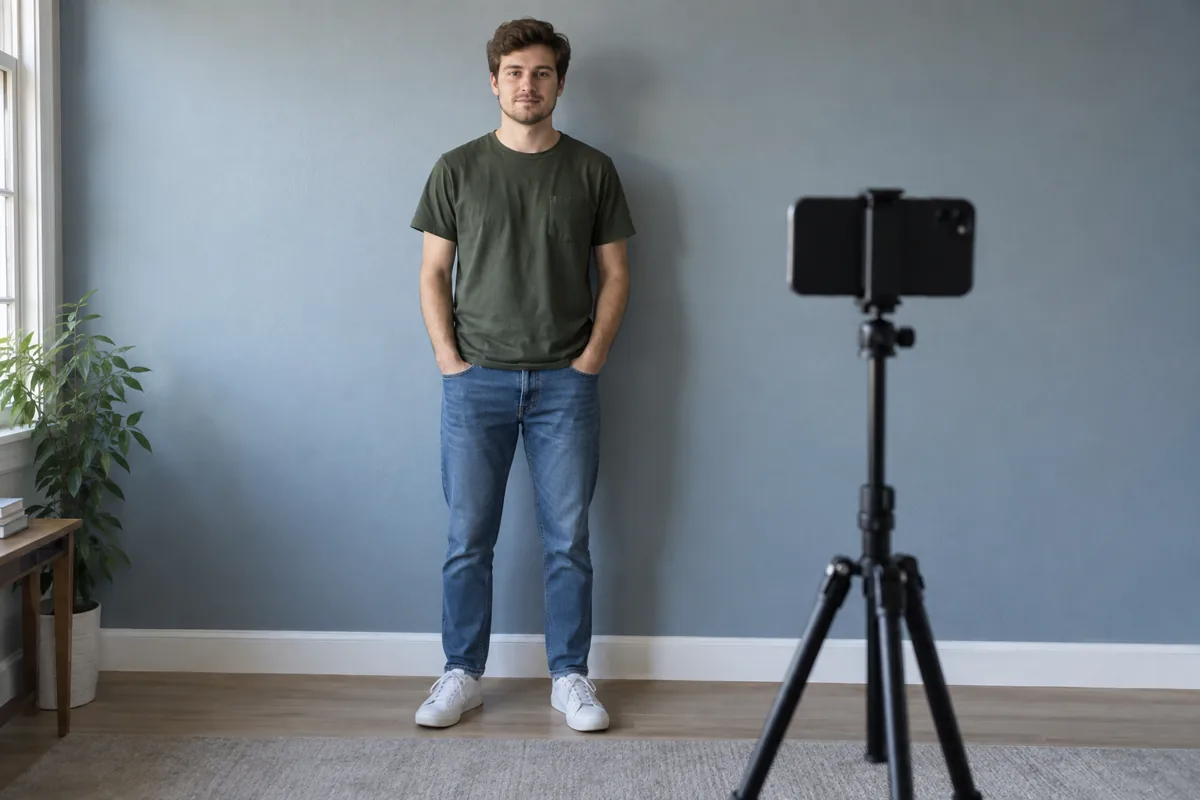
A style preview is easier to judge when the source photo is ordinary. Stand in even light, use a neutral background, put the camera around eye height and step back far enough to include the whole head and shoulders. Keep the camera at a similar distance for front and profile images. Avoid the close wide-angle selfie that enlarges whatever is nearest to the lens. Nikon's portrait-photography guidance notes that a very wide lens can distort a face; distance and lens choice therefore matter when a photograph becomes your reference.
Wear your hair as you normally do, then make a second frame only if you need to reveal its growth direction. Do not lift your chin or hold your expression differently to flatter one option. Keep the original photo beside any generated preview. The face-analysis photo checklist explains the repeatable setup in more detail. Its purpose here is not to measure attractiveness. It is to stop camera position from becoming an unrecognized variable in a haircut decision.
Test the reversible version first
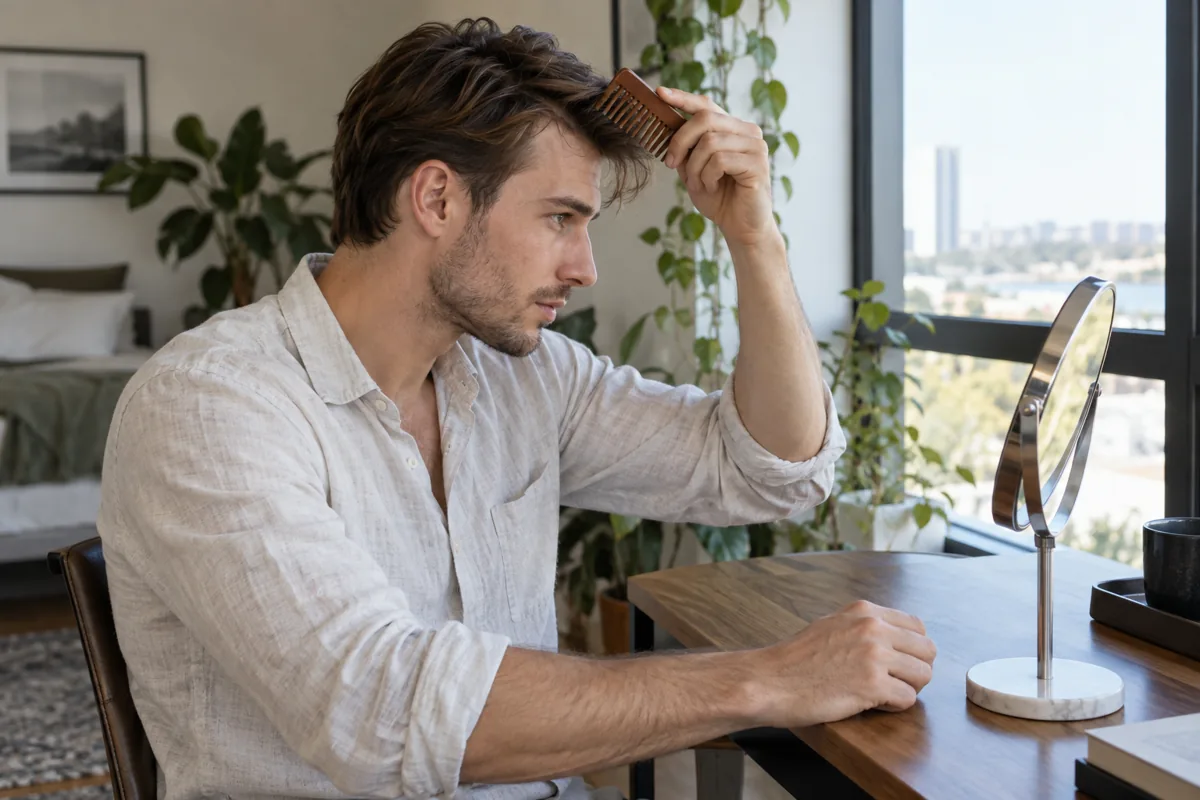
Before asking software to invent a finished cut, try what can be done with your present hair. Comb a fringe forward, then gently move it aside. Change the part after the hair is dry. Let the sides sit naturally, then flatten them with your hands without cutting. Observe the overall frame from normal mirror distance rather than inspecting isolated millimeters. If a small change already answers your question, you may need a styling adjustment instead of a new haircut.
Do not force hair into a shape that requires heavy product or high heat when you would not use those every day. The point of this test is to learn how your hair behaves under normal conditions. A preview can show a direction, but only the real-hair test reveals whether that direction feels comfortable and repeatable. Take one simple photograph of each version in the same room if comparing them helps. Give each image a plain label such as “front down” or “front away,” not a score.
Use MogRise to compare a hairstyle direction
MogRise is made by the publisher of Looksmax Guide. Its style-preview tools can help you consider hairstyle directions alongside your own front and profile photographs. Start with the single variable you chose above. For example, compare a more open forehead with a softer fringe while keeping the length and side weight as similar as the tool allows. Notice whether you are responding to the hairstyle itself or to different light, expression, hair density and image polish.
Treat a generated result as a conversation aid, not a prediction of the final cut. The preview may show more volume, a different hairline or a smoother texture than your real hair can hold. Do not assume that an AI face score tells you which option is objectively better. If the image suggests a useful idea, write it in practical words: “keep enough front length to move it sideways” or “avoid taking the sides too close.” Then check the idea against your hair and the time you are willing to spend styling it.
Read a preview for decisions, not certainty
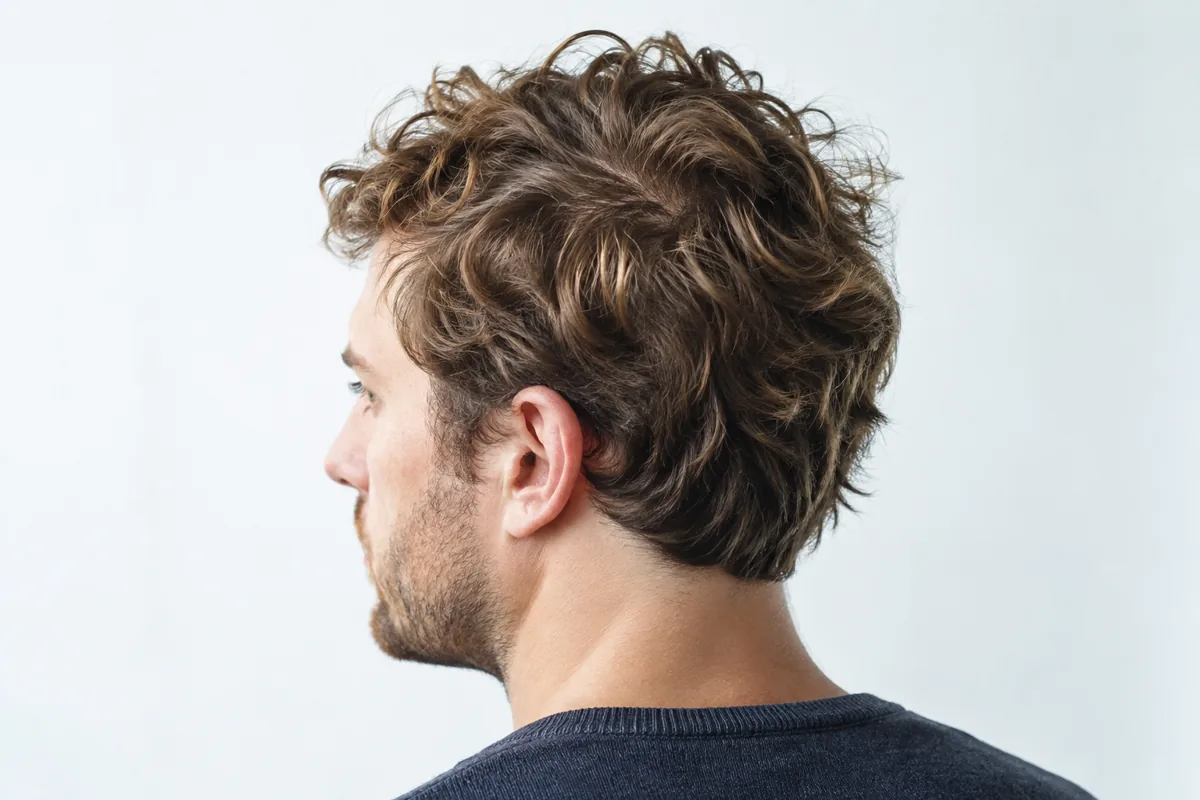
Look at the same three features in every option: the front boundary, the shape around the ears, and the amount of height or width at the crown. Ask what the barber would actually cut to create each feature. If an option changes hair color, skin texture, beard, expression and lighting together, it cannot isolate the effect of the haircut. Set it aside rather than treating the most polished render as evidence. A useful preview makes your request more precise; it does not remove uncertainty.
When the app and your mirror disagree, trust the real hair for length, growth direction and texture. The preview is most valuable as a prompt to ask a barber whether the direction is feasible. Keep no more than two alternatives on your shortlist. Endless comparisons can make tiny differences feel decisive when they would disappear in normal life. Close the tool when you can explain what you want to preserve, what may change and what remains unknown.
Check the daily cost of the style
A haircut must work on an ordinary day, not only in its first photographed hour. Ask how much drying, product and reshaping the reference requires. If you travel, wear a hat, cycle, or have little time before work, those conditions matter more than a perfect still image. Try the reversible styling version on a typical morning. Does it stay in place while you move? Can you reset it with water and a comb? Does the direction feel like your own choice rather than a task you will abandon after two days?
Avoid making the trial harsher than the intended routine. The American Academy of Dermatology's hair-styling guidance advises limiting heat and handling hair gently, because excess heat and tension can damage it. This does not mean a dryer is forbidden; it means a style that only works through repeated aggressive heat or pulling has a real maintenance cost. If you have pain, persistent scalp irritation or concerning hair loss, ask a qualified clinician instead of using a preview to diagnose the cause.
Translate the idea into a barber brief
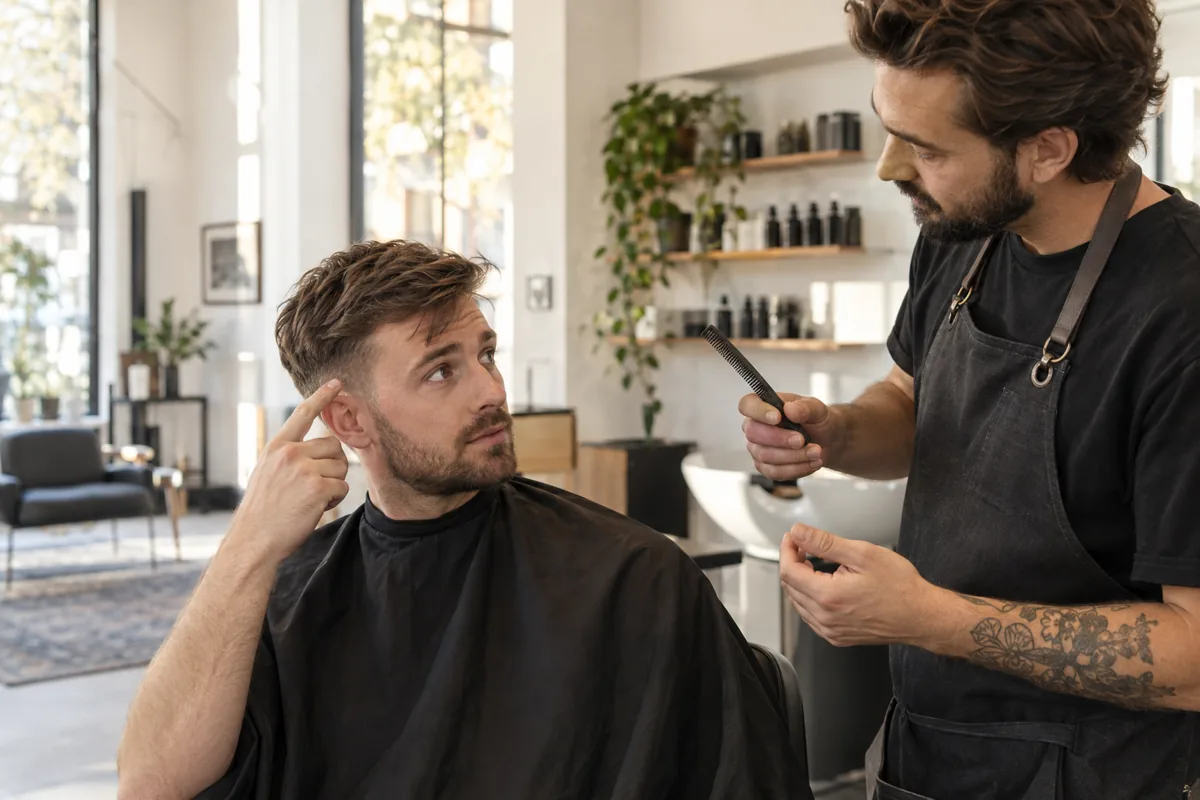
Bring the original photo, one or two preview images and a picture of your hair on a normal day. Explain which part of the preview you like and which parts might be artificial. “I like the softer front, but my hair grows forward at the crown; can we keep the sides familiar?” gives the barber a solvable problem. Ask what can be done at your current length, how the hair should be styled, and what the cut will look like when it is not freshly finished in the chair.
Agree on the first step before cutting. You can request a conservative version that preserves length, then adjust later if needed. Ask the barber to show the proposed side and back length, especially if the reference hides those areas. Our haircut brief for your barber provides a fuller appointment checklist. A good conversation may conclude that you should grow one section out first. That is still a useful decision and often safer than forcing a dramatic result in one visit.
Review the real cut without chasing a render
After the appointment, see the haircut in your own light and after you have styled it once yourself. It may not match a generated image, and that alone does not mean the decision failed. Compare it with the practical brief: was the front kept long enough, do the sides feel manageable, and can you repeat the finish? If one detail is difficult, ask the barber for a small adjustment or clearer styling instruction at the next visit. Do not keep cutting to imitate every pixel of a preview.
Looksmaxxing here means making a modest, informed presentation choice. A haircut cannot establish your value or fix every feeling about your appearance. If comparing photos or AI results becomes a persistent source of distress, step away from the images and seek support from a qualified mental-health professional. The outcome worth keeping is an everyday style you can explain and maintain, not a higher score or a promise of transformation.
Frequently asked questions
Can I try a hairstyle before a haircut without an app?
Yes. Move your existing part or fringe, take consistent front and side photos, and bring realistic references to a barber. These steps cannot show the exact finished cut, but they reveal your current length, natural growth and maintenance preferences. An app preview is optional and should add a specific question to that process, not replace it.
How many preview styles should I compare?
Begin with your current style and one alternative that changes a single feature. Add a second alternative only if it answers a different practical question. Ten polished renders can blur the decision because they often vary light, color and texture at the same time. Stop when you can explain what the barber should keep and what should change.
Will a hairstyle simulation show exactly how I will look?
No. Generated hair can differ in density, length, texture, growth direction and lighting. Use it to explore a direction, then test what you can with your own hair and ask a barber about feasibility. Keep the original photograph visible so an attractive render is not mistaken for a measured or guaranteed result.
What if my hair is too short for the style I want?
Ask which sections need to grow and which can be shaped now. A conservative interim cut may keep the sides tidy without removing the front length you need. Bring that growth plan to the appointment. Avoid asking the barber to imitate a long-hair reference immediately when the necessary length is not there; the preview cannot supply real hair.