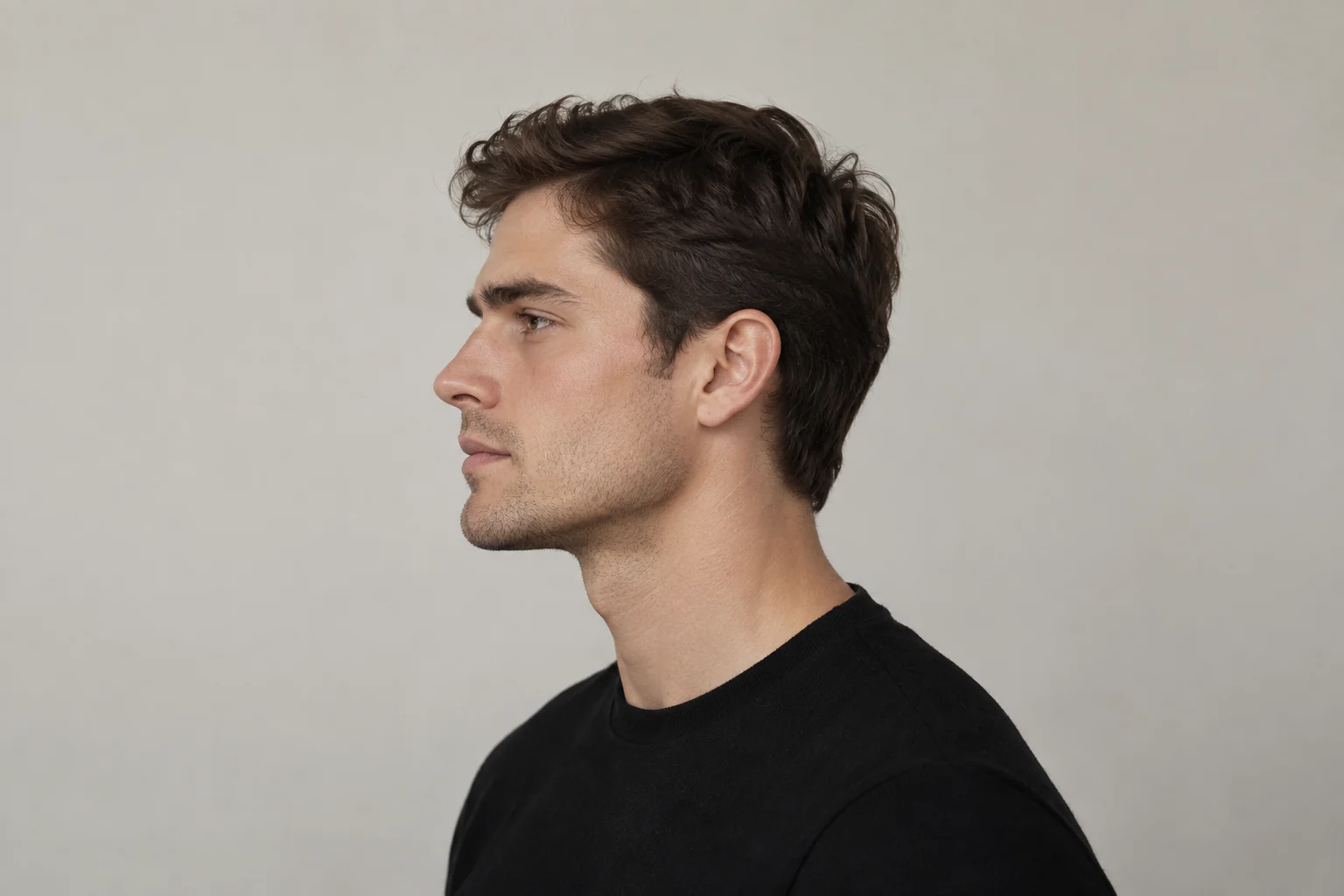
JAWLINE & PROFILE · 8 MIN READ
Jawline definition: separate structure, framing and the photo.
Understand jawline definition, chin and profile balance, beard framing and mewing claims before choosing your next looksmaxxing step.
Read the jawline, chin and side profile. Separate facial structure from beard framing, head position and shadows before choosing a change.
 LOWER FACE / CHIN / SIDE PROFILE
First identify what the photo is showing: the natural lower-face outline, a beard edge or a shadow. Check front and profile views with a relaxed mouth and normal head position. That separates a framing decision from a structural or functional concern that a photo cannot settle.
Make sure the apparent change matches the variable you intended to test.
| The question | AWhat changed | BWhat it can tell you |
|---|---|---|
| Light direction | A stronger shadow appears below the jaw. | The lighting changed definition in the picture; it does not establish structural change. |
| Beard contour | The outer edge is shorter or more deliberate. | You can assess how that grooming choice frames the lower face. |
| Head position | The chin is raised and the neck extended. | The pose changed. Return to your normal position for a progress comparison. |
A fair comparison lets you keep a useful styling result without confusing it with a change in anatomy.
Use the front image for lower-face width and chin outline. Use the true profile for the transition from lips to chin and chin to neck. Keep the camera at eye level and avoid deliberately pushing the chin forward.
Notice where facial hair adds length or width and where it hides the natural outline. Choose a grooming question based on your actual coverage, then ask a barber to explain a realistic contour adjustment.
A beard contour can be compared as a styling change. Bite concerns, jaw pain or chewing problems require a dental assessment. A face photo or an AI score cannot decide whether a structural treatment is appropriate.
A lower face can look wider without looking more defined, or longer because of facial hair without a change in the chin itself. Name the dimension you want to investigate. Definition concerns the readable boundary; width concerns the side-to-side outline; length concerns the vertical extent of the lower frame. Each can be influenced by the way the portrait is presented.
Describe the front and side observations independently. If the boundary disappears only in one lighting setup, start with photography. If the beard adds unwanted length, compare chin coverage. If the question concerns pain, bite or function, keep it separate from an aesthetic trim decision and bring it to an appropriate professional.
Map the actual coverage at the sides, chin and cheek boundary. A beard preview may propose a continuous outline that your current growth does not support. Discuss the effect with your barber and adapt it to the coverage you have. The purpose is a coherent silhouette you can maintain, not a literal copy of the generated hair.
Choose the variable explicitly. Shortening the chin while keeping the sides similar tests added length. Reducing side bulk while preserving the chin tests width. Tidying a boundary tests the edge. Review each in a relaxed front and profile reference, with your normal haircut kept familiar.
Put the visible concern, the action and the review condition on one line. This makes it harder to confuse a dramatic portrait with a structural change. If the action is grooming, include comfort and upkeep. If the action is a consultation, the outcome is an answered question and an appropriate next step.
Keep the plan small enough to finish. A strong lower-face experiment can end with a clearer trim preference. It does not need a new jawline rating to justify keeping the result.
| Main concern | First action |
|---|---|
| Added beard length | Compare chin coverage. |
| Unclear boundary in a photo | Repeat relaxed pose and readable light. |
| Difficult grooming upkeep | Simplify the trim and discuss a maintainable outline. |
| Persistent functional concern | Seek an appropriate qualified assessment. |
Create a pair of reference photos before the appointment. Describe where facial hair obscures or extends the lower-face outline. Bring the front and profile together so the barber can see how the contour behaves in both views. Ask which change is feasible with your current growth.
After the change, repeat the same setup. Keep the camera distance, exposure and head position similar. Write whether you prefer the overall balance and how much maintenance it requires. A useful result is a repeatable trim brief, rather than a claim that the jawbone became sharper.
Keep the cheek coverage. Reduce the extra length under the chin. Compare the overall outline at eye level before deciding whether the sides need changing too.
Calling a new shadow or a clenched-jaw pose a physical transformation.
Write down the variable you are testing: beard outline, pose or lighting. Hold the other two steady.
Choose one lower-face question and make the comparison repeatable.
Match the camera, head position and lighting before interpreting the difference.
Can you reproduce the apparent definition without clenching or stretching?
No account or upload. Notes stay on this page; download them before leaving.
It proves the outline looks different in that image. Check lighting, camera distance, head position and beard state before claiming anything about the underlying face.
Yes, the visible beard edge can add length below the chin. Compare chin length separately from side bulk so you can explain the effect you prefer.
An appearance label or selfie is not enough to determine that. Separate your aesthetic preference from health or functional concerns and discuss clinical questions with an appropriate qualified professional.
Understand jawline definition, chin and profile balance, beard framing and mewing claims before choosing your next looksmaxxing step.
Understand facial thirds, midface, symmetry and profile balance. Learn what a face analysis can show and how to use it in looksmaxxing.
Compare stubble and beard contours for looksmaxxing. Assess chin length, side bulk and coverage against the balance of your whole face.