

- Positive, neutral and negative describe a direction, not three attractiveness grades.
- The outer eyelid corner is the landmark—not the end of an eyebrow or eyelash.
- Record the reference and uncertainty before comparing angles.
Canthal tilt describes the inclination of a line joining the inner and outer corners of an eye relative to a horizontal reference. The outer corner sits higher for positive tilt, approximately level for neutral tilt and lower for negative tilt. In looksmaxxing, the term is often used as a shortcut for judging the eye area. Reading the angle properly starts with the landmarks and the photograph, not a target number.
Positive vs neutral vs negative canthal tilt
The inner corner is the junction of the lids closest to the nose; the outer corner is the junction toward the temple. Trace the line from inner to outer separately for each eye. Read its direction relative to a level reference. Do not confuse the angle with the curve of the upper lid or the slope of a brow.
A value close to horizontal deserves particular caution. A small change in where you place a landmark can change a near-zero estimate from positive to negative. Report that as uncertain rather than treating the two signs as completely different categories of face.
| Description | Position of the outer corner |
|---|---|
| Positive canthal tilt | Higher than the inner corner in the reference view. |
| Neutral canthal tilt | Approximately level with the inner corner. |
| Negative canthal tilt | Lower than the inner corner in the reference view. |
How to estimate canthal tilt from a photo
Use a clear front reference with the camera level and the head facing forward. Keep the eyes naturally open and make sure both corners are visible. If glasses, blur or shadow hide the junction, choose a clearer reference. The angle of a dramatic three-quarter portrait cannot simply be compared with a straight-on image.
On a copy of the photo, mark the inner and outer eyelid junctions. Measure the horizontal separation and the vertical rise toward the outer corner. The angle is arctan(vertical rise ÷ horizontal separation), expressed in degrees. If your image editor counts vertical pixels downward, an outer corner higher in the picture has a smaller y-coordinate: define your sign convention before calculating.
For an arithmetic example, a 30-pixel horizontal separation and a 3-pixel upward rise gives about +5.7 degrees. This is an illustration of the calculation, not a recommended angle or a measurement of the editorial portrait. Repeat the landmark placement once; if the estimate moves noticeably, keep the uncertainty with the result.
- Use actual eyelid junctions, not lashes or brows.
- Describe left and right separately instead of hiding differences in an average.
- Keep the image and landmark choices with any reported number.
Why head position changes the apparent angle
Sideways head roll tilts the whole face relative to the frame. Looking down or up changes the projection of the eye region as well. Research on sagittal head tilt documented changes in apparent canthal tilt and eyelid show across poses. A more positive-looking angle in a new selfie can therefore be a photographic difference rather than a change in tissue.
Before comparing two estimates, check head position, camera height, expression and landmark visibility. Rotating a tilted image may correct the frame orientation, but it does not undo the perspective of a head turned away from the camera. When the setup is uncertain, retake the reference instead of refining a number from unsuitable inputs.
Is positive canthal tilt always better?
An angle answers a geometry question. It does not include lid contour, brow position, expression or the proportions of the rest of the face. Turning positive into ‘good’ and negative into ‘bad’ adds a judgment that the measurement itself does not contain.
Be careful with studies quoted as a universal ideal. For example, a published experiment on medial canthal tilt asked judges to choose between original and digitally altered female faces. That setup does not establish an optimal angle for every male face or justify copying a numerical target from a social-media post.
In a practical looksmaxxing audit, the useful outcome may simply be understanding what an AI report meant. Ask which corners were detected, what reference was used and how stable the observation is. You do not need to convert every descriptive measurement into a change you must make.
Separate eye framing from changing the eye corner
Brows, a fringe and glasses can change the frame around your eyes. They do not move the eyelid junctions. If your actual goal is a clearer brow line or a less dominant glasses rim, name that goal directly and compare the framing choice without presenting it as a canthal-tilt correction.
Canthoplasty is surgery involving the tissues at the eye corner. Suitability, risks and expected outcomes require assessment by a qualified specialist; an app score or a home angle estimate cannot select a procedure. For an ordinary styling question, return to what you can compare without confusing appearance in a photograph with structural change.
Identify the landmark before drawing the line
A canthal-tilt line is intended to connect the inner and outer eye corners. Eyeliner, lashes, a shadow or the visible endpoint of an eyelid fold may be mistaken for one of those landmarks. Before you measure, enlarge the original image briefly and check whether both endpoints are actually visible. If a frame or shadow obscures them, note the uncertainty.
Keep the same landmark definition for both eyes and every comparison. Do not switch from the eye corner to the highest visible eyelid edge because one image is clearer. When the endpoints are uncertain, a broad description such as approximately level is more useful than an angle with several decimal places. Precision in the output cannot repair ambiguity in the input.
Check head roll separately from camera height
A sideways head tilt changes the apparent angle against the horizontal edge of the image. A higher or lower camera position changes the view of the eye region in another way. Treat those as separate setup questions. A level phone does not guarantee a level head, and a level head does not guarantee the same perspective between two portraits.
Use a simple, repeatable setup and inspect the full head before cropping the eyes. The portrait should be centered enough that the two eyes are not being seen from dramatically different directions. If you cannot reproduce the conditions, label the measurement as approximate. That is more honest and more useful than arguing over a small difference caused by the photo.
Audit a measurement before interpreting it
Start with the measurement method, then the number. Ask what line was drawn, which horizontal reference was used and whether each eye was measured independently. A score derived by an app may describe the model’s interpretation rather than a published angle in degrees. Keep the output’s definition beside it so you do not compare unlike values.
Next, decide whether the value helps answer your actual looksmaxxing question. An angle alone does not explain brow framing, eyelid exposure, under-eye appearance or how the eye area fits the whole face. Use it as one observation if it is useful. If the measurement does not lead to a reasonable next question, it does not need to become a priority.
| Check | Why it matters |
|---|---|
| Visible endpoints | A guessed outer corner can shift the line. |
| Head orientation | Head roll changes the angle against the image edge. |
| Same definition | Degrees and a model-generated score are different outputs. |
| Whole-face context | One eye-area measurement cannot explain the entire portrait. |
Write down uncertainty instead of chasing an ideal
An observation sheet can be short: original photo, approximate description, uncertain landmark and next question. If the two sides look different, repeat the setup before interpreting that difference. Avoid flipping, rotating or editing one crop until it resembles a reference; those changes alter the conditions you are trying to understand.
Your practical action may concern glasses, brows or photography rather than the eye corner itself. If your question involves symptoms, function or a procedure, take it to an appropriately qualified professional with the original references. A social-media diagram is useful for learning a term, but it cannot determine what intervention would be appropriate for your anatomy or goals.
A measurement with its uncertainty attached.
A fictional reader gets different eye-area labels from two selfies and wants to understand the disagreement before changing anything.
One photo has a slight sideways head roll and a shadow over the outer corner. The reader keeps that estimate marked as uncertain, makes one relaxed front reference and notes where both eyelid junctions are visible. Their next question is about landmark detection, not how to reach a target angle.
Your canthal-tilt reading notes
Use the prompts to turn this guide into your own next step. The examples are suggestions; write what fits your situation.
Check the angle’s definition and reference conditions. An unexplained score is not interchangeable with degrees.
Add a note to any prompt to continue. Your notes stay on this page. Download a text file before leaving.
A few useful clarifications.
01Can the two eyes have different canthal tilt?
A photo can produce different estimates for each eye. Record both and check head rotation, landmark placement and perspective before deciding what the difference represents. A single image cannot establish its cause.
02What is the ideal canthal tilt?
This guide does not prescribe a universal target. An angle describes one relationship, while aesthetic judgments involve the whole eye area and face. A study of particular images cannot establish an ideal for every individual.
03Is an AI canthal-tilt score the same as a measurement in degrees?
Not necessarily. A tool may convert an estimated angle into a proprietary score or combine several eye-area features. Check the report’s units, landmark definition and explanation before comparing it with another result.
04Should I measure canthal tilt from a three-quarter portrait?
Use a clear, relaxed front view for an informal estimate. A three-quarter view changes the perspective of the eye region and can obscure landmarks. Even a front-view estimate should be labeled approximate.
05Why do two tools give different canthal-tilt results?
They may use different landmarks, definitions, scoring systems or interpretations of the same photo. Compare the method and input before treating the outputs as directly interchangeable.
06Does the glasses rim show my actual canthal tilt?
No. The rim is part of the visual frame and may have a different slope from the line between the eye corners. Keep the frame’s appearance separate from the anatomical landmarks.
Where your next question leads.
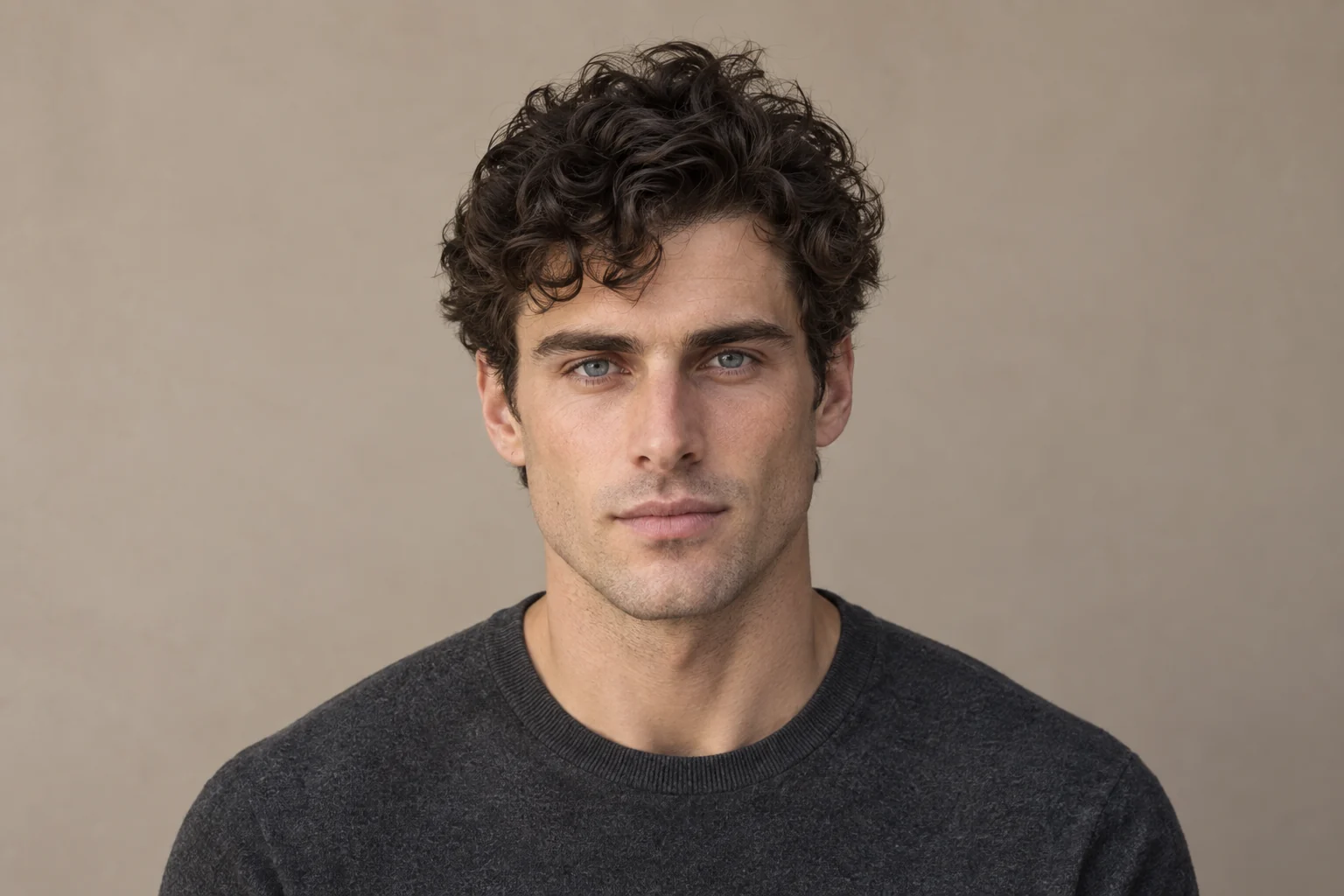
Hunter eyes vs prey eyes: understand the eye-area look.
What are hunter eyes? Compare hunter eyes vs prey eyes, eyelid exposure, brows and canthal tilt, with practical ways to assess your eye area.

Eye-area looksmaxxing: brows, under-eyes and the whole frame.
Understand brows, under-eye shadows, puffiness and canthal tilt. Build an eye-area looksmaxxing plan around clear observations.

FaceScore and PSL: turn the report into a looksmaxxing plan.
Read FaceScore and PSL-style ratings alongside facial harmony, jawline, eye-area and skin observations. Choose an action from the explanation.