
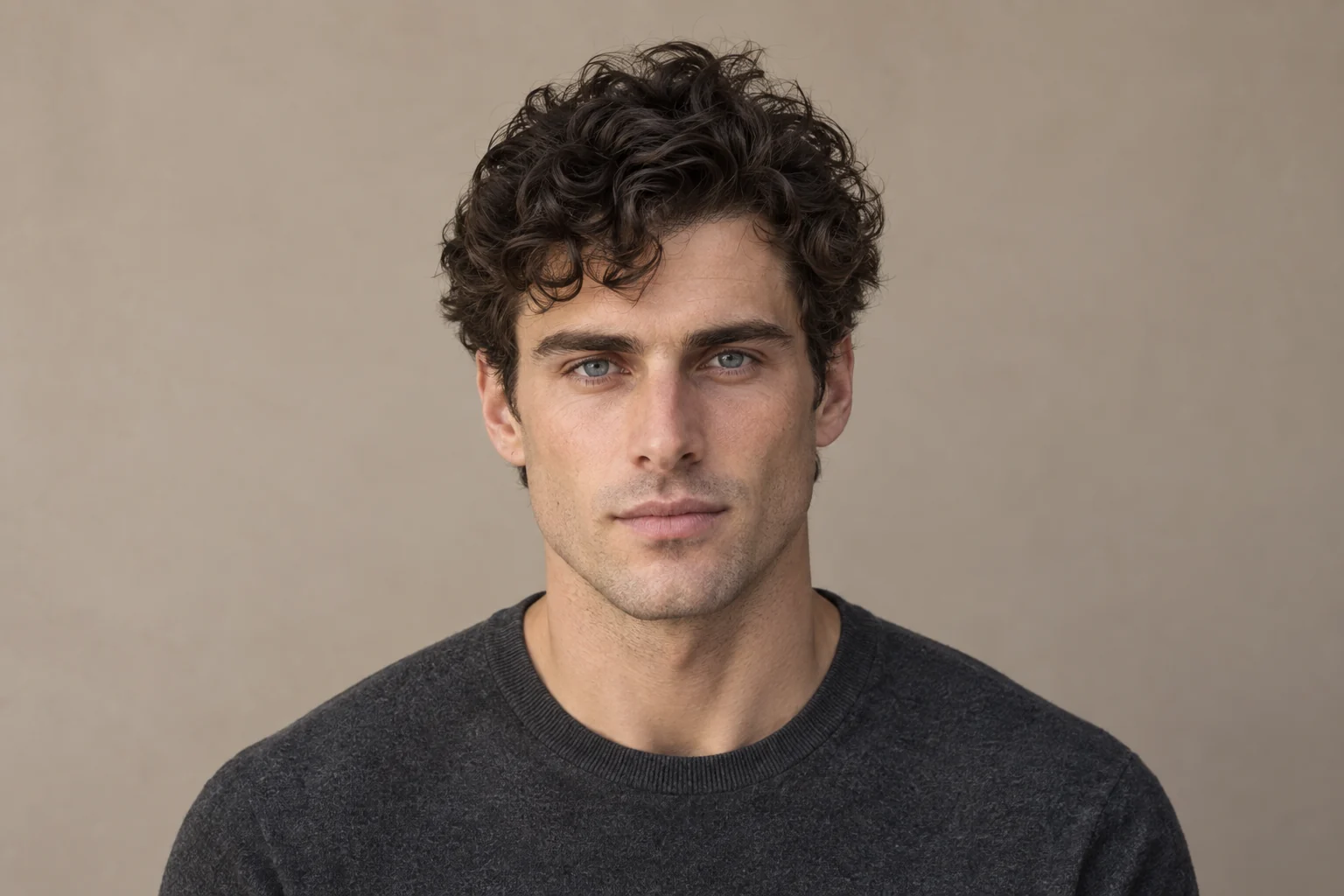
- Hunter eyes describes a combination of details, not a single angle.
- A relaxed reference helps separate your eye area from a posed expression.
- Brow and glasses choices affect framing; they do not reposition the eye corners.
Hunter eyes is looksmaxxing slang for an eye area that appears relatively narrow, deep-set or hooded, often with a strong brow frame. Prey eyes is the contrasting label used for a more open or rounded appearance. These are informal descriptions, not two anatomical categories. The useful question is which visible details create the impression—and which, if any, you want to approach through framing or care.
What are hunter eyes? Break the label into features
In looksmaxxing discussions, the hunter-eye look usually combines a horizontally elongated eye opening, relatively little visible upper lid, a close-looking brow frame and sometimes an upward outer corner. A person can have some of these details without the others. Hooded lids and a positive canthal tilt, for example, describe different things and should be written down separately.
Upper eyelid exposure refers to the visible area above the lash line when the eyes are open. Brow position describes the frame above it. Canthal tilt describes the relationship between the inner and outer corners. Keeping those observations separate makes a face analysis more useful: a glasses choice may affect brow visibility, while it cannot change the position of an eye corner.
Hunter eyes vs prey eyes: what people are comparing
The comparison is usually between two visual impressions, not a checklist every face must pass. The table translates the online vocabulary into details you can describe. It is not a rating scale, and features from both columns can appear on the same face.
Start by asking what the comparison image changes. Is one person squinting? Is a brow hidden under hair? Is the supposedly stronger eye area photographed with a darker shadow? If you cannot name those differences, the labels conceal more than they explain.
| The comparison | What to describe instead |
|---|---|
| Narrow vs open-looking eyes | The visible shape of the eye opening with a relaxed expression. |
| Hooded vs exposed upper lids | How much upper lid is visible; keep brow position in the observation. |
| Intense vs soft-looking framing | Brow shape, surrounding shadow and glasses, rather than a personality label. |
| Upward vs downward outer corners | Canthal tilt, assessed separately for each eye in a suitable reference. |
Why the same eyes can look different across photos
A study of head position and the eye region found that changing the up-or-down tilt of the head altered visible eyelid and brow relationships. It is a reason to control pose in a comparison, not evidence that posing remodels the eye area. The study concerns photographic appearance; it does not validate hunter eyes as a universal beauty target.
For your own reference, keep the camera around eye level, use even light and look naturally toward the lens. Let the brows rest. Do not hold a squint to recreate a model photograph. Keep the whole face in the first image; an eye-only crop removes the surrounding proportions you are trying to understand.
Can you get hunter eyes through softmaxxing?
Begin with the part of the eye frame that interests you. If your brows disappear behind your glasses, compare a frame whose upper rim sits differently. If a fringe hides one brow, compare it gently moved aside. If you want tidier brows, start by brushing them into their usual position and describing the outline you want to preserve before removing hair.
These are framing experiments, not a method for turning one anatomical eye shape into another. A photo that looks more intense after squinting or tilting the head is not evidence of a lasting change. Treat a claimed exercise transformation as an evidence question: were the pose, expression and capture conditions actually comparable?
A persistent eyelid concern belongs in an individual assessment. Procedures that change eyelid tissue or the eye corners are clinical decisions, not a routine extension of brow grooming. Cleveland Clinic describes canthoplasty as surgery involving the tissues at the eye corner; a social-media label cannot establish whether such a procedure is appropriate.
Build an eye-area brief you can use
Write three lines: what you notice, what you can compare and what will stay unchanged. For example: ‘My glasses cover the outer part of my brows. I will compare a lighter upper rim while keeping my hair and expression the same.’ That brief names an action and an outcome without promising a different eye shape.
Review the full face at an ordinary viewing size, then inspect the eye frame. Keep a note about visibility, comfort and how the choice works in everyday use. A style you only prefer in one carefully held expression may not be the choice you want to maintain.
If you use MogRise, ask about the specific observation rather than asking the Coach to give you hunter eyes. ‘Which part of the frame is affecting brow visibility?’ is a clearer starting question. Read the explanation alongside your original photos and keep any AI observation separate from a clinical assessment.
Do not confuse an intense expression with eye structure
Many hunter-eye comparisons pair a relaxed portrait with a deliberate squint, lowered brow or different camera angle. Those images can create a compelling contrast without showing a stable change in the eye region. Compare the expression first: look at whether the brow has moved, the cheeks are raised or the eyelids are being narrowed intentionally.
A useful reference has a relaxed face, visible brows and even light. Keep the head level and avoid trying to reproduce a model’s expression. If you prefer the mood of a more intense portrait, describe it as a photographic preference. That distinction leaves you free to explore the look without mistaking a pose for a change you can permanently maintain.
Compare the brow, eyelid and frame independently
The hunter-eyes label bundles several visual impressions into one phrase. Break the bundle apart before choosing an action. You may like a strong upper frame, limited visible eyelid, a particular eye outline or the relationship between the eyes and cheekbones. The part that attracts you matters because each observation points toward a different question.
For a practical styling comparison, begin with the frame around the eyes. Try two comfortable glasses options with different upper-rim weight, or discuss a conservative brow tidy-up that preserves your growth pattern. Use the whole portrait to judge the result. A rim that looks powerful in a crop may dominate the face when the hair, nose and lower frame are visible together.
Translate the online vocabulary into a usable brief
‘I want hunter eyes’ does not explain what you want to preserve or change. A stronger brief names the effect: clearer brows, less visual competition from glasses, a calmer photo expression or a question about the under-eye region. Add the conditions of the reference you used so the comparison can be understood.
Keep anatomical observations in a separate note. An online label is not enough information to determine a procedure, and an edited or generated image does not establish its suitability. For an ongoing health concern, prepare a history and an appropriate professional question. For everyday presentation, choose a reversible comparison with a visible, explainable purpose.
| What you like in the reference | What to investigate on your own face |
|---|---|
| A strong upper eye frame | Natural brow visibility and the weight of the glasses rim. |
| A composed, intense expression | A relaxed portrait versus a deliberately posed photo. |
| Less under-eye shadow | The same area in neutral and overhead light; any persistent concern separately. |
| A particular eyelid outline | What remains visible with the same expression, angle and crop. |
Build a shortlist that works beyond the close-up
Choose two references that show the full head rather than only the eyes. Note the hair, brow, glasses and facial-hair frame around each. Then explain which element you could reasonably compare in your own routine. A reference with very different hair density or brow growth may still inspire a direction, but it should not become a literal target.
Review the preferred framing in daylight and an ordinary indoor setting. Keep the version that supports the overall face and feels comfortable to wear. If you cannot describe why the option is useful without referring to a ranking label, revisit the original question. Your outcome should be a clearer preference or an answered question, not another category to monitor constantly.
A framing question without the hunter-eye label.
In this fictional example, a reader prefers an intense-looking eye area in a posed photo but wants a choice that also works with a relaxed expression.
The everyday reference shows that a heavy glasses rim covers the outer brow. The reader compares one lighter-rimmed frame with the same hair and relaxed eyes. Their review asks whether more brow is visible and whether the frame is comfortable—not whether the eye anatomy has transformed.
Your eye-framing brief
Use the prompts to turn this guide into your own next step. The examples are suggestions; write what fits your situation.
Describe the framing result without attributing a posed expression to a lasting anatomical change.
Add a note to any prompt to continue. Your notes stay on this page. Download a text file before leaving.
A few useful clarifications.
01Are hunter eyes the same as positive canthal tilt?
No. Canthal tilt describes an angle between the eye corners. Hunter eyes is informal language for a combination of lid visibility, eye-opening shape, brow framing and other details. One angle does not establish the whole look.
02Can prey eyes be attractive?
The label is not an attractiveness test. It groups different eye appearances into one informal category and leaves out expression, the rest of the face and individual preferences. Use a precise description instead of treating the label as a verdict.
03Does squinting show a real hunter-eye transformation?
It shows a different expression in the image. To assess a lasting change, compare relaxed references under matching conditions and identify what actually changed. A posed before-and-after cannot answer that by itself.
04Can glasses help create a stronger-looking eye frame?
Different upper rims change where visual emphasis sits around the eyes. Compare pairs that fit first, then judge the whole portrait. Glasses can change framing; they do not change the underlying eye anatomy.
05Why do hunter-eye examples often use a squint?
Narrowing the eyelids and changing the brow position alters the expression. Check whether a comparison uses the same relaxed expression before treating it as evidence of a stable difference.
06What should I save from a hunter-eyes reference?
Save the full portrait and a short description of the visible element you like. A note about brow emphasis or rim weight is easier to use than an unexplained crop of someone else’s eyes.
Where your next question leads.

Canthal tilt: positive, neutral and negative, explained.
Understand positive, neutral and negative canthal tilt, how photo measurements work, and why one eye angle cannot explain your entire face.

Eye-area looksmaxxing: brows, under-eyes and the whole frame.
Understand brows, under-eye shadows, puffiness and canthal tilt. Build an eye-area looksmaxxing plan around clear observations.
Softmaxxing: build a practical daily and weekly routine.
Build a softmaxxing routine for skincare, brows, beard and facial framing. Set your priorities, plan daily and weekly actions, and review what works.